
Have you ever reached the end of a busy day and wondered what you actually accomplished?
You’ve answered emails, attended meetings, responded to messages and crossed several things off your to-do list.
You’ve barely stopped moving.
Yet the important project hasn’t progressed. The goal you promised yourself you’d work towards remains untouched. And tomorrow’s list looks almost identical to today’s.
It’s frustrating because you haven’t been sitting around doing nothing.
You’ve been busy all day.
If this sounds familiar, these five books about being busy but unproductive explore why constant activity doesn’t always lead to meaningful progress and how to focus your attention on the things that genuinely matter.
Because productivity isn’t simply about how much you do.
It’s about whether what you’re doing is taking you somewhere worthwhile.
Why Being Busy Doesn’t Always Mean Being Productive
There’s something satisfying about completing tasks.
You answer a message, tick something off a list or deal with a small problem, and immediately feel that you’ve accomplished something.
Those little achievements can be useful.
But they can also create an illusion of progress.
You might spend an entire morning completing minor tasks while avoiding the one responsibility that would make a meaningful difference.
Perhaps you’ve been planning to start a business, learn a new skill or finish an important project.
Yet every day seems to disappear into smaller obligations.
The trouble is that urgent tasks often demand attention more loudly than important ones.
An incoming email feels immediate.
A notification asks for a response.
Someone needs a quick favour.
Meanwhile, the work that could genuinely move you forward rarely creates the same sense of urgency.
These five books offer different perspectives on breaking that pattern.
1. Slow Productivity — Cal Newport
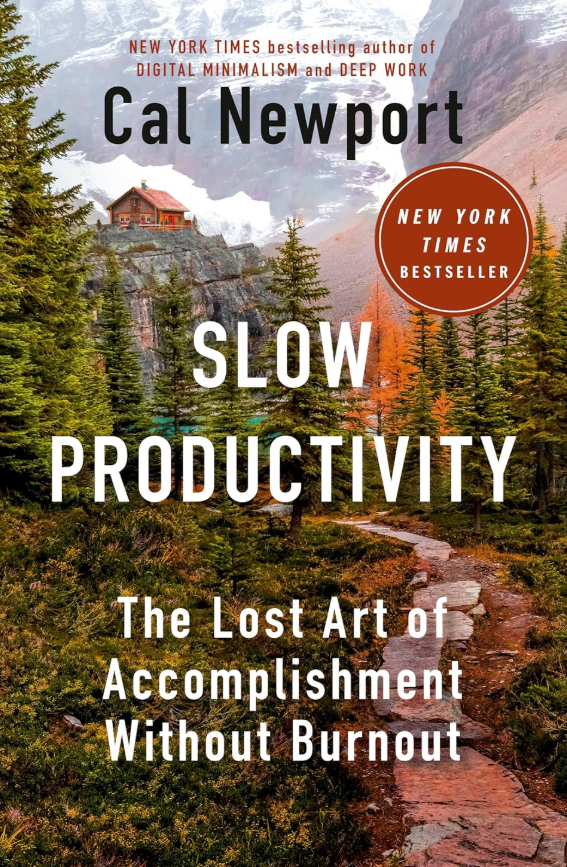
If you regularly confuse being busy with getting somewhere, Slow Productivity is an excellent place to start.
Cal Newport challenges the modern expectation that productive people should always be visibly occupied.
He explores how overloaded schedules, constant communication and too many simultaneous responsibilities can interfere with meaningful work.
Rather than encouraging people to squeeze more activity into every hour, Newport presents a more deliberate approach to accomplishment.
Why this book is worth reading
One of the book’s central ideas is that doing fewer things at once can create more room for work that matters.
Consider someone managing ten projects simultaneously.
They spend their days switching between tasks, attending meetings and responding to requests.
They appear incredibly productive.
But because their attention is constantly divided, few projects receive the concentration needed to make substantial progress.
Newport encourages readers to reconsider how much they take on and how they organise their work.
The aim isn’t to work slowly for the sake of it.
It’s to create a more sustainable approach to meaningful achievement.
Best for: Readers who feel overwhelmed by constant demands but rarely have enough uninterrupted time for important work.
2. Essentialism — Greg McKeown
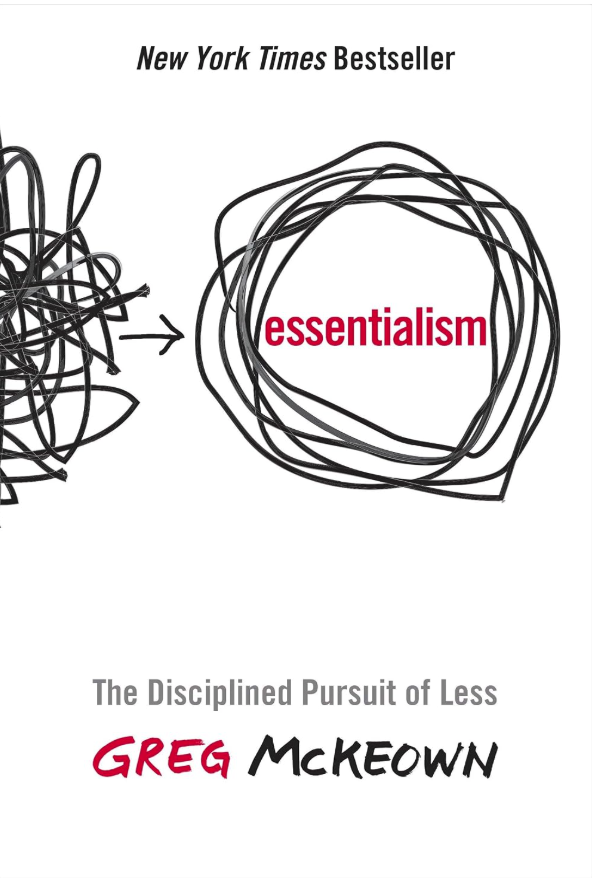
One reason people become unproductive is that they’re trying to do too many things.
They accept every opportunity.
They say yes to additional responsibilities.
They begin new projects before finishing existing ones.
Eventually, their attention becomes spread across so many commitments that nothing receives enough focus.
In Essentialism: The Disciplined Pursuit of Less, Greg McKeown explores the importance of identifying what genuinely matters and reducing less valuable commitments.
Why this book is worth reading
McKeown challenges the assumption that doing more automatically creates better results.
Sometimes the greatest improvement comes from choosing what not to do.
Imagine having five personal goals.
You want to improve your health, learn a language, build a business, read more books and develop a new skill.
Each goal may be worthwhile.
But attempting to make substantial progress on all five every day can become exhausting.
Essentialism encourages readers to consider which priorities deserve their attention now.
That doesn’t mean abandoning every other ambition.
It means recognising that your time and energy are limited resources.
Best for: People who take on too much, struggle to establish priorities and feel pulled in several directions.
3. Make Time — Jake Knapp and John Zeratsky
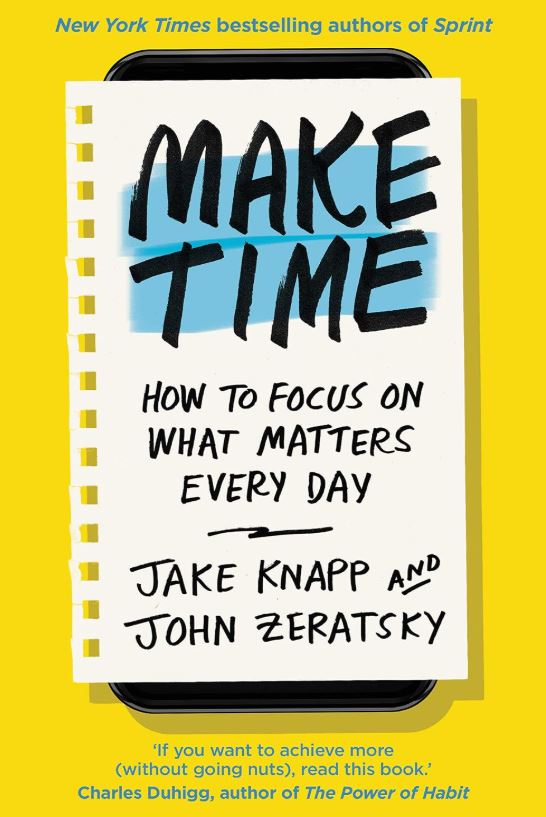
Sometimes your problem isn’t a lack of motivation.
It’s that your day seems to belong to everyone else.
You begin with good intentions.
Then the emails arrive.
Someone sends a message.
An unexpected task appears.
Before you know it, the day has disappeared into other people’s priorities.
In Make Time, Jake Knapp and John Zeratsky explore ways to design your day around what matters rather than allowing distractions and default routines to control it.
The book offers a practical framework and a range of tactics readers can experiment with.
Why this book is worth reading
One particularly useful approach is choosing a daily highlight.
Instead of trying to accomplish everything, you identify something meaningful that deserves attention.
It might be completing an important section of a project, spending quality time with someone or making progress towards a personal goal.
The idea is to give that priority a place in your day before smaller demands take over.
You can still complete ordinary responsibilities.
But you’ve made a conscious decision about what matters most.
Best for: Readers whose days are constantly interrupted by messages, distractions and other people’s requests.
4. Deep Work — Cal Newport
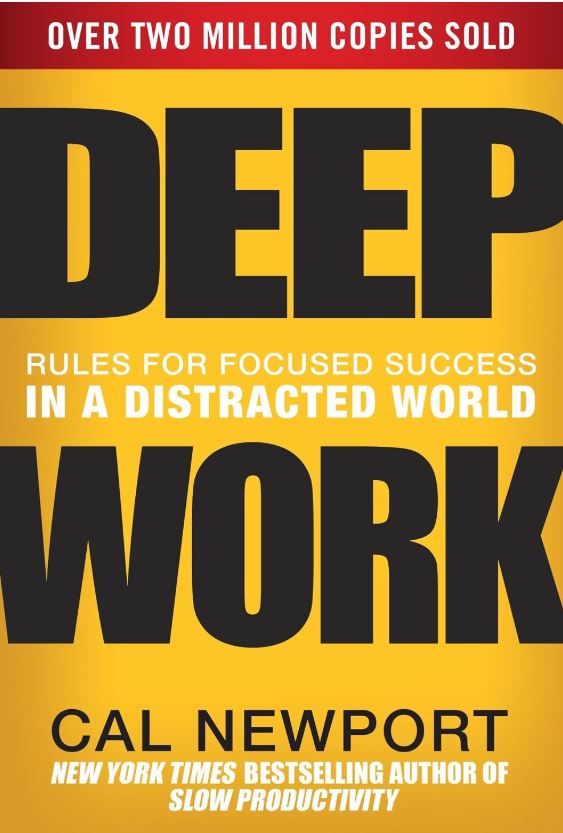
How often do you sit down to concentrate on something important, only to check your phone a few minutes later?
Perhaps a notification appears.
You answer a quick message.
Then you remember an email.
Before long, you’ve switched between several activities without making much progress on the original task.
In Deep Work, Cal Newport explores the value of concentrating on demanding tasks without unnecessary distractions.
The book examines how focused attention can support learning, problem-solving and meaningful professional work.
Why this book is worth reading
Not every task requires deep concentration.
Answering a straightforward message or arranging an appointment may only take a few minutes.
But writing, studying, developing ideas and solving complicated problems often require sustained attention.
When those activities are repeatedly interrupted, it can become difficult to make progress.
Newport encourages readers to develop working habits that protect periods of concentration.
That might involve reducing interruptions, establishing clearer boundaries or scheduling time for demanding work.
The goal isn’t to ignore every responsibility.
It’s to recognise that important work sometimes needs more than a few distracted minutes.
Best for: Readers who struggle with digital distractions, multitasking and maintaining concentration on meaningful projects.
5. The ONE Thing — Gary Keller and Jay Papasan
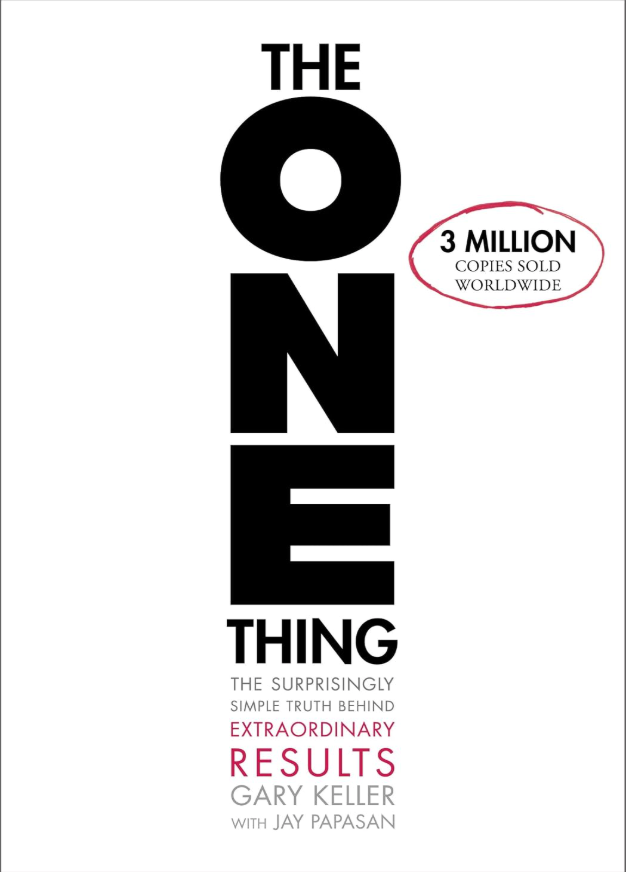
When your to-do list contains twenty different responsibilities, deciding where to begin can become a challenge of its own.
Everything seems important.
Everything needs attention.
And the temptation is to complete whichever task feels easiest.
In The ONE Thing, Gary Keller and Jay Papasan encourage readers to identify the priority that can make the greatest difference.
The book explores focus, goal-setting and the value of concentrating effort rather than continually dividing attention.
Why this book is worth reading
One of the difficulties with busy schedules is that not every task contributes equally to your goals.
You might spend hours organising a project without completing the work that would move it forward.
Or you may devote your attention to minor improvements while avoiding a difficult but important decision.
The ONE Thing encourages a more selective approach.
Instead of asking how many things you can complete today, consider which accomplishment would create the most meaningful progress.
That question can help distinguish genuinely important work from activity that simply fills the day.
Best for: People who struggle to prioritise and frequently spend time on minor tasks while important goals remain unfinished.
Which of These Books About Being Busy but Unproductive Should You Read First?
The best starting point depends on what’s keeping you occupied without making progress.
If your workload feels permanently overwhelming, Slow Productivity offers a different way to approach achievement.
If you’re trying to do too many things, Essentialism helps you reconsider your priorities.
If other people’s demands keep taking over your day, Make Time provides practical ways to protect what matters.
If constant interruptions prevent meaningful concentration, Deep Work explores the importance of focused attention.
And if you struggle to identify your most important task, The ONE Thing encourages a simpler approach to prioritisation.
Each book addresses a different obstacle.
You don’t need to read all five before making changes.
Sometimes identifying the main reason you’re struggling is the most useful first step.

Why Productivity Advice Sometimes Makes Us Even Busier
There’s an interesting problem with productivity advice.
Sometimes the effort to become more productive creates additional work.
You download another planning app.
Create a complicated task-management system.
Organise your schedule into categories.
Research the perfect morning routine.
And spend an entire afternoon preparing to become productive.
Yet the original task remains unfinished.
Planning and organisation have their place.
But they become less useful when maintaining the system takes more time than completing the work.
The goal isn’t to create the most impressive to-do list.
It’s to make meaningful progress on the things the list is supposed to support.
When Being Busy Becomes a Habit
Sometimes we stay busy because it feels reassuring.
Completing small tasks provides immediate evidence that we’re doing something useful.
More difficult projects don’t always provide that same satisfaction.
You might spend several hours working on something important without producing a visible result.
Progress may feel slow.
And because the task requires sustained effort, it’s tempting to return to something easier.
You check your inbox.
Organise a folder.
Make another list.
These activities aren’t necessarily pointless.
But they can become convenient alternatives to the work that genuinely matters.
This is where The Discipline to Follow Through by Julian Merren offers a related perspective.
The book focuses on building lasting habits, maintaining consistency and following through on meaningful goals rather than continually starting over.
While it isn’t specifically about workplace productivity, its emphasis on staying committed to worthwhile actions connects naturally with the challenge of being constantly occupied without progressing.
For someone who keeps starting projects but struggles to complete them, developing more consistent habits may be particularly helpful.
Discover The Discipline to Follow Through by Julian Merren
Five Practical Ways to Turn Busyness Into Progress
Reading can change how you think about productivity, but small adjustments can also improve how you approach everyday tasks.
1. Choose one meaningful priority
Before the day begins, identify the task that would make the greatest difference if completed or meaningfully advanced.
It doesn’t have to be enormous.
It simply needs to matter.
2. Separate urgent tasks from important ones
Some responsibilities genuinely require immediate attention.
Others only feel urgent because they’re visible or demanding.
Consider whether a task needs to be completed now or can reasonably wait.
The American Psychological Association also provides useful research into multitasking and task-switching, explaining why repeatedly shifting between activities can make demanding work less efficient.
3. Protect a period of uninterrupted time
Set aside a realistic amount of time for work that requires concentration.
Reduce avoidable distractions during that period.
Even a modest block of focused attention can create room for progress that a constantly interrupted day may not allow.
4. Measure outcomes, not activity
Instead of asking how busy you were, consider what actually changed.
Did you complete an important section?
Solve a meaningful problem?
Make progress towards a goal?
Those questions may reveal more than the number of tasks you’ve crossed off.
5. Leave room for recovery
Becoming more productive shouldn’t mean filling every available moment with work.
Rest, relationships and ordinary enjoyment deserve room in your schedule.
A useful productivity system should support your life rather than turn every minute into another obligation.
The Difference Between a Full Day and a Meaningful Day
There’s nothing wrong with completing small tasks.
Emails need answering. Appointments need arranging. Household responsibilities need attention.
These activities are part of everyday life.
But when they consume all our available time, it’s worth asking whether important priorities are being neglected.
Sometimes meaningful progress looks less impressive than a packed schedule.
It might involve spending an uninterrupted hour on a difficult project.
Finishing one important task instead of ten minor ones.
Or deciding not to accept another commitment because your existing priorities deserve attention.
That isn’t laziness.
It’s recognising that your time has limits and choosing how to use it deliberately.
Final Thoughts: Being Busy Isn’t the Goal
It’s easy to reach the end of a demanding day and assume that all the activity must have produced something worthwhile.
But effort and progress aren’t always the same thing.
Sometimes we’re genuinely accomplishing important work.
Other times, we’re moving between tasks without giving our most meaningful goals enough attention.
The best books about being busy but unproductive encourage us to reconsider that difference.
They remind us that meaningful achievement often requires focus, clearer priorities and the willingness to do fewer things well.
You don’t need to complete every possible task.
You don’t need to fill every moment.
And you don’t need to measure your value by how busy you appear.
Start by identifying something that genuinely matters.
Give it your attention.
Then build the habits that help you continue making progress.
If following through consistently is one of your challenges, explore The Discipline to Follow Through by Julian Merren for further reading on developing lasting habits and finishing what you start.
Because a productive life isn’t necessarily one filled with activity.
It’s one where your effort is moving you towards something meaningful.