
Some
We often imagine that successful, productive people must feel motivated far more frequently than everyone else. But motivation naturally varies, and even worthwhile goals involve activities that aren’t particularly exciting.
If you’ve been looking for books about discipline without motivation, you’re probably interested in a practical question: how do you keep doing what matters when you don’t feel like doing it?
These five books explore that challenge from different perspectives, offering ideas about procrastination, self-control, focus, patience and consistent action.
Why Motivation Isn’t Always Enough
Motivation can be a wonderful starting point.
It encourages us to make decisions, explore possibilities and imagine what we might achieve.
But motivation doesn’t necessarily remain at the same level throughout a project.
Think about learning a language.
Initially, everything feels interesting. You’re discovering new words, imagining future conversations and enjoying the excitement of beginning.
A few months later, the experience may be very different.
You’re practising familiar material, struggling with difficult concepts and wondering whether you’re improving quickly enough.
The original excitement has faded, but the work still matters.
Stanford’s Fogg Behavior Model also explains how motivation, ability and a prompt work together to influence whether an action happens.
That’s where having a practical routine becomes useful.
Instead of asking whether you feel sufficiently motivated, you begin asking what manageable action you can take.
There is also an important distinction between ordinary low motivation and genuine exhaustion. Sometimes rest, recovery or a change in priorities is more appropriate than pushing through.
Developing discipline shouldn’t mean ignoring your wellbeing.
It’s about learning when to act, when to adjust and when to give yourself room to recover.
1. The Motivation Myth — Jeff Haden
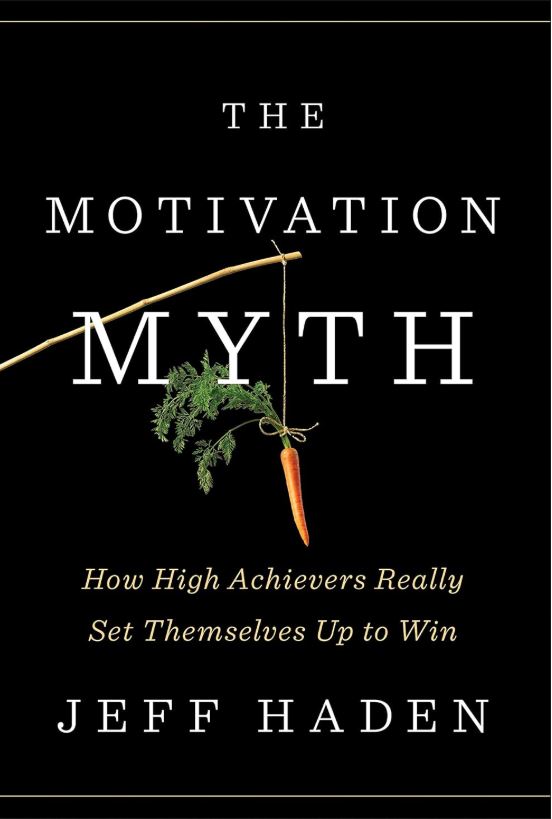
Best for: Understanding Why Action Can Come Before Motivation
The Motivation Myth by Jeff Haden challenges a familiar assumption about achievement.
We often believe that motivation needs to appear before meaningful progress can begin.
We wait to feel inspired, confident or completely ready.
Haden explores a different perspective: motivation can develop through the process of taking action and experiencing progress.
This is a useful idea for anyone who regularly postpones important goals because they don’t feel enthusiastic enough to begin.
Imagine wanting to improve your writing.
You might spend days waiting for a brilliant idea or the perfect opportunity to concentrate.
But setting aside a manageable amount of time to write something, even an imperfect first draft, gives you an opportunity to make progress.
That progress can provide encouragement that wasn’t there before you started.
The book emphasises practical processes rather than treating motivation as a mysterious quality that certain people possess.
What you can learn:
- Stop waiting for ideal conditions before beginning.
- Build confidence through achievable progress.
- Focus on repeatable processes rather than emotional enthusiasm.
If you tend to postpone your goals until you feel ready, The Motivation Myth offers a worthwhile change in perspective.
2. Do It Today — Darius Foroux
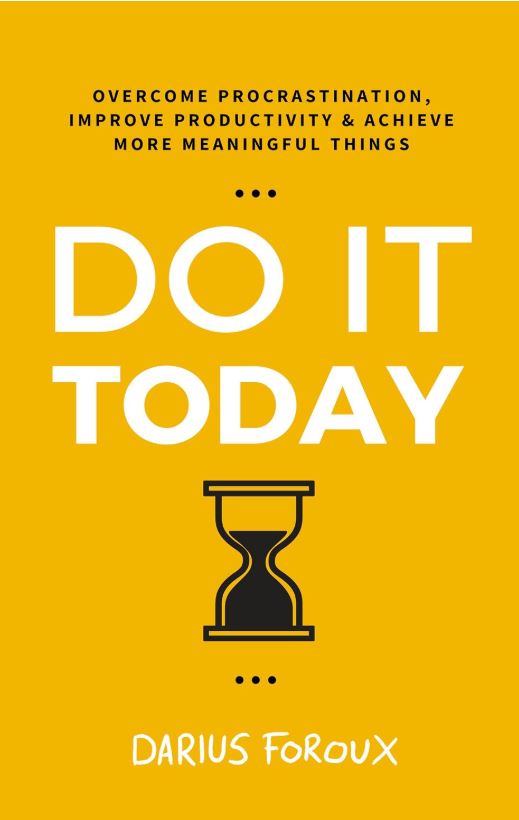
Best for: Overcoming Procrastination and Taking the Next Step
Sometimes you know exactly what needs to be done.
You’ve made a plan, identified your priorities and worked out how to begin.
Yet the task keeps getting postponed.
You tell yourself that tomorrow will be a better day.
Or perhaps next week, when things are less demanding.
Do It Today by Darius Foroux explores procrastination, productivity and the importance of taking action on meaningful goals.
The book brings together practical articles focused on reducing unnecessary delay and making better use of your time.
An especially relevant idea is recognising how easily planning can become a substitute for actually doing something.
For example, imagine you’ve been thinking about starting a personal website.
You spend weeks comparing designs, researching platforms and watching tutorials.
All that preparation may be useful.
But eventually, you need to create the first page.
Taking action doesn’t mean rushing important decisions or ignoring necessary preparation.
It means recognising when further planning is no longer moving you forward.
What you can learn:
- Recognise when procrastination is disguised as preparation.
- Identify practical actions you can complete today.
- Give meaningful work a place in your schedule.
Do It Today is particularly relevant if you regularly postpone things that matter, even when you understand why they’re important.
3. The Willpower Instinct — Kelly McGonigal
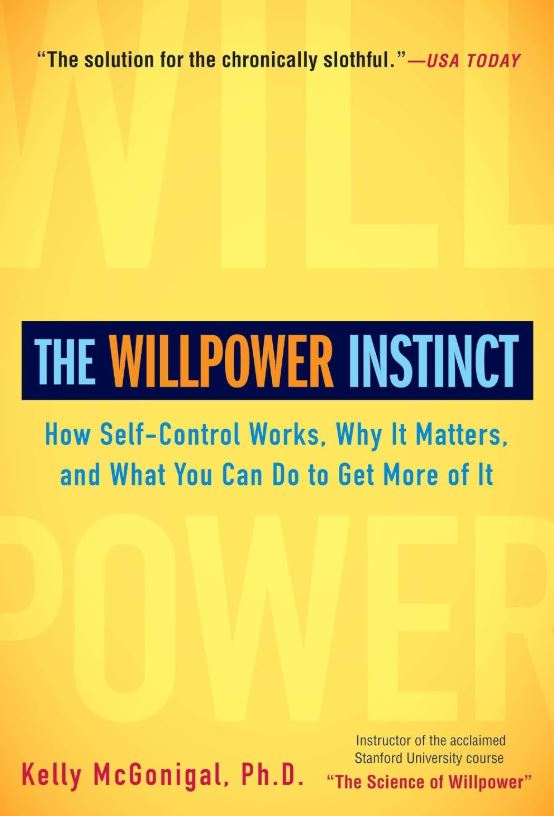
Best for: Understanding Self-Control and Competing Priorities
Discipline is often described as a simple battle between doing what you should and doing what you want.
But human behaviour is considerably more complicated.
You might genuinely want to finish a project while also wanting to relax.
You may value a healthy routine but find it difficult to maintain after an exhausting day.
These competing priorities can make self-control feel frustrating.
In The Willpower Instinct, psychologist Kelly McGonigal explores the science of self-control and how people can better understand the choices they make.
The book examines willpower through psychological research and practical exercises.
One helpful takeaway is that self-control isn’t simply about repeatedly criticising yourself for making the wrong decision.
Understanding the situations that make certain choices difficult can help you approach those situations more thoughtfully.
For example, if you consistently struggle to concentrate after a long working day, perhaps your most demanding personal task needs a different place in your schedule.
That’s a more useful adjustment than continually expecting yourself to perform at your best when you’re exhausted.
What you can learn:
- Better understand the challenges involved in self-control.
- Recognise situations that make your commitments harder to maintain.
- Approach difficult decisions with greater awareness.
If you’re interested in why discipline sometimes feels easy and other times remarkably difficult, The Willpower Instinct provides an interesting perspective.
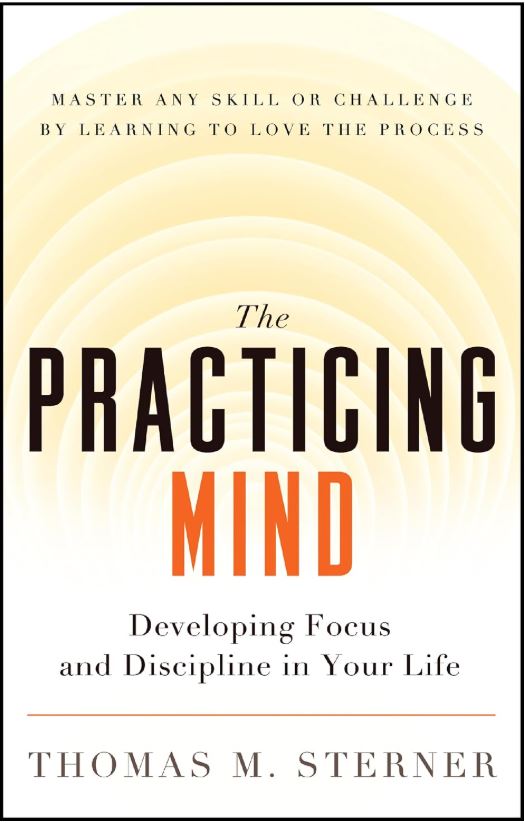
4. The Practicing Mind — Thomas M. Sterner
Best for: Remaining Patient When Progress Feels Slow
One of the less obvious reasons motivation disappears is that improvement doesn’t always happen as quickly as we’d like.
You begin learning a skill, and the early stages feel exciting.
But eventually, progress becomes less noticeable.
You’re practising regularly without experiencing dramatic breakthroughs.
And you start wondering whether the effort is worthwhile.
The Practicing Mind by Thomas M. Sterner encourages readers to rethink their relationship with practice.
Rather than continually evaluating how far they remain from a particular outcome, Sterner explores the value of concentrating on the process itself.
This is particularly relevant for goals involving gradual improvement.
Consider someone learning to play an instrument.
If every practice session is judged by how quickly they’ve improved, the experience may become frustrating.
But when attention shifts towards practising carefully and engaging with the activity, progress can feel less dependent on immediate results.
The book encourages patience, focus and a more thoughtful approach to learning.
What you can learn:
- Develop greater patience with gradual improvement.
- Concentrate on the activity rather than constantly measuring the outcome.
- Recognise that repetitive practice is part of developing a skill.
If you frequently abandon worthwhile activities because progress feels too slow, The Practicing Mind is worth considering.
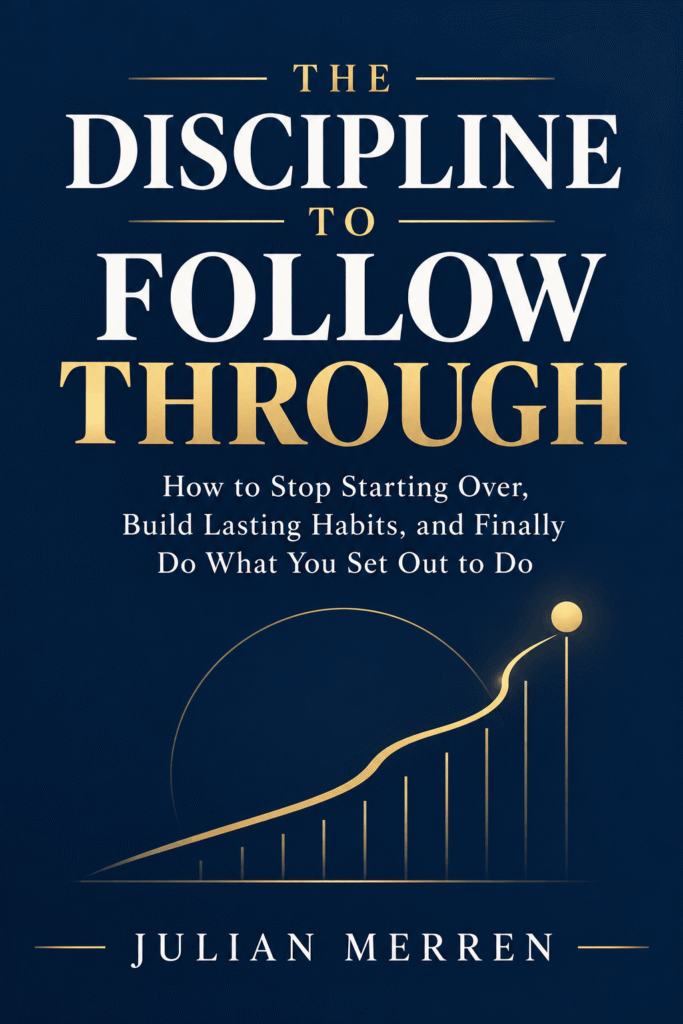
5. The Discipline to Follow Through — Julian Merren
Best for: Developing Consistency When Motivation Fades
Knowing what matters is one thing.
Continuing to act on it through distractions, demanding schedules and ordinary low-energy days is another.
That’s the challenge explored in The Discipline to Follow Through by Julian Merren.
The book focuses on making realistic commitments, building manageable habits, overcoming procrastination and developing practical systems for staying consistent.
Rather than encouraging readers to depend on constant enthusiasm, it explores how to create routines that can continue when motivation changes.
An important part of this approach is recognising that discipline doesn’t need to involve doing everything perfectly.
You may miss a planned session.
A responsibility might interrupt your schedule.
Or you might discover that your original routine was too ambitious.
Those experiences don’t necessarily mean your goal should be abandoned.
Sometimes you need to adjust the commitment, reduce the next action or return after an interruption.
The book also includes a separate 30-Day Follow-Through Workbook, with daily assignments and weekly checkpoints designed to help readers practise the ideas.
What you can learn:
- Create commitments that suit your everyday circumstances.
- Take manageable action without relying on constant motivation.
- Overcome procrastination and protect your attention.
- Return to meaningful goals after setbacks.
If you’re tired of making promising starts but struggling to maintain your commitments, this book offers a practical way to approach lasting consistency.
Discover The Discipline to Follow Through and its 30-Day Companion Workbook
Which Books About Discipline Without Motivation Should You Read First?
The most useful choice depends on what’s preventing you from taking action.
If you keep waiting to feel inspired before beginning, start with The Motivation Myth.
If procrastination regularly delays important work, Do It Today offers practical encouragement.
If you’re interested in understanding self-control and difficult decisions, consider The Willpower Instinct.
If your enthusiasm disappears because improvement feels slow, The Practicing Mind may help you develop greater patience.
And if your biggest challenge is maintaining commitments through the ordinary demands of life, The Discipline to Follow Through focuses on building practical consistency.
You don’t need to read all five immediately.
Choose the book that addresses your biggest obstacle and concentrate on applying one useful idea.
Because reading about discipline is only the beginning.
The real value comes from discovering how those ideas fit your life.

Three Things to Try When You Have No Motivation
Before giving up on an important goal because you’re not feeling motivated, consider these three approaches.
1. Make the next action smaller
Instead of expecting yourself to complete an entire project, identify one manageable step.
If you’re working on a book, that might mean writing a paragraph.
If you’re studying, it might mean reviewing one short section.
A smaller commitment can reduce the difficulty of getting started.
2. Remove unnecessary decisions
Sometimes a task becomes difficult because you haven’t decided when or how you’ll complete it.
Choose a suitable time, prepare the materials you need and make the next action clear.
You may find it easier to begin when you don’t have to organise everything from scratch.
3. Check whether you need action or recovery
Not every low-motivation day requires the same response.
If you’re simply avoiding an uncomfortable but manageable task, beginning with a smaller action might help.
If you’re genuinely exhausted, unwell or overwhelmed, rest and adjusting your expectations may be more appropriate.
Discipline should support a sustainable life, not become another source of unnecessary pressure.
Final Thoughts
If you’ve been searching for books about discipline without motivation, remember that taking meaningful action doesn’t always require feeling enthusiastic.
Some days, progress will feel exciting.
Other days, it may involve completing an ordinary task you’ve committed to doing.
And occasionally, the most sensible decision will be to rest or reconsider your plans.
The five books above offer different ways to understand those experiences and develop a more practical approach to following through.
You don’t have to become someone who feels motivated every morning.
You can begin by choosing one meaningful goal, creating a realistic next step and learning how to continue when the excitement fades.
Because discipline isn’t necessarily about forcing yourself to do more.
Sometimes it’s about making it easier to keep doing what matters.