
Financial freedom can sound like an enormous destination.
No mortgage. No debt. A large investment portfolio. Enough passive income to never worry about working again.
For some people, perhaps that’s exactly what it means.
But financial freedom can also begin much earlier.
It might mean having enough savings to handle an unexpected bill without panic. Being able to reduce your working hours. Leaving a job that no longer suits you. Taking a month away. Helping someone you care about. Or simply knowing that one financial setback won’t immediately turn your life upside down.
That’s why the most interesting books about financial freedom and building a better life aren’t necessarily the ones promising the fastest route to becoming wealthy.
They’re often the books that make us think more carefully about a different question:
What do I actually want money to make possible?
Here are five books that approach that question from very different directions.
1. The Good Life — Robert Waldinger and Marc Schulz
Because a richer life isn’t necessarily a more expensive one
Starting a list about financial freedom with a book about relationships might seem unusual.
That’s precisely why The Good Life belongs here.
Robert Waldinger and Marc Schulz explore lessons from the long-running Harvard Study of Adult Development, focusing particularly on the importance of relationships and connection in a fulfilling life.
And that gives us a useful starting point for thinking about money.
If we never decide what makes life valuable, it’s very easy to make financial progress the goal itself.
Earn more.
Save more.
Accumulate more.
Then move the target and begin again.
Financial freedom becomes much more meaningful when it serves something beyond the number.
Maybe greater financial security gives you more time with your partner.
Perhaps it allows you to visit family more often.
Maybe it simply reduces the amount of energy spent worrying about money.
The point isn’t that money doesn’t matter.
It’s that money works best when it supports the things that do.
Read this if: you’ve been concentrating so heavily on building wealth that you want to reconsider what you’re building it for.
2. Your Money or Your Life — Vicki Robin and Joe Dominguez
Because every purchase involves more than money
Your Money or Your Life asks readers to think about the relationship between money and the time spent earning it.
That’s a powerful idea because we usually look at prices in dollars or pounds.
But money also represents part of our lives.
Hours worked.
Commutes made.
Stress carried home.
Time spent away from people or activities we value.
That doesn’t mean spending is bad. Nor does it mean the cheapest option is automatically the best one.
Instead, the book encourages a more deliberate relationship with money and consumption.
Financial freedom isn’t necessarily about denying yourself everything today so that some future version of you can finally start living.
It’s about becoming more conscious of the trade-offs you’re making.
When your spending begins to reflect what actually matters to you, money can become less about consumption and more about choice.
Read this if: you want to examine whether the way you earn and spend money matches the life you actually want.
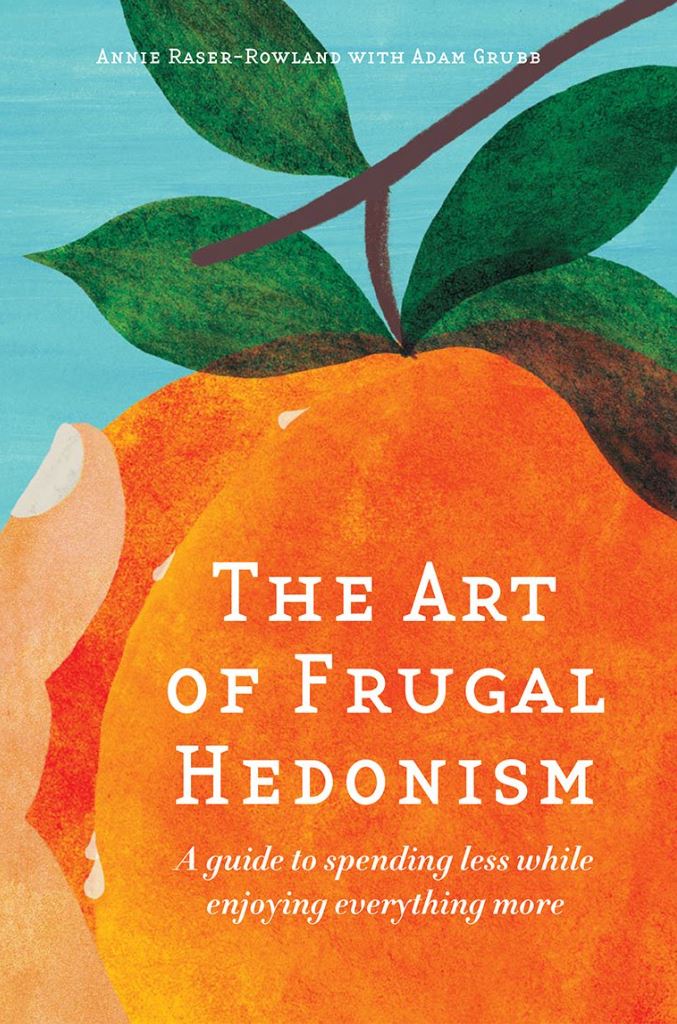
3. The Art of Frugal Hedonism — Annie Raser-Rowland and Adam Grubb
Because enjoying life and spending more aren’t the same thing
There’s an assumption hiding inside many conversations about success:
A better life costs more.
Bigger house.
Newer car.
More expensive holidays.
More possessions.
More upgrades.
The Art of Frugal Hedonism offers a refreshingly different perspective by exploring ways to enjoy life richly without automatically connecting enjoyment to higher consumption.
That matters enormously when thinking about financial freedom.
If the lifestyle required to make you happy becomes more expensive every time your income rises, freedom has a habit of moving further away.
But if you discover that many of the things you genuinely enjoy don’t require endless spending, something interesting happens.
The gap between what you earn and what you need can become more valuable than another upgrade.
And that gap creates options.
Read this if: you like the idea of building a good life without feeling that every improvement has to come with a higher price tag.
4. The Pathless Path — Paul Millerd
Because freedom can include changing how you work
For many people, financial freedom is closely connected to work.
The dream isn’t necessarily never working again.
It may simply be having enough financial breathing room to make different choices about work.
Paul Millerd’s The Pathless Path explores alternatives to the conventional career script and asks what can happen when we reconsider the assumptions surrounding work, success and the path we’re expected to follow.
That makes it particularly relevant to financial freedom.
Money can create the space to experiment.
To take a sabbatical.
To work fewer hours.
To try something uncertain.
To leave a role that pays well but takes too much from the rest of your life.
None of those choices requires becoming a millionaire first.
Sometimes the first meaningful level of financial freedom is simply having enough resilience to say:
I have options.
Read this if: your idea of a better life involves reconsidering your relationship with work rather than simply earning more from it.
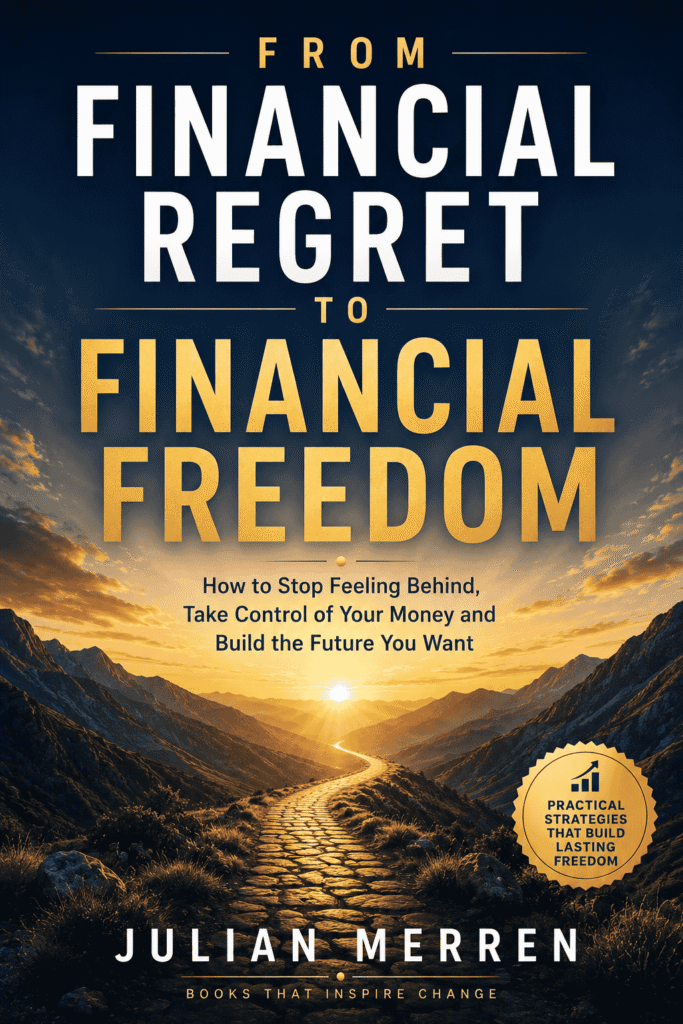
5. From Financial Regret to Financial Freedom — Julian Merren
Because the life you want still has to begin from where you are
It’s difficult to think about financial freedom when you’re busy regretting the financial decisions that came before it.
Maybe you started saving late.
Perhaps you spent money you wish you’d kept.
Debt slowed you down.
Or you simply reached a point in life where you looked around and thought:
I should be further ahead than this.
From Financial Regret to Financial Freedom by Julian Merren was written for that starting point.
Rather than focusing on an ideal financial life that began twenty years ago, it focuses on what can be changed now: understanding your position, creating more room within the money you’re already earning, strengthening your safety net, addressing debt and gradually building wealth.
That makes it a natural fit among books about financial freedom and building a better life.
Because freedom doesn’t begin when every financial problem has disappeared.
It begins when your past stops deciding what you’re willing to do next.
Read this if: financial regret or feeling behind has made the idea of financial freedom seem out of reach.
You can explore From Financial Regret to Financial Freedom and see whether it’s the right next read for you.
What Does Financial Freedom Actually Mean to You?
Before chasing financial freedom, it helps to define it.
Not somebody else’s version.
Yours.
Try completing this sentence:
I would feel more financially free if I could…
Then see what appears.
Maybe it’s:
- work four days instead of five
- clear your credit cards
- build six months of financial breathing room
- travel once a year without borrowing
- retire with greater confidence
- change careers
- help your children
- spend more time doing work you care about
- stop feeling anxious whenever an unexpected expense arrives
Those goals are very different.
And they’ll require different amounts of money.
That’s why defining your goals matters. Australia’s Moneysmart recommends identifying specific financial goals, how much each will require and the time available to reach them before deciding how to invest towards them.
The clearer the life goal becomes, the easier it is to understand what role money needs to play.
Financial Freedom Isn’t One Finish Line
We often imagine freedom as something binary.
Either you’re financially free or you’re not.
Real life is more gradual.
An emergency fund can create one layer of freedom.
Removing high-interest debt can create another.
Building investments can create another.
Reducing the amount you need to maintain a lifestyle can create another still.
Eventually, those layers can give you something more valuable than a label.
Choices.
That’s the common thread running through these books about financial freedom and building a better life.
They’re not all telling you how to accumulate the maximum amount of money.
They’re asking you to think about the relationship between money and life.
Because wealth without purpose can simply become another number to increase.
Build the Life First — Then Let Money Support It
Perhaps the question isn’t:
How much money would make me financially free?
Perhaps it’s:
What would I do differently if money gave me more freedom?
Would you work differently?
Live somewhere else?
Spend more time with particular people?
Travel?
Create something?
Slow down?
Feel safer?
Once you know the answer, financial goals stop being quite so abstract.
You’re no longer saving simply because saving is supposedly responsible.
You’re creating options.
And if you’re starting later than you’d hoped, those options don’t have to appear all at once.
One debt reduced.
One savings buffer created.
One unnecessary expense removed.
One investment started.
One better decision repeated.
Financial freedom can grow gradually.
The best books about financial freedom and building a better life remind us that the goal isn’t simply to become better at money.
It’s to become better at using money to support a life worth living.
And wherever you’re starting from, that’s a direction you can begin moving towards today.