
There are certain promises we make that seem easy to forget.
Not the promises we make to our friends, family or colleagues. We often go out of our way to honour those.
I’m talking about the promises we make to ourselves.
The promise to start exercising regularly.
To finally finish that personal project.
To spend less time scrolling, save more money, read more books or make progress towards something we’ve wanted for years.
At the time, we genuinely mean it.
We feel determined, excited and confident that things will be different.
But a few days later, life becomes demanding, motivation fades or another responsibility takes priority.
The commitment quietly disappears.
And eventually, we begin questioning whether we can trust ourselves to follow through.
If you’ve been searching for books about keeping promises to yourself, you’re probably looking for more than advice about productivity.
You want to feel confident that when you decide to do something important, you’ll give yourself a genuine opportunity to accomplish it.
These five books approach that challenge from different perspectives, exploring habits, confidence, self-acceptance and practical follow-through.
Why Do We Keep Breaking Promises to Ourselves?
One reason personal commitments become difficult to maintain is that we often make them when we’re feeling particularly motivated.
On a quiet Sunday evening, promising to exercise every morning or spend an hour working on a project might seem perfectly reasonable.
But our plans don’t always account for tiredness, interruptions or ordinary responsibilities.
Another problem is expecting too much too quickly.
We decide to change several habits simultaneously, creating commitments that are difficult to maintain even during a relatively quiet week.
Then, when we miss a day, we interpret the setback as evidence that we lack discipline.
Over time, those experiences can make new commitments feel less convincing.
The answer isn’t necessarily to make bigger promises or become harder on yourself.
Sometimes it begins with making smaller, more realistic commitments and developing a better way to respond when things don’t go according to plan.
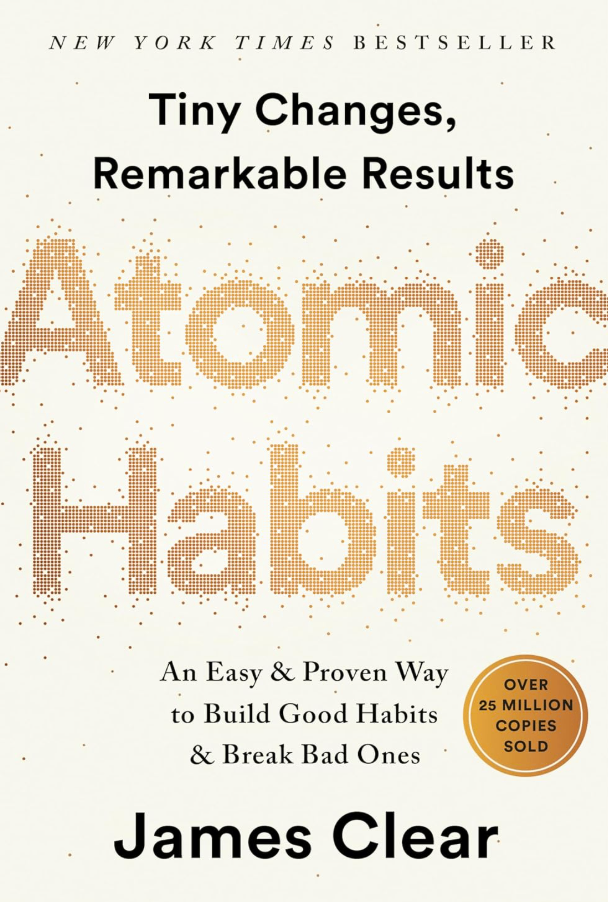
1. Atomic Habits — James Clear
Best for: Building Trust Through Small, Repeatable Actions
Atomic Habits by James Clear is a practical starting point for anyone who struggles to maintain personal commitments.
The book explores how small actions, repeated consistently, can contribute to meaningful changes in behaviour.
One particularly relevant idea is the relationship between habits and personal identity.
Rather than focusing entirely on what you want to achieve, Clear encourages readers to consider the kind of person they want to become and the behaviours that support that identity.
Imagine you want to become someone who reads regularly.
You could promise yourself an hour of reading every evening.
But if that commitment is difficult to maintain, you may quickly become discouraged.
A smaller commitment, such as reading a few pages, gives you a manageable opportunity to practise the behaviour.
The aim isn’t to impress yourself with an ambitious target.
It’s to develop a routine you can realistically repeat.
James Clear explains how small actions can help shape your identity, offering another perspective on why realistic, repeatable commitments matter.
Clear also explores how our environment influences habits and why making positive behaviours convenient can help us follow through. PenguinRandomHouse.com: Books
What you can learn:
- Start with realistic commitments rather than dramatic changes.
- Make useful actions easier to repeat.
- Develop habits that support the person you want to become.
Atomic Habits is especially useful if you’re tired of creating ambitious plans that rarely become lasting routines.
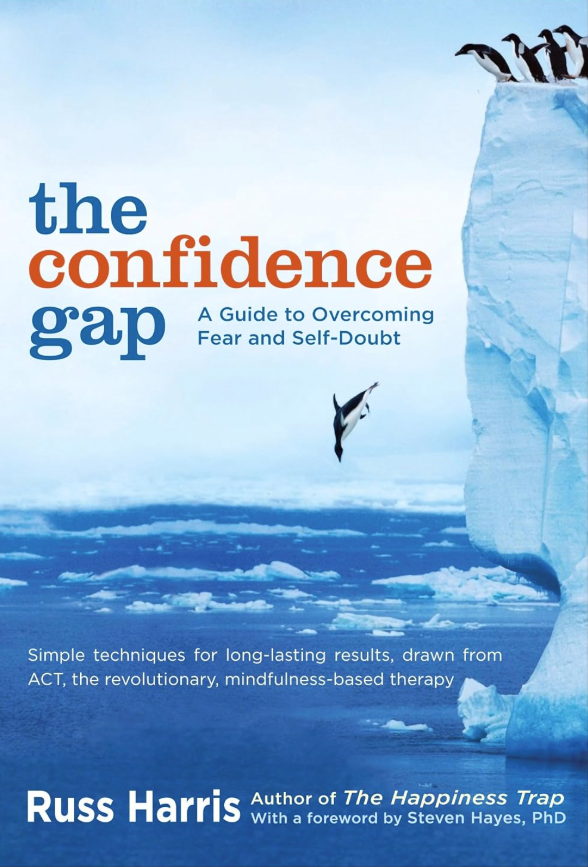
2. The Confidence Gap — Russ Harris
Best for: Taking Action Even When You Doubt Yourself
Sometimes the reason we break personal commitments isn’t that we don’t care.
It’s that we begin doubting our ability to succeed.
Perhaps you’ve promised yourself that you’ll apply for a better job, start a business or learn something challenging.
But when the opportunity arrives, uncertainty takes over.
You question whether you’re capable, worry about making mistakes or decide you should wait until you feel more confident.
In The Confidence Gap, Russ Harris explores a different relationship between confidence and action.
Drawing on Acceptance and Commitment Therapy, the book encourages readers to stop treating uncomfortable feelings as automatic reasons to avoid meaningful activities.
Rather than waiting for every doubt to disappear, you can learn to take reasonable steps towards what matters while acknowledging that uncertainty may still be present.
For example, someone who wants to improve their communication skills might avoid speaking up because they fear making mistakes.
Taking a small, manageable opportunity to contribute can be more useful than waiting until they feel completely confident.
The book also discusses identifying personal values and using them to guide behaviour. PenguinRandomHouse.com: Books
What you can learn:
- Recognise when self-doubt is influencing your decisions.
- Take manageable action without demanding complete confidence.
- Connect commitments to personal values that genuinely matter.
The Confidence Gap is worth considering if fear, hesitation or self-doubt regularly prevents you from keeping important promises.
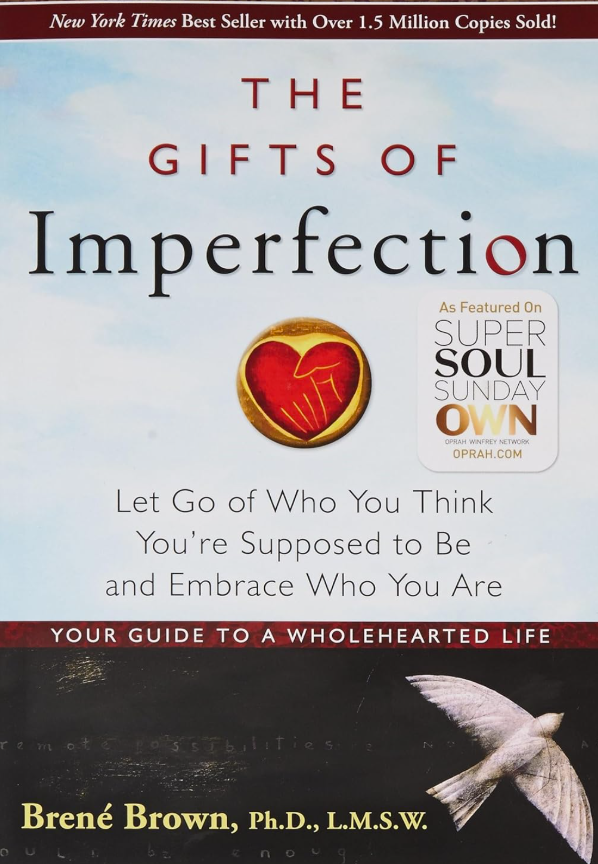
3. The Gifts of Imperfection — Brené Brown
Best for: Letting Go of Unrealistic Expectations
Sometimes the promises we make to ourselves come with an unspoken condition.
We must follow the plan perfectly.
If we decide to exercise regularly, we expect never to miss a session.
If we begin a creative project, we expect every result to meet our standards.
And if we make a mistake, we become frustrated with ourselves.
That pressure can make even worthwhile goals feel difficult to maintain.
In The Gifts of Imperfection, Brené Brown explores wholehearted living, authenticity and the expectations that can prevent people from accepting themselves.
Although the book isn’t specifically a manual about habit-building, its themes are relevant to anyone who connects personal commitments with perfectionism or harsh self-judgement.
Imagine you’ve decided to write every morning.
After five successful days, you miss a session.
You could interpret that interruption as proof you’ve failed.
Or you could recognise that the previous five days still mattered and return to writing at the next reasonable opportunity.
Learning to respond constructively to imperfections may make personal commitments easier to approach. PenguinRandomHouse.com: Books
What you can learn:
- Recognise unrealistic expectations.
- Approach mistakes without unnecessary self-criticism.
- Make room for imperfect but meaningful progress.
The Gifts of Imperfection is particularly relevant if your personal promises often turn into another reason to judge yourself harshly.
4. The Now Habit — Neil Fiore
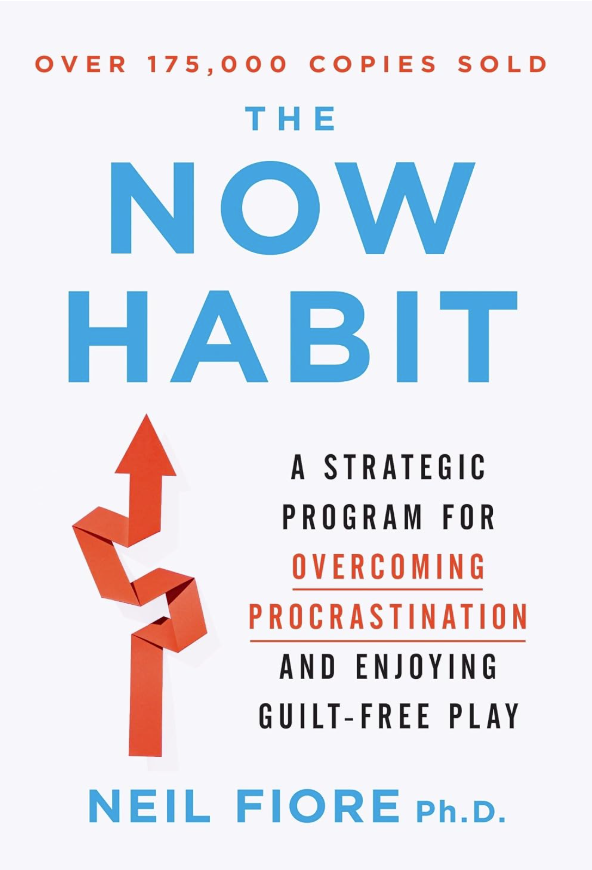
Best for: Keeping Commitments You’ve Been Avoiding
Some promises are difficult to maintain because the activities involved make us uncomfortable.
You genuinely want to finish an important project, but the work seems intimidating.
You intend to begin studying, yet you keep finding other tasks that feel more appealing.
Or perhaps you’ve promised yourself that you’ll complete something creative, but you’re worried the result won’t be good enough.
In The Now Habit, Neil Fiore explores how procrastination can become connected to pressure, anxiety and perfectionism.
The book offers practical approaches to beginning tasks and reconsidering the expectations surrounding productivity.
An important distinction is recognising that avoiding a task doesn’t necessarily mean the goal has stopped mattering.
Sometimes you’re avoiding the discomfort associated with beginning.
For example, someone who wants to complete an online course might keep postponing lessons because the material has become difficult.
Rather than thinking about finishing the entire course, they might choose a short, clearly defined study session.
That smaller commitment can make the next step less intimidating.
What you can learn:
- Recognise the connection between avoidance and unrealistic expectations.
- Make demanding activities easier to begin.
- Develop a more practical relationship with productive work.
The Now Habit is worth reading if procrastination regularly prevents you from honouring commitments you’ve genuinely wanted to keep.
5. The Discipline to Follow Through — Julian Merren
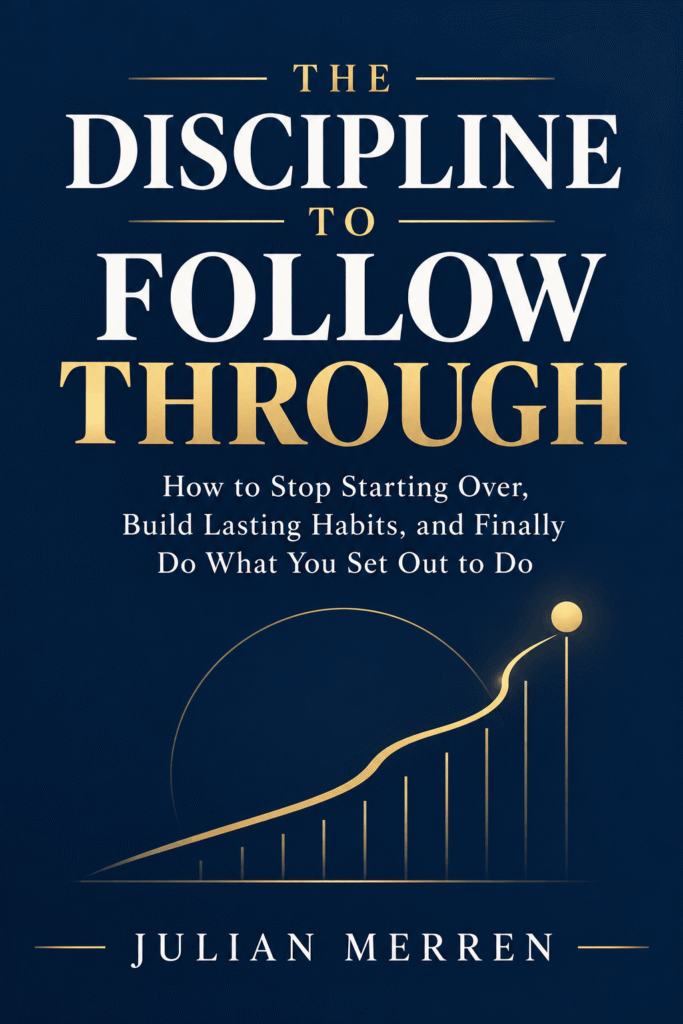
Best for: Rebuilding Self-Trust Through Realistic Commitments
There comes a point when repeatedly abandoning personal goals can affect how seriously you take your own promises.
You want to make a change.
You believe the goal matters.
But you’ve made similar commitments before, and you remember how quickly they disappeared.
That’s one of the central challenges explored in The Discipline to Follow Through by Julian Merren.
The book focuses on rebuilding trust in yourself, making realistic commitments, overcoming procrastination and developing manageable habits.
Rather than encouraging readers to depend on constant motivation, it explores how to create practical systems that support consistent action.
An important theme is learning how to respond when you fall off track.
Perhaps you miss a scheduled session.
Maybe a responsibility interrupts your routine or a goal takes longer than expected.
Those situations don’t necessarily mean your commitment has failed.
Sometimes you need to adjust your expectations, identify the next manageable action and continue.
The book also includes a separate 30-Day Follow-Through Workbook, featuring daily assignments and weekly checkpoints to help readers put these principles into practice.
What you can learn:
- Make commitments you’re realistically able to keep.
- Rebuild confidence through manageable, repeated actions.
- Overcome procrastination and protect your attention.
- Recover from setbacks without constantly starting over.
If you’re tired of making promises to yourself that never seem to last, this book offers a practical approach to developing more reliable follow-through.
Discover The Discipline to Follow Through and its 30-Day Companion Workbook
Which Books About Keeping Promises to Yourself Should You Read First?
The most useful choice depends on what’s preventing you from following through.
If your habits are too ambitious or difficult to maintain, begin with Atomic Habits.
If self-doubt regularly stops you from taking action, consider The Confidence Gap.
If perfectionism makes every setback feel like failure, The Gifts of Imperfection offers a thoughtful perspective.
If you’re avoiding important tasks, The Now Habit explores ways to approach procrastination more constructively.
And if you’re trying to rebuild confidence in your ability to keep commitments over time, The Discipline to Follow Through focuses directly on that challenge.
There’s no need to read all five immediately.
Choose the one that best addresses your current difficulty, and look for one practical idea you can begin applying.

Three Ways to Start Keeping More Promises to Yourself
Before making another ambitious commitment, consider three small changes.
1. Make the promise realistic
Instead of promising yourself an hour of daily exercise, identify an activity and frequency that fit your current circumstances.
A manageable commitment gives you a better opportunity to follow through.
2. Be specific about what you’ll do
A promise such as “I’ll become more organised” is difficult to act on.
A clearer commitment might involve spending ten minutes preparing your priorities at the end of each working day.
You know what needs doing and when you’ll do it.
3. Decide how you’ll respond to interruptions
Eventually, something will interfere with your plans.
Instead of treating that interruption as a complete failure, decide how you’ll return.
Sometimes that means resuming at the next scheduled opportunity.
Other times, it means adjusting a commitment that has become unrealistic.
The aim is to become more reliable, not perfectly rigid.
Final Thoughts
If you’ve been searching for books about keeping promises to yourself, remember that self-trust doesn’t necessarily come from making dramatic commitments.
It can develop when you choose realistic actions and give yourself opportunities to follow through.
You don’t need to change every part of your life overnight.
You don’t need to maintain a perfect record.
And one missed session doesn’t automatically erase the effort you’ve already made.
The five books above offer different ways to build better habits, understand self-doubt, respond to perfectionism and develop practical consistency.
Choose one promise that genuinely matters to you.
Make it small enough to fit your life.
Then give yourself the opportunity to keep it.
Because sometimes rebuilding trust in yourself begins with something surprisingly simple: doing what you reasonably said you would do.