
A colleague suggests changing part of your presentation. You nod, ask a question and get on with the meeting. Hours later, you’re still thinking about the comment.
You can see that the suggestion might improve the work. Yet another thought keeps appearing: perhaps they’ve lost confidence in you.
If feedback tends to stay with you long after the conversation ends, these books about receiving criticism offer several ways to approach it. Some focus directly on feedback. Others help with the emotions, assumptions and communication difficulties that can make it harder to hear.
Each recommendation suits a different part of the experience, so you can choose the one that matches where you get stuck.
What would it mean to take criticism less personally?
You might still feel disappointed when someone points out a mistake. You might need time to think before you can discuss it properly.
A useful goal is to understand what the person is referring to, decide whether the point is fair and choose a response. That leaves room for your feelings while keeping the conversation specific.
Consider the difference between hearing that a report needs a clearer summary and concluding that you’re bad at your job. The first gives you something you can investigate. The second can leave you discouraged without showing you what to change.
It also matters how the criticism is delivered. Useful information, inaccurate assumptions and hurtful remarks can arrive in the same conversation. Learning to respond gives you more options for handling each part.
Five books about receiving criticism and responding thoughtfully
1. Thanks for the Feedback by Douglas Stone and Sheila Heen
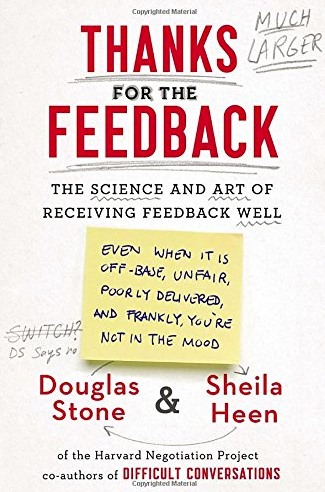
Best for understanding why receiving feedback can be so challenging.
This is the most direct fit for the topic. Douglas Stone and Sheila Heen examine receiving feedback across everyday comments, formal evaluations and unsolicited advice, offering a framework for making better use of what people tell us.
It’s a useful starting point if your reaction sometimes stops you from understanding the message. You might disagree immediately, focus on the speaker’s tone or hear a much broader judgement than they intended.
The book puts attention on the receiving side of the exchange. That can help you consider what information you need before deciding what to accept or challenge.
Try thinking of a recent comment that bothered you. Can you describe the specific change the person wanted? If you can’t, a request for an example may be more useful than another hour of replaying the wording.
2. Emotional Agility by Susan David
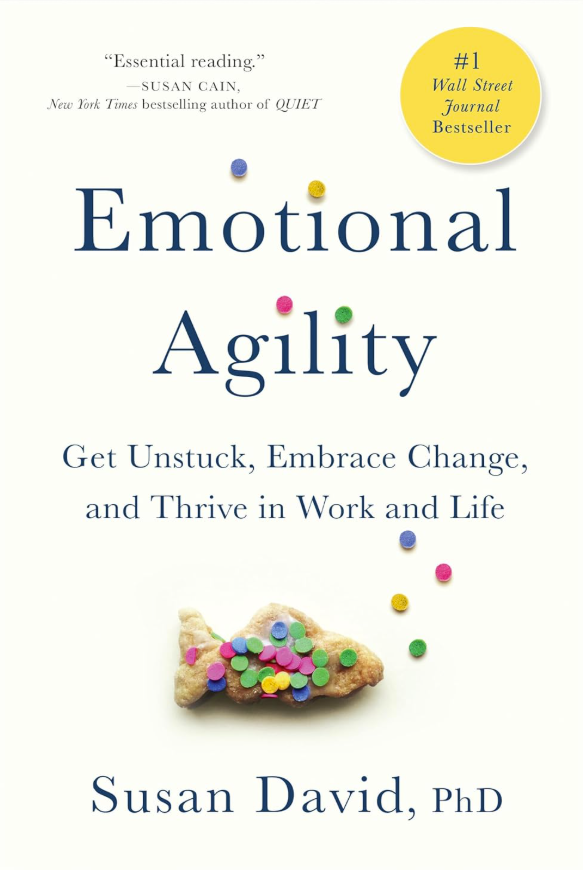
Best for the feelings that make a measured response difficult.
Susan David explores how people relate to thoughts, feelings and self-talk, with an emphasis on acknowledging difficult experiences and choosing actions that fit their values.
This is a broader book about emotions. Its relevance here is the space between feeling criticised and deciding what to do.
Perhaps you want to be someone who listens carefully, yet embarrassment sends you into a long explanation. Or you want to stand up for yourself, but disappointment makes you agree before you’ve thought.
The book may appeal if you recognise that tension and want to approach your inner experience with greater flexibility.
A simple reflection is to name the feeling as specifically as you can. Feeling embarrassed about a mistake gives you a different starting point from assuming the whole conversation has gone badly.
3. The Assertiveness Workbook by Randy J. Paterson
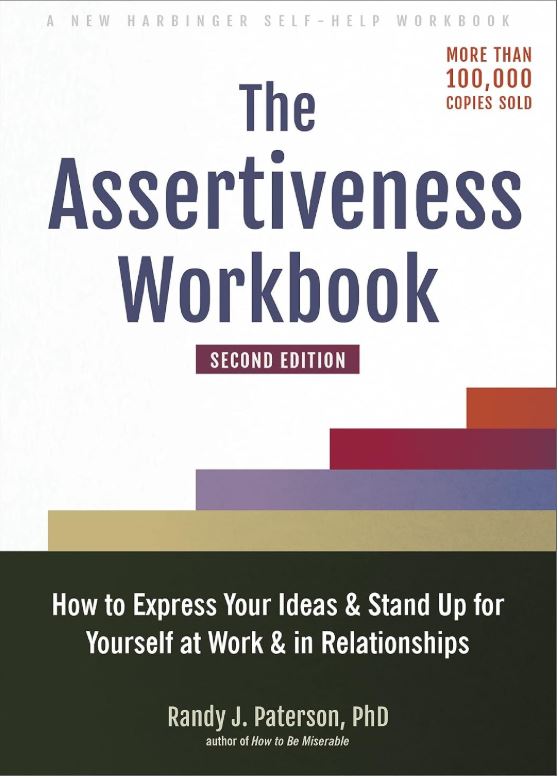
Best for responding when criticism is unfair or delivered badly.
Randy J. Paterson’s workbook develops communication and assertiveness skills through practical exercises. Its scope includes expressing yourself clearly, maintaining boundaries and responding calmly to unfair criticism.
It may suit readers who swing between saying nothing and defending themselves forcefully.
If someone makes a sweeping claim about your behaviour, you might want to ask which incident they mean. If there’s a valid point, you can acknowledge that point while also addressing how the conversation is being conducted.
Practising those distinctions can make your response more precise. Instead of trying to answer everything at once, you can identify what you agree with, what needs clarification and what you want to challenge.
This is a good option if you prefer working through exercises and rehearsing communication skills between real conversations.
4. Difficult Conversations by Douglas Stone, Bruce Patton and Sheila Heen
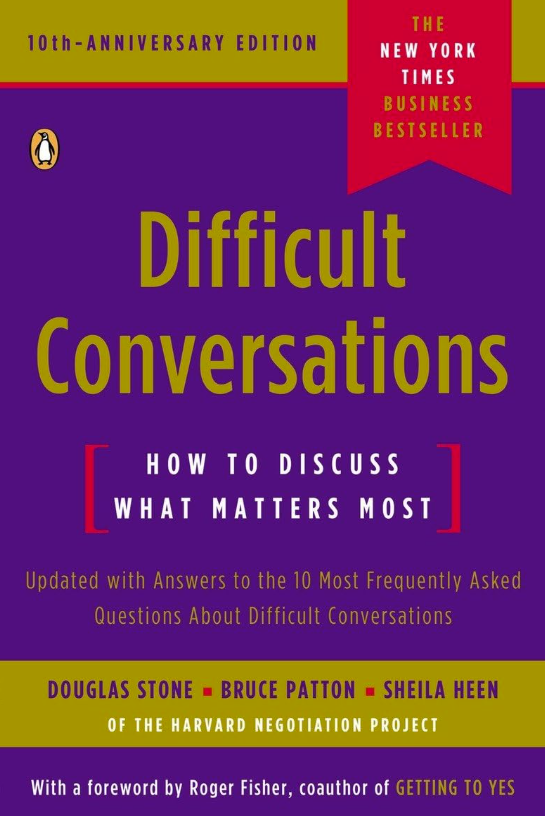
Best for returning to a conversation that has become tense.
Difficult Conversations examines the layers of challenging exchanges, including different accounts of what happened, the feelings involved and what the conversation means for each person’s sense of themselves.
Although it shares authors with Thanks for the Feedback, its wider focus makes it relevant for the discussion that follows criticism.
Perhaps a manager thinks they’ve offered straightforward guidance while you’ve heard disappointment. Perhaps a partner is talking about an interrupted conversation while you’re defending your intentions.
The book offers a way to look more carefully at those different perspectives and keep the discussion constructive.
Before returning to a difficult exchange, write down what you know happened and what you’ve assumed it meant. That can help you identify a question worth asking when you speak again.
5. Articulate by Julian Merren
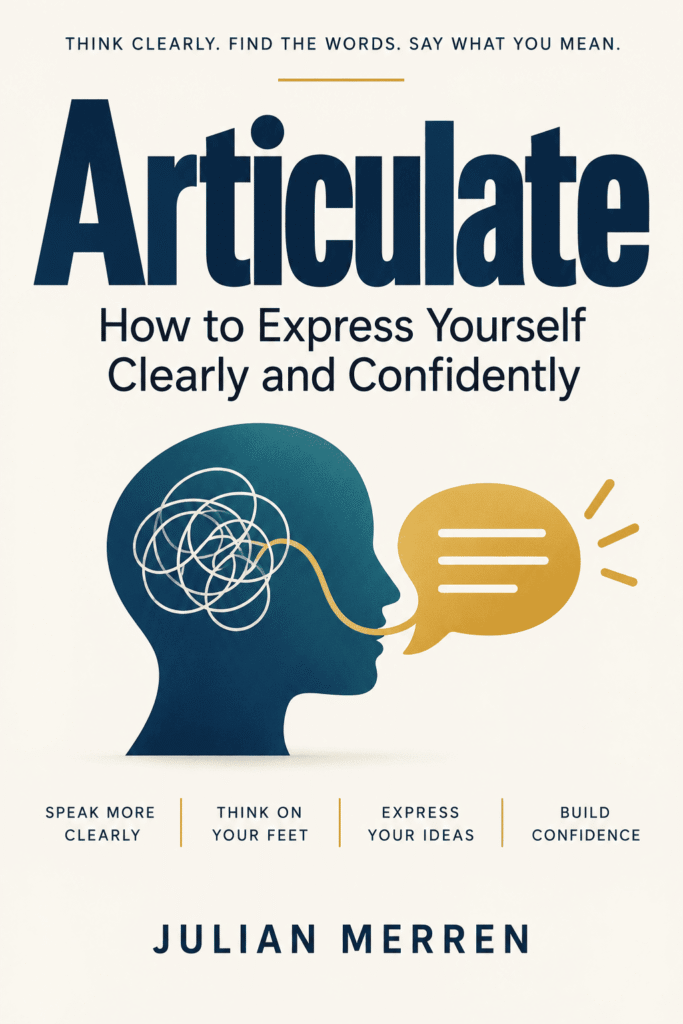
Best for organising your response when you’re put on the spot.
You may understand the feedback and still struggle to answer. Your thoughts arrive together, you explain too much and the point you wanted to make disappears.
Articulate by Julian Merren focuses on practical communication skills, including organising your thoughts, getting to the point, listening and responding more confidently in difficult or high-pressure discussions.
Its connection to this topic is the moment you need to turn your response into clear speech.
If criticism leaves you rambling, it may help to decide what your next sentence needs to do. You might want to ask for an example, acknowledge a mistake or explain one piece of relevant context.
Giving that sentence a purpose can make it easier to shape.
If clear expression is the part you want to practise, explore Articulate by Julian Merren and see whether its approach fits your needs.
A practical way to approach your next feedback conversation
You don’t have to work on every part of your response at once. Choose one of these small practices to try:
- Ask for a specific example when the comment is vague.
- Check what change the other person would like to see.
- Take time to consider the feedback before committing to a response.
- Acknowledge a mistake clearly when you understand and agree with the point.
- Raise concerns about disrespectful language or inaccurate claims.
The Centre for Clinical Interventions’ guide to dealing assertively with criticism offers free exercises on recognising different types of criticism and responding to them.
Afterwards, write down one useful point and one next action. If the feedback remains unclear, that action may be a follow-up question.

Choose the book that fits the hardest part
The most useful books about receiving criticism address the difficulty you recognise in yourself. You might need help understanding feedback, sitting with uncomfortable feelings, setting a boundary or finding words for your response.
Start with that part. Read a section, choose one idea and practise it in an ordinary conversation where the stakes feel manageable.
If your thoughts become tangled when you’re asked to respond, Articulate by Julian Merren offers a practical next step for developing clearer expression. You can build the skill one considered sentence at a time.