
Sometimes resentment doesn’t begin with a serious argument.
It begins with something small.
A forgotten promise. An unkind remark. A moment when you needed support and your partner didn’t notice.
At the time, you might tell yourself it isn’t worth mentioning.
You move on, or at least you try to.
But then something similar happens again. And suddenly, the original disappointment doesn’t feel quite so small.
Over time, these experiences can accumulate until even ordinary disagreements carry the weight of things that were never properly discussed.
If you’re searching for books about resentment in marriage, you may already recognise this pattern. You care about your relationship, but something has changed in how you respond to your partner.
Perhaps you’re becoming irritated by things that never used to bother you. Maybe you find yourself remembering old disappointments whenever a new disagreement arises.
The following five books explore how resentment develops, why unresolved hurt can affect emotional connection, and what couples can do to begin addressing those feelings.
How Does Resentment Build in a Relationship?
Resentment often develops when disappointment remains unresolved.
One partner feels hurt or overlooked but doesn’t communicate what happened.
Perhaps they want to avoid an argument. Maybe they’ve raised similar concerns before and felt dismissed.
Or they convince themselves that the problem isn’t important enough to discuss.
Unfortunately, choosing not to discuss something doesn’t always make the feeling disappear.
Instead, it may quietly influence how someone interprets future interactions.
A forgotten commitment becomes another example of unreliability.
An insensitive comment becomes further evidence that their feelings don’t matter.
Before long, both partners may be arguing about today’s problem while carrying the emotional weight of several older ones.
Some common signs of accumulating resentment include:
- Feeling irritated by small things your partner does.
- Mentally keeping track of past disappointments.
- Becoming less willing to offer affection or understanding.
- Assuming negative intentions before hearing an explanation.
- Feeling that your concerns are repeatedly dismissed.
- Bringing up old arguments during new disagreements.
Recognising these patterns doesn’t mean one person is automatically responsible for the relationship’s difficulties.
But it may reveal that something important needs attention.
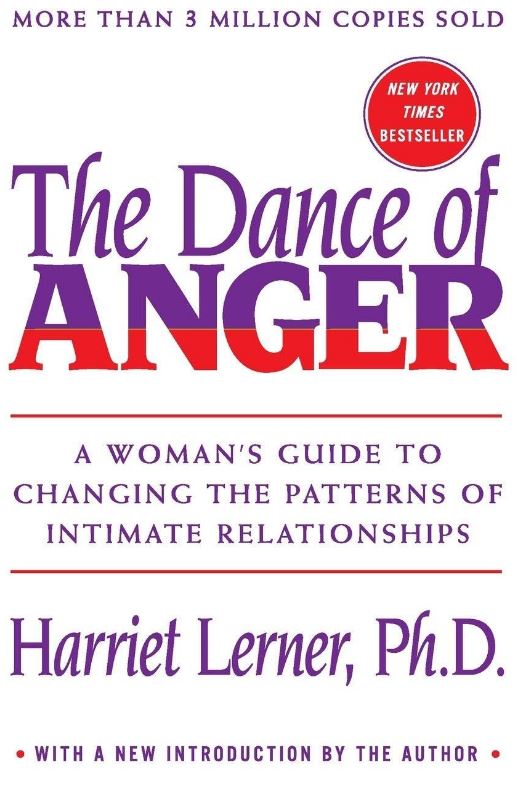
1. The Dance of Anger — Harriet Lerner
Anger and resentment are closely connected, but they aren’t necessarily the same thing.
Anger can arise in response to a particular event.
Resentment often develops when that anger remains unresolved or when similar experiences continue happening.
In The Dance of Anger, psychologist Harriet Lerner explores how anger operates within relationships and how familiar patterns of behaviour can keep people stuck.
The book is especially concerned with understanding anger rather than simply suppressing or expressing it.
Why this book is worth reading
Sometimes people believe that being a good partner means avoiding anger.
They remain quiet when something bothers them.
They minimise their frustration.
They convince themselves that expressing disappointment will only create unnecessary conflict.
But unspoken feelings don’t always disappear.
Lerner encourages readers to examine the patterns behind their reactions and consider how changing their own responses may influence the relationship.
For someone who has spent years swallowing frustrations until they become resentment, this perspective can be particularly valuable.
Best for: Readers who struggle to express anger constructively or repeatedly find themselves caught in the same relationship conflicts.
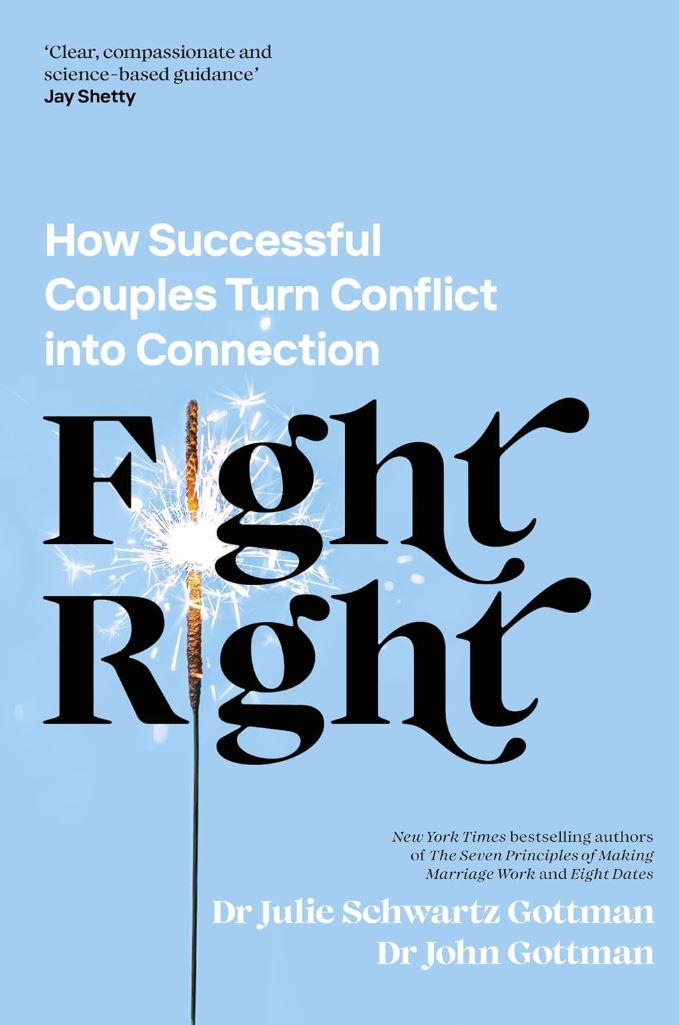
2. Fight Right — Julie Schwartz Gottman and John Gottman
Many couples become concerned when they argue.
They assume that a healthy relationship should involve fewer disagreements, and they may avoid difficult subjects to keep the peace.
But disagreements are part of sharing a life with another person.
The more important question is how those disagreements are handled.
In Fight Right, psychologists Julie Schwartz Gottman and John Gottman examine common conflict patterns and how couples can approach disagreements more constructively.
Why this book is worth reading
One difficulty with resentment is that a new disagreement rarely feels entirely new.
You might begin discussing a missed appointment, only to find yourselves arguing about promises made months earlier.
One partner feels criticised.
The other feels ignored.
And neither feels understood.
Fight Right encourages couples to look beyond winning an argument and consider the needs, emotions and recurring patterns beneath it.
That shift matters because resentment often grows when disagreements end without genuine understanding or meaningful change.
Best for: Couples who repeatedly have the same arguments or struggle to discuss frustrations without becoming defensive.
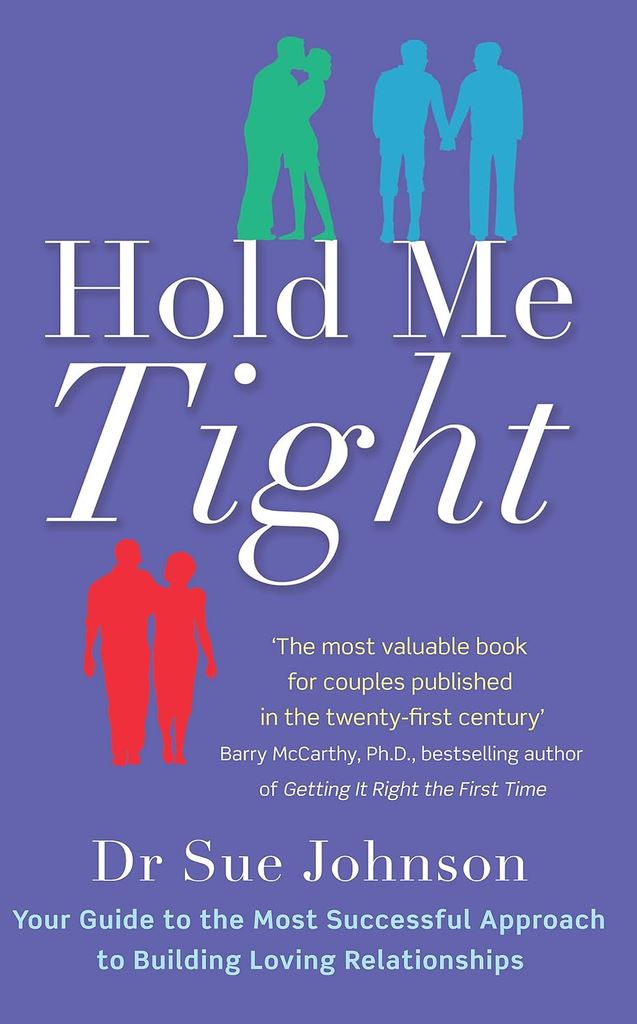
3. Hold Me Tight — Sue Johnson
Resentment isn’t always rooted in practical disagreements.
Sometimes it develops because one partner feels emotionally disconnected.
Perhaps they believe their concerns don’t matter.
Maybe they feel unsupported during difficult moments.
Or they’ve gradually stopped sharing their feelings because previous attempts at connection seemed unsuccessful.
In Hold Me Tight, clinical psychologist Sue Johnson explores emotional connection and the negative interaction patterns that can develop between romantic partners.
Her approach draws on Emotionally Focused Therapy and emphasises the importance of emotional responsiveness.
Why this book is worth reading
Consider a couple who repeatedly argue about spending time together.
One partner complains that the other is never available.
The other responds defensively, pointing out their work responsibilities and everything they do for the family.
The disagreement appears to be about time.
But beneath it may be a deeper concern about feeling important, valued or emotionally secure.
Johnson’s work encourages couples to understand these underlying emotional needs rather than remaining trapped in surface-level arguments.
For readers who feel that resentment has created distance between them and their partner, this book offers a particularly relevant perspective.
Best for: Couples whose unresolved frustrations have developed into emotional withdrawal, loneliness or recurring disconnection.
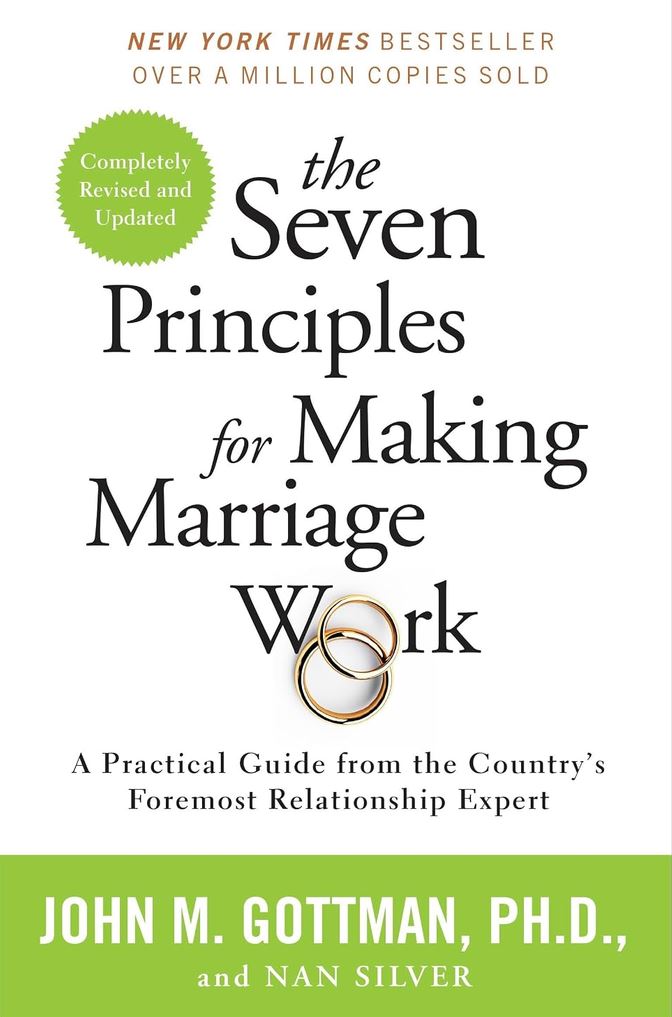
4. The Seven Principles for Making Marriage Work — John Gottman and Nan Silver
When resentment builds, it can gradually change the way partners view one another.
A behaviour that once seemed harmless becomes irritating.
A small mistake feels deliberate.
And positive moments may receive less attention than disappointing ones.
In The Seven Principles for Making Marriage Work, John Gottman and Nan Silver explore relationship habits, emotional connection and practical ways couples can strengthen their marriages.
The book draws on Gottman’s relationship research and includes exercises designed to encourage greater understanding between partners.
Why this book is worth reading
One of the challenges of resentment is that it can make us increasingly focused on what isn’t working.
We notice forgotten promises more readily than thoughtful gestures.
We remember the last disagreement but overlook occasions when our partner showed care.
This doesn’t mean genuine problems should be ignored.
It means that understanding a relationship requires recognising both its difficulties and its strengths.
The book encourages couples to pay attention to friendship, mutual understanding and everyday interactions, alongside addressing conflict.
Best for: Couples who want to rebuild warmth and appreciation while also working through recurring relationship difficulties.
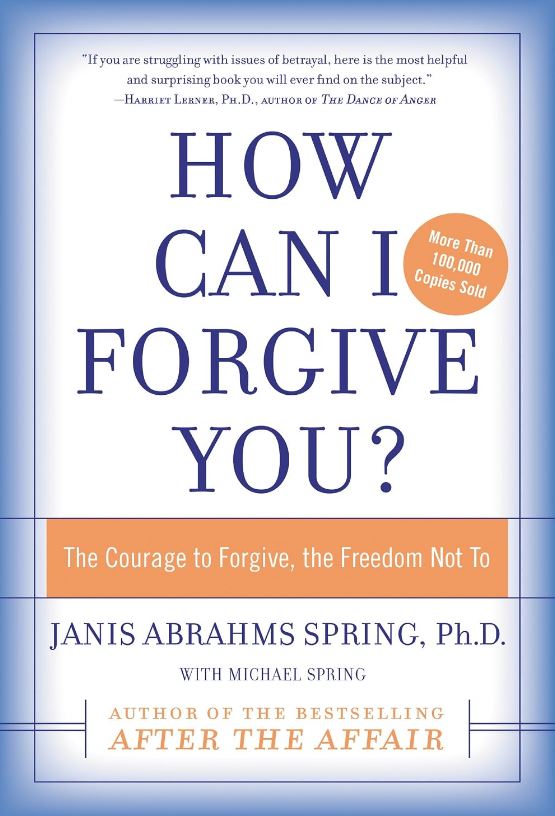
5. How Can I Forgive You? — Janis Abrahms Spring, with Michael Spring
Some resentment develops from everyday disappointments.
Other times, the hurt is much deeper.
A significant betrayal, repeated dishonesty or serious broken promise can leave someone struggling with anger long after the original event.
In How Can I Forgive You?, psychologist Janis Abrahms Spring, writing with Michael Spring, explores forgiveness, accountability and the process of recovering from interpersonal hurt.
The book challenges the assumption that forgiveness must always be immediate or unconditional.
Why this book is worth reading
People sometimes feel pressured to forgive before their concerns have been properly acknowledged.
They may be encouraged to move on, forget what happened or stop bringing up the past.
But genuine repair requires more than simply deciding not to discuss something.
The hurt person may need acknowledgement, honesty and meaningful behavioural change.
Spring examines forgiveness without treating it as an obligation, making this book particularly relevant when resentment follows a serious breach of trust.
It’s important to distinguish these situations from ordinary marital disagreements.
Not every hurt can or should be approached in the same way, and forgiveness does not require someone to remain in an unsafe relationship.
Best for: Readers dealing with deeper unresolved hurts who want to understand forgiveness, accountability and their available choices.
Which of These Books About Resentment in Marriage Should You Read First?
The right book depends on what’s creating the resentment.
If you’re struggling with anger you’ve kept to yourself, The Dance of Anger is a thoughtful starting point.
If you and your partner repeatedly argue about the same issues, Fight Right focuses on healthier ways of approaching conflict.
If resentment has created emotional distance, Hold Me Tight explores the need for connection and understanding.
If you want to strengthen the positive foundations of your marriage, The Seven Principles for Making Marriage Work provides a broader relationship approach.
And if your resentment follows a serious betrayal or unresolved injury, How Can I Forgive You? examines the more complicated questions surrounding forgiveness.
Each book addresses a different part of the problem.
You don’t need to read all five. Start with the one that most closely reflects the difficulties you’re experiencing.
When Resentment Makes You Feel Invisible
One of the quieter consequences of ongoing resentment is the feeling that your needs no longer matter.
You may have tried explaining what bothers you.
Perhaps you’ve asked for more understanding or hoped your partner would notice how unhappy you’ve become.
But when little seems to change, you might begin withdrawing emotionally.
You stop raising certain concerns because you expect another disappointing response.
You become less willing to share your thoughts.
And gradually, you may feel less like an equal partner and more like someone whose feelings have become an afterthought.
This is where Invisible No More: Rediscover Yourself and Find Your Way Back to Each Other by Julian Merren offers a related perspective.
The book explores feeling emotionally unseen, losing connection with yourself within a relationship and finding a way towards greater emotional closeness.
It isn’t specifically a guide to resolving marital resentment, but its focus on emotional disconnection may resonate with readers whose unresolved frustrations have left them feeling unappreciated.
For those readers, understanding the emotional effects of feeling invisible may be an important part of considering what needs to change.
Discover Invisible No More by Julian Merren
Four Ways to Address Resentment Before It Grows
Books can help us understand relationship patterns, but change also depends on what happens in everyday interactions.
For further guidance, The Gottman Institute offers practical ways to repair relationship conflict, including approaches to rebuilding understanding after disagreements.
Here are four practical starting points.
1. Identify what you’re actually upset about
Resentment can become so familiar that it’s difficult to explain its original cause.
Take some time to consider whether your frustration relates to a particular event, an ongoing pattern or an important need that hasn’t been addressed.
Being specific can make a difficult conversation more constructive.
2. Discuss the pattern rather than attacking the person
There’s a difference between describing what happened and making a judgement about someone’s character.
For example, explaining that a repeatedly broken promise has affected your trust is more useful than simply labelling your partner unreliable.
Focus on the behaviour, its impact and what you need to change.
3. Look for meaningful follow-through
An apology can matter, but the same problem may return if nothing changes afterwards.
Discuss what each partner is willing to do differently.
Be realistic about what can change and how you’ll recognise progress.
The objective isn’t a perfect relationship. It’s creating greater consistency between what is promised and what happens.
4. Stop treating every disagreement as a scorecard
It’s understandable to remember occasions when you’ve felt hurt.
But repeatedly collecting evidence against your partner can make new conversations increasingly difficult.
Try addressing concerns directly rather than saving them for future arguments.
Of course, this doesn’t mean overlooking persistent mistreatment or repeatedly accepting broken promises.
Healthy resolution requires responsibility from both people.

Resentment Doesn’t Disappear Simply Because You Ignore It
Sometimes couples avoid difficult conversations because they don’t want to make things worse.
They hope that if they give the situation enough time, the frustration will gradually disappear.
Occasionally, a small irritation does fade on its own.
But repeated disappointments and unresolved emotional injuries often require more deliberate attention.
That might mean having an honest conversation, changing a familiar pattern or seeking support from a qualified relationship counsellor.
If a relationship involves intimidation, coercion or abuse, safety and appropriate professional support should take priority over attempts to repair the relationship together.
For other couples, recognising resentment before it becomes deeply entrenched can provide an opportunity to better understand what each person needs.
Final Thoughts: Don’t Let Small Hurts Become the Whole Story
Every long-term relationship experiences disappointment.
People make mistakes, misunderstand each other and occasionally fail to provide the support their partners hoped for.
But when hurt remains unspoken or repeatedly unaddressed, it can gradually shape how partners see one another.
A small frustration becomes part of a larger story.
A forgotten promise becomes another reason to withdraw.
And eventually, resentment can begin occupying more space than the affection that originally brought two people together.
The best books about resentment in marriage encourage readers to look beneath familiar arguments and understand the feelings, expectations and behaviours that keep dissatisfaction alive.
They remind us that healthier relationships require more than avoiding conflict.
They require honesty, accountability, mutual consideration and a willingness to address problems rather than quietly collecting them.
If resentment has also left you feeling emotionally unseen, explore Invisible No More by Julian Merren for a thoughtful perspective on emotional connection and rediscovering yourself within a relationship.
Because a strong relationship isn’t one where nobody ever gets hurt.
It’s one where difficulties can be acknowledged, responsibility can be taken and both people are willing to work towards something healthier.