
You sit down to work on something important.
Perhaps you’re writing, studying, reading or finally tackling a personal project you’ve been meaning to finish.
You have a clear intention.
You know what needs doing.
Then your phone lights up.
You check one notification, answer a message and remember something else you wanted to look up.
Before long, twenty minutes have disappeared.
Eventually, you return to your original task, only to discover that you’ve lost your concentration.
Sound familiar?
Staying focused can be difficult, especially when everyday life offers endless opportunities for distraction.
But there’s another challenge.
Even when you manage to concentrate today, how do you maintain that commitment tomorrow, next week and over the following months?
If you’ve been searching for books about staying focused and consistent, you’re probably looking for more than another productivity trick.
You want practical ways to protect your attention, build reliable routines and make meaningful progress towards the things that matter.
These five books approach those challenges from different perspectives.

Why Focus and Consistency Need to Work Together
Focus and consistency are closely connected, but they aren’t quite the same thing.
Focus involves directing your attention towards a particular activity.
Consistency involves returning to that activity regularly enough to make progress.
You might be excellent at concentrating for several hours when you’re feeling motivated.
But if you rarely return to the project, your progress may remain limited.
Alternatively, you might sit down to work every morning but spend most of that time switching between emails, messages and unrelated tasks.
The American Psychological Association explains why constantly switching between tasks can reduce productivity, particularly when activities require considerable attention.
You’re showing up, but your attention is divided.
Meaningful progress often requires both.
You need to make room for the activity and give it enough attention to move forward.
That doesn’t mean concentrating perfectly every day.
It means learning how to manage distractions, create manageable commitments and return when your attention wanders.
The following books offer practical approaches to developing those abilities.
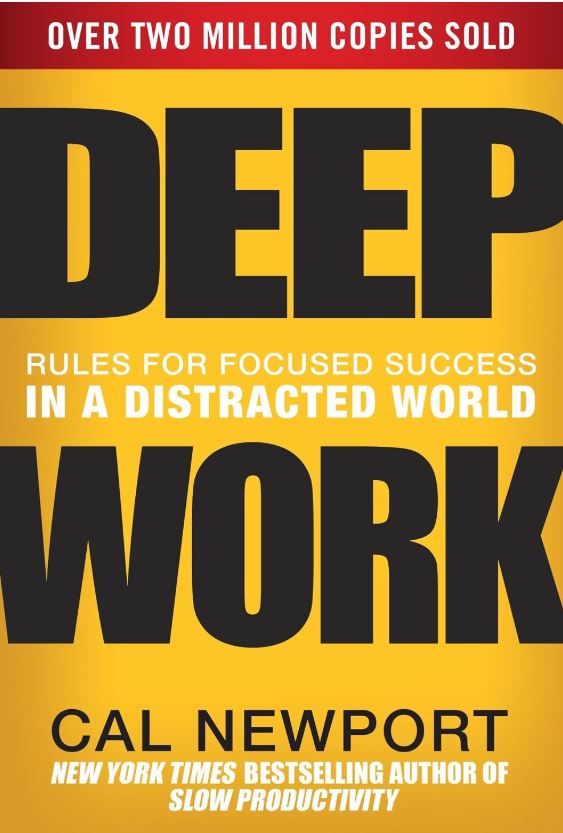
1. Deep Work — Cal Newport
Best for: Developing Better Concentration
Deep Work by Cal Newport explores the value of concentrating deeply on demanding activities without unnecessary distraction.
Newport distinguishes between work requiring sustained concentration and shallower activities that can be completed with less cognitive effort.
Consider someone who wants to write a book.
They sit down with good intentions but continually interrupt themselves to check messages, organise files or browse the internet.
By the end of the session, they’ve been busy but have written very little.
Newport’s approach encourages readers to create conditions that support more deliberate concentration.
That might involve setting aside a suitable period for focused work, reducing unnecessary interruptions and becoming more intentional about how technology fits into the day.
The book also explores why deep concentration is a skill worth developing rather than something we should automatically expect whenever we sit down.
What you can learn:
- Create dedicated periods for demanding activities.
- Recognise the difference between meaningful work and constant busyness.
- Develop routines that support deeper concentration.
If you’re struggling to make progress because your attention is continually interrupted, Deep Work offers a practical place to begin. Hachette Australia
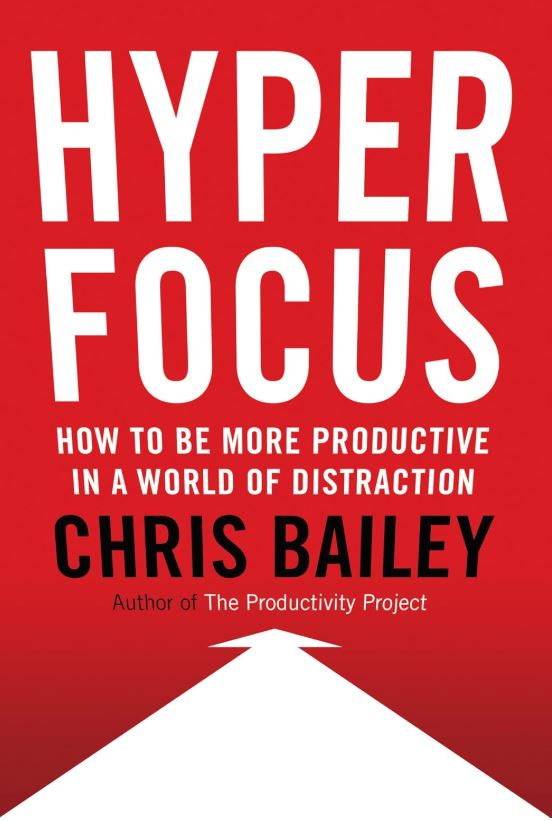
2. Hyperfocus — Chris Bailey
Best for: Understanding How to Direct Your Attention
Have you ever noticed how easily your attention can shift from one thing to another?
You begin reading an article.
A few moments later, you’re thinking about an unrelated responsibility.
Then you remember a message you need to answer.
Before long, you’re doing something completely different.
In Hyperfocus, Chris Bailey explores how we manage attention and why concentrating on meaningful activities can be difficult.
The book examines two different approaches to attention: hyperfocus and scatterfocus.
Hyperfocus involves deliberately concentrating on a chosen activity.
Scatterfocus involves allowing the mind greater freedom to wander, which Bailey connects with reflection and creative thinking.
One useful lesson is that improving focus doesn’t necessarily mean trying to concentrate intensely every waking moment.
There are times when deliberate attention is valuable and others when a more relaxed mental approach may be appropriate.
For example, you might use a focused session to work through a demanding problem, then take a suitable break rather than forcing yourself to continue indefinitely.
What you can learn:
- Recognise common distractions and interruptions.
- Create an environment that supports concentration.
- Balance focused work with opportunities for reflection.
Hyperfocus is particularly relevant if you want to understand your attention rather than simply force yourself to work harder. Chris Bailey
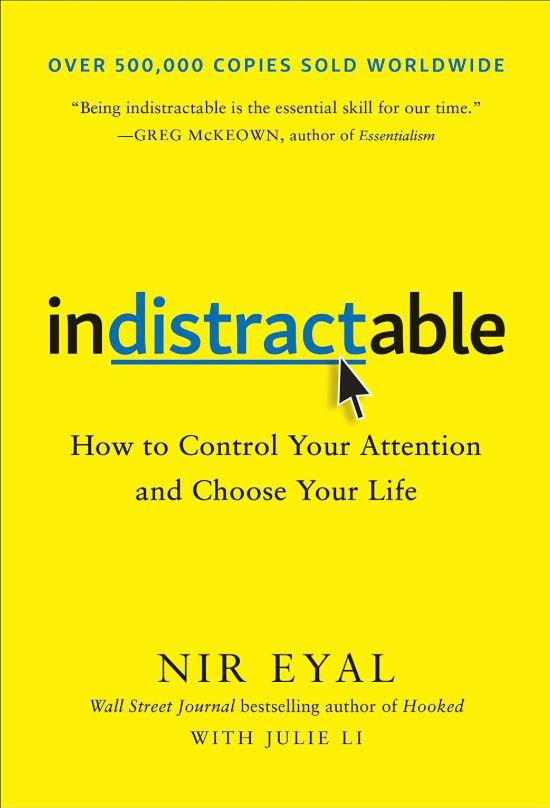
3. Indistractable — Nir Eyal
Best for: Managing Everyday Distractions
Sometimes you know exactly what you need to do.
You’ve chosen your priority, made time for it and genuinely want to complete the work.
Yet distractions keep appearing.
Your phone demands attention.
An email arrives.
Or you begin looking for something more interesting than the task in front of you.
In Indistractable, Nir Eyal explores why people become distracted and how they can develop a more intentional relationship with their attention.
The book encourages readers to examine both external distractions and the internal feelings that can lead them away from intended activities.
That’s an important distinction.
Sometimes we become distracted because something interrupts us.
Other times, we actively seek a distraction because the task we’re avoiding feels difficult, boring or uncomfortable.
Imagine you’re working on a demanding assignment.
You reach a section that requires careful thought.
Instead of continuing, you suddenly decide to check your messages.
The interruption may have less to do with your phone than with your desire to escape an uncomfortable task.
Understanding that pattern gives you an opportunity to respond differently.
What you can learn:
- Recognise what draws your attention away from important activities.
- Become more deliberate about your time.
- Reduce avoidable interruptions while respecting genuine responsibilities.
Indistractable is useful if your biggest challenge is protecting the attention you’ve already decided to give something important. Simon & Schuster
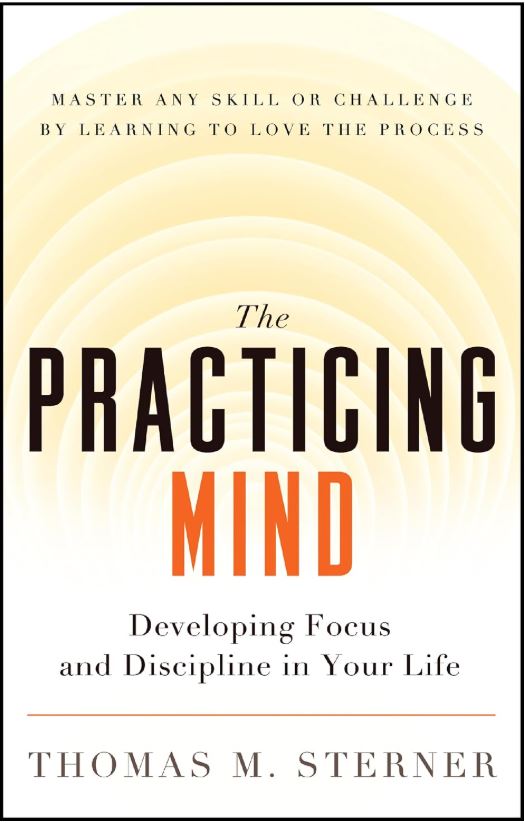
4. The Practicing Mind — Thomas M. Sterner
Best for: Developing Patience and Consistency
Concentration is important.
But what happens when you’re working towards a goal that requires months or years of practice?
Perhaps you’re learning an instrument, developing a professional skill or completing a demanding personal project.
At first, you’re enthusiastic.
You enjoy imagining what you’ll eventually accomplish.
But progress becomes slower than expected.
The repetitive work begins feeling less exciting, and you start questioning whether you’re improving.
In The Practicing Mind, Thomas M. Sterner explores the value of concentrating on the process of practice rather than constantly judging yourself against a distant outcome.
The book encourages readers to develop patience and engage more fully with the activity they’re performing.
Consider someone learning to play the piano.
If they spend every practice session thinking about how far they are from performing confidently, the process may become frustrating.
But if they concentrate on the exercise in front of them, they give themselves an opportunity to improve without constantly comparing their progress with an ideal result.
That perspective can be valuable for almost any long-term goal.
What you can learn:
- Develop patience with gradual improvement.
- Concentrate on the activity you’re performing.
- Build a more sustainable relationship with regular practice.
The Practicing Mind is particularly relevant if you struggle to remain consistent when progress feels slow. New World Library
5. The Discipline to Follow Through — Julian Merren
Best for: Turning Focus Into Consistent Action
Being able to concentrate is valuable.
But maintaining meaningful commitments involves more than occasionally having a productive day.
You need to create realistic routines, protect your attention and learn how to continue when motivation fades.
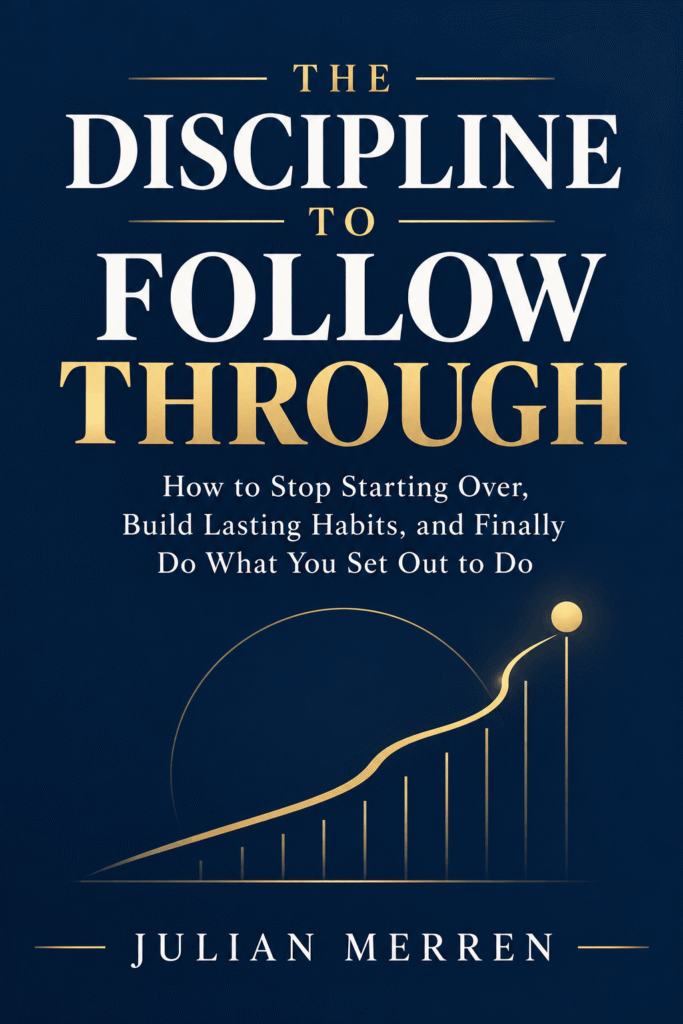
That’s one of the central challenges explored in The Discipline to Follow Through by Julian Merren.
The book focuses on developing manageable habits, overcoming procrastination, protecting attention and creating practical systems for following through.
Rather than expecting readers to remain constantly motivated, it explores how to make commitments that fit their circumstances and continue when life becomes demanding.
An important theme is learning how to respond when things don’t go according to plan.
Perhaps you miss a scheduled work session.
Maybe an unexpected responsibility interrupts your progress.
Or perhaps your concentration is simply poor on a particular day.
Those experiences don’t automatically mean your commitment has failed.
Sometimes the most useful response is to adjust your approach and return to the next manageable action.
The book also includes a separate 30-Day Follow-Through Workbook, featuring daily assignments and weekly checkpoints to help readers practise these ideas.
What you can learn:
- Make realistic commitments and build consistent routines.
- Protect your attention from unnecessary distractions.
- Overcome procrastination and take meaningful action.
- Return to your goals after interruptions without repeatedly starting over.
If you struggle to maintain focus and follow through over time, this book offers a practical approach to developing greater consistency.
Discover The Discipline to Follow Through and its 30-Day Companion Workbook
Which Books About Staying Focused and Consistent Should You Read First?
The most useful choice depends on what makes progress difficult for you.
If you need to develop deeper concentration, begin with Deep Work.
If you want a better understanding of how to direct your attention, consider Hyperfocus.
If everyday distractions repeatedly interrupt your plans, Indistractable offers practical strategies.
If you’re finding it difficult to maintain patience during a long-term project, The Practicing Mind encourages a more process-focused approach.
And if your biggest challenge is turning concentration into regular, meaningful action, The Discipline to Follow Through focuses on practical consistency.
You don’t need to read all five immediately.
Choose the book that addresses your most pressing difficulty and begin applying one useful idea.
Three Practical Ways to Stay Focused and Consistent
Before creating another elaborate productivity routine, consider three simple changes.
1. Choose one clear priority
When several tasks compete for your attention, decide which deserves focus first.
Rather than vaguely planning to be productive, identify a specific activity.
Perhaps you’ll write a page, complete a lesson or work on one important section of a project.
Clarity makes it easier to begin.
2. Reduce avoidable interruptions
Think about what regularly draws your attention away.
Could you silence non-essential notifications for a suitable period?
Move your phone somewhere less distracting?
Or choose a quieter environment when you need to concentrate?
You won’t eliminate every interruption, but reducing the avoidable ones may help.
3. Build a repeatable routine
You don’t need to maintain intense concentration for hours every day.
Choose a manageable period that fits your responsibilities.
Perhaps twenty minutes of focused work on several days each week is a realistic starting point.
You can adjust that commitment as your circumstances change.
The aim is to develop an approach you can return to rather than another ambitious schedule that’s difficult to maintain.
Final Thoughts
Finding the right books about staying focused and consistent can help you rethink how you approach meaningful goals.
You don’t necessarily need endless motivation or a perfect daily routine.
You may need clearer priorities, fewer distractions and realistic opportunities to practise.
The five books above offer different approaches to those challenges.
Choose one activity that genuinely matters to you.
Give it your attention.
Then develop a manageable way to return to it regularly.
Because meaningful progress rarely depends on one extraordinary day of concentration.
More often, it develops when you give worthwhile activities enough attention, consistently, over time.