
You start a new project feeling excited about what’s possible.
Maybe it’s an online course, a fitness goal, a writing project, or something you’ve wanted to accomplish for years.
You make plans, organise your schedule, and imagine how satisfying it will feel when everything is finished.
For a while, things go well.
Then the initial excitement fades. Progress becomes slower, other responsibilities demand your attention, and the project gradually slips further down your list of priorities.
Eventually, something else catches your interest.
And another unfinished project joins the collection.
If that sounds familiar, you’re certainly not the only person who finds starting easier than finishing.
The good news is that completing meaningful goals isn’t simply about having more willpower. It often involves managing distractions, setting realistic expectations, overcoming procrastination, and learning how to continue when progress feels less exciting.
If you’re looking for books to help you finish what you start, these five recommendations approach the problem from different perspectives.
Each offers practical ideas worth considering when you’re tired of leaving things unfinished.

Why Is It So Difficult to Finish What We Start?
Starting something new can feel rewarding because the possibilities are endless.
You imagine the finished result without having to deal with all the small difficulties that will eventually appear along the way.
But completing a goal means working through those less exciting stages.
There are decisions to make, mistakes to correct, distractions to manage, and days when you’d rather do something else.
Sometimes perfectionism gets in the way. You keep improving what you’ve already done because you’re afraid the finished result won’t be good enough.
Other times, the problem is having too many competing priorities.
And occasionally, you’ve simply created a goal that doesn’t fit realistically into your daily life.
The key is understanding what’s stopping you, rather than assuming every unfinished project is evidence of poor discipline.
That’s where the right book can provide a useful change in perspective.
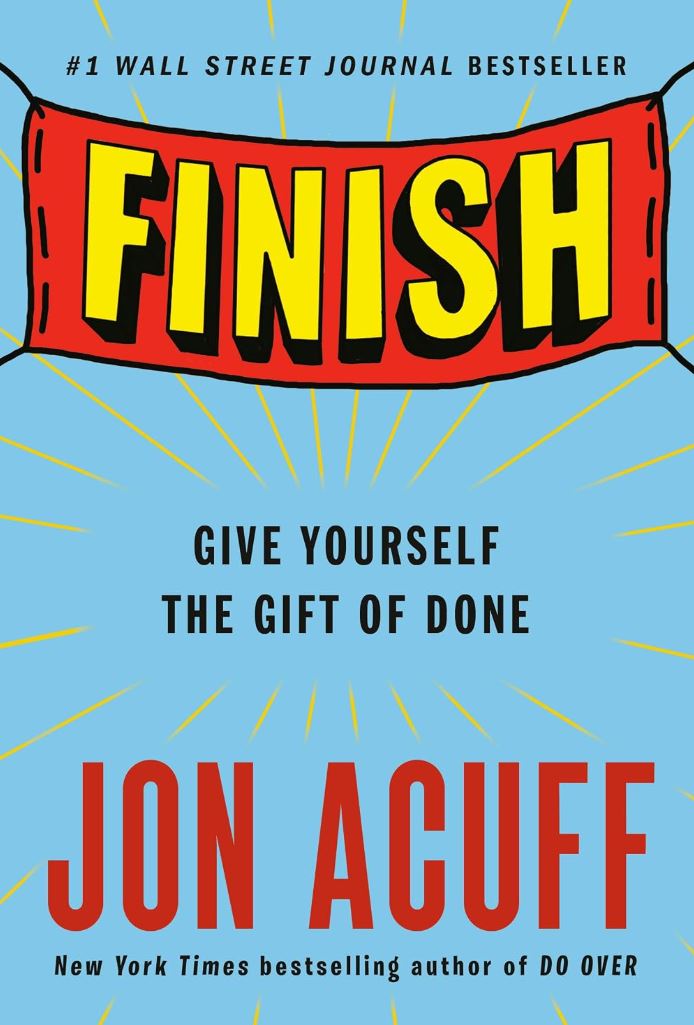
1. Finish: Give Yourself the Gift of Done — Jon Acuff
Best for: Overcoming perfectionism and completing unfinished projects
Finish: Give Yourself the Gift of Done by Jon Acuff is particularly relevant for people who have no trouble starting new projects but rarely reach the finish line.
One of the central ideas explored in this book is that perfectionism can quietly become an obstacle to achievement.
You might believe you’re setting high standards, but sometimes those standards make progress unnecessarily difficult.
Consider someone trying to write their first book.
They spend weeks improving the opening chapter, rewriting sentences and adjusting details because everything needs to be perfect.
Meanwhile, the remaining chapters are barely started.
The problem isn’t necessarily a lack of effort. It’s that the pursuit of perfection has become more important than completing the project.
Acuff encourages readers to rethink unrealistic expectations and approach finishing with greater flexibility.
What you can learn:
- Recognise when perfectionism is slowing your progress.
- Adjust expectations that make goals unnecessarily difficult.
- Give yourself permission to finish something imperfectly.
If you’re constantly polishing, planning, or restarting instead of completing, this book deserves a place on your reading list.
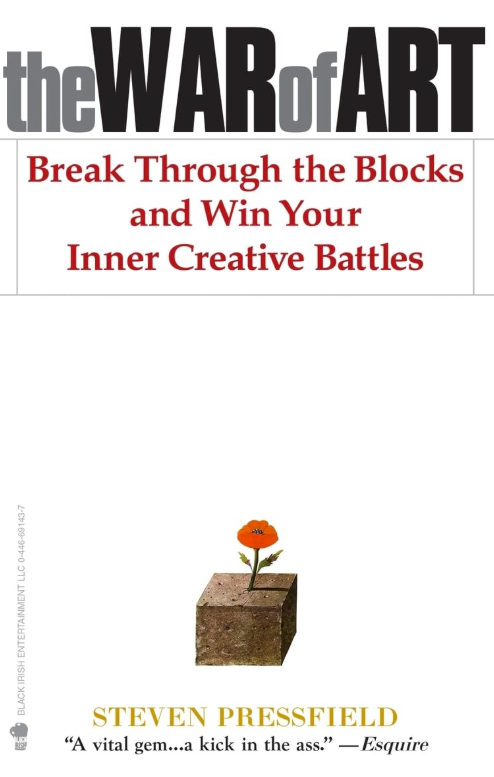
2. The War of Art — Steven Pressfield
Best for: Pushing through resistance and procrastination
Have you ever noticed how difficult it can feel to begin working on something that genuinely matters to you?
You know the project is important.
You want to make progress.
Yet somehow, you find yourself checking emails, reorganising your workspace, or suddenly discovering several other things that need your attention.
The War of Art by Steven Pressfield examines this familiar struggle through a concept he calls Resistance.
Pressfield uses the term to describe the internal obstacles that can prevent people from pursuing meaningful creative and personal work, including fear, self-doubt, procrastination, and perfectionism.
It’s an especially relevant book for writers, artists, entrepreneurs, and anyone attempting to complete an ambitious personal project.
One useful takeaway is that waiting until you feel completely ready may keep you waiting indefinitely.
Sometimes the most practical response is to establish a time to work and begin, even when the task feels uncomfortable.
That doesn’t mean ignoring genuine problems or forcing yourself through exhaustion.
It means recognising when avoidance has become a habit.
What you can learn:
- Recognise common forms of avoidance.
- Develop a more consistent approach to meaningful work.
- Stop treating motivation as a requirement for getting started.
If you regularly find yourself putting off the work that matters most, Pressfield’s perspective is worth exploring.
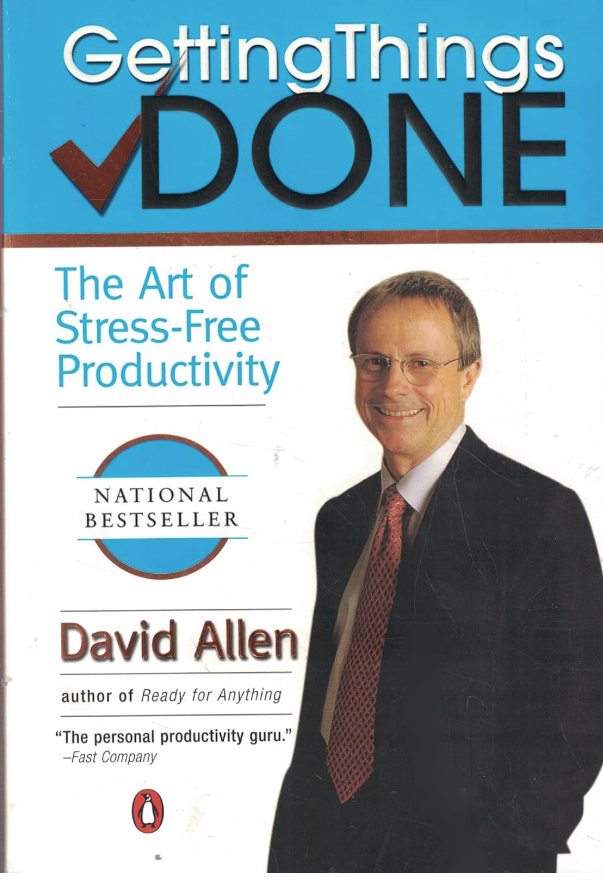
3. Getting Things Done — David Allen
Best for: Organising unfinished tasks and reducing overwhelm
Sometimes the problem isn’t motivation or perfectionism.
It’s simply having too many things competing for your attention.
There are work responsibilities, household tasks, personal commitments, emails, appointments, and projects you’ve been meaning to finish.
Everything feels important, but nothing seems particularly clear.
Getting Things Done by David Allen offers a structured approach to managing responsibilities and organising the actions needed to move projects forward.
For a closer look at this approach, explore the five steps of the Getting Things Done method on the official website
A central part of Allen’s approach is capturing commitments outside your head and clarifying what each one requires.
Rather than leaving yourself with a vague reminder such as “finish the website”, you identify a specific next action.
That might be drafting the homepage introduction, checking a contact form, or reviewing the navigation menu.
Suddenly, a large unfinished project becomes something you can make progress on.
The book also emphasises reviewing your commitments regularly so important tasks don’t disappear beneath everyday distractions.
What you can learn:
- Collect unfinished tasks and commitments in a trusted system.
- Break vague projects into clearly defined next actions.
- Review your priorities rather than relying on memory.
If you often feel busy but struggle to complete important projects, Getting Things Done provides a useful framework for creating more clarity.
4. The ONE Thing — Gary Keller and Jay Papasan
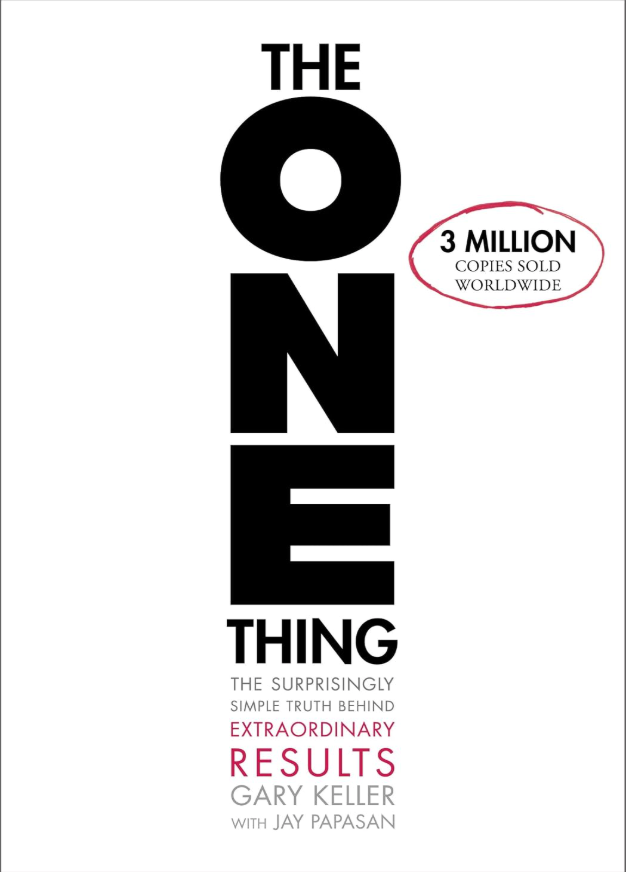
Best for: Staying focused instead of chasing too many goals
One reason projects remain unfinished is that we continually divide our attention between competing ambitions.
You begin learning a new skill.
Then you decide to start a business.
A few days later, another interesting opportunity appears.
Before long, you’re attempting to make progress on several demanding goals simultaneously.
The difficulty is that every new commitment competes for time and attention.
The ONE Thing by Gary Keller and Jay Papasan encourages readers to identify what matters most and direct their efforts towards it.
Rather than treating every task as equally important, the book explores how focused priorities can help people make meaningful progress.
This is especially useful if your biggest obstacle is constantly becoming distracted by new ideas.
Imagine having five projects you want to complete.
Instead of giving each one a small amount of attention every day, you might decide which deserves your immediate focus and establish a realistic period for working on it.
The other ideas don’t necessarily need to disappear.
They simply don’t all need to be pursued at the same time.
What you can learn:
- Identify the priorities that deserve your attention.
- Reduce competing commitments.
- Give important projects sufficient space to progress.
If you regularly abandon one promising idea for another, The ONE Thing could help you develop a more deliberate approach.
5. The Discipline to Follow Through — Julian Merren
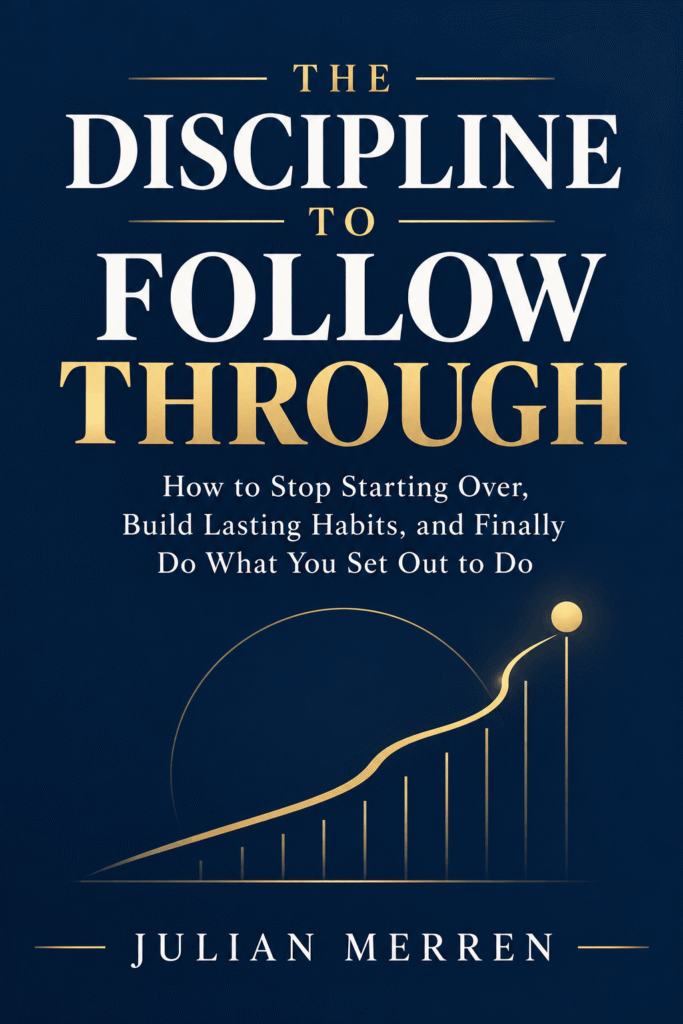
Best for: Building consistency and completing the goals that matter
Sometimes you know exactly what needs to be done.
You’ve broken the work into manageable steps, made room in your schedule, and chosen an important goal.
But maintaining the commitment is still difficult.
Life gets busy. Motivation fades. You miss a few planned sessions and start questioning whether it’s worth continuing.
That’s the challenge explored in The Discipline to Follow Through by Julian Merren.
The book focuses on the practical side of self-discipline: making realistic commitments, overcoming procrastination, protecting attention, and continuing when circumstances aren’t ideal.
Rather than encouraging readers to change everything overnight, it explores how to develop habits and routines that work within everyday life.
One particularly helpful theme is learning how to recover when you fall off track.
An interruption doesn’t have to mean abandoning the entire project or returning to the beginning.
The book also includes a separate 30-Day Follow-Through Workbook, featuring daily assignments and weekly checkpoints to help readers apply what they’ve learned.
What you can learn:
- Turn important goals into manageable commitments.
- Keep moving forward when motivation fades.
- Recover from setbacks without abandoning your progress.
- Develop a personal system for following through.
If you’re tired of making promises to yourself and leaving meaningful projects unfinished, this book offers a practical approach to building consistency.
Discover The Discipline to Follow Through and its 30-Day Workbook
Which of These Books to Help You Finish What You Start Should You Choose?
The right book depends on what’s getting in your way.
If perfectionism is preventing you from completing projects, begin with Finish.
If you regularly avoid important work, consider The War of Art.
If your responsibilities feel disorganised and overwhelming, Getting Things Done may help you create a clearer system.
If you’re constantly distracted by new ideas, The ONE Thing offers a useful perspective on choosing priorities.
And if you struggle to maintain your commitments after the initial excitement disappears, The Discipline to Follow Through brings the focus back to consistency and practical action.
You don’t need to read all five immediately.
Choose the book that addresses your biggest difficulty and try applying one of its ideas before moving on to the next.
Three Simple Ways to Start Finishing More
Before taking on another ambitious project, consider making three small changes.
1. Define what finished actually means.
A vague goal such as “improve my finances” or “work on my website” can continue indefinitely.
Choose a clear, realistic outcome so you know what you’re working towards.
2. Identify your next action.
Instead of thinking about everything that remains unfinished, choose one meaningful task you can complete next.
Making progress becomes easier when the next step is clear.
3. Plan for interruptions.
You won’t always have the same time, energy, or motivation.
Decide how you’ll return to the project after a difficult week rather than assuming your schedule will always run smoothly.
These steps won’t eliminate every obstacle, but they can make the process of following through more manageable.
Final Thoughts
If you have a collection of unfinished projects, it’s easy to believe that you simply need to become more disciplined.
But the difficulty may be more specific.
Perhaps you’re expecting perfection, juggling too many commitments, avoiding uncomfortable tasks, or relying on enthusiasm to keep you going.
The five books to help you finish what you start offer different ways to address those challenges.
The most important thing isn’t collecting more advice. It’s finding an approach that helps you take action and continue long enough to make meaningful progress.
Choose one unfinished goal.
Decide what completing it would look like.
Then take the next manageable step.
Because starting something new can be exciting, but there’s a different kind of satisfaction in finally finishing something that matters.