
Introduction
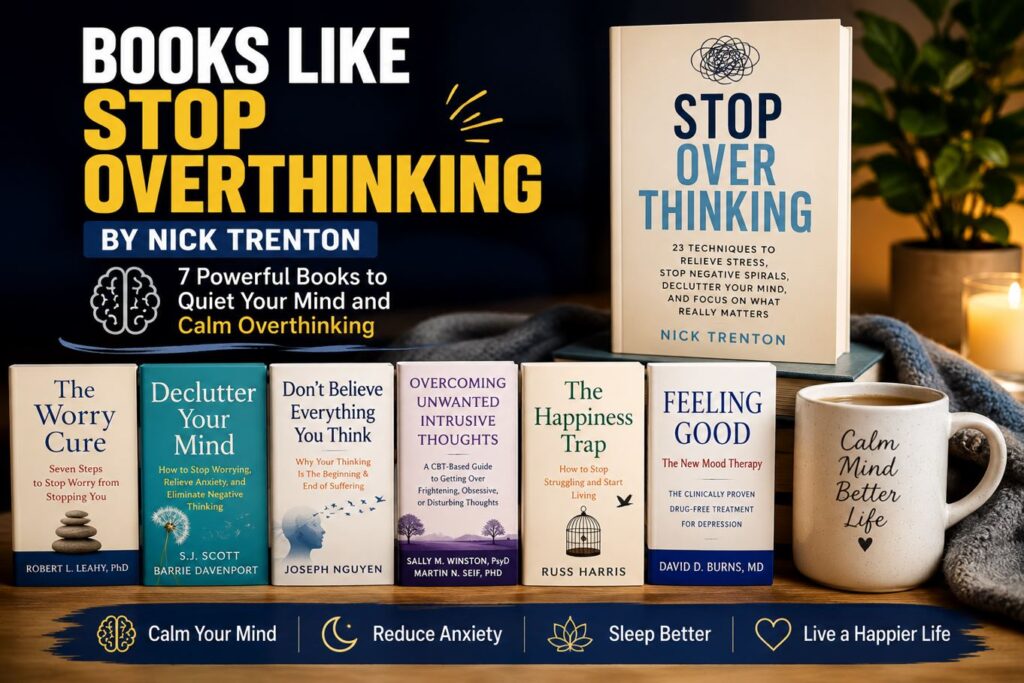
Have you finished reading Stop Overthinking by Nick Trenton and found yourself wanting more?
You’re not alone.
It’s one of those books that’s easy to read, packed with practical advice, and leaves you feeling like you finally have a plan for dealing with racing thoughts. Instead of filling pages with theory, Trenton focuses on simple techniques that help you understand why your mind gets stuck in endless loops—and, more importantly, how to break free.
The problem is that once you’ve turned the last page, you often want to keep learning.
If you’re searching for Books Like Stop Overthinking by Nick Trenton, you’ve come to the right place. The books below explore similar ideas, from calming anxious thoughts and overcoming intrusive thinking to building a healthier relationship with your mind. Each offers its own unique approach, so whether you’re looking for science-backed strategies, mindfulness techniques, or practical daily habits, there’s something here for you.
Let’s dive in.
Why Stop Overthinking Resonates With So Many Readers
One reason this book has become so popular is that it doesn’t make overthinking feel like an impossible problem to solve.
Nick Trenton writes in a straightforward, conversational style that’s easy to follow. Rather than overwhelming readers with complicated psychology, he breaks the process down into manageable steps.
The book covers topics like identifying thought patterns, reducing anxiety, avoiding analysis paralysis, and developing healthier mental habits. Most importantly, it reminds readers that overthinking isn’t something you’re born with—it’s a habit that can be changed.
If that’s what you enjoyed most about the book, the following recommendations should be right up your alley.
The Worry Cure – Robert L. Leahy
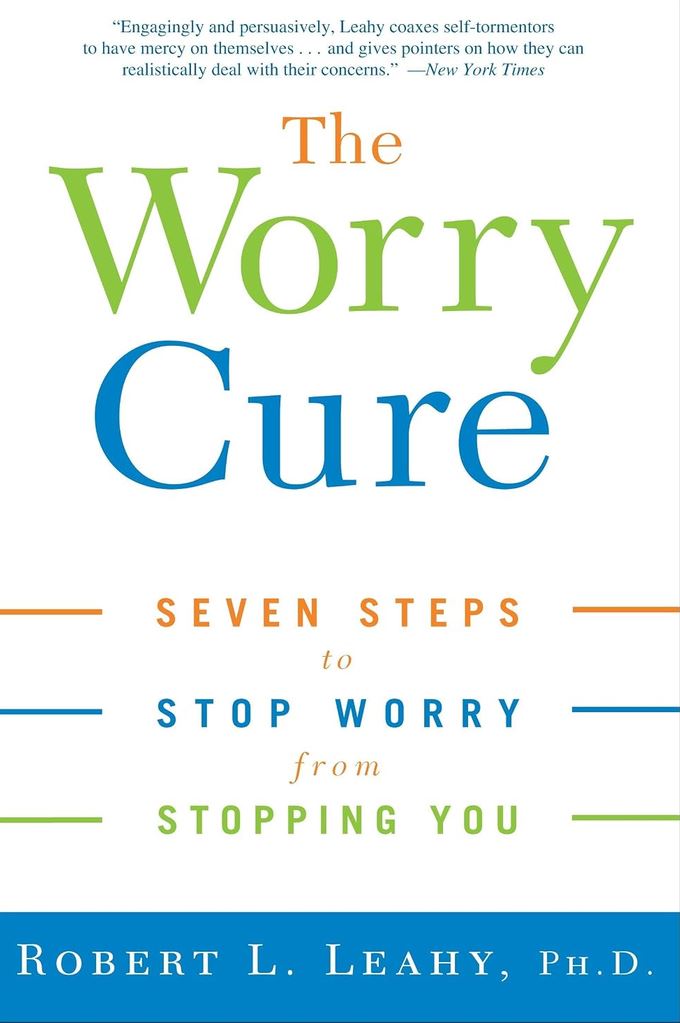
If your overthinking is driven by constant worrying about the future, The Worry Cure is an excellent next read.
Psychologist Robert Leahy explains why our brains naturally imagine worst-case scenarios and offers practical ways to stop feeding those worries. Rather than trying to eliminate anxious thoughts altogether, he teaches you how to respond to them differently.
What makes this book stand out is that it’s grounded in cognitive behavioural therapy while remaining easy to understand. You’ll find exercises that help challenge negative thinking, reduce uncertainty, and stop seeking reassurance all the time.
Best for: People whose overthinking is fuelled by constant worry about what might happen next.
Declutter Your Mind – S.J. Scott & Barrie Davenport
Sometimes overthinking isn’t caused by one big problem.
It’s caused by hundreds of little thoughts competing for your attention.
Declutter Your Mind focuses on reducing mental clutter so you can feel calmer, more focused, and less overwhelmed.
The authors cover mindfulness, gratitude, healthier habits, and simplifying your daily routines. The writing is practical and encouraging, making it a great choice if you enjoy books filled with actionable advice.
If you appreciated Nick Trenton’s straightforward style, you’ll probably enjoy this one too.
Best for: Readers who feel mentally overloaded and want practical daily habits.
Don’t Believe Everything You Think – Joseph Nguyen
This book has become incredibly popular because of one powerful idea.
Just because you think something doesn’t mean it’s true.
Joseph Nguyen encourages readers to question the stories their minds create instead of automatically believing them. The result is a surprisingly calming read that helps loosen the grip of anxious thinking.
Unlike many psychology books, this one feels reflective and almost philosophical without becoming difficult to understand.
If you’ve ever found yourself replaying conversations or imagining problems that haven’t happened yet, this book offers a refreshing perspective.
Best for: Anyone looking for a simpler, more mindful approach to overthinking.
Overcoming Unwanted Intrusive Thoughts – Sally Winston & Martin Seif
Not all overthinking looks the same.
For some people, it involves distressing thoughts that seem to appear out of nowhere and refuse to leave.
This book explains why intrusive thoughts happen and, more importantly, why trying to suppress them often makes them stronger.
The authors use evidence-based techniques to help readers stop fearing their thoughts and start understanding them instead.
It’s compassionate, reassuring, and incredibly practical.
Best for: Readers dealing with intrusive thoughts, anxiety, or obsessive thinking.
The Happiness Trap – Russ Harris
One of the biggest lessons in The Happiness Trap is that we don’t have to control every thought that enters our minds.
Instead, we can learn to accept thoughts without letting them control our actions.
Based on Acceptance and Commitment Therapy, this book teaches mindfulness in a very practical way. Rather than chasing constant happiness, Harris encourages readers to focus on living according to their values.
Many readers find this approach surprisingly freeing because it removes the pressure to “fix” every anxious thought.
Best for: People who want a healthier long-term relationship with their thoughts.
Feeling Good – Dr. David D. Burns
Although first published decades ago, Feeling Good remains one of the most influential books on cognitive behavioural therapy.
Dr. Burns explains how distorted thinking contributes to anxiety, depression, and overthinking, then provides practical techniques for challenging those thoughts.
The book is more detailed than some of the others on this list, but many readers consider it essential reading for understanding how the mind works.
If you enjoy learning the science behind personal growth, this classic deserves a place on your bookshelf.
Best for: Readers who enjoy evidence-based psychology and want to understand their thinking patterns more deeply.
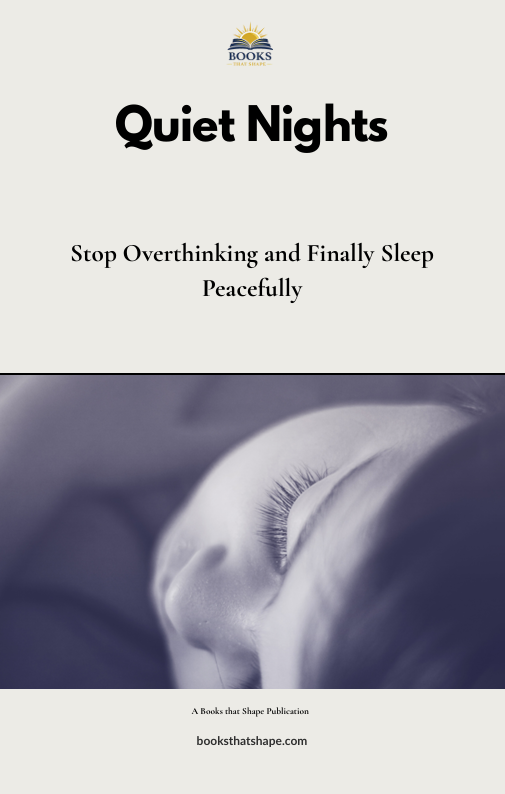
Quiet Nights: Stop Overthinking and Finally Sleep Peacefully
Many people discover that their overthinking becomes most intense at night.
The distractions of the day disappear, and suddenly the mind begins replaying conversations, worrying about tomorrow, or imagining every possible outcome.
That’s exactly the problem Quiet Nights was written to address.
Instead of offering general advice, it focuses specifically on calming an overactive mind before bed. Inside, you’ll find practical techniques such as brain dumping, creating a “Worry Window,” simple mindfulness exercises, and building an evening routine that helps signal to your brain that it’s time to rest.
One thing I particularly like is that the book doesn’t promise instant results. It recognizes that better sleep comes from small, consistent habits practiced over time.
If Stop Overthinking helped you during the day, Quiet Nights is a natural next step for anyone whose biggest struggle begins when the lights go out.
Best for: Readers whose overthinking keeps them awake at night.
Which Book Should You Read First?
The right choice depends on what’s causing your overthinking.
- For constant worrying: The Worry Cure
- For mental clutter: Declutter Your Mind
- For intrusive thoughts: Overcoming Unwanted Intrusive Thoughts
- For mindfulness: The Happiness Trap
- For understanding thought patterns: Feeling Good
- For overthinking before bed: Quiet Nights
Each book offers something different, but they all share one goal—helping you create a calmer, quieter mind.
Final Thoughts
Finding Books Like Stop Overthinking by Nick Trenton isn’t difficult once you know what you’re looking for.
Some books help you understand why you overthink. Others teach practical exercises to interrupt negative thought patterns. And some, like Quiet Nights, focus on one of the most common struggles of all: lying awake while your mind refuses to switch off.
The good news is that overthinking isn’t a personality trait—it’s a habit. And like any habit, it can be changed with the right knowledge and consistent practice.
If you’re ready to continue your journey towards a calmer mind, any of the books on this list would make an excellent next read.
Happy reading.