

Introduction
You feel tired all evening, yet the moment your head reaches the pillow, your mind becomes watchful. You check the time, calculate how many hours remain and wonder how you will manage tomorrow. The more urgently you try to sleep, the further away sleep seems.
The Science of Sleep Anxiety Explained begins with a surprisingly reassuring idea: this pattern does not mean you have forgotten how to sleep. It often means that the brain and body are treating bedtime as a situation that requires attention. Sleep is automatic, but worry, monitoring and effort can make the conditions for it less welcoming.
Understanding that loop can replace some of the mystery and self-blame with a clearer, kinder response.
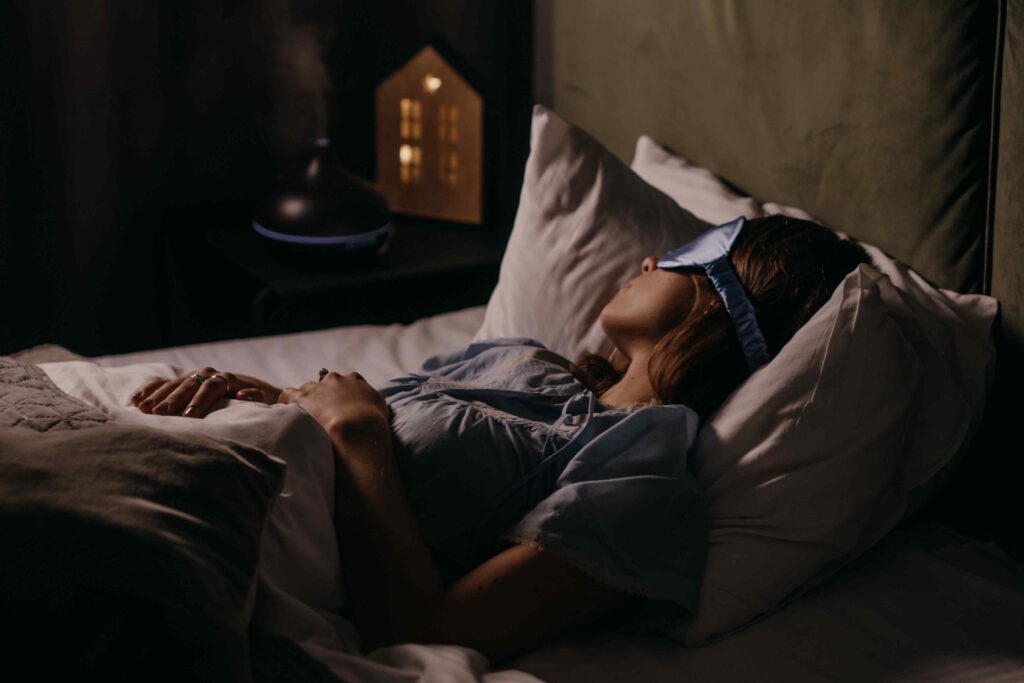
What do we mean by sleep anxiety?
Sleep anxiety is an informal description of worry, fear or tension connected to sleep. It may appear before bed, during a period of wakefulness or even earlier in the day when you begin anticipating the night ahead.
Common thoughts include:
- “What if I cannot fall asleep?”
- “I must get eight hours or tomorrow will be ruined.”
- “Why am I still awake?”
- “Something must be wrong with me.”
These thoughts are understandable, especially after several poor nights. Yet they can make sleep feel like a performance with a deadline rather than a chance to rest.
The phrase is not a diagnosis, and sleep difficulties can have many causes, including stress, health conditions, medication, shift work, pain and the sleep environment. The NHS advises speaking to a GP when changing sleep habits has not helped, when sleep trouble has lasted for months or when it is affecting daily life.
The Science of Sleep Anxiety Explained through the alert system
Sleep involves a gradual reduction in wakefulness; it cannot be commanded in the same way that we can lift a hand or switch off a lamp. Anxiety pulls in the opposite direction. When the mind detects a possible threat, the body becomes more prepared to notice, predict and respond.
At night, the “threat” may be the consequences you associate with not sleeping. A racing heart, tense muscles or rapid thoughts can then become further evidence that sleep is in danger. This is sometimes discussed through the idea of hyperarousal: heightened cognitive, emotional or physical activation that is associated with insomnia.
It is important not to reduce every sleep problem to anxiety. Still, the model helps explain a familiar experience: you can be exhausted and alert at the same time.
The worry–wakefulness loop
A difficult night may begin with ordinary wakefulness. Then a sequence develops:
- You notice you are awake. A normal delay or brief awakening catches your attention.
- You predict a difficult tomorrow. The mind moves quickly from “I am awake” to “I will not cope”.
- Your alert system responds. Frustration, fear and physical tension increase.
- You monitor for sleep. You check the clock, scan your body and ask whether a technique is working.
- Wakefulness becomes more noticeable. The continued monitoring seems to confirm the original fear.
The loop is powerful because each step makes sense in isolation. Checking the time feels like gathering useful information. Trying harder feels responsible. Planning for tomorrow feels protective. Together, however, they keep attention fixed on the very state you want to leave.
How the bed can become a cue for wakefulness
The brain learns through association. When a bed is repeatedly paired with worry, scrolling, working, clock-watching or long stretches of frustration, getting into bed may begin to trigger alertness automatically.
This is often called conditioned arousal. You may feel relatively calm in another room, then suddenly tense beneath the duvet. The reaction is not a personal failure; it is a learned link. Learned links can also change gradually when the bed is more consistently connected with sleep and quiet rest.
This is one reason common insomnia guidance suggests getting out of bed for a calm, low-stimulation activity if you cannot sleep, then returning when sleepier. The aim is not to follow a rigid rule or punish yourself for being awake. It is to reduce the amount of frustrated wakefulness associated with the bed.
Why trying to force sleep can backfire
Effort is valuable in much of life. It helps us learn, practise and complete tasks. Sleep is different because it arrives when wakefulness is allowed to recede.
The instruction “I must sleep now” creates a goal to monitor. Monitoring requires attention, while attention keeps the mind involved. The night can then become a stream of evaluations: Is my breathing slow enough? Am I relaxed yet? How long has this taken?
A gentler target is rest rather than sleep. You do not have to pretend that being awake is enjoyable. Instead, you can release the demand to produce sleep immediately and choose the least activating response available.
Practical ways to soften the cycle
There is no single evening routine that suits everybody, and these suggestions are not a substitute for individual care. Think of them as experiments rather than tests.
1. Move worry out of bed
Set aside ten minutes earlier in the evening to write down what is occupying your mind. Separate practical tasks from uncertainties you cannot resolve tonight.
For each practical concern, note one next step. For everything else, try a closing line such as, “This matters, but I do not need to solve it in bed.”
2. Stop turning the clock into a scoreboard
Repeated clock-checking invites mental arithmetic and predictions about the next day. If it is safe and practical, turn the display away or place your phone beyond easy reach. You can still use an alarm without watching every minute pass.
3. Build a flexible wind-down signal
Choose a small sequence that tells the body the active part of the day is ending. It might include dimming the lights, washing, putting tomorrow’s essentials in place and reading a few pages.
Consistency can help, but perfection is unnecessary. A routine should support you, not become another standard to fail.
4. Respond to wakefulness with less struggle
If you are awake and increasingly frustrated, change the scene. Sit somewhere comfortable in low light and choose a quiet activity. Return to bed when you feel sleepier.
Avoid watching the minutes or demanding a particular result from the activity.
5. Question catastrophic predictions
Sleep loss can make a day harder, but anxious predictions often speak in absolutes. Replace “Tomorrow will be a disaster” with something more accurate: “Tomorrow may feel more difficult, and I can simplify what I can.”
This is not forced positivity. It is a way of reducing the extra alarm created by certainty about the worst outcome.
6. Keep the wake-up time reasonably steady
A broadly consistent morning time can support the body’s sleep–wake rhythm. This does not require minute-by-minute precision.
If your work, health or caring responsibilities make regularity difficult, personalised advice may be more useful than rigid online rules.
Where Quiet Nights may fit
Quiet Nights by BooksthatShape can sit within a gentle evening transition. Its role here is not to treat insomnia or guarantee sleep, but to offer reflective reading when you want to step away from problem-solving and create a calmer boundary around the day.
You might read a short section before bed, then put the book down without using it as another sleep technique to judge. That distinction matters: the purpose is to make the evening feel kinder, not to demand a particular outcome.
Discover Quiet Nights by BooksthatShape if you would like a thoughtful reading companion for your wind-down routine.
When to seek more support
Occasional poor nights are common. If sleep difficulties have continued for months, are causing significant distress or are affecting your ability to function, speak with a GP or another qualified health professional.
They can consider possible causes and discuss appropriate support. Seek prompt medical advice if sleepiness is making driving or other safety-critical activities difficult.
Cognitive behavioural therapy for insomnia, often shortened to CBT-I, is a structured approach used for persistent insomnia. It addresses thoughts and behaviours that can maintain sleep problems. A professional can help you decide whether it is appropriate for your circumstances.
Understanding changes the tone of the night
The most useful lesson in The Science of Sleep Anxiety Explained is that a difficult night is not necessarily a battle you need to win. Worry activates attention; attention encourages monitoring; monitoring makes wakefulness feel more urgent. Once you recognise the sequence, you can experiment with stepping out of it.
Tonight, choose one gentle change: write tomorrow’s task down, turn the clock away or replace the demand to sleep with permission to rest.
Small shifts will not make every night predictable, but they can make bedtime feel less like an examination—and more like a place where the day is allowed to end.