
Building wealth slowly doesn’t sound particularly exciting.
There are no overnight transformations. No secret strategy that suddenly changes everything. No promise that one investment will turn a modest amount of money into a fortune.
And perhaps that’s precisely the point.
For every sensible discussion about saving and investing, there’s another message somewhere promising a faster route. When you already feel financially behind, those promises can become especially tempting.
But the books about building wealth slowly on this list offer a different perspective.
They explore patience, behaviour, sensible investing and the ordinary financial decisions that can gradually create an extraordinary amount of change.
If you’d rather build something sustainable than spend your life searching for the next shortcut, these five books are worth exploring.
1. A Random Walk Down Wall Street — Burton G. Malkiel
Best for questioning the urge to outsmart everyone
Investing becomes much more complicated when you believe your success depends on predicting what happens next.
Which company is about to soar?
When will the market fall?
Is now the perfect time to buy?
Should you sell before everybody else does?
A Random Walk Down Wall Street by Burton G. Malkiel has long challenged the idea that ordinary investors can reliably stay ahead by continually predicting markets and selecting winning investments.
That makes it particularly relevant to anyone attracted to faster ways of building wealth.
Because chasing extraordinary returns often requires believing you can repeatedly spot opportunities that everybody else has missed.
The alternative isn’t particularly glamorous: diversification, keeping costs in mind and thinking over the long term.
But removing the pressure to constantly find “the next big thing” can make investing considerably easier to live with.
A good choice if: you’re interested in investing but find yourself constantly wondering whether you should be doing something more clever.
2. The Millionaire Next Door — Thomas J. Stanley and William D. Danko
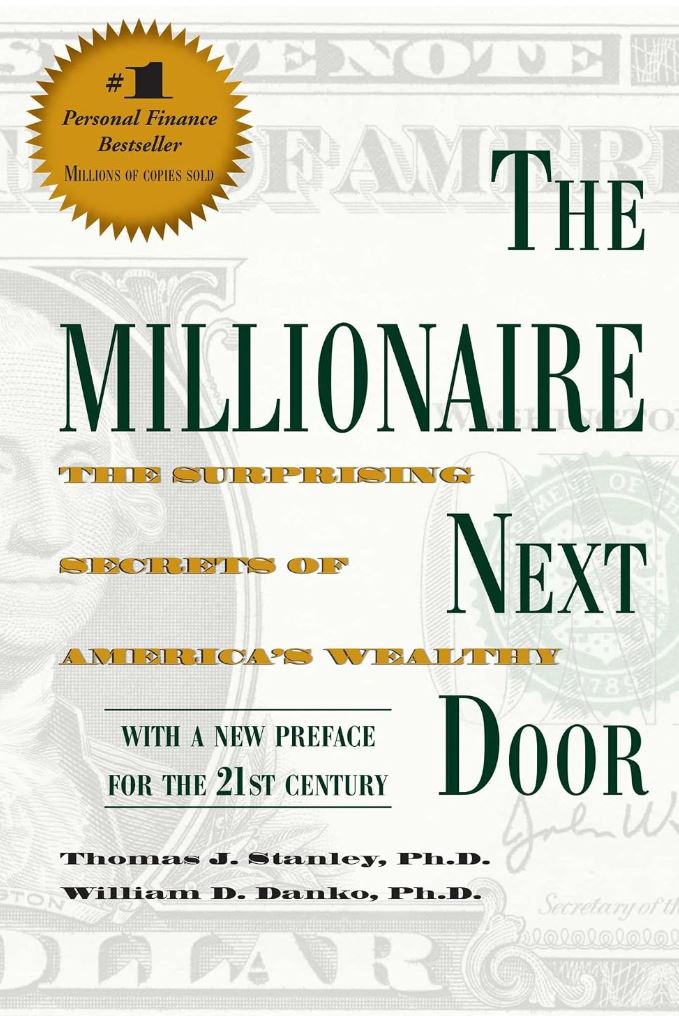
Best for separating wealth from the appearance of wealth
What does a wealthy person look like?
That’s a surprisingly important question.
Because if wealth means an expensive car, a large house, designer clothes and visible signs of success, building wealth can easily become confused with spending money.
The Millionaire Next Door examines wealth through a very different lens.
Its central theme is that accumulating wealth and displaying wealth are not necessarily the same thing.
That distinction matters.
Someone can have a high income while spending nearly everything they earn. Another person can live far less conspicuously while steadily accumulating assets.
One looks wealthy.
The other may actually be becoming wealthy.
For someone trying to build a stronger financial future, this can change the question from:
“What can I afford to buy?”
to:
“How much of what I earn am I keeping?”
It isn’t about refusing to enjoy your money. It’s about recognising that lifestyle and financial strength aren’t automatically the same thing.
A good choice if: you want to rethink what being financially successful actually means.
3. The Bogleheads’ Guide to Investing — Taylor Larimore, Mel Lindauer and Michael LeBoeuf
Best for making sensible investing feel less mysterious
One reason people chase shortcuts is that ordinary investing can seem overwhelmingly complicated.
Thousands of investments are available.
Financial news changes every day.
Experts disagree.
Social media constantly produces new opportunities.
Against that background, simplicity can almost feel suspicious.
The Bogleheads’ Guide to Investing takes its name from the investing philosophy associated with Vanguard founder John C. Bogle and presents a broad introduction to long-term personal finance and investing.
The attraction is not finding a magical investment.
It’s creating a sensible process.
That includes understanding diversification, investment costs, risk, asset allocation and the importance of sticking with a long-term strategy rather than continually reacting to noise.
This is where slow wealth building begins to make more sense.
You don’t necessarily need more activity.
Sometimes you need a reasonable plan and enough patience to allow it to work.
A good choice if: you’d like a practical introduction to long-term investing without constantly chasing market predictions.
4. Enough — John C. Bogle
Best for asking what all this wealth is actually for
Most financial books naturally focus on accumulating more.
More savings.
More investments.
More income.
More assets.
John C. Bogle’s Enough asks readers to think about something slightly different: our relationship with money, success and the endless pursuit of more.
That’s an interesting addition to a wealth-building reading list.
Because without some idea of what “enough” means, financial progress can become an endless race.
You reach one target and immediately create another.
Someone else earns more.
Someone else’s portfolio performs better.
Someone else retires earlier.
There’s always another comparison available.
Knowing why you’re building wealth can therefore be as important as knowing how.
Perhaps you’re looking for security.
More freedom over your time.
A comfortable retirement.
The ability to help your family.
Or simply fewer money worries.
Once the purpose becomes clearer, it may become easier to ignore shortcuts that don’t fit the life you’re actually trying to build.
A good choice if: you want your financial goals to reflect your values rather than somebody else’s definition of success.
5. From Financial Regret to Financial Freedom — Julian Merren
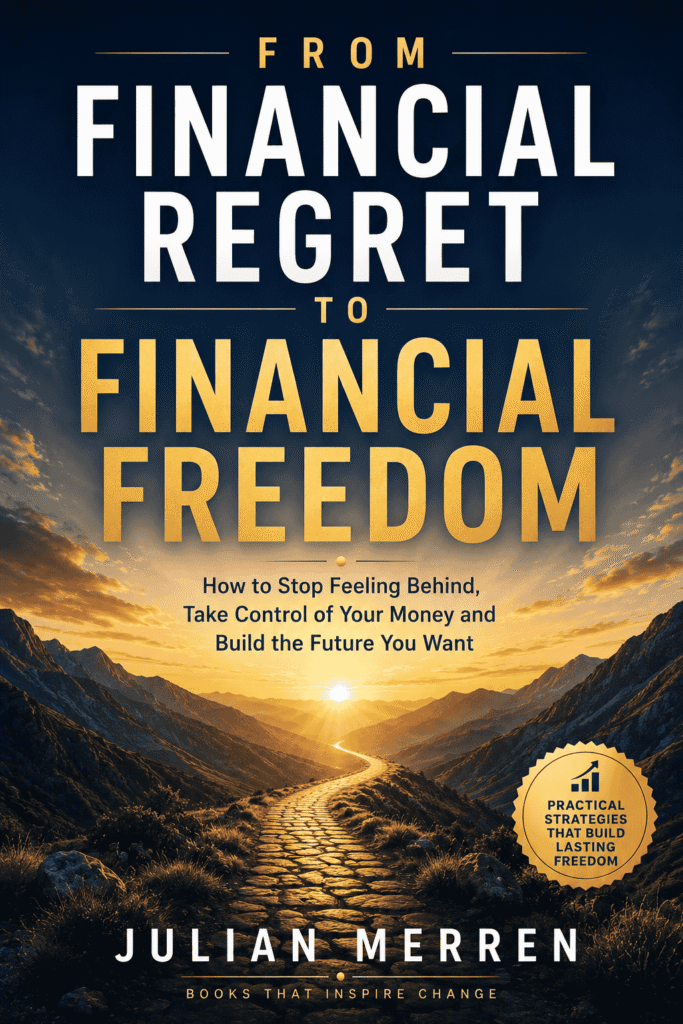
Best for people who feel pressure to catch up quickly
There is one situation where getting rich quickly can become particularly seductive.
Feeling late.
If you believe you should have started investing twenty years ago, gradual progress can seem inadequate.
You don’t just want to move forward.
You want to recover the lost years.
That’s the problem From Financial Regret to Financial Freedom by Julian Merren addresses.
The book is written around financial regret and the feeling of being behind. Rather than pretending past decisions don’t matter, it focuses on the decisions that are still available now.
That includes understanding your present financial position, finding room within your current income, creating a financial safety net, dealing with debt and beginning to build wealth without relying on desperate shortcuts.
That’s particularly important for late starters.
Taking dramatically more risk doesn’t give you the years back. It simply introduces another way for your financial position to go wrong.
A more useful question may be:
What can I build from here?
If that sounds closer to where you are, you can explore From Financial Regret to Financial Freedom.
Why Books About Building Wealth Slowly Matter
The internet has made financial information easier to access.
It has also made financial excitement easier to access.
A successful trade can be shown in seconds. Someone can post an extraordinary return without showing all the unsuccessful decisions that came before it. An investment can suddenly appear to be everywhere.
That can make ordinary progress feel inadequate.
Yet Australia’s Moneysmart warns that investing because something is trending online or in the news can be risky. Its guidance recommends understanding how an investment works, its risks and whether it fits your long-term goals rather than acting because of hype or fear of missing out.
That’s a useful distinction.
There’s nothing wrong with wanting your money to grow.
The danger begins when the desire to grow it quickly becomes more important than understanding what you’re doing.
The Difference Between Slow and Passive
Building wealth gradually doesn’t mean doing nothing.
There can be plenty to do:
- increase the amount you’re saving when circumstances allow
- reduce unnecessary investment costs
- learn more about the investments you own
- diversify rather than relying on one opportunity
- increase your income
- reduce expensive debt
- review your goals periodically
- keep investing through different market conditions when appropriate to your plan
The difference is that these actions improve the process rather than searching for a miracle.
Moneysmart’s current investing guidance similarly emphasises planning, research and diversification, with investments chosen around goals, time frame and risk tolerance.
Slow doesn’t mean careless.
It can mean deliberate.
Be Suspicious When Speed Becomes the Selling Point
One of the simplest filters you can apply to a financial opportunity is to notice how it’s being sold.
Is the emphasis on understanding the investment?
Or on how quickly you need to act?
Moneysmart identifies pressure to invest quickly, promises of high returns with little or no risk, guaranteed returns and reliance on hype or endorsements as warning signs worth investigating before investing.
That doesn’t mean every unfamiliar investment is automatically bad.
It means urgency shouldn’t replace understanding.
If you cannot explain how an investment works, where the potential return comes from and what could cause you to lose money, slowing down isn’t missing an opportunity.
It may simply be good judgement.
Five Books, One Unexciting Idea
These five books approach money from different directions.
A Random Walk Down Wall Street questions our ability to continually outsmart markets.
The Millionaire Next Door challenges the idea that looking wealthy and being wealthy are the same thing.
The Bogleheads’ Guide to Investing offers a framework for sensible long-term investing.
Enough asks what you’re ultimately trying to achieve.
And From Financial Regret to Financial Freedom addresses the emotional pressure to catch up when you wish you’d started earlier.
Different books.
But there’s a common idea underneath them.
Building wealth doesn’t have to be dramatic to be meaningful.
A Stronger Financial Future Doesn’t Need a Shortcut
Perhaps the hardest part of building wealth slowly is that progress can initially be difficult to see.
Your first few investments may look tiny.
Reducing debt may take longer than you’d hoped.
Your savings account may grow by hundreds rather than thousands.
But something important is happening.
You’re building a system.
You’re learning how to keep some of what you earn, direct it towards your future and resist the temptation to continually abandon the plan for something more exciting.
That’s why books about building wealth slowly can be so useful.
They remind us that financial progress doesn’t need to make a good social-media story.
It needs to work in real life.
Choose the book that addresses the part of your financial life you most need to strengthen.
Then take one idea from it and put it to work.
You don’t need to get rich next week.
You need to keep making tomorrow financially stronger than today.