
There comes a point in life when you start wondering whether the path you’ve been following is still the one you want to be on.
Perhaps you’ve spent twenty years building a career, only to realise that the work no longer excites you. Maybe your priorities have changed, your responsibilities have grown, or you’ve simply reached a stage where you want something different.
And then comes the uncomfortable question: Is it too late to start again?
The idea of starting over after 40 can feel intimidating. You’ve invested years developing skills, gaining experience and creating some financial stability. Walking away from that doesn’t sound particularly appealing.
But here’s something worth remembering: starting over doesn’t necessarily mean abandoning everything you’ve built.
Sometimes it means using what you already know to create a different future.
The following five books offer different perspectives on career reinvention, personal growth and finding your next direction. Whether you’re considering a completely new career or simply want to feel more fulfilled in the one you have, they’re a useful place to begin.
Why Starting Over After 40 Feels So Difficult
Changing direction in your twenties can feel like an adventure. Changing direction in your forties can feel like a financial decision with serious consequences.
There may be a mortgage, children, ageing parents or other responsibilities to consider. You’ve probably also developed a professional identity that isn’t easy to leave behind.
And there’s another challenge: uncertainty.
You might know exactly what you don’t want anymore, but have no clear idea what should replace it.
That’s why the best starting point isn’t necessarily updating your CV or applying for completely different jobs. It’s understanding what you want to change, what you need to protect and what possibilities are genuinely available.
These books approach that challenge from different angles.
1. Designing Your Life — Bill Burnett and Dave Evans
Stop Searching for the Perfect Answer and Start Exploring
One of the biggest obstacles to changing direction is believing you need a complete plan before you can begin.
Designing Your Life offers a different approach.
Drawing on design-thinking principles, Bill Burnett and Dave Evans encourage readers to treat their lives as something they can explore, experiment with and gradually improve.
Rather than expecting yourself to discover one perfect career, the book introduces practical ways to consider multiple possible futures.
This is especially helpful when you’re unsure what comes next.
You might be interested in a different industry but have no idea whether you’d enjoy working in it. Or perhaps you’re considering self-employment but aren’t ready to give up a reliable income.
Instead of making a dramatic commitment, you can investigate those possibilities through conversations, small experiments and practical research.
Why it’s worth reading: It replaces the pressure to make one enormous decision with permission to explore several realistic options.
Best for: Anyone who wants change but feels paralysed by the need to get the next decision right.

2. Working Identity — Herminia Ibarra
You Don’t Have to Know Who You’re Becoming Before You Begin
A career change isn’t only about finding a new job. It can also challenge how you see yourself.
If you’ve spent twenty years working in finance, management, healthcare or technology, that experience may have become part of your identity.
The thought of doing something completely different can feel unsettling, even when your current work no longer suits you.
In Working Identity, Herminia Ibarra explores how people make professional transitions and why career reinvention often involves trying new activities, developing relationships and experimenting with different professional identities.
One of the book’s most useful ideas is that clarity doesn’t always arrive before action.
Sometimes you discover what suits you by doing something different, rather than thinking about it endlessly.
For example, someone considering a move from corporate management into teaching or training might begin by mentoring colleagues, volunteering or delivering occasional workshops.
Those experiences can reveal whether the attraction is genuine or simply an appealing idea.
Why it’s worth reading: It helps explain why changing careers can feel emotionally difficult, even when the practical reasons for change are clear.
Best for: Readers who feel trapped by the professional identity they’ve spent years building.
3. The Squiggly Career — Helen Tupper and Sarah Ellis
Your Career Doesn’t Have to Follow a Straight Line
For many people, career success used to mean climbing a predictable ladder.
You gained experience, earned promotions, increased your salary and gradually moved towards more senior positions.
But what happens when you reach a certain point and realise you no longer want the next promotion?
The Squiggly Career challenges the idea that progress must always mean moving upwards.
Helen Tupper and Sarah Ellis explore how modern careers can involve sideways moves, new skills, different opportunities and changing definitions of success.
This perspective can be particularly valuable when you’re considering starting over after 40.
You may not need a completely new profession. A different role, organisation or working arrangement could offer the variety, flexibility or purpose you’ve been missing.
The book also encourages readers to understand their strengths and values rather than relying entirely on job titles to define success.
A sideways move that gives you more satisfaction and better work-life balance might be a better decision than another promotion that leaves you exhausted.
Why it’s worth reading: It broadens your understanding of what career progress can look like.
Best for: Experienced professionals who want change without discarding the skills and experience they’ve already developed.
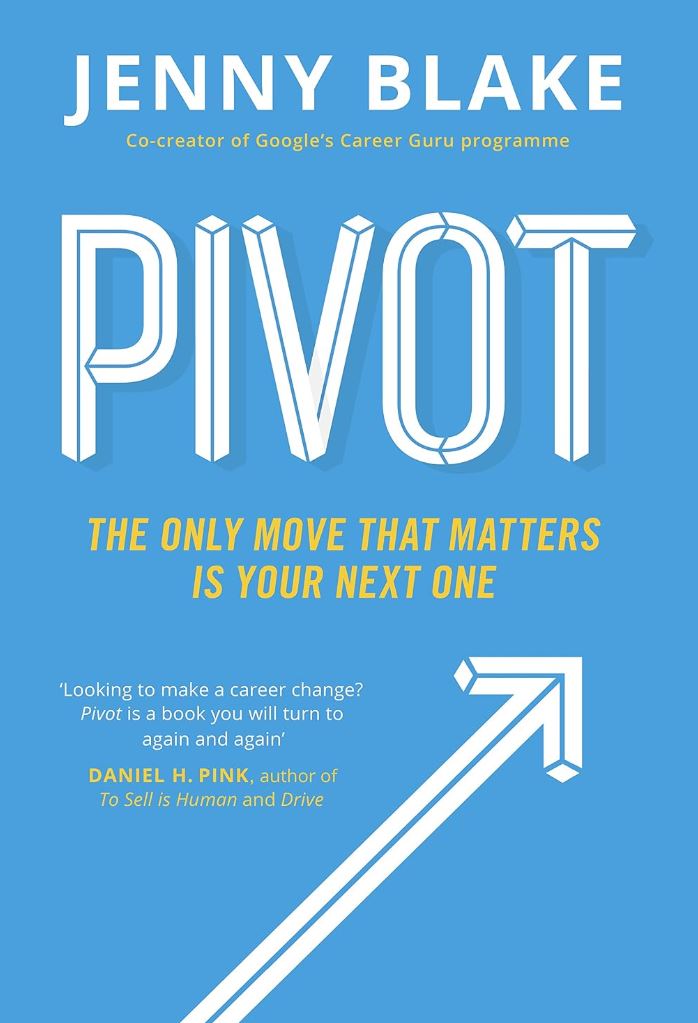
4. Pivot — Jenny Blake
Build Your Next Move Around What You Already Have
One of the most discouraging thoughts about changing direction is the belief that you’ll have to begin again at the bottom.
But after twenty years in the workforce, you’re unlikely to be starting from nothing.
You’ve developed transferable skills, professional relationships, problem-solving abilities and knowledge that could be valuable in other roles.
In Pivot, Jenny Blake presents a practical framework for making career changes by building on your existing strengths and experience.
Rather than treating change as a complete break from the past, the book encourages you to identify what is already working and use it as the foundation for your next move.
Imagine someone who has spent years managing operations but no longer wants the pressure of their current position.
Their experience might transfer into project coordination, training, process improvement, consultancy or another role where their existing knowledge remains useful.
They may need to develop additional skills, but they don’t necessarily need to start their professional life again.
Why it’s worth reading: It offers a structured way to explore new opportunities while making use of your existing abilities.
Best for: People who want a practical career transition rather than a dramatic leap into the unknown.
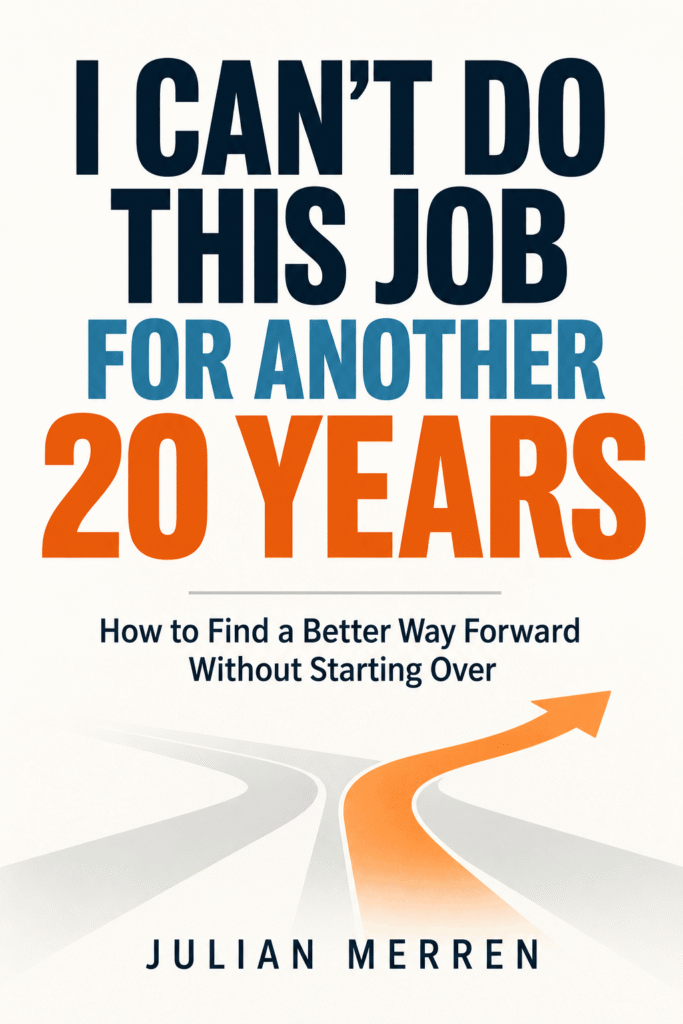
5. I Can’t Do This Job for Another 20 Years — Julian Merren
Find Out What Actually Needs to Change Before You Start Over
Sometimes the desire to start again comes from a simple realisation:
I cannot imagine spending another ten or twenty years doing this.
But recognising that something needs to change isn’t the same as knowing what to do next.
That’s the problem at the heart of I Can’t Do This Job for Another 20 Years by Julian Merren.
The book is written for people who have already invested years in their careers but are beginning to question whether they want to continue on the same path.
Rather than encouraging readers to resign, chase a passion or make a dramatic career change, it starts with a more practical question:
What exactly is making your current working life feel wrong?
Is it the work itself? The employer? The hours? The pressure? The lack of progress? Or have your priorities simply changed?
Those distinctions matter.
You might discover that a different role within your existing industry would solve much of the problem. Alternatively, you may realise that a larger change is worth exploring.
The book offers practical frameworks, exercises and a 30-day challenge designed to help readers assess their situation, recognise transferable skills and take manageable steps towards a better direction.
It also acknowledges something that career-change advice sometimes overlooks: financial security, family commitments and the realities of everyday life.
Why it’s worth reading: It helps you work out whether you need an entirely new career or a better version of your existing working life.
Best for: Anyone who knows they can’t continue indefinitely in their current job but isn’t ready to risk everything on an uncertain alternative.
Explore the book: I Can’t Do This Job for Another 20 Years by Julian Merren.
Starting Over After 40 Doesn’t Mean Starting From Zero
There’s a tendency to look at career change as a choice between two extremes.
Stay exactly where you are, or leave everything behind.
In reality, there’s often a great deal of space between those options.
Before making a major decision, consider these questions:
- What do I want to leave behind? Identify the specific frustrations rather than assuming the entire career is wrong.
- What do I want to keep? Think about income, flexibility, skills, relationships and the parts of your work you still enjoy.
- What could I change without resigning? Explore different responsibilities, employers, working arrangements or departments.
- What could I test first? Look for small ways to investigate another direction before making a major commitment.
- What would a better working life actually look like? Focus on practical improvements rather than searching for an idealised dream career.
You don’t need answers to everything immediately.
Even identifying one realistic option can make the future feel less overwhelming.
How to Make a Fresh Start Without Making a Rash Decision
If you’re seriously considering changing direction, try approaching the next few months as a period of investigation rather than a deadline for reinvention.
Begin by writing down what isn’t working. Be specific. “I hate my job” is understandable, but “I no longer want rotating shifts” or “I want work that involves more creativity” gives you something practical to explore.
Next, identify the experience you could carry into another role. Think beyond your job title. Leadership, communication, organisation, technical knowledge and problem-solving skills may be useful in settings you haven’t considered.
Then choose one possibility to investigate.
Speak to someone doing that work. Research the skills required. Try a short course if it would genuinely help you evaluate the opportunity. Look at real job advertisements to understand what employers expect.
Finally, review what you’ve learned before deciding whether to take a larger step.
A successful transition doesn’t have to happen quickly. It needs to make sense for your circumstances.
Final Thoughts: Your Next Chapter Can Be Different
The idea of starting over after 40 can bring up plenty of doubts.
You might wonder whether you’ve left it too late, whether employers will value your experience or whether a change will be worth the effort.
Those concerns deserve thoughtful consideration.
But they don’t automatically mean you should spend the next twenty years doing something that no longer feels right.
You have experience, knowledge and a clearer understanding of what matters to you than you probably had at the beginning of your career.
The goal isn’t necessarily to reinvent yourself completely. It may simply be to use everything you’ve learned to build a working life that fits who you are now.
And if you’re not sure where to begin, these five books can help you ask better questions, explore realistic possibilities and take your next step with greater clarity.
Looking for a practical place to start? Explore I Can’t Do This Job for Another 20 Years by Julian Merren for a grounded approach to finding a better way forward without starting from zero.