
You’ve spent twenty years building a career.
You’ve developed skills, gained experience, established a reliable income and gradually become someone who knows exactly what they’re doing.
But now you’re beginning to wonder whether you want to spend the next fifteen or twenty years doing the same thing.
Perhaps the work no longer interests you. Maybe the pressure has become exhausting. Or perhaps you’ve simply reached a stage where your priorities have changed.
You’d like to do something different.
But there’s one thought that keeps getting in the way.
Haven’t I left it a bit late?
If you’re in your 40s or 50s, it’s understandable to wonder whether it’s too late to change careers.
You may have a mortgage, family responsibilities, retirement plans and a lifestyle that depends on your current income.
Starting again doesn’t sound particularly appealing.
But changing careers later in life doesn’t necessarily mean abandoning everything you’ve built.
Sometimes it means finding a different way to use the skills and experience you’ve already accumulated.
These five books offer practical ideas, thoughtful perspectives and encouragement for anyone questioning whether there’s still time to build a more satisfying working future.
Why It Can Feel Too Late to Change Careers After 40
When you’re twenty-five, the idea of trying something different can feel exciting.
You may have fewer financial commitments, more flexibility and plenty of time to recover if things don’t work out.
At forty-five or fifty-five, the situation can look very different.
You might have spent years developing specialised knowledge. Your income may reflect your experience, and other people may depend on that income.
The possibility of taking a pay cut or returning to an entry-level position can feel intimidating.
There may also be concerns about age discrimination, retraining and whether employers will value your experience in a different field.
Those concerns shouldn’t be dismissed.
Some transitions genuinely are more difficult later in life, particularly when a new profession requires lengthy qualifications or a significant reduction in earnings.
But not every career change requires a complete reinvention.
You may be able to move into a related role, change employers, explore another industry or gradually develop skills that open new opportunities.
The important thing is understanding what’s possible before deciding that your age has already made the decision for you.

1. Pivot — Jenny Blake
Build Your Next Career Move Around Your Existing Strengths
One of the biggest fears surrounding career change is the possibility of losing everything you’ve worked to achieve.
That’s why Pivot by Jenny Blake is a useful starting point.
The book presents a framework for navigating career transitions by building on your existing strengths, interests and experience.
Rather than encouraging readers to abandon their professional history, Blake focuses on identifying what they already have and exploring how it might support a different direction.
For example, someone who’s spent twenty years managing operations may have developed skills in leadership, planning, communication and problem-solving.
Those abilities might be useful in project management, training, service delivery or process improvement.
Of course, moving into another role may still require additional learning.
But recognising your transferable skills can help you identify opportunities that don’t involve beginning again at the bottom.
Pivot also encourages readers to test ideas and investigate possibilities before making major commitments.
That can be particularly valuable when financial stability matters.
Why it’s worth reading: It offers a practical approach to career transitions that respects the value of your existing experience.
Best for: Experienced professionals who want a different direction without unnecessarily discarding their skills.
2. Working Identity — Herminia Ibarra
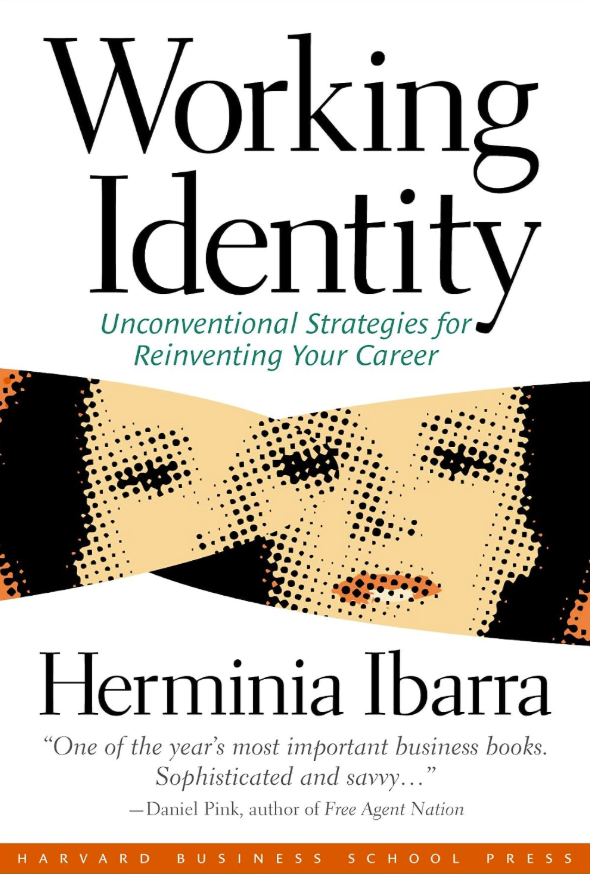
Discover Who You Could Become Professionally
After spending decades in one profession, your career can become closely connected to your identity.
You don’t simply work in finance, healthcare, technology or management.
You begin to think of yourself as someone who belongs in that particular field.
And imagining yourself doing something completely different can feel surprisingly uncomfortable.
In Working Identity, Herminia Ibarra explores how people navigate professional transitions and develop new working identities.
One of the book’s important ideas is that career change often involves experimenting with possibilities rather than discovering a perfect answer through reflection alone.
That might involve meeting people in different industries, exploring unfamiliar responsibilities or trying new activities connected to a possible career direction.
For someone considering a change after forty or fifty, this approach can be reassuring.
You don’t necessarily need to know exactly what your future career will look like before taking the first step.
You can begin by learning what different opportunities actually involve.
Why it’s worth reading: It explores the personal challenges of changing professional direction and encourages practical experimentation.
Best for: People who feel defined by the career they’ve spent years building.
3. The 100-Year Life — Lynda Gratton and Andrew J. Scott
Rethink the Idea of One Career for Life
For previous generations, a familiar working-life pattern involved education, several decades of employment and retirement.
But longer lives and changing economic conditions have encouraged new ways of thinking about how careers might develop.
In The 100-Year Life, Lynda Gratton and Andrew J. Scott explore how longevity may reshape education, employment, finances and personal transitions.
The book challenges the assumption that everyone should follow one uninterrupted career path throughout adulthood.
Instead, it examines the possibility of longer, more varied working lives involving periods of learning, change and reinvention.
This is an interesting perspective for someone who’s reached fifty and begun thinking that their professional opportunities are running out.
You may still have many working years ahead.
That doesn’t mean every career change will be practical or financially sensible.
But it does suggest that continuing to learn and adapt may be increasingly important.
The book also encourages readers to think beyond income alone, considering relationships, skills and wellbeing as part of long-term planning.
Why it’s worth reading: It offers a broader perspective on how careers and working lives can evolve over time.
Best for: Readers reconsidering their career plans in midlife and thinking about the years ahead.
4. Designing Your Life — Bill Burnett and Dave Evans
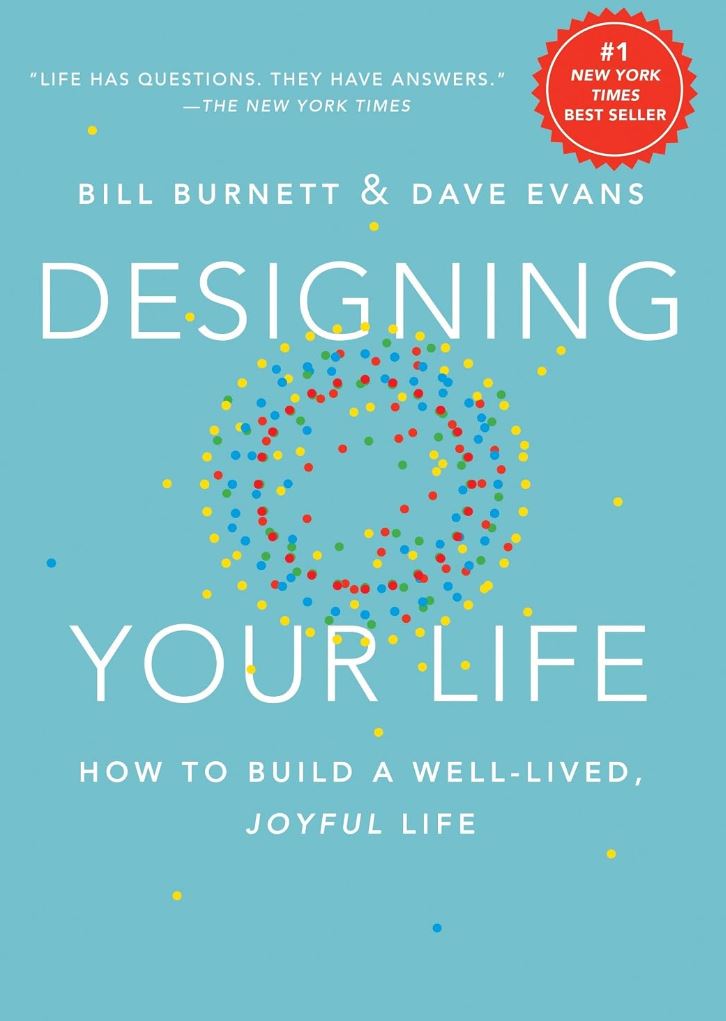
Explore New Possibilities Without Making a Huge Leap
Sometimes the biggest obstacle to career change isn’t your age.
It’s uncertainty.
You know your current career no longer feels right, but you have no clear idea what you’d rather do.
And when you have significant responsibilities, making a decision without knowing where it might lead can feel particularly risky.
Designing Your Life by Bill Burnett and Dave Evans approaches that uncertainty through design thinking.
The authors encourage readers to explore different possibilities, investigate ideas and learn through practical experiences.
Instead of expecting yourself to discover one perfect career, you can begin testing directions that interest you.
For example, someone considering a move into training might volunteer to mentor colleagues or investigate opportunities to deliver workplace instruction.
Someone interested in consultancy could speak with people already working in the field to understand the realities involved.
These experiences can help you decide whether an opportunity is worth pursuing before making a major commitment.
Why it’s worth reading: It provides a useful approach to exploring career possibilities when you’re unsure what you want to do next.
Best for: People who want change but need a more manageable way to investigate their options.
5. I Can’t Do This Job for Another 20 Years — Julian Merren
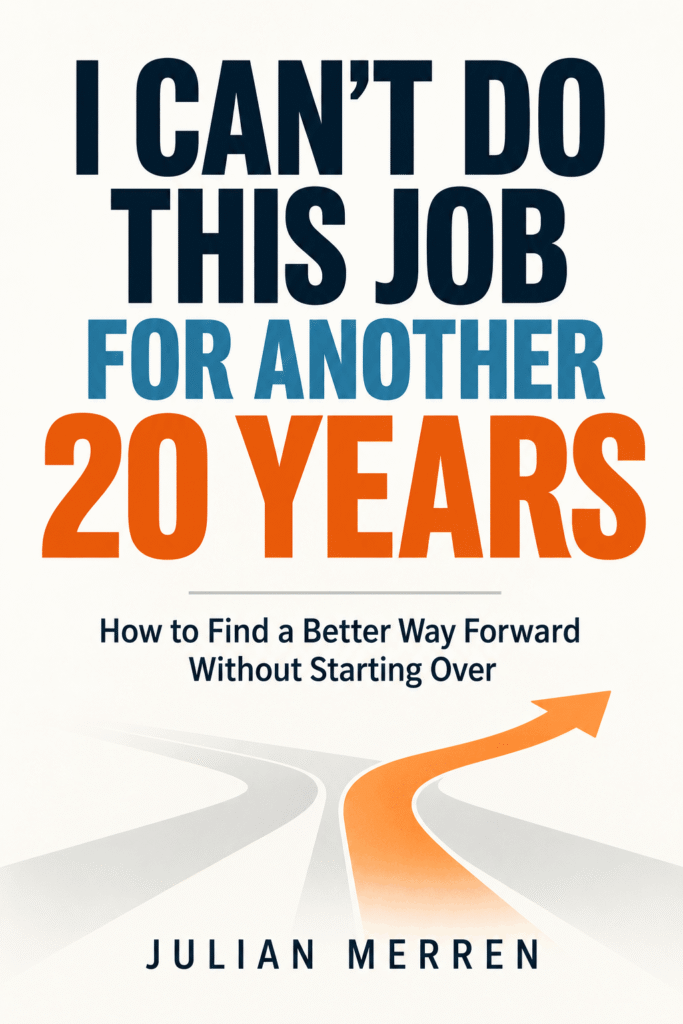
Find a Better Way Forward Without Starting Over
Sometimes the thought of changing careers begins with a simple question.
Can I really keep doing this for another twenty years?
You may have spent decades becoming good at your job, but that doesn’t necessarily mean you want to continue doing it.
Perhaps the hours no longer suit you.
Maybe you’re tired of the pressure, the responsibilities or the working environment.
Or perhaps your priorities have changed, and you want something different from the next stage of your life.
I Can’t Do This Job for Another 20 Years by Julian Merren explores these concerns from the perspective of experienced workers who want a better future without unnecessarily throwing away everything they’ve built.
The book encourages readers to identify what’s actually wrong before deciding how much needs to change.
That distinction matters.
A different employer might improve your working conditions.
Another role could allow you to use your experience in a more satisfying way.
A related industry might offer opportunities you haven’t considered.
And if a larger career transition genuinely makes sense, you can investigate it while considering your financial responsibilities.
The book includes practical exercises and a 30-day challenge to help readers examine their options and take manageable steps towards change.
Why it’s worth reading: It offers a realistic approach to career dissatisfaction for people who need to balance the desire for change with financial security.
Best for: Experienced workers in their 40s and 50s who want to explore a better working future without making impulsive decisions.
Explore the book: I Can’t Do This Job for Another 20 Years by Julian Merren.
Four Questions to Ask Before Changing Careers Later in Life
Reading about career change can help you see new possibilities. But the next step is connecting those ideas to your own circumstances.
Before deciding whether to stay or leave, consider these four questions.
1. What Exactly Do I Want to Change?
Are you unhappy with your profession, or with the conditions surrounding your job?
Perhaps you enjoy the work but dislike the hours, management or level of responsibility.
Understanding the difference can prevent you from making a much larger change than necessary.
2. Which Skills Could I Take Somewhere Else?
Think beyond your job title.
You may have developed valuable abilities in leadership, communication, problem-solving, planning, training or managing difficult situations.
Look for roles where those strengths might be useful.
3. What Would a Career Change Cost Me?
Consider your income, savings, financial commitments and retirement plans.
Would you need additional qualifications?
Could you afford a temporary reduction in earnings?
How long might a transition realistically take?
These questions aren’t reasons to abandon your plans. They’re important parts of making informed decisions.
4. Could I Test the Idea Before Committing?
Investigate job advertisements, speak with people in the field and explore short learning opportunities.
If possible, try relevant projects or responsibilities before making a permanent move.
You may discover that the career you’re considering is a good fit.
Or you may find a different option that better suits your circumstances.
Either way, you’ve gained useful information.
Final Thoughts: Is It Really Too Late to Change Careers?
If you’ve spent twenty or thirty years building a career, it’s understandable to feel reluctant about changing direction.
You’ve invested time, effort and energy into becoming good at what you do.
And you may have financial responsibilities that make uncertainty difficult to accept.
But deciding that it’s too late to change careers simply because you’ve reached a particular age may close off possibilities before you’ve properly explored them.
You don’t necessarily have to begin again.
You may be able to use your existing skills in another role, move into a different working environment or gradually build towards a new direction.
Some changes will be harder than others, and not every opportunity will suit your circumstances.
But there’s a difference between recognising those challenges and assuming you have no options.
These five books can help you think through that difference.
If you’re questioning the next fifteen or twenty years of your working life, start by exploring what you actually want to change.
And if you’d like a practical guide to assessing your options, I Can’t Do This Job for Another 20 Years by Julian Merren may be a useful place to begin.
Your experience still has value. And your next career move doesn’t have to look like your first.