
There comes a point in many working lives when the question begins to change.
In your twenties and thirties, you may have focused on building a career, gaining experience, increasing your income and establishing financial security.
You worked towards promotions, developed valuable skills and gradually became someone who knew what they were doing.
But somewhere around your forties or fifties, you may begin thinking differently.
Perhaps you’re no longer interested in climbing the corporate ladder.
Maybe the responsibilities that once excited you have become exhausting.
Or perhaps you’ve realised that spending another fifteen or twenty years doing the same work isn’t particularly appealing.
You don’t necessarily hate your career.
You simply want something better from the years ahead.
And that’s where the idea of a midlife career change begins to make sense.
Not necessarily a dramatic reinvention or a decision to throw away everything you’ve built.
Sometimes it’s about using your experience differently, adjusting your priorities and finding work that better suits the person you’ve become.
These five books offer thoughtful perspectives and practical ideas for building a more satisfying second half of your career.
Why the Second Half of Your Career Deserves a Different Approach
One of the most interesting things about reaching midlife is that your definition of success may have changed.
Earlier in your career, a promotion might have represented progress.
A higher salary, more responsibility or a more impressive job title may have been important goals.
But after spending decades working, you may begin valuing different things.
More flexibility.
Less pressure.
Greater independence.
Time for family, relationships and personal interests.
Or simply the opportunity to do work that feels worthwhile without consuming your entire life.
There’s nothing wrong with those priorities changing.
The difficulty is that many people continue following career plans they created years ago, even when those plans no longer reflect what they want.
A better second half begins by questioning those assumptions.
And these books can help.
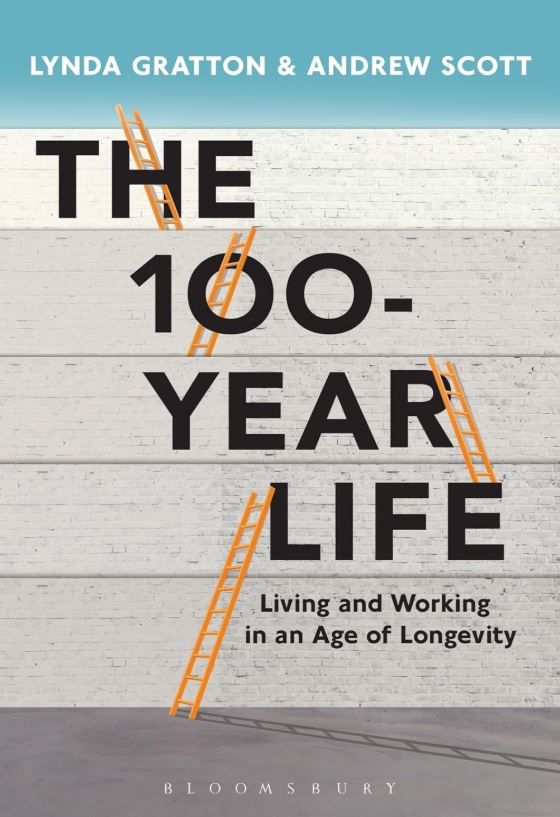
1. The 100-Year Life — Lynda Gratton and Andrew J. Scott
Rethink What a Longer Working Life Could Look Like
For previous generations, working life often followed a fairly predictable pattern.
Complete your education, establish a career, work for several decades and eventually retire.
But longer lives and changing economic conditions have encouraged new ways of thinking about how careers develop.
In The 100-Year Life, Lynda Gratton and Andrew J. Scott explore how longevity may reshape employment, education, finances and personal transitions.
The book challenges the assumption that everyone should follow one uninterrupted career path throughout adulthood.
Instead, it considers how longer lives may involve multiple stages of learning, working and reinvention.
This perspective can be particularly useful when you’ve reached fifty and begun thinking that your professional opportunities are running out.
Depending on your circumstances, you may still have many working years ahead.
That doesn’t mean you should make a risky career decision simply because change is possible.
But it does suggest that continuing to develop your skills and adapt to new opportunities may be worthwhile.
Why read it? It encourages you to think beyond the traditional idea of one career followed by retirement.
Best for: Readers reconsidering their long-term working future and the opportunities that might exist in the years ahead.
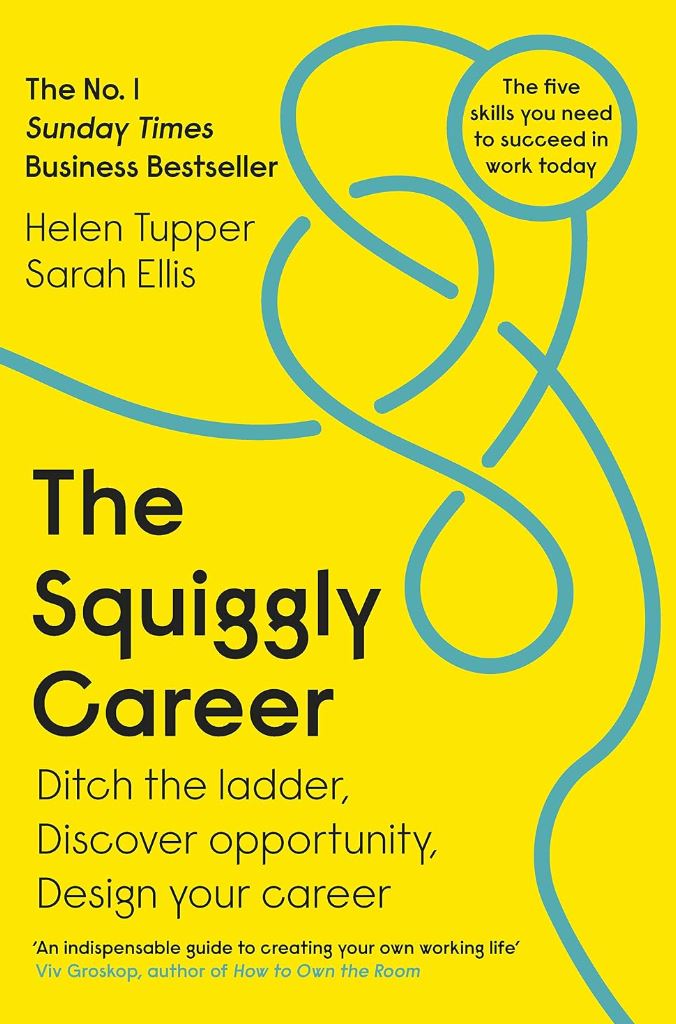
2. The Squiggly Career — Helen Tupper and Sarah Ellis
Your Next Career Move Doesn’t Have to Be Upwards
For years, career progression has often been associated with climbing.
You begin in a junior position, develop your experience, move into management and continue working towards greater responsibility.
But what happens when you no longer want to climb?
Perhaps you’ve already experienced the pressures of senior management.
Maybe you’d prefer a role with fewer responsibilities, greater flexibility or more opportunities to use your specialist knowledge.
In The Squiggly Career, Helen Tupper and Sarah Ellis explore a more flexible approach to career development.
Their ideas challenge the assumption that professional progress must always follow a straight line.
Sometimes a sideways move can be more satisfying than another promotion.
You might move into training, advisory work, project coordination or a different area of your organisation.
The important thing is identifying opportunities that reflect your strengths and priorities rather than simply chasing the next job title.
For someone considering a midlife career change, this can be a valuable shift in perspective.
Why read it? It encourages you to explore career opportunities that don’t depend on traditional promotions.
Best for: Experienced professionals who want to rethink what career success means to them.
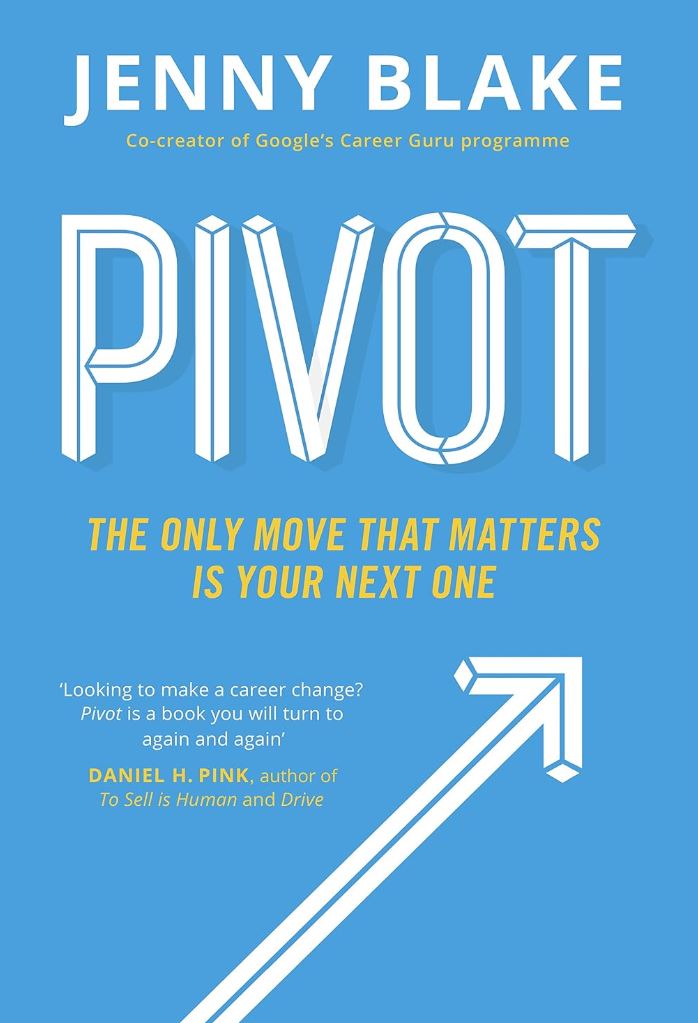
3. Pivot — Jenny Blake
Build Your Next Chapter Around the Skills You Already Have
One of the biggest obstacles to changing direction later in life is the fear of starting again.
You’ve spent twenty or thirty years developing experience.
You understand your industry, know how to handle difficult situations and have built valuable professional relationships.
Why would you want to abandon all of that?
Pivot by Jenny Blake offers a practical approach to career transitions that begins with your existing strengths.
Rather than treating change as a complete break from the past, Blake encourages readers to examine what they already know and how those abilities might support a different direction.
For example, someone who’s spent years managing operations may have developed valuable skills in planning, communication, leadership and problem-solving.
Those abilities could be useful in another organisation, a related industry or a different type of role.
Of course, some transitions require additional qualifications or training.
But recognising your transferable skills can help you identify possibilities that don’t involve returning to the beginning.
The book also encourages exploring and testing ideas before making major commitments.
Why read it? It offers a practical way to investigate new opportunities while respecting the experience you’ve already gained.
Best for: People who want a career change but don’t want to discard everything they’ve worked to achieve.
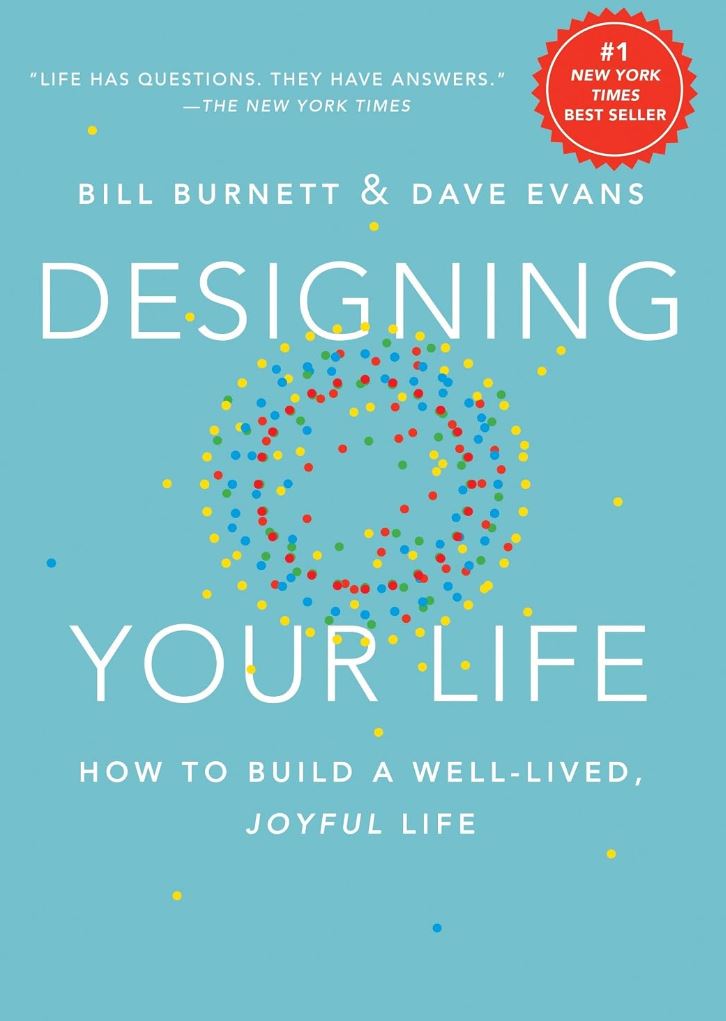
4. Designing Your Life — Bill Burnett and Dave Evans
Stop Searching for the Perfect Career and Start Exploring
Sometimes the hardest part of changing careers isn’t the financial risk.
It’s not knowing what you actually want to do.
You may have spent decades working towards goals that once seemed important.
But now those goals no longer feel particularly meaningful.
You want something different, yet you struggle to imagine what that might look like.
Designing Your Life by Bill Burnett and Dave Evans approaches this uncertainty through design thinking.
Rather than expecting readers to discover one perfect career, the authors encourage them to explore different possibilities and learn through practical experiences.
That might involve speaking with people in unfamiliar industries, investigating new responsibilities or experimenting with activities connected to possible career directions.
For example, someone interested in teaching could begin by mentoring colleagues.
Someone considering consultancy might investigate what independent advisers actually do before making a commitment.
These small experiments can help you gather information and develop a clearer understanding of your options.
Why read it? It offers a useful approach to exploring career possibilities when you’re uncertain about your next direction.
Best for: Readers who know they want something different but haven’t yet identified what that might be.
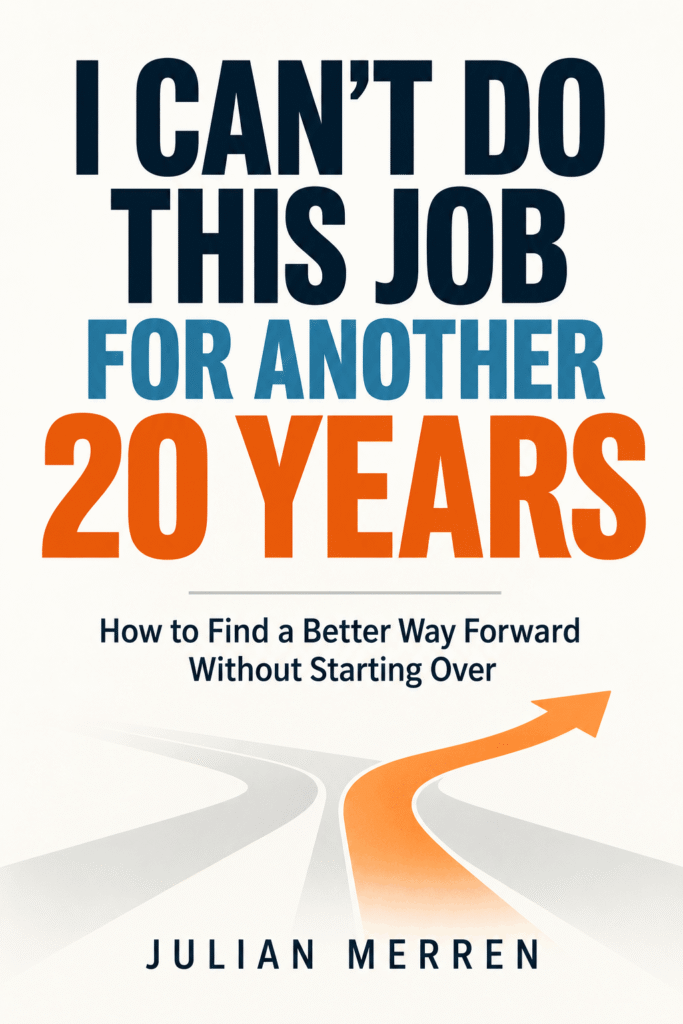
5. I Can’t Do This Job for Another 20 Years — Julian Merren
Find a Better Way Forward Without Starting Over
Sometimes the idea of changing careers begins with a surprisingly simple realisation.
I can do this job. I just don’t want to keep doing it for another twenty years.
You’ve spent decades becoming good at your work.
You’ve developed experience, established financial security and built a professional identity.
But perhaps the pressure has become exhausting.
Maybe your responsibilities no longer suit your life.
Or perhaps your priorities have changed, and you want something different from the next stage of your career.
I Can’t Do This Job for Another 20 Years by Julian Merren explores these concerns from the perspective of experienced workers who want change without unnecessarily throwing away everything they’ve built.
The book encourages readers to identify what’s actually wrong before deciding how much needs to change.
Sometimes a different employer may provide a better working environment.
Perhaps another role could allow you to use your experience in a more satisfying way.
Or maybe a gradual transition into another industry would offer the right balance between change and financial security.
The book includes practical exercises and a 30-day challenge to help readers examine their circumstances and explore manageable next steps.
Why read it? It offers a realistic approach to building a better working future while respecting your experience and financial responsibilities.
Best for: Experienced workers in their 40s and 50s who want a more satisfying second half of their career without making impulsive decisions.
Explore the book: I Can’t Do This Job for Another 20 Years by Julian Merren.
Four Questions to Ask Before Planning a Midlife Career Change
Reading about career change can help you see new possibilities.
But the next step is understanding what those possibilities might mean for your own life.
Before making a major decision, consider these four questions.
1. What Do I Want More of in My Working Life?
Perhaps you’d like greater independence, more meaningful responsibilities or better work-life balance.
Try to identify what would genuinely improve your everyday experience rather than focusing only on a new job title.
2. What Do I Want Less Of?
Sometimes it’s easier to identify what you’re trying to escape.
Long hours, constant pressure, difficult management or responsibilities that no longer interest you.
Understanding these frustrations can help you avoid moving into another role with exactly the same problems.
3. Which Skills and Experiences Could I Use Differently?
Look beyond your current job title.
Consider the knowledge, judgement and abilities you’ve developed over the years.
You may discover opportunities in related roles or industries that value your experience.
For Australian readers, the Jobs and Skills Australia tool lets you explore how people move between different occupations, offering useful examples of potential career pathways

4. What Would a Realistic Transition Involve?
Consider your financial commitments, retirement plans, training requirements and the opportunities available in your area.
Could you investigate a different role while remaining employed?
Would additional qualifications be necessary?
Could a gradual transition reduce some of the uncertainty?
The aim isn’t to eliminate every risk.
It’s to make decisions with a clearer understanding of your options.
Final Thoughts: The Second Half of Your Career Can Be Different
Reaching midlife doesn’t mean you’ve run out of opportunities.
But it doesn’t mean you need to reinvent yourself completely, either.
You’ve spent years developing skills, gaining experience and learning what matters to you.
Those things still have value.
A midlife career change might involve moving into a different industry, taking on a new role or gradually building towards something unfamiliar.
But it could also mean finding a better employer, reducing your responsibilities or changing how you work.
The important thing is recognising that your future doesn’t have to be an automatic continuation of your past.
These five books can help you explore what a better second half might look like.
And if you’re ready to examine your options more closely, I Can’t Do This Job for Another 20 Years by Julian Merren offers a practical starting point.
You don’t have to start your career again to make the years ahead more satisfying. You can begin by building on everything you’ve already learned.