
Have you ever spent so much time preparing to do something that you never actually began?
Perhaps you’ve been planning to write a book, launch a business, learn a new skill or make a meaningful change in your life.
You research the subject.
You organise your notes.
You watch tutorials, compare different approaches and convince yourself that you need just a little more information before you’re ready.
But the starting point keeps moving.
There’s always something else to understand, another detail to improve or a potential mistake to avoid.
Eventually, weeks or months pass without much progress.
If you’ve been searching for books about perfectionism and procrastination, you may already recognise this pattern.
The problem isn’t necessarily a lack of ambition.
Sometimes it’s the belief that you need to get everything right before you can begin.
The following five books explore different ways to challenge that expectation, approach difficult tasks and make progress without demanding perfection.
Why Perfectionism Can Make Starting So Difficult
Perfectionism isn’t simply about wanting to do something well.
Having high standards can be useful.
You might care deeply about your work, take pride in your achievements and want to produce something meaningful.
The difficulty begins when those standards become conditions you must satisfy before taking action.
Perhaps you believe your first attempt needs to be impressive.
Maybe you’re worried other people will judge an imperfect result.
Or you feel that making a mistake would mean you’ve wasted your time.
Under those circumstances, postponing the task can become surprisingly appealing.
For readers who want to explore these patterns further, the Centre for Clinical Interventions offers free resources for understanding and managing perfectionism, including practical exercises for reconsidering unhelpful standards
As long as you haven’t started, you haven’t produced anything that can be criticised.
Your idea remains full of possibility.
But it also remains unfinished.
The five recommendations below examine this challenge from different perspectives, from understanding perfectionist thinking to developing practical ways to begin.
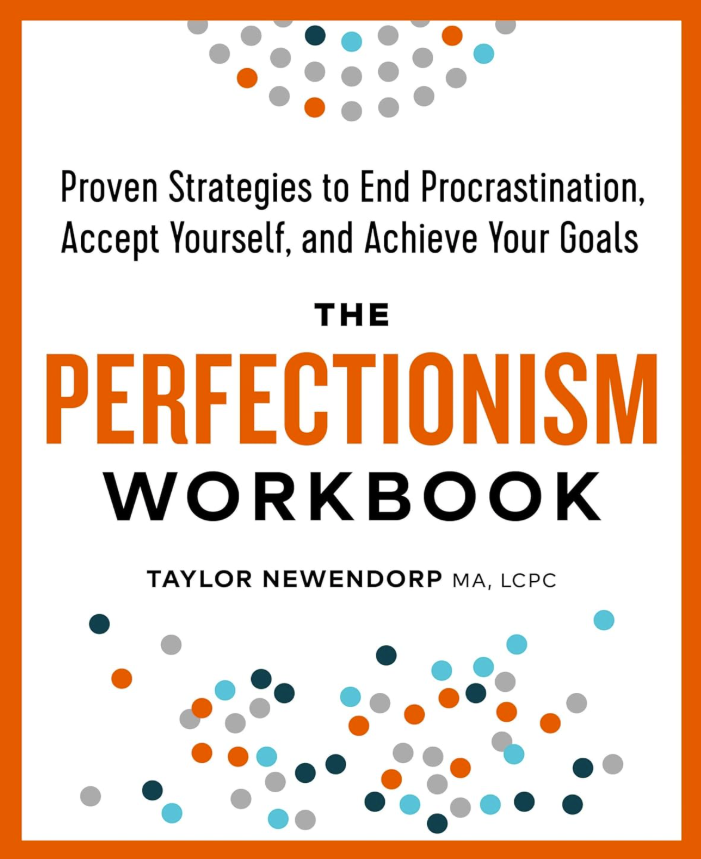
1. The Perfectionism Workbook — Taylor Newendorp
Best for: Understanding the Thinking That Keeps You Stuck
The Perfectionism Workbook by Taylor Newendorp explores how perfectionism can influence thoughts, behaviour and everyday decisions.
Rather than simply encouraging readers to lower their standards, the workbook offers exercises designed to help them recognise unhelpful patterns.
These include fear of mistakes, excessive self-criticism, procrastination and the pressure to meet unrealistic expectations.
Imagine you’ve been planning to create a website.
You want the layout to look professional, the writing to be excellent and every detail to work perfectly.
So you keep changing the design.
You rewrite the same introduction repeatedly.
And you postpone publishing because something still doesn’t feel quite right.
A workbook approach can help you examine the beliefs behind that hesitation.
Are you expecting a first attempt to look like a finished professional project?
Would publishing a reasonable first version genuinely be unacceptable?
Or have your expectations become an obstacle to making progress?
The book draws on cognitive behavioural approaches, mindfulness and acceptance-based strategies to encourage more flexible thinking. Penguin Books Australia
What you can learn:
- Recognise perfectionist thinking patterns.
- Challenge unrealistic expectations.
- Approach mistakes with less harsh self-judgement.
- Use practical exercises to address avoidance.
This is a particularly useful choice if perfectionism affects several areas of your life and you want a structured way to examine it.
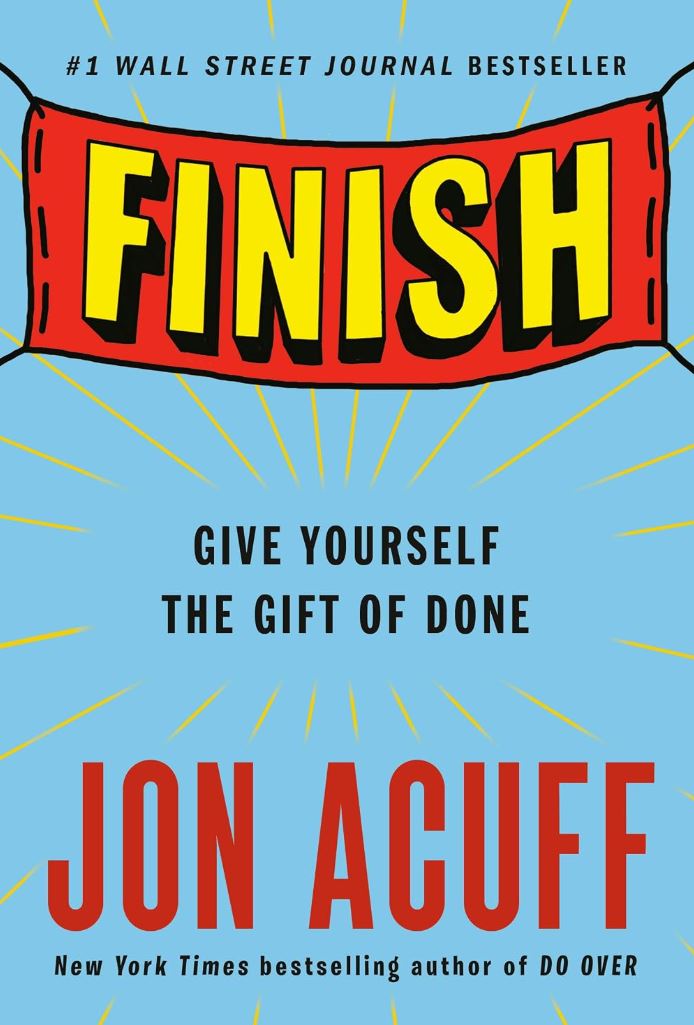
2. Finish: Give Yourself the Gift of Done — Jon Acuff
Best for: People Who Keep Starting but Rarely Finish
Some people have no difficulty generating ideas or beginning exciting projects.
The trouble begins when those projects become imperfect.
You miss a deadline.
Your progress slows down.
The work becomes more complicated than expected.
And suddenly, abandoning the project feels easier than adjusting your original plan.
In Finish, Jon Acuff explores how perfectionism can interfere with completing meaningful goals.
One of the book’s central themes is the danger of expecting an ideal path towards achievement.
Imagine you’ve decided to write regularly for thirty days.
You manage the first week, but miss a session during the second.
If you believe your routine must remain perfect, you may decide the entire effort has failed.
But missing one session doesn’t erase the work you’ve already completed.
You can adjust the schedule and continue.
Acuff encourages readers to question unrealistic rules, make goals more manageable and develop a healthier relationship with finishing. Penguin Books Australia
What you can learn:
- Recognise when perfectionism is delaying completion.
- Reconsider unrealistic goals and expectations.
- Continue when progress becomes imperfect.
- Value meaningful completion over an idealised result.
Finish is particularly relevant if you have several unfinished projects because something always seems to go wrong before the end.
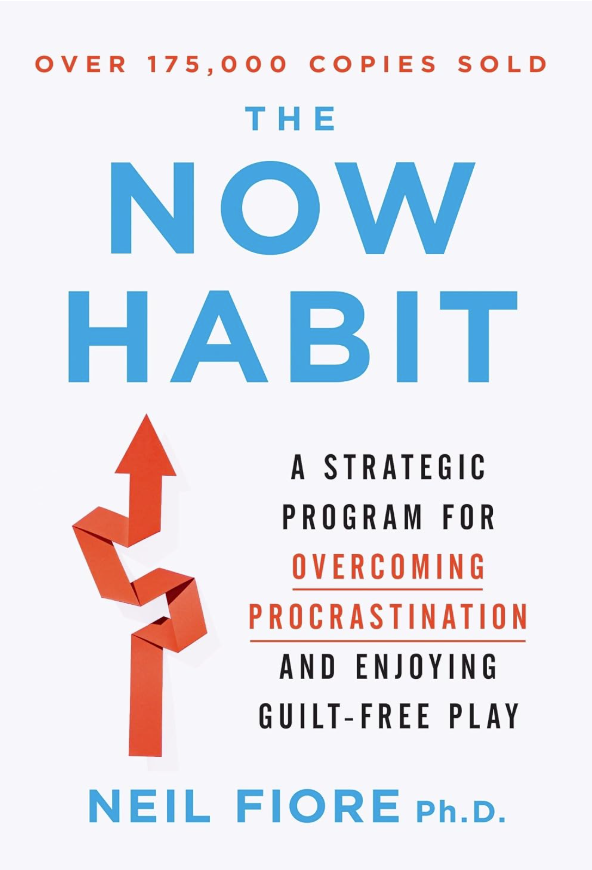
3. The Now Habit — Neil Fiore
Best for: Getting Started When a Task Feels Intimidating
Sometimes procrastination is less about distraction and more about discomfort.
You know what you need to do.
You understand why it matters.
But the task feels demanding, uncertain or connected to expectations you’re worried about meeting.
So you postpone it.
In The Now Habit, psychologist Neil Fiore explores how procrastination can become linked to pressure, anxiety and perfectionism.
The book encourages readers to reconsider their relationship with work and offers practical techniques for making tasks easier to approach.
One of its well-known concepts is the Unschedule, which involves taking a different approach to planning your time.
Rather than creating an intimidating timetable filled with work obligations, the method begins by accounting for existing commitments and personal activities.
This can help make the remaining work periods more realistic.
For example, perhaps you’ve been putting off a course assignment because you imagine needing several uninterrupted hours.
Instead of waiting for that perfect opportunity, you might identify a manageable period to begin one clearly defined section.
The aim isn’t to force yourself into endless productivity.
It’s to make the work more approachable and reduce the pressure surrounding it. neilfiore.com
What you can learn:
- Recognise when pressure is contributing to avoidance.
- Make intimidating tasks easier to begin.
- Develop more realistic working periods.
- Reduce the guilt associated with unfinished work.
The Now Habit is worth reading if you frequently postpone tasks precisely because they feel important.
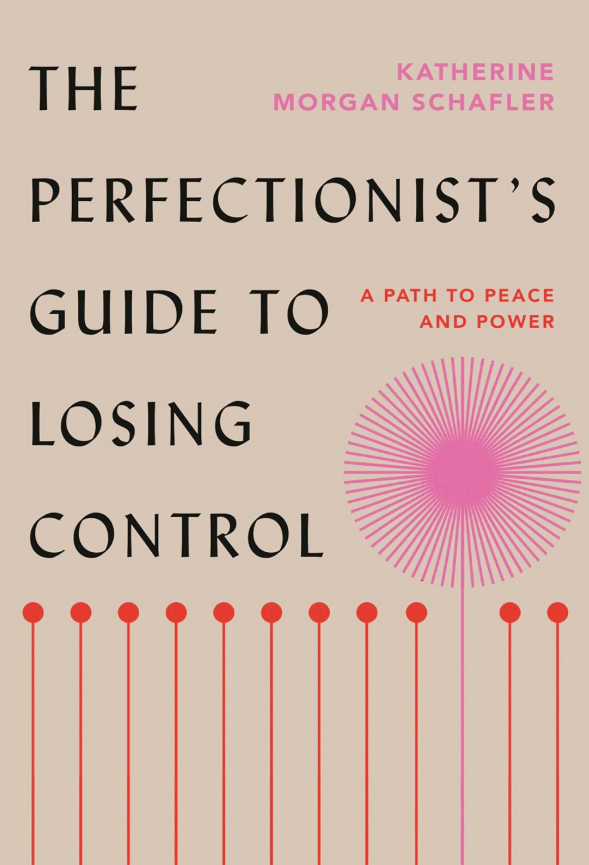
4. The Perfectionist’s Guide to Losing Control — Katherine Morgan Schafler
Best for: Rethinking Your Relationship With High Standards
Advice about perfectionism often sounds straightforward.
Stop trying to be perfect.
Lower your expectations.
Don’t worry so much about what other people think.
But those suggestions don’t always address why someone holds such demanding standards in the first place.
In The Perfectionist’s Guide to Losing Control, psychotherapist Katherine Morgan Schafler explores different expressions of perfectionism.
Rather than treating every perfectionist tendency as something that must be eliminated, she encourages readers to develop a more constructive relationship with their ambitions and expectations.
The book describes five perfectionist profiles, including the procrastinating perfectionist.
This approach may be particularly interesting if you recognise that your high standards sometimes help you produce excellent work but also prevent you from beginning.
Consider someone who wants to create a digital product.
They care about quality, accuracy and providing something genuinely useful.
Those standards are valuable.
But if they continually postpone completing a reasonable first version, the same standards may be working against them.
The challenge becomes learning when careful preparation is useful and when it has turned into unnecessary delay. Hachette Australia
What you can learn:
- Recognise different forms of perfectionism.
- Understand how high standards can become counterproductive.
- Develop a more flexible relationship with expectations.
- Approach ambition without demanding constant control.
This book offers a thoughtful perspective for readers who don’t want to abandon their standards but do want to stop being held back by them.
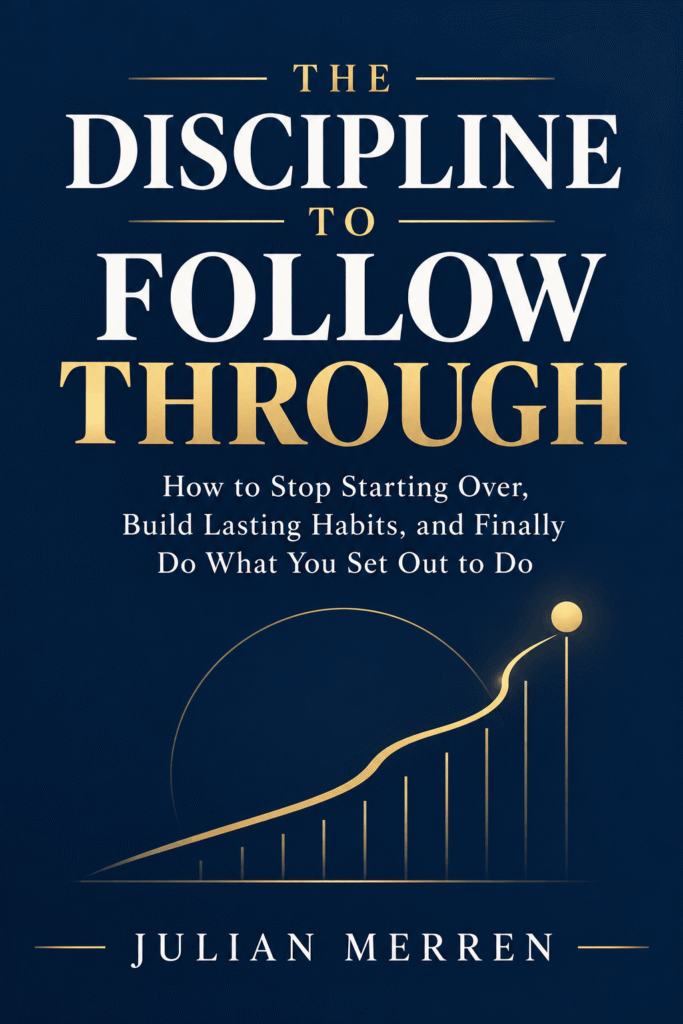
5. The Discipline to Follow Through — Julian Merren
Best for: Taking Action Before Everything Feels Perfect
Understanding perfectionism is valuable.
But eventually, you need a practical way to move forward.
You may recognise that your expectations are unrealistic.
You might understand why you’ve been postponing an important project.
Yet taking the first step can still feel difficult.
That’s where The Discipline to Follow Through by Julian Merren becomes particularly relevant.
The book explores how to make realistic commitments, overcome procrastination, build manageable habits and develop practical systems for following through.
A central theme is making the starting point small enough that taking action becomes more manageable.
Rather than attempting to change everything immediately, readers are encouraged to develop routines that fit their circumstances.
The book also explores what to do when motivation fades, how to protect attention and how to respond when things don’t go according to plan.
For someone who repeatedly postpones a project because it isn’t ready to be perfect, these principles can offer a more practical alternative.
You don’t necessarily need to abandon your standards.
You may need to separate the act of beginning from the expectation of producing a flawless result.
The book includes a separate 30-Day Follow-Through Workbook, featuring daily assignments and weekly checkpoints to help readers apply the ideas.
What you can learn:
- Make commitments that are realistic enough to maintain.
- Begin before every detail feels completely settled.
- Overcome procrastination through manageable action.
- Continue after setbacks without repeatedly starting over.
If perfectionism has been preventing you from turning good intentions into meaningful progress, this book offers a practical approach to developing consistent action.
Discover The Discipline to Follow Through and its 30-Day Companion Workbook
Which Books About Perfectionism and Procrastination Should You Read First?
The most useful choice depends on what’s keeping you stuck.
If you want structured exercises to understand perfectionist thinking, begin with The Perfectionism Workbook.
If you frequently start projects but struggle to finish them, consider Finish.
If demanding tasks feel so intimidating that you keep postponing them, The Now Habit offers practical techniques.
If you want to reconsider your relationship with high standards, The Perfectionist’s Guide to Losing Control provides another perspective.
And if your greatest difficulty is turning intentions into manageable, consistent action, The Discipline to Follow Through focuses on that challenge.
You don’t need to read all five immediately.
Choose the book that most closely addresses your situation and begin with one idea you can realistically apply.

Three Practical Ways to Stop Waiting for Perfect
Before starting another round of preparation, consider three useful changes.
1. Define what is good enough to begin
Not every task requires a flawless first attempt.
A draft can be revised.
A routine can be adjusted.
And an early version of a project can provide information that helps you improve it.
Set a reasonable standard for the next stage rather than demanding a perfect finished result before you’ve started.
2. Separate preparation from action
Research and planning can be valuable, but eventually they need to support something tangible.
If you’ve spent several days planning a project, consider whether you now have enough information to complete one small part of it.
Instead of researching another writing technique, write a paragraph.
Instead of redesigning your schedule, try one manageable session.
3. Give yourself permission to improve gradually
Your first attempt doesn’t need to represent your best possible work.
Some activities involve safety, legal or professional requirements that genuinely demand careful standards.
But many everyday personal projects allow room for learning and improvement.
Focus on producing a reasonable first step, then use what you’ve learned to decide what comes next.
Final Thoughts
If you’ve been searching for books about perfectionism and procrastination, remember that having high standards doesn’t have to prevent you from making progress.
You can care about quality without expecting every first attempt to be flawless.
You can make mistakes without treating them as evidence that you should stop.
And you can begin something meaningful before you’ve figured out every detail.
The five books above offer different ways to understand perfectionism, reduce avoidance and develop a healthier approach to personal goals.
Choose one thing you’ve been postponing because it doesn’t feel quite ready.
Identify a manageable next step.
Then give yourself permission to begin.
Because sometimes the difference between another unfinished idea and meaningful progress isn’t a better plan.
It’s being willing to take the first step before everything feels perfect.