

Sometimes the most difficult conversations in a relationship aren’t between you and your partner.
They’re about the people around you.
Perhaps your mother-in-law keeps offering advice you haven’t asked for. Maybe your father-in-law expects every weekend to include a family visit. Or perhaps relatives regularly question how you manage your home, raise your children or spend your money.
You want to maintain a good relationship with them.
But you also want the freedom to make decisions about your own life.
And somewhere between keeping everyone happy and protecting your relationship, things can become complicated.
If you’re searching for books about boundaries with in laws, you may already recognise this dilemma. You don’t necessarily want arguments, distance or damaged family relationships.
You simply want your needs and decisions to be respected.
These five books explore healthy boundaries, family expectations and how couples can navigate difficult situations without turning every disagreement into a family conflict.
Why Can Setting Boundaries With In-Laws Feel So Difficult?
When you enter a long-term relationship, you’re often becoming part of a wider family.
That can bring warmth, support and meaningful connections.
But it can also bring expectations that don’t always match your own.
One family might consider weekly visits essential.
Another might value independence and prefer occasional gatherings.
Some parents remain closely involved in their adult children’s decisions, while others expect them to manage their own lives.
Neither approach automatically creates a problem.
Difficulties arise when expectations become obligations and reasonable differences are treated as personal rejection.
You might feel uncomfortable declining an invitation because your partner doesn’t want to disappoint their parents.
Perhaps you hesitate to address unwanted advice because you worry about appearing disrespectful.
Or you find yourself agreeing to arrangements that leave you frustrated afterwards.
Boundaries help clarify where one person’s expectations end and another person’s choices begin.
They aren’t necessarily about keeping people away.
They’re about creating relationships where respect can exist alongside closeness.
1. The Book of Boundaries — Melissa Urban

If you’re looking for practical language to use during uncomfortable family conversations, The Book of Boundaries by Melissa Urban is an excellent starting point.
Urban explores how to identify personal limits, communicate them clearly and respond when other people push back.
The book includes more than 130 example scripts covering different relationships and situations, including parents and in-laws.
Why this book is worth reading
One of the hardest parts of setting boundaries is knowing exactly what to say.
You might understand that an expectation is unreasonable but struggle to express yourself without sounding angry.
Perhaps your in-laws expect you to attend every family event.
You appreciate the invitations but also need time for your own responsibilities and relationship.
A clear response might explain that you enjoy spending time together but won’t be available every weekend.
You don’t necessarily need an elaborate justification.
Urban’s approach encourages direct, respectful communication while recognising that other people may not immediately welcome a change.
The book also explores how to manage the guilt that sometimes follows setting a limit.
Best for: Readers who know they need clearer boundaries but struggle to find the right words.
2. Toxic In-Laws — Susan Forward, with Donna Frazier
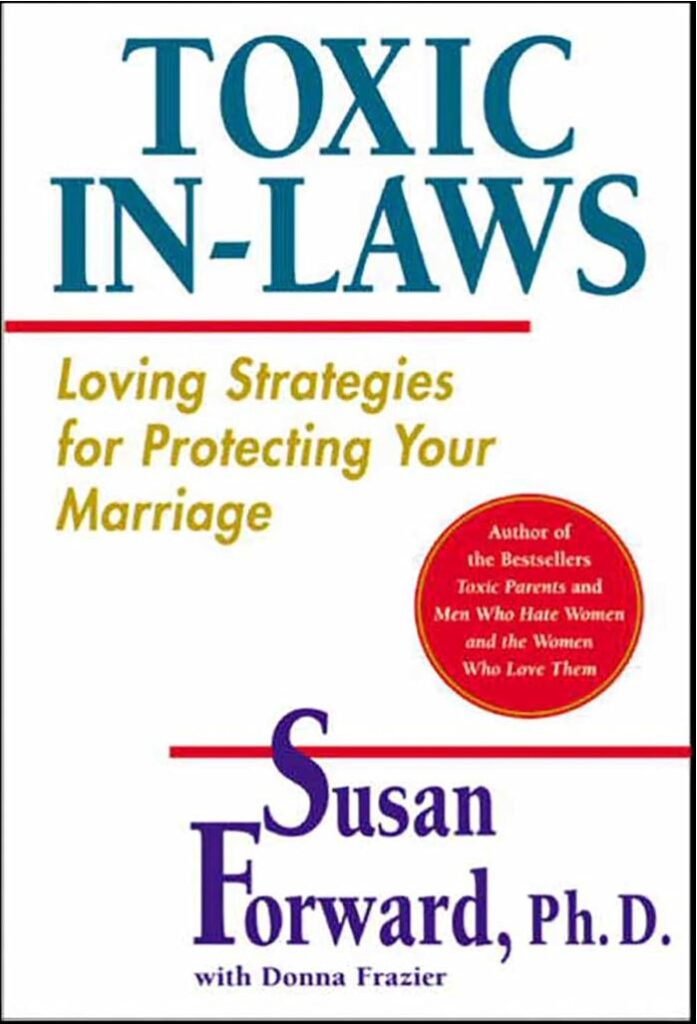
Sometimes disagreements with in-laws go beyond ordinary differences in expectations.
There may be repeated criticism, manipulation, interference or attempts to undermine a marriage.
In Toxic In-Laws: Loving Strategies for Protecting Your Marriage, Susan Forward, with Donna Frazier, explores more harmful patterns involving extended family.
The book examines how couples can respond when difficult in-law behaviour begins affecting their relationship.
Why this book is worth reading
One particularly challenging situation occurs when a partner feels caught between their spouse and their parents.
They may recognise that certain behaviour is hurtful but feel uncomfortable confronting their family.
Meanwhile, the other partner may feel unsupported.
Over time, the original conflict with an in-law can become a disagreement within the marriage itself.
Forward explores these complicated loyalties and the importance of recognising behaviour that genuinely undermines a relationship.
This is a stronger, more specialised book than the others on our list.
Not every opinionated relative is toxic, and occasional disagreements shouldn’t automatically be treated as emotional abuse.
Best for: Couples dealing with repeated, serious interference or harmful behaviour from in-laws.
3. Set Boundaries, Find Peace — Nedra Glover Tawwab
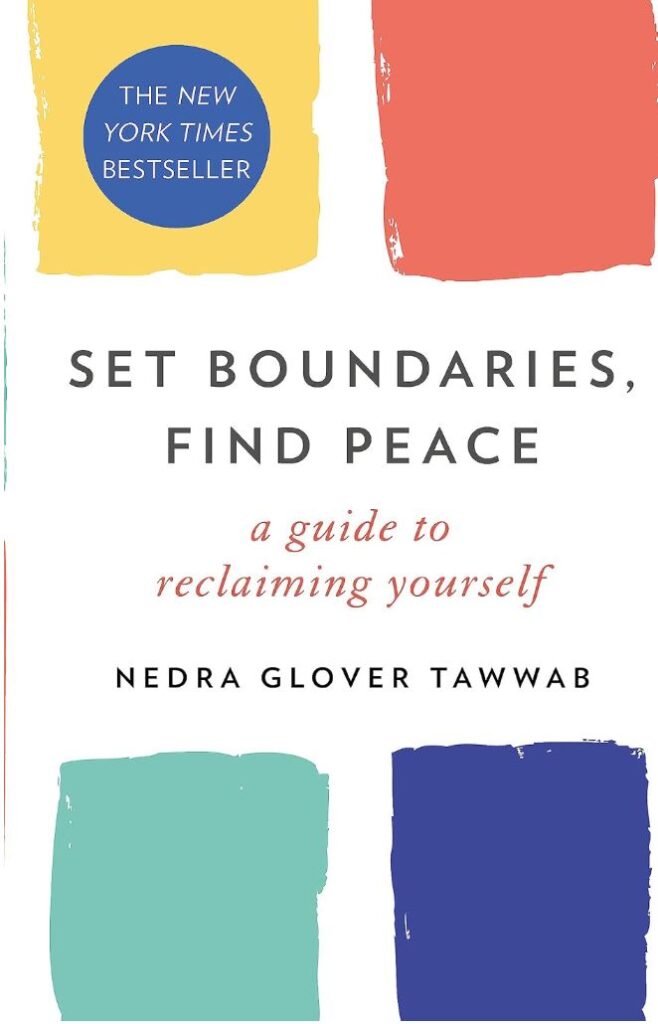
Many people struggle with boundaries because they associate saying no with being unkind.
They worry that declining an invitation means rejecting someone.
Or that expressing discomfort will create unnecessary tension.
In Set Boundaries, Find Peace, therapist Nedra Glover Tawwab explores the importance of understanding personal needs and communicating limits across different relationships.
The book addresses boundaries involving time, emotions, personal space and other aspects of everyday life.
Why this book is worth reading
Imagine a relative who regularly arrives without calling first.
They may see these visits as friendly and spontaneous.
You might experience them as interruptions to your privacy.
The challenge isn’t necessarily proving that one person is wrong.
It’s explaining what works for your household.
You might welcome visits while asking that they be arranged beforehand.
Tawwab encourages readers to recognise that a reasonable boundary doesn’t require another person to agree with it enthusiastically.
It’s possible to be warm, considerate and firm at the same time.
Best for: Readers who feel guilty asserting their needs or worry that boundaries will disappoint family members.
4. Boundaries — Henry Cloud and John Townsend
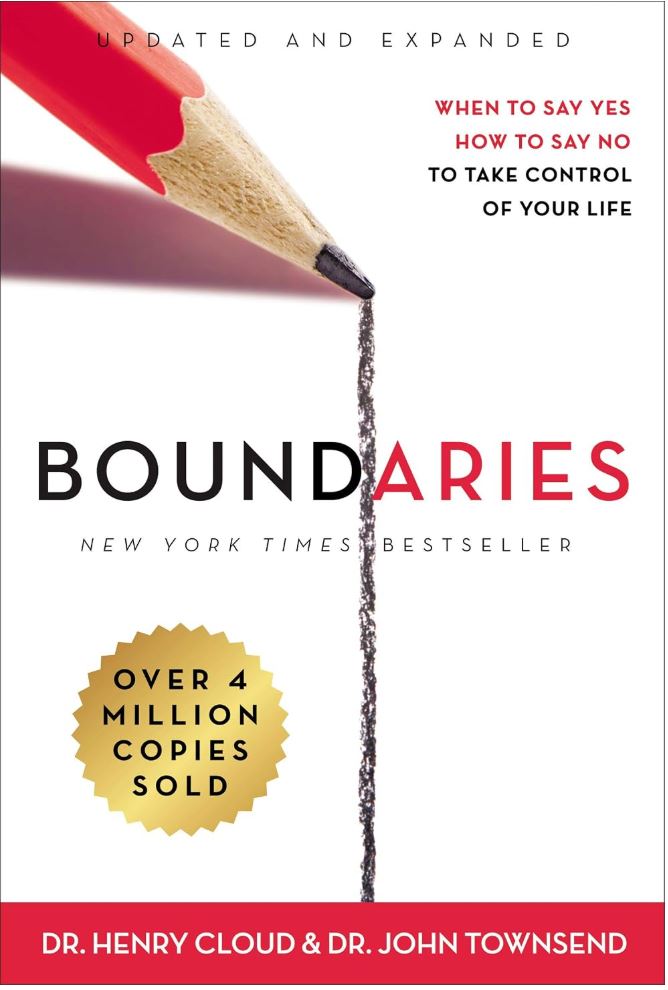
Boundaries by Henry Cloud and John Townsend explores how people can recognise their responsibilities, establish personal limits and avoid taking responsibility for choices that belong to others.
The book discusses relationships involving family, marriage, friendships and work.
Its approach is explicitly Christian and draws on biblical teachings, which readers may wish to consider when deciding whether it suits their preferences.
Why this book is worth reading
One of the difficulties with extended-family expectations is feeling responsible for everyone else’s reactions.
Perhaps you and your partner decide to spend a holiday at home.
Your relatives are disappointed.
You may immediately feel that you must change your plans to make them happy.
But recognising someone’s disappointment isn’t the same as being responsible for eliminating it.
Cloud and Townsend encourage readers to consider the distinction between their own choices and the emotional responses of others.
That can be a useful perspective when family expectations have become difficult to manage.
Best for: Readers who want a structured, faith-based approach to boundaries, responsibility and saying no.
5. The Dance of Connection — Harriet Lerner
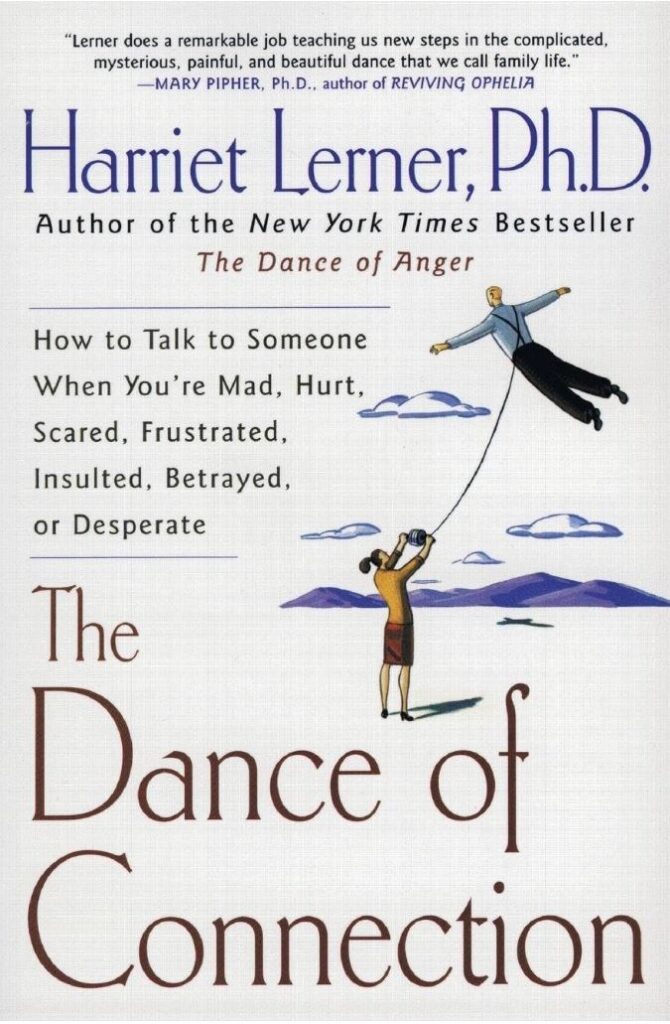
Sometimes the difficulty isn’t recognising that a boundary is needed.
It’s having the conversation.
Perhaps you want to explain that certain comments about your parenting are hurtful.
Maybe you need to tell a relative that your family cannot accommodate every request.
But you’re worried the discussion will become emotional or defensive.
In The Dance of Connection, psychologist Harriet Lerner explores how to communicate more authentically during difficult interactions.
The book focuses on finding your voice and navigating conversations involving hurt, frustration and disagreement.
Why this book is worth reading
A boundary can be reasonable while still being difficult to express.
You may begin a conversation calmly, only to find yourself becoming defensive when someone challenges your decision.
Or perhaps you become so concerned about avoiding conflict that you abandon what you intended to say.
Lerner encourages readers to examine how they communicate when emotions are involved.
Her work can be particularly relevant when family conversations repeatedly follow the same frustrating pattern.
Best for: Readers who need to speak up about family expectations but struggle to remain clear and constructive during difficult conversations.

Which of These Books About Boundaries With In Laws Should You Read First?
The most useful choice depends on the situation you’re facing.
If you need practical wording for everyday limits, start with The Book of Boundaries.
If your relationship is affected by persistent, harmful interference, Toxic In-Laws explores those more serious circumstances.
If guilt makes it difficult to say no, Set Boundaries, Find Peace offers a helpful perspective.
If you prefer a Christian approach to responsibility and boundaries, consider Boundaries.
And if the main challenge is communicating during emotionally difficult family conversations, The Dance of Connection may be particularly relevant.
Not every book addresses the same level of conflict.
Choose the one that reflects your circumstances rather than assuming every family disagreement requires a dramatic solution.
When Your Partner Doesn’t Support Your Boundaries
Sometimes the most upsetting part of an in-law disagreement isn’t what the relative said or did.
It’s how your partner responds afterwards.
Perhaps you’ve explained that certain comments make you uncomfortable.
But your partner dismisses the concern as harmless.
Maybe they ask you to overlook repeated intrusions because they don’t want to upset their parents.
Or they agree with you privately but struggle to support the decision when speaking with family.
That can leave someone feeling alone within their own relationship.
It’s important to remember that partners may have different family experiences and expectations.
One person might regard frequent family involvement as normal.
The other may need greater independence.
Neither preference automatically makes someone unreasonable.
But these differences deserve honest discussion.
Protecting your relationship doesn’t mean rejecting your family
A couple can maintain strong relationships with their extended families while also making independent decisions.
That may involve agreeing on visiting arrangements, deciding which matters remain private or clarifying who communicates particular boundaries.
It doesn’t require both partners to agree on everything immediately.
But it does require taking one another’s concerns seriously.
This connects naturally with Invisible No More by Julian Merren.
The book explores feeling emotionally unseen within a relationship, losing touch with your own needs and finding a way towards greater connection.
It isn’t specifically a guide to managing in-laws. However, its themes may resonate with readers who feel unheard or unsupported when family expectations create tension.
If that experience sounds familiar, explore Invisible No More by Julian Merren.
Four Ways to Set Boundaries Without Creating Unnecessary Conflict
Understanding boundaries is one thing.
Communicating them within an established family relationship can be more complicated.
Here are four practical starting points.
1. Agree with your partner before speaking to family
Discuss what’s bothering you and what you would like to change.
Be specific about the behaviour rather than making general accusations.
Try to reach a shared understanding before introducing new expectations to relatives.
For further guidance, The Gottman Institute explores managing family expectations and healthy boundaries, including how to communicate limits with clarity and kindness.
2. Be clear rather than offering endless explanations
A boundary doesn’t necessarily require a lengthy defence.
You can explain that visits need to be arranged in advance or that certain decisions belong to you and your partner.
Kindness matters, but so does clarity.
3. Recognise the difference between a request and a boundary
A request asks someone to behave differently.
A boundary clarifies what you will do if the situation continues.
For example, you might ask relatives to call before visiting.
If unannounced visits continue, you may choose not to accommodate them.
The focus is on actions within your control rather than attempting to control someone else.
4. Allow room for adjustment
Family habits can be deeply established.
A new arrangement may initially feel unfamiliar or disappointing to someone.
Where the relationship is respectful, patience and consistency may help people adjust.
However, patience shouldn’t require repeatedly accepting intimidation, manipulation or serious mistreatment.
When these issues arise, professional guidance and appropriate support may be necessary.
Boundaries Are Not About Choosing Sides
One misconception is that setting boundaries with in-laws automatically means forcing your partner to choose between their family and their relationship.
That doesn’t have to be the case.
Most people want to maintain meaningful connections with the people who raised and supported them.
Those relationships can continue to matter after marriage or partnership.
But forming a life together also involves making decisions as a couple.
The challenge is finding a balance where extended family relationships remain valued without overriding the couple’s autonomy.
Healthy boundaries aren’t necessarily walls.
They’re agreements about privacy, respect, time and responsibility.
And those agreements work best when they’re communicated thoughtfully rather than introduced as punishments.
Final Thoughts: Respectful Boundaries Can Protect Relationships
Family relationships can be complicated because they involve love, loyalty, history and expectations that have developed over many years.
Sometimes those expectations fit comfortably into a couple’s life.
Other times, they create tension.
The best books about boundaries with in laws encourage readers to recognise that maintaining family harmony doesn’t require agreeing to every request.
You can appreciate your relatives while making independent decisions.
You can respect family traditions without following every one.
And you can communicate your needs without treating disagreement as an automatic reason to end a relationship.
The aim isn’t to create distance unnecessarily.
It’s to build relationships where everyone understands that closeness and personal boundaries can exist together.
If family disagreements have also left you feeling emotionally overlooked by your partner, discover Invisible No More by Julian Merren for further reading about feeling seen, valued and connected within a relationship.
Because protecting your relationship isn’t about keeping everyone else out.
It’s about making sure the people within it have room to be heard.