

Building wealth can sound like something you do once you already have money.
You invest a large sum. Buy property. Build a portfolio. Watch your assets grow.
But what if you’re starting with very little?
Perhaps you’ve only recently cleared some debt. Maybe you’ve spent years living from one payday to the next. Or you’ve reached your forties or fifties and realised that you haven’t accumulated nearly as much as you expected.
That’s when books about building wealth from scratch can be particularly useful.
The best ones don’t assume you’re beginning with a large investment account. They help you understand the principles that come before wealth: creating a surplus, developing consistent habits, investing sensibly and allowing time to do some of the work.
Here are five books that approach that journey from different directions.
1. The Index Card — Helaine Olen and Harold Pollack
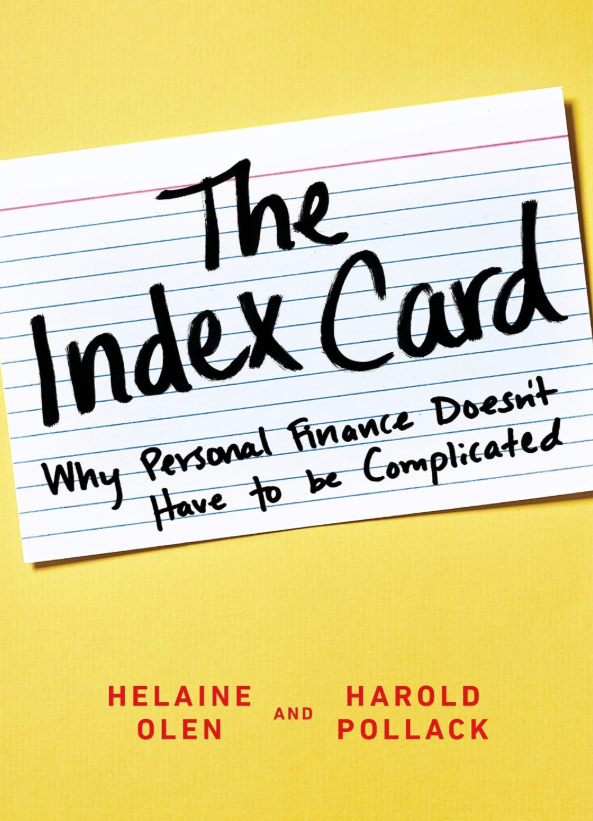
Best for making personal finance feel simpler
One reason people delay building wealth is that money can sound unnecessarily complicated.
There are investment products to understand, financial terminology to learn and endless opinions about what you should be doing.
The Index Card by Helaine Olen and Harold Pollack takes the opposite approach.
Its central premise is that many of the most important principles of personal finance can be kept relatively simple.
That’s valuable when you’re starting from scratch.
You don’t necessarily need an elaborate financial strategy before you can begin improving your position. You need to understand a few fundamentals well enough to act on them consistently.
Spend less than you earn.
Save.
Be careful with debt.
Think long term.
Understand what you’re investing in.
The details still matter, of course. But simplicity can help remove the feeling that you need to become a financial expert before you’re allowed to start.
Read this if: financial complexity has been preventing you from taking the first step.
2. The Little Book of Common Sense Investing — John C. Bogle
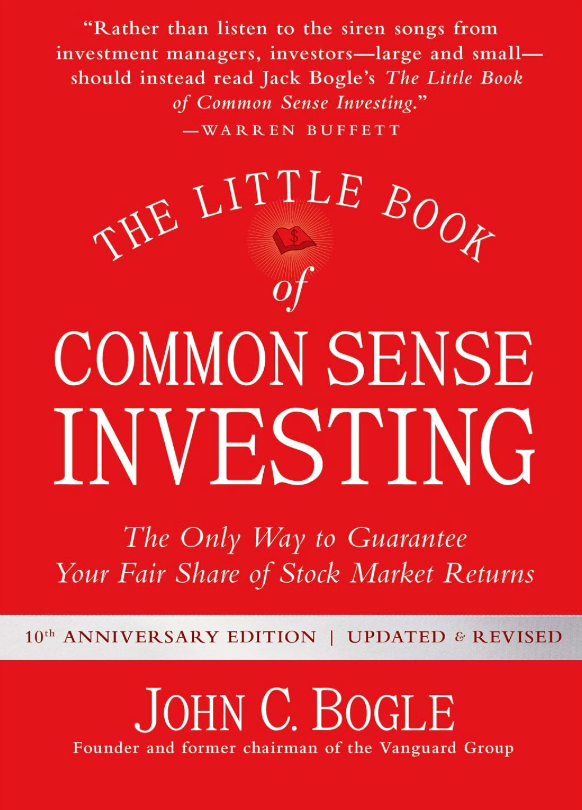
Best for understanding simple long-term investing
Once you’ve created some room between what you earn and what you spend, another question appears.
What do you actually do with the money?
John C. Bogle’s The Little Book of Common Sense Investing is centred on a straightforward approach to long-term investing through low-cost index funds.
The wider lesson is particularly relevant to someone starting with modest amounts.
Building wealth doesn’t necessarily require constantly finding winning investments.
Costs matter.
Diversification matters.
Consistency matters.
And time matters.
That doesn’t mean every investment is suitable for every person. Your goals, time frame and tolerance for risk should influence the choices you make.
But the book is a useful introduction to the idea that investing can be far less complicated than many people imagine.
Read this if: you’re ready to learn more about long-term investing but don’t want to spend your life trying to pick individual winners.
3. The Richest Man in Babylon — George S. Clason
Best for understanding the habits that come before wealth
This is the oldest book on our list, but the reason it continues to appear in personal-finance discussions is fairly simple.
Its lessons revolve around fundamental money habits.
Most importantly, keeping some of what you earn.
That sounds almost too obvious.
Yet it’s difficult to build wealth if every pound or dollar that enters your life eventually leaves it.
The amount you retain initially may be small.
That’s fine.
If you’re starting from scratch, the first goal isn’t to look wealthy.
It’s to create the habit that makes wealth possible.
£20 saved consistently is more useful than waiting for the day when you imagine you’ll suddenly have £500 available.
As your income changes and your financial position strengthens, the amounts can change too.
The habit comes first.
Read this if: you want simple financial principles presented through memorable stories rather than technical explanations.
4. The Barefoot Investor — Scott Pape
Best for turning financial intentions into a practical system
Knowing that you should save and invest is one thing.
Organising your financial life so that it actually happens is another.
That’s where The Barefoot Investor by Scott Pape can be useful.
Written particularly with Australian readers in mind, the book takes a practical approach to organising money, dealing with debt, saving and building towards longer-term financial goals.
The important idea here is structure.
When money has no plan, whatever feels urgent tends to win.
Bills get paid.
Everyday spending happens.
Something unexpected comes along.
And building wealth gets postponed until next month.
Then next month looks remarkably similar.
A financial system changes that by giving your future a place in today’s budget.
Read this if: you know you need to improve your finances but want a more organised framework for doing it.
5. From Financial Regret to Financial Freedom — Julian Merren
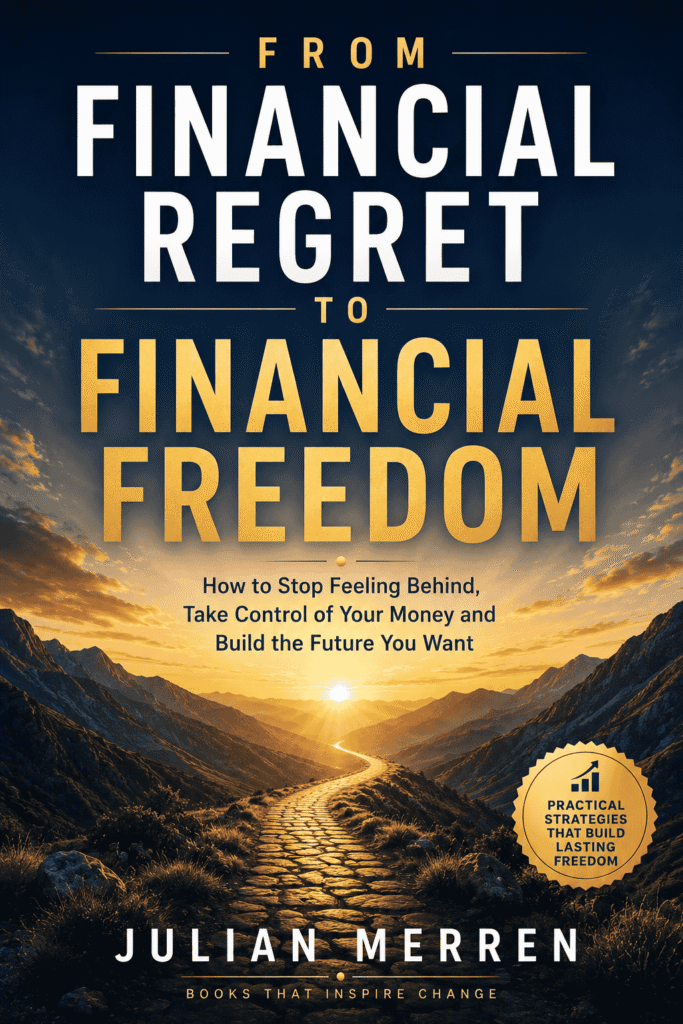
Best for building wealth when you wish you’d started earlier
Starting from scratch at 25 and starting from scratch at 50 can feel very different.
At 25, you may look ahead and see decades.
Later in life, it’s easy to look backwards instead.
You think about the years when you weren’t investing.
The money you spent.
The debt you accumulated.
The opportunities you missed.
And suddenly the temptation is to compensate for lost time by looking for a shortcut.
That’s exactly when caution matters.
From Financial Regret to Financial Freedom by Julian Merren is written for people who feel financially behind and want to move from regret towards practical action.
The book begins with understanding where you stand now, then moves through finding money within what you’re already earning, building a safety net, dealing with debt and beginning to build wealth.
The emphasis isn’t on gambling to catch up.
It’s on strengthening your position from wherever you’re starting.
If you’re trying to build wealth later than you hoped, you can explore From Financial Regret to Financial Freedom here.
What Books About Building Wealth From Scratch Have in Common
These five books take different approaches, but several themes keep appearing.
You need a gap before you can build
Wealth begins with some distance between what comes in and what goes out.
Initially, that gap might be small.
Don’t dismiss it.
A small surplus is something you can work with. No surplus gives you very little room to move.
Consistency matters more than an impressive beginning
There’s a tendency to think investing isn’t worthwhile unless you have a substantial amount.
But beginning with smaller regular contributions can help establish the habit while you learn.
Australia’s Moneysmart notes that micro-investing can allow people to begin with small amounts and develop a regular saving and investing habit, although fees, risks and how the product works still need to be understood.
Your foundation matters
Investing while having no emergency savings can leave you vulnerable when life inevitably produces an unexpected expense.
Similarly, expensive debt can work against the progress you’re trying to make elsewhere.
Building wealth therefore doesn’t have to begin with buying an investment.
Sometimes it begins by making your financial life more resilient.
Building Wealth From Scratch Doesn’t Mean Chasing Fast Returns
This becomes especially important if you feel you’ve started late.
When time feels short, high returns can look particularly attractive.
But higher expected returns generally come with higher risk. Moneysmart specifically warns that there are no shortcuts to investing success and recommends considering your goals, investment time frame and tolerance for risk before choosing investments.
The goal isn’t to make up for twenty years in two.
If you’re new to investing, Moneysmart also provides a useful guide to help you develop an investing plan around your goals, time frame and attitude to risk
It’s to make the years ahead more productive than the years behind.
That may not sound as exciting.
But it’s considerably more useful.
Don’t Underestimate What Time Can Still Do
If you wish you’d started ten or twenty years ago, you probably already understand the value of time.
But there’s another side to that thought.
The years ahead still count.
Compounding means returns can themselves begin generating further returns over time. The longer money remains invested or saved under compounding conditions, the more opportunity that process has to work.
You can’t give yourself yesterday’s time.
You can stop giving away tomorrow’s.
Which Book Should You Read First?
Start with whatever is currently stopping you.
If personal finance feels overwhelmingly complicated, try The Index Card.
If you’re ready to understand a simple approach to long-term investing, consider The Little Book of Common Sense Investing.
If you want timeless lessons about saving and money habits, The Richest Man in Babylon is an accessible starting point.
If your finances need a practical system, particularly if you’re in Australia, The Barefoot Investor may be the most immediately applicable.
And if you’re beginning later in life and financial regret keeps getting in the way, From Financial Regret to Financial Freedom was written with that problem in mind.
You don’t need all five books before you begin.
You need one useful idea that changes what you do next.
You Don’t Need Wealth to Start Building Wealth
Perhaps that’s the most encouraging lesson from books about building wealth from scratch.
You don’t have to wait until you have plenty of money before you begin.
The process itself is what gradually creates the money.
Create some breathing room.
Build a safety net.
Deal with the debts holding you back.
Learn how investing works.
Start with an amount you can realistically sustain.
Then keep going.
Your first £50 or $50 invested may not feel life-changing.
But what it represents might be.
For the first time, some of the money you’re earning today is being sent forward to work for the person you’ll be years from now.
And that’s where building wealth really begins.