

Turning 50 can change the way you think about work.
Perhaps you’ve spent twenty or thirty years building a career. You’ve developed valuable skills, gained experience and established a level of financial security that matters to you.
But somewhere along the way, something has changed.
The work that once interested you no longer feels particularly rewarding. Maybe you’re tired of the pressure, the routine or the feeling that every working week looks exactly like the last.
And you find yourself wondering:
Do I really want to spend another 10 or 15 years doing this?
A career change at 50 can feel considerably more complicated than making the same decision earlier in life.
There may be a mortgage to consider, retirement savings to protect and family responsibilities that make starting over seem unrealistic.
You might also wonder whether employers will value your experience or whether learning something new at this stage is worth the effort.
These are sensible questions. They deserve thoughtful answers.
The encouraging part is that changing direction doesn’t necessarily mean abandoning everything you’ve built.
Sometimes it means finding a better way to use what you already know.
Here are five books that can help you explore your options, understand what’s important now and make a more considered decision about the next chapter of your working life.

1. Designing Your Life — Bill Burnett and Dave Evans
Best for: People who know they want something different but aren’t sure what.
One of the hardest parts of considering a career change later in life is not knowing what you’d actually prefer to do.
You may have spent decades becoming good at one particular profession.
That doesn’t necessarily mean you’ve spent much time thinking about what other possibilities might suit you.
Designing Your Life by Bill Burnett and Dave Evans approaches this problem through design thinking.
Rather than expecting readers to discover one perfect career, the authors encourage exploration, experimentation and the development of different possibilities for a meaningful working life.
That’s particularly useful when you’re approaching 50.
You don’t need to make a dramatic decision based on an idea that simply sounds appealing.
You can investigate.
You might speak to people working in another industry, explore a short course or try a small project before making a bigger commitment.
And perhaps you’ll discover that you don’t need an entirely new career.
You simply need a different version of the one you already have.
Why it’s worth reading: It helps replace the pressure of finding one perfect answer with a more practical process of exploring possibilities.
2. Working Identity — Herminia Ibarra
Best for: People who struggle to imagine themselves in a different career.
After twenty or thirty years in the same profession, your career can become part of how you see yourself.
You’re the accountant.
The manager.
The engineer.
The teacher.
The IT professional.
People know what you do, and you’ve probably become comfortable explaining your professional identity in those terms.
So what happens when you no longer want that identity to define the next stage of your life?
Working Identity by Herminia Ibarra explores how people make significant career transitions.
One of its central ideas is that professional reinvention often develops through action rather than endless introspection.
Instead of waiting until you know exactly who you want to become, you begin exploring different possibilities and learning from those experiences.
For someone considering a career change at 50, that can be reassuring.
You don’t have to abandon your professional identity overnight.
You can begin expanding it.
Perhaps your management experience could lead towards mentoring or consulting.
Maybe your technical background could open opportunities in training, project coordination or another related field.
The important thing is giving yourself permission to explore roles that don’t perfectly match the title you’ve carried for years.
Why it’s worth reading: It helps you think beyond your existing job title and recognise that your professional identity can continue evolving.
3. Pivot — Jenny Blake
Best for: Anyone worried about starting again from the bottom.
There’s a common fear surrounding career change later in life.
What happens to all those years of experience?
You’ve invested time developing your skills, building professional relationships and learning how to handle difficult situations.
The thought of becoming a beginner again can make even an appealing career change feel intimidating.
Pivot by Jenny Blake offers a different perspective.
Rather than approaching change as a complete restart, Blake encourages readers to build their next move around their existing strengths, interests and experience.
That’s an especially valuable approach at 50.
Consider how much you’ve learnt throughout your working life.
You may have developed strong communication skills, managed teams, solved complex problems or learnt how to make decisions under pressure.
Those abilities can remain useful even when your job title changes.
The challenge is recognising where else they might have value.
You may discover that a move into a related role or industry allows you to use much of your existing experience while leaving behind the parts of your current career you no longer enjoy.
Why it’s worth reading: It encourages you to treat your experience as an advantage rather than something you’re forced to leave behind.
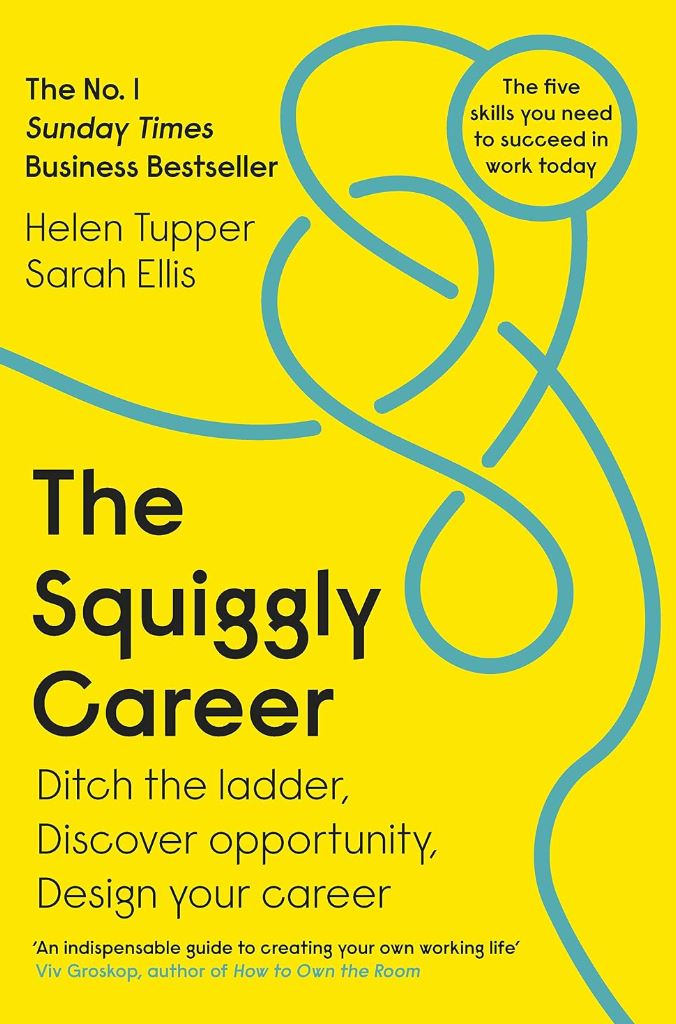
4. The Squiggly Career — Helen Tupper and Sarah Ellis
Best for: People who feel trapped by the traditional career ladder.
For much of their working lives, many people have followed a fairly predictable career model.
Work hard.
Gain experience.
Get promoted.
Take on more responsibility.
Keep climbing until retirement.
But what happens when climbing higher is no longer what you want?
Perhaps you’ve reached a stage where you would happily exchange a little responsibility for more flexibility.
Maybe you’re no longer interested in managing people.
Or perhaps you want work that leaves you with enough energy to enjoy your evenings and weekends.
The Squiggly Career by Helen Tupper and Sarah Ellis challenges the idea that successful careers must follow one straight upward path.
The authors explore a more flexible approach to professional development, where sideways moves, changing priorities and different experiences can all contribute to a satisfying career.
This perspective becomes particularly relevant in your 50s.
A job with fewer responsibilities isn’t automatically a step backwards.
Neither is moving into a different field, working fewer hours or choosing a role that offers greater personal satisfaction.
Your priorities at 50 don’t have to be identical to your priorities at 30.
Why it’s worth reading: It encourages you to define career progress according to what matters to you now, rather than what once seemed important.
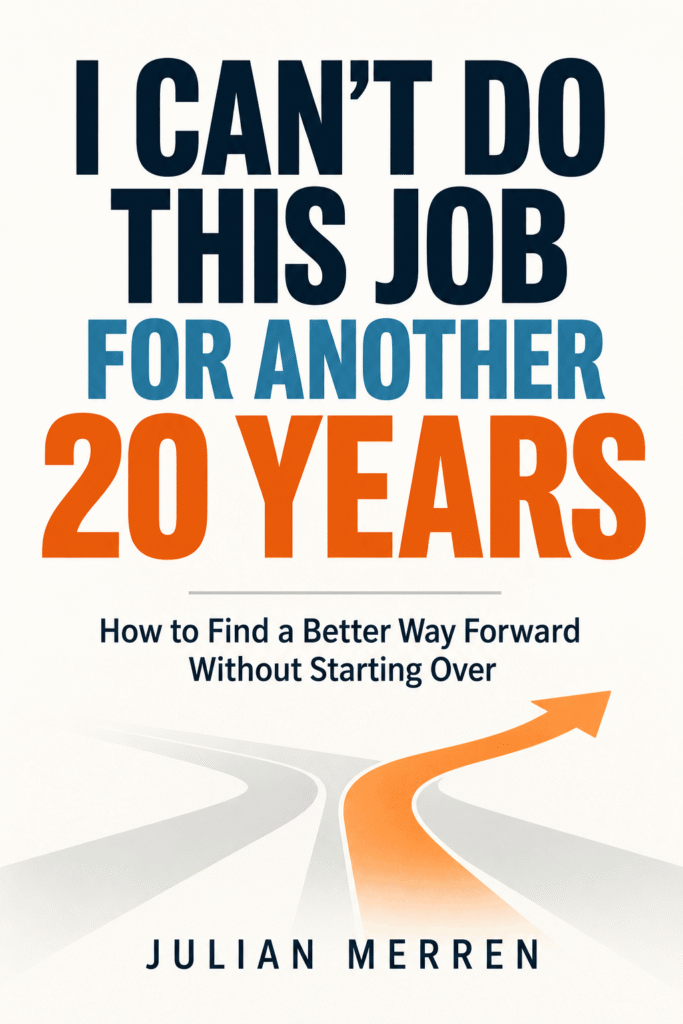
5. I Can’t Do This Job for Another 20 Years — Julian Merren
Best for: People who know something needs to change but want to make a sensible decision.
Sometimes the problem isn’t that you have a terrible job.
You might have a reasonable salary, good colleagues and the security that comes from years of experience.
But when you imagine continuing along the same path until retirement, you feel increasingly uncomfortable.
That’s the situation explored in I Can’t Do This Job for Another 20 Years: How to Find a Better Way Forward Without Starting Over by Julian Merren.
The book takes a practical approach to career dissatisfaction, particularly for people who have already invested many years in their working lives.
Rather than assuming a complete career change is the answer, it encourages readers to identify what actually needs to change.
Is it your current role?
Your employer?
The industry?
The hours and responsibilities?
Or have your personal priorities changed?
These distinctions matter because a career change at 50 can involve important financial and personal considerations.
You may want to protect your retirement plans, maintain a certain income or avoid committing to years of expensive retraining.
The book encourages readers to explore realistic options while recognising the value of the experience they’ve already accumulated.
Sometimes a smaller change can make a meaningful difference.
Other times, a larger transition may be worth investigating.
The important thing is understanding the problem before deciding on the solution.
Why it’s worth reading: It helps you think through career dissatisfaction without assuming you must sacrifice financial security or start from zero.
Explore I Can’t Do This Job for Another 20 Years by Julian Merren
Career Change at 50: What Should You Consider Before Making a Move?
Reading the right books can open your mind to possibilities, but it’s equally important to consider your personal circumstances.
A successful career transition isn’t necessarily the most dramatic one.
It’s the one that makes sense for your life.
1. How much financial security do you need?
At 50, financial considerations may carry more weight than they did earlier in your career.
You might be paying off a mortgage, supporting family members or thinking more seriously about retirement.
Before making a significant change, consider what income you need to maintain and how much uncertainty you can reasonably manage.
You don’t have to ignore these responsibilities to pursue a better working life.
2. What experience could you take with you?
Spend some time identifying the abilities you’ve developed beyond your specific job title.
Think about the problems you solve, the people you work with and the responsibilities you’ve handled.
Your next role may look quite different from your current one while still drawing heavily on those skills.
3. Do you need a new career or simply a different working environment?
This is one of the most important questions.
Perhaps your profession still suits you, but your current workplace doesn’t.
Maybe you’re ready for fewer responsibilities rather than an entirely new industry.
Understanding that difference could save you from making a much bigger change than necessary.
4. What could you test before committing?
You don’t have to resign before exploring alternatives.
Consider speaking to people in different roles, investigating training requirements or examining job advertisements to understand what employers are looking for.
Small experiments can provide useful information without immediately putting your financial security at risk.
Is It Too Late to Change Careers at 50?
No particular birthday automatically makes career change impossible.
But that doesn’t mean every option will be practical or suitable.
Some professions require substantial qualifications or licensing. Others may involve reduced income while you build experience.
That’s why research matters.
A career change at 50 should be approached with realistic expectations about training, finances, employment opportunities and the working years you have ahead.
The encouraging part is that you may have more transferable experience than you realise.
You don’t necessarily need to compete for entry-level opportunities in a completely unfamiliar field.
You may be able to move into a related profession, use your expertise in a different setting or develop a new role around skills you’ve spent decades building.
Your Next Chapter Doesn’t Have to Look Like Your Last
Changing careers at 50 isn’t necessarily about reinventing yourself.
Sometimes it’s about recognising that the career you’ve built no longer gives you what you need.
Perhaps you want more flexibility.
Less pressure.
More meaningful work.
Or simply a better balance between earning a living and enjoying your life.
The five books above offer different perspectives on how to explore those possibilities.
And if there’s one idea worth taking away, it’s this:
You don’t have to throw away everything you’ve built to create something better.
Start by understanding what no longer works.
Recognise the value of your experience.
Explore your options carefully.
Then make the next sensible move.
Not the forever move.
If you’re looking for a practical starting point, I Can’t Do This Job for Another 20 Years by Julian Merren can help you begin that process.