
You’ve spent fifteen or twenty years building a career.
You’ve developed skills, gained experience, earned a reasonable income and gradually become someone who knows what they’re doing.
But now you’re beginning to wonder whether you want to spend the rest of your working life doing the same thing.
Perhaps the work no longer interests you. Maybe your priorities have changed. Or perhaps you’ve reached a point where you want something different but have no idea how to get there.
And then comes the uncomfortable thought.
If I change careers now, will I have to start all over again?
For many experienced workers, the fear of starting from zero is enough to stop them exploring other possibilities.
The prospect of losing financial stability, returning to entry-level work or spending years retraining can make staying in an unsatisfying career feel like the safer choice.
But changing direction doesn’t automatically mean abandoning everything you’ve built.
Your experience, skills and professional knowledge may be more transferable than you realise.
The following five books explore different ways to rethink your career, recognise your existing strengths and make a more informed move towards something better.
Why Changing Careers Doesn’t Always Mean Losing Your Experience
When people think about career change, they often imagine moving from one completely unrelated profession to another.
An accountant becomes a chef. An engineer becomes a teacher. A manager decides to open a café.
Those transitions are possible, but they’re not the only way to change direction.
You might move into a different role within your industry, apply your experience in another sector or develop a new speciality that builds on skills you already possess.
For example, someone with years of experience managing operations may have developed leadership, planning, communication and problem-solving abilities.
Those skills could be useful in project coordination, training, process improvement or consultancy.
The challenge is learning to recognise your experience beyond the job title you’ve held for years.
And that’s where these books can help.

1. Pivot — Jenny Blake
Build Your Next Move Around What You Already Know
If you’re worried that changing careers means throwing away years of experience, Pivot by Jenny Blake is a particularly relevant place to begin.
The book presents a framework for making career transitions by building on your existing strengths, interests and experience.
Rather than encouraging readers to abandon their professional lives and start again, Blake focuses on identifying what’s already working and using it as a foundation for change.
That might mean recognising skills you’ve developed but rarely thought about.
Perhaps you’re good at organising complicated projects, helping colleagues solve problems or communicating with difficult stakeholders.
Those abilities may have value in roles that look very different from your current position.
Pivot also encourages readers to investigate possibilities and test ideas before making major commitments.
This can be especially useful if you’re considering a career change but can’t afford to lose your income while experimenting.
You don’t necessarily need to know your final destination immediately.
You need to identify a realistic next step that makes use of what you already have.
Why it’s worth reading: It offers a practical framework for changing direction without assuming your previous experience has become irrelevant.
Best for: Experienced professionals who want to explore new opportunities while protecting the value of their existing skills.
2. Designing Your Life — Bill Burnett and Dave Evans
Explore New Possibilities Before Making a Big Decision
One of the hardest parts of changing careers is deciding what you actually want to do next.
You might know your current work no longer suits you, but that doesn’t mean you’ve suddenly discovered a new profession you’d love.
Designing Your Life by Bill Burnett and Dave Evans offers a different way to approach that uncertainty.
Using principles from design thinking, the authors encourage readers to explore multiple possible futures rather than searching for one perfect career.
Instead of expecting yourself to solve everything through reflection, you can investigate ideas through conversations, experiments and practical experiences.
For example, someone interested in moving from corporate work into education might begin by mentoring colleagues, helping deliver training or speaking to people already working in the field.
Those experiences can reveal what the work actually involves.
You might discover an opportunity worth pursuing. Alternatively, you might realise that an attractive idea doesn’t suit your circumstances as well as you’d imagined.
Either outcome is useful because it gives you information before you make a major decision.
Why it’s worth reading: It helps replace the pressure to find the perfect career with a more manageable process of exploration.
Best for: Readers who want change but aren’t yet sure which direction would suit them.
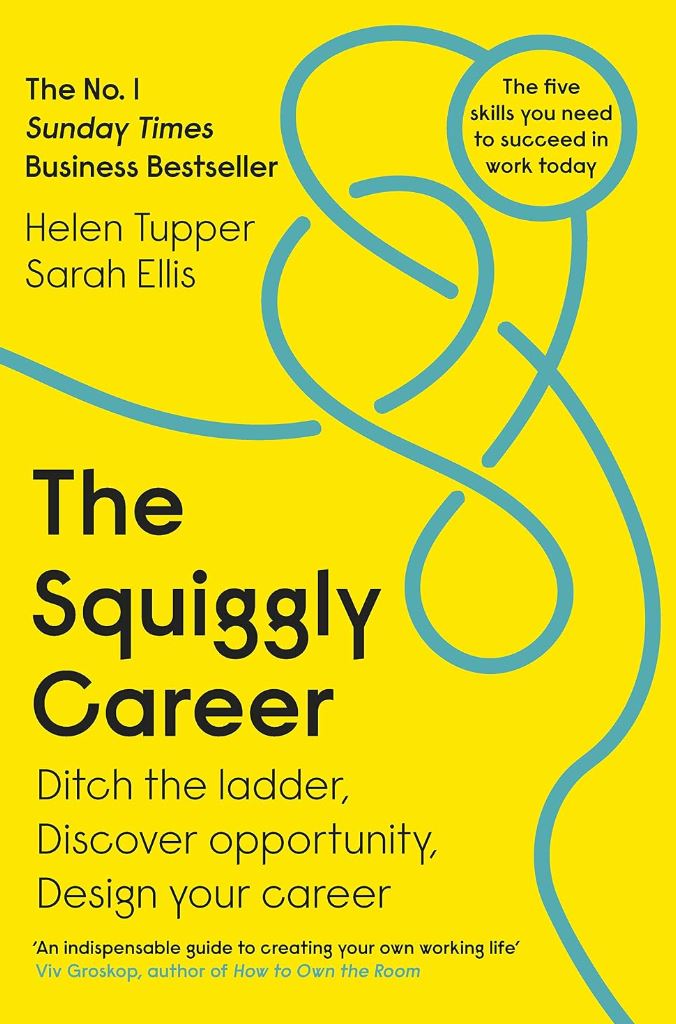
3. The Squiggly Career — Helen Tupper and Sarah Ellis
Career Progress Doesn’t Always Mean Climbing Higher
For much of our working lives, we’re encouraged to think of success as moving upwards.
You gain experience, earn promotions, take on more responsibility and gradually work towards a more senior position.
But what happens when you no longer want the next promotion?
Perhaps you want greater flexibility, less pressure or an opportunity to do work that feels more meaningful.
In The Squiggly Career, Helen Tupper and Sarah Ellis challenge the idea that careers must follow a predictable ladder.
They explore how professional growth can involve sideways moves, new experiences, developing different skills and redefining what success means.
This perspective is particularly valuable when you’re considering a career change later in life.
You might discover that a move into a different department or a related industry provides the change you’re looking for.
A role with fewer management responsibilities but more satisfying work could be a genuine improvement, even if it doesn’t look like a traditional promotion.
And importantly, you may be able to make that change while continuing to use much of your existing experience.
Why it’s worth reading: It encourages you to recognise career opportunities beyond promotions and conventional definitions of success.
Best for: Professionals who want to change the direction of their working lives without necessarily abandoning their industry.
4. Working Identity — Herminia Ibarra
Your Professional Identity Can Change Without Erasing Your Past
After spending years in one profession, your career can become closely connected to how you see yourself.
You might have been an IT professional, accountant, manager or engineer for so long that imagining yourself doing something different feels almost impossible.
And that can make career change surprisingly emotional.
In Working Identity, Herminia Ibarra explores how people navigate professional transitions and develop new working identities.
The book challenges the assumption that you must fully understand your future career before beginning to change.
Instead, it explores the importance of trying new activities, building relationships and experimenting with different professional possibilities.
This matters because thinking about a new career and experiencing elements of that work are very different things.
You may believe you’d enjoy consulting, for example, but speaking with working consultants and trying a small advisory project could give you a much clearer understanding.
You might discover that the work suits your strengths.
Or you might find that you prefer some aspects of it but not others.
The aim is to learn through experience rather than expecting complete certainty at the beginning.
Why it’s worth reading: It helps readers understand the personal side of career reinvention and why exploring new roles can be more useful than waiting for a perfect answer.
Best for: People who feel trapped by the professional identity they’ve spent years developing.
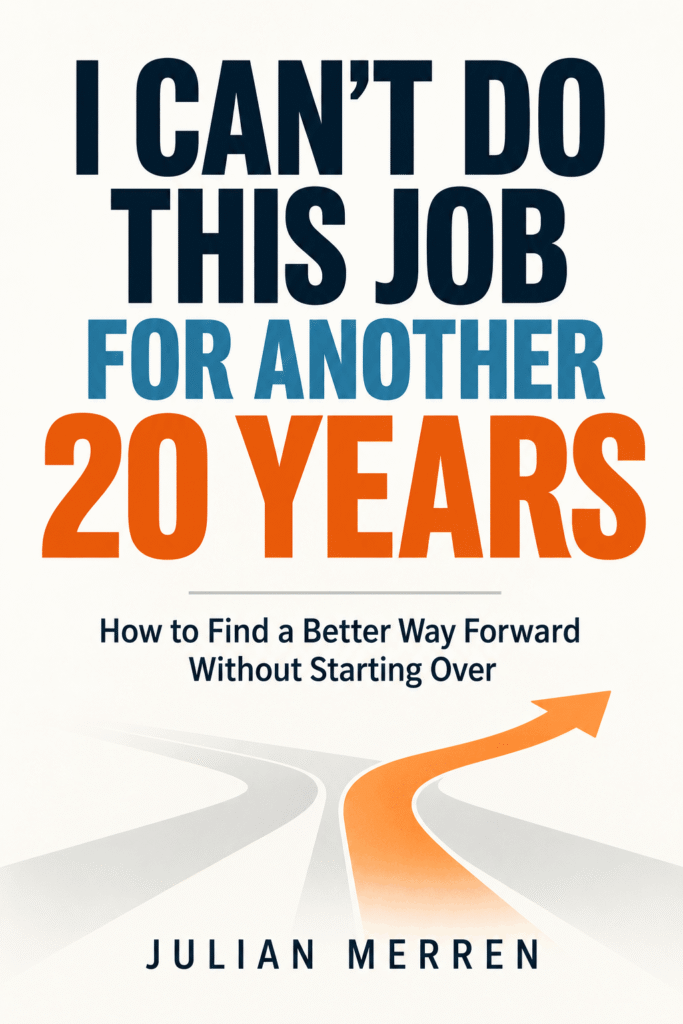
5. I Can’t Do This Job for Another 20 Years — Julian Merren
Find a Better Direction Without Starting From Zero
Sometimes the desire to change careers begins with a simple realisation.
I don’t want to spend another fifteen or twenty years doing this.
But recognising that something needs to change isn’t the same as knowing how much change is necessary.
That’s the challenge explored in I Can’t Do This Job for Another 20 Years by Julian Merren.
The book is written for people who have spent years building a career but are beginning to question whether their current working life still suits them.
Rather than encouraging readers to resign or pursue a completely different profession, it begins by examining what’s actually making their work unsatisfying.
Is it the role itself?
The employer?
The hours?
The pressure?
Or have their priorities changed?
These distinctions matter because a different problem may require a different solution.
Someone who enjoys their profession but dislikes their working conditions might benefit from changing employers.
Someone who wants to use their experience differently might explore another role or industry.
And someone whose interests have genuinely changed may decide that a larger transition is worth investigating.
The book includes practical exercises, decision-making frameworks and a 30-day challenge designed to help readers assess their options while considering financial responsibilities.
Why it’s worth reading: It helps you work out what needs to change before committing to a major career decision.
Best for: Experienced workers who want a better future but don’t want to throw away everything they’ve built.
Explore the book: I Can’t Do This Job for Another 20 Years by Julian Merren.
How to Change Careers Without Starting From Zero
Reading about career change can be encouraging, but the real value comes from applying those ideas to your own circumstances.
Before deciding you need to begin again, try looking at your experience from a different perspective.
1. Identify Your Transferable Skills
Think beyond your current job title.
You may have developed skills in communication, leadership, problem-solving, planning, training or managing complex situations.
Write down examples of when you’ve used those abilities successfully.
This helps you recognise what you could offer employers in other roles.
2. Look for Adjacent Career Opportunities
Instead of immediately searching for completely unrelated professions, investigate roles that connect with your existing experience.
Someone working in operations might consider project management, process improvement or training.
Someone in customer service might explore account management, client relations or team leadership.
These aren’t guaranteed transitions, but they can provide useful starting points for research.
3. Investigate What Employers Actually Require
Look at genuine job advertisements for positions that interest you.
Which skills do employers consistently request?
Which qualifications are essential?
And which requirements might you already meet through your existing experience?
This can help you identify realistic opportunities and any gaps you may need to address.
4. Test a Direction Before Committing
If possible, speak with someone working in the field you’re considering.
Explore short learning opportunities, relevant projects or responsibilities that give you a better understanding of the work.
The aim isn’t to rush into a new career.
It’s to gather information before making a significant financial or professional commitment.
5. Protect What Matters While You Explore
A career change needs to fit your circumstances.
Consider your income, financial commitments, family responsibilities and the time required to develop additional skills.
A gradual transition may be more realistic than an immediate resignation.
And there’s nothing wrong with choosing a smaller change if it provides the improvement you’re looking for.
Final Thoughts: Your Experience Still Has Value
The fear of starting from zero can make career change feel almost impossible.
But after fifteen or twenty years in the workforce, you’re unlikely to be beginning with nothing.
You have experience, knowledge, professional relationships and skills that may be useful in ways you haven’t yet considered.
That doesn’t mean every career transition will be easy.
Some require new qualifications, a period of retraining or adjustments to your financial expectations.
But you don’t need to assume that changing direction means erasing your professional past.
Sometimes the next chapter of your career is simply a different way of using everything you’ve already learned.
These five books can help you recognise those possibilities, explore realistic options and approach your next move with greater confidence.
And if you’re wondering how to build a better working future without throwing away years of experience, I Can’t Do This Job for Another 20 Years by Julian Merren offers a practical place to begin.
You may be changing direction, but you’re not starting from nothing.