

There’s
And the longer you’ve been working, the more complicated the question can become. You might have financial responsibilities, an established salary or years of experience that you don’t want to abandon.
But here’s an idea worth considering.
You don’t necessarily need to discover your perfect career. You need to understand what a better working life would look like for you.
These five books approach that challenge from different angles. Some help you explore possibilities, others encourage you to recognise your strengths, and one focuses on making practical changes without starting over.
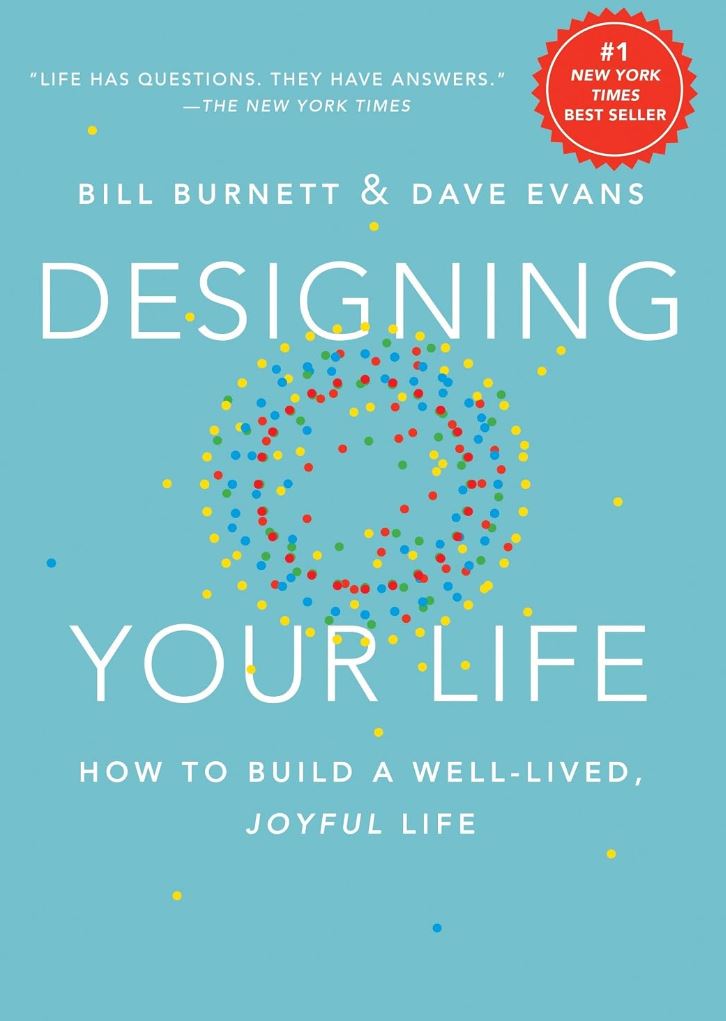
1. Designing Your Life — Bill Burnett and Dave Evans
Best for: People who have no idea what they want to do next
One of the biggest obstacles to finding a new career is believing you need to discover the right answer before doing anything.
You might spend hours researching different professions, completing career quizzes or imagining yourself in entirely different roles.
Yet somehow, you end up feeling more confused.
Designing Your Life by Bill Burnett and Dave Evans offers a different approach.
Drawing on design thinking, the authors encourage readers to explore possibilities, develop alternative plans and experiment with ideas rather than searching for one perfect career.
That’s an important distinction.
You might be interested in working with people, but unsure whether teaching, training or mentoring would suit you.
Instead of committing to an expensive qualification immediately, you could speak with people already working in those fields or investigate opportunities to gain some relevant experience.
These small experiments help turn vague ideas into useful information.
The book also challenges the assumption that there’s only one correct path waiting to be discovered.
There may be several different working lives that could suit your interests, abilities and circumstances.
Why it’s worth reading: It helps you move from endless career speculation towards practical exploration.

2. The Pathfinder — Nicholas Lore
Best for: People who struggle to identify their strengths and interests
Sometimes the reason you can’t choose a career is that you haven’t spent much time understanding what you actually enjoy.
You know what you’re qualified to do.
You know what your current employer expects.
But what kinds of work naturally hold your attention?
Which responsibilities energise you?
And which tasks leave you feeling drained?
The Pathfinder by Nicholas Lore is a career-planning book designed to help readers examine their interests, abilities and personal preferences.
It uses exercises and self-assessment activities to encourage a deeper understanding of what might make work satisfying.
This can be particularly useful if you’ve spent years following a career path that developed almost by accident.
Perhaps you accepted an opportunity, became good at the job and continued progressing because that seemed like the sensible thing to do.
Twenty years later, you might realise you’ve never seriously questioned whether the profession suits you.
The important thing is to approach self-assessment as a starting point rather than expecting a questionnaire to deliver a perfect answer.
Your interests and strengths can help narrow the possibilities, but you’ll still need to investigate whether particular careers are realistic.
Why it’s worth reading: It encourages you to look beyond job titles and examine the personal qualities that influence career satisfaction.
3. Working Identity — Herminia Ibarra
Best for: Experienced workers who struggle to imagine themselves doing something else
When you’ve spent many years in the same profession, your job can become part of your identity.
You’re the manager.
The accountant.
The engineer.
The IT professional.
People know you for your expertise, and you’ve probably become comfortable describing yourself through your work.
So when you begin considering a different career, it can feel like you’re questioning part of who you are.
Working Identity by Herminia Ibarra explores how people make professional transitions and develop new working identities.
One of the book’s important ideas is that career change often involves trying new activities, building different relationships and learning through experience.
In other words, you don’t always discover your next career by sitting alone and thinking about it.
Sometimes you need to experience something different before you can imagine yourself doing it.
For example, an experienced manager might discover an interest in mentoring after helping younger colleagues develop their skills.
A technical specialist might enjoy delivering training more than performing their original role.
These discoveries can happen gradually.
And they don’t necessarily require you to abandon your existing career immediately.
Why it’s worth reading: It helps explain why professional reinvention can feel difficult and why action often provides clarity that thinking alone cannot.
4. Pivot — Jenny Blake
Best for: People who want a different career without throwing away their experience
One of the most common concerns about changing careers is the fear of starting from zero.
Perhaps you’ve spent twenty years developing specialist knowledge.
You’ve worked hard to reach your current salary, built professional relationships and gained experience that younger workers haven’t yet had the opportunity to develop.
Why would you want to lose all that?
Pivot by Jenny Blake offers a practical perspective on career transitions.
Rather than treating change as a complete restart, Blake encourages readers to build their next move around their existing strengths, interests and experience.
That’s particularly valuable when you’re unsure what career you want.
Instead of beginning with a blank page, consider what you already know how to do.
Maybe you’re excellent at solving problems.
Perhaps you enjoy explaining complicated information.
Or you’ve developed strong organisational, leadership or communication skills.
Those abilities may be valuable in roles outside your current profession.
Of course, some transitions require additional training, and not every skill transfers equally well.
But recognising what you already have can make exploring alternatives feel far less overwhelming.
Why it’s worth reading: It helps you identify realistic career possibilities that build on your experience rather than discard it.
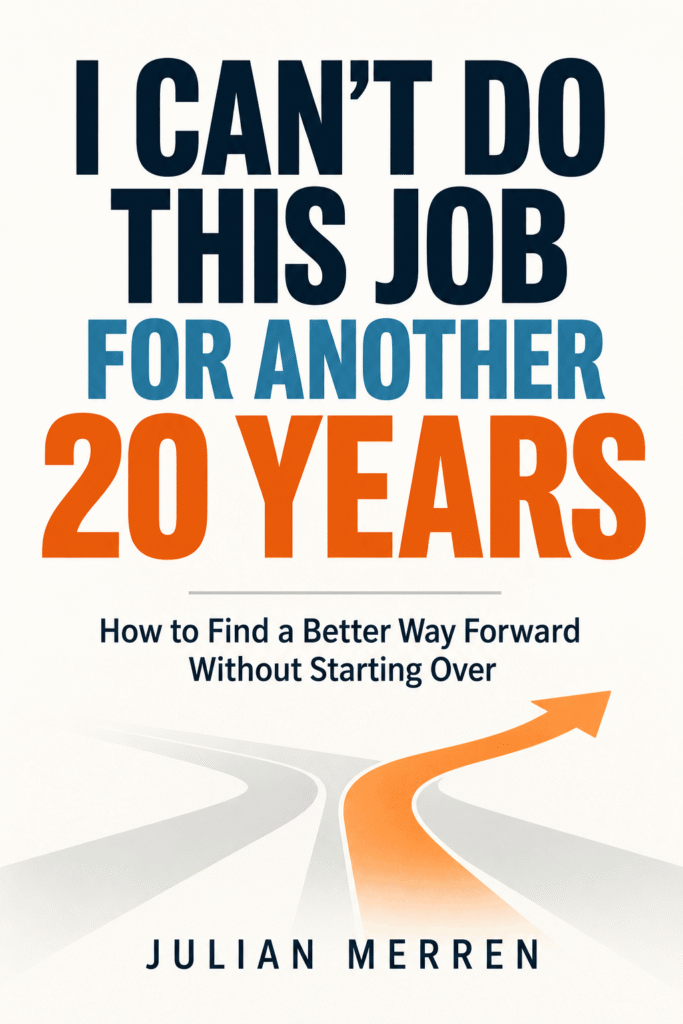
5. I Can’t Do This Job for Another 20 Years — Julian Merren
Best for: People who want a change but aren’t sure how big that change needs to be
Sometimes the problem isn’t that you can’t identify your dream career.
It’s that you’re asking yourself the wrong question.
You might be thinking, What career should I do instead?
But perhaps a more useful question is:
What exactly needs to change about my current working life?
That’s the approach explored in I Can’t Do This Job for Another 20 Years: How to Find a Better Way Forward Without Starting Over by Julian Merren.
The book is aimed at people who have established careers but no longer feel satisfied with the direction they’re heading.
Rather than assuming a complete career change is necessary, it encourages readers to identify the source of their dissatisfaction.
Perhaps your profession still interests you, but your current employer doesn’t.
Maybe you enjoy the work but have become exhausted by management responsibilities.
Or perhaps your priorities have changed, and you’re looking for more flexibility, less pressure or greater meaning.
These are different problems.
And they may require very different solutions.
The book also recognises that financial security, family responsibilities and years of professional experience matter.
You don’t necessarily have to abandon everything you’ve built to improve your working life.
Sometimes the answer is a different role, a different employer or a related industry where your existing skills remain valuable.
Other times, a larger career transition may be worth exploring.
Why it’s worth reading: It helps you understand whether you need an entirely new career or simply a better version of the working life you already have.
Explore I Can’t Do This Job for Another 20 Years by Julian Merren
What to Do When You Don’t Know What Career You Want
Reading about career possibilities is useful, but eventually you’ll need to turn those ideas into action.
Fortunately, that doesn’t mean making a dramatic decision.
Start with three practical questions.
1. What do you want less of?
It’s often easier to identify what isn’t working than to describe your ideal career.
Perhaps you want less stress, fewer meetings, shorter hours or a more supportive working environment.
Write down the three things about your current work that you’d most like to change.
This gives you something concrete to work with.
2. What do you want more of?
Now consider the positive side.
Would you like more independence?
More creativity?
More meaningful interactions with people?
Or simply more time and energy for life outside work?
These preferences can help you recognise opportunities that genuinely suit your priorities.
3. What could you explore without making a major commitment?
If you’re struggling to identify your strengths, the National Careers Service offers a free skills and career assessment that can help you explore your interests and possible career directions.
You don’t have to quit your job to investigate another career.
Start by examining job advertisements, speaking with people in different roles or researching the qualifications employers require.
You could also investigate short courses or opportunities to develop new skills.
The goal is to gather information before committing substantial time or money.
Stop Searching for the Perfect Career
One of the biggest traps in career planning is believing that somewhere out there is a single perfect job that will finally make everything fall into place.
That expectation can keep you searching indefinitely.
Every option has drawbacks.
Every profession involves responsibilities you may not enjoy.
And even a career that suits you today might not suit you in another ten years.
A more realistic goal is finding work that better matches your current interests, abilities, priorities and circumstances.
That might mean discovering a new profession.
But it could also mean making a smaller adjustment that significantly improves your everyday life.
If you don’t know what career you want, don’t assume you have to solve the entire problem immediately.
Start by understanding what isn’t working, recognising the skills you already have and exploring possibilities that interest you.
Then make one sensible move.
Not the forever move.
Your Next Career Doesn’t Have to Be a Mystery
Feeling uncertain about your career can be frustrating, particularly when you’ve spent years building experience in a profession that no longer feels right.
But uncertainty doesn’t mean you’re out of options.
The five books above offer different ways to explore your interests, recognise your strengths and approach career change more thoughtfully.
You may discover that a completely different profession appeals to you.
Or you might realise that a smaller change could give you much of what you’re looking for.
Either way, the important thing is to begin exploring rather than waiting for perfect clarity.
You don’t have to know exactly what you want to do for the rest of your life. You just need to understand what might make the next chapter better.
And if you’re struggling to work out what needs to change, I Can’t Do This Job for Another 20 Years by Julian Merren offers a practical place to begin.
Discover How to Find a Better Way Forward Without Starting Over