

It can be remarkably quiet at two in the morning.
Unfortunately, your thoughts don’t always get the message.
The house is still. Tomorrow is waiting. But instead of sleeping, you’re mentally adding up bills, wondering whether you’ve saved enough, thinking about an upcoming expense or replaying a financial decision you wish you’d made differently.
Money has a habit of feeling heavier at night.
If you’re searching for books to read when worried about money, you probably don’t need another person simply telling you to “stop worrying”.
You need perspective.
You need something that helps you understand why money occupies so much mental space, what you can actually control and where you might begin.
These three books approach that problem differently.
1. The Psychology of Money — Morgan Housel
Best for understanding why money feels so emotional
Money looks like a numbers problem.
Income. Expenses. Savings. Debt. Investment returns.
Yet our relationship with those numbers is rarely logical.
That’s one reason The Psychology of Money by Morgan Housel is such a useful place to begin.
Housel explores the behavioural side of money — how our experiences, expectations, attitudes towards risk and ideas about wealth influence financial decisions.
And that’s particularly relevant when you’re lying awake worrying.
Sometimes the number itself isn’t the only thing troubling you.
A small savings balance might represent a fear of not being prepared.
An investment loss can feel like evidence that you’ve failed.
Seeing somebody else doing well financially can make your own progress suddenly seem inadequate.
A purchase you regret can become something you replay repeatedly, long after the money has gone.
The value of understanding this behaviour isn’t that every financial problem suddenly disappears.
It’s that you begin separating the financial reality from the story you’ve attached to it.
Ask yourself what you’re actually worried about
When money is circling through your thoughts, try making the worry more specific.
Instead of:
I’m terrible with money.
Try:
I’m worried that I don’t have enough emergency savings.
Instead of:
I’ll never be financially secure.
Try:
I’m worried about how I’ll manage this particular expense.
Specific problems are much easier to work with than sweeping conclusions about your entire financial future.
Read this if: your money worries often turn into comparison, regret or worst-case thinking.
2. Your Money or Your Life — Vicki Robin and Joe Dominguez
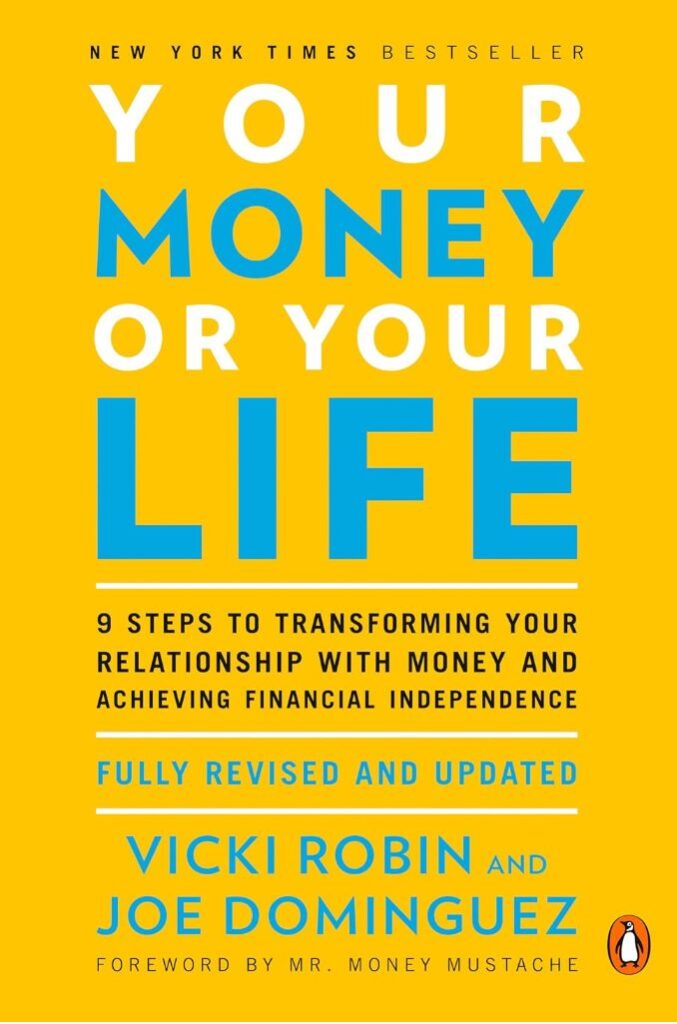
Best for reconsidering what “enough” actually means
Sometimes financial worry doesn’t come from having absolutely nothing.
It comes from never feeling as though you have enough.
There is always another target.
A larger emergency fund.
A bigger investment portfolio.
A better house.
More retirement savings.
A higher income.
And if your definition of financial security keeps moving, it’s difficult to ever feel that you’re getting closer.
Your Money or Your Life takes a broader view of money by examining its relationship with time, values and the life you’re trying to create.
That makes it especially interesting for someone whose thoughts about money have become constant.
What are you actually trying to achieve?
Security?
Freedom?
More control over your time?
The ability to work less?
A comfortable retirement?
Peace of mind when an unexpected bill arrives?
Those aren’t necessarily the same goal.
Financial security needs a definition
Try completing this sentence:
“I would feel more financially secure if…”
Then make the answer concrete.
Perhaps it’s having three months of essential expenses set aside.
Maybe it’s eliminating a particular debt.
Perhaps it’s knowing you’re regularly contributing towards retirement.
Your answer won’t solve everything immediately.
But it gives your financial effort somewhere to go.
Without a destination, “I need more money” can become an endless source of pressure.
Read this if: you’re constantly thinking about money but aren’t entirely sure what would make you feel more financially secure.
3. From Financial Regret to Financial Freedom — Julian Merren
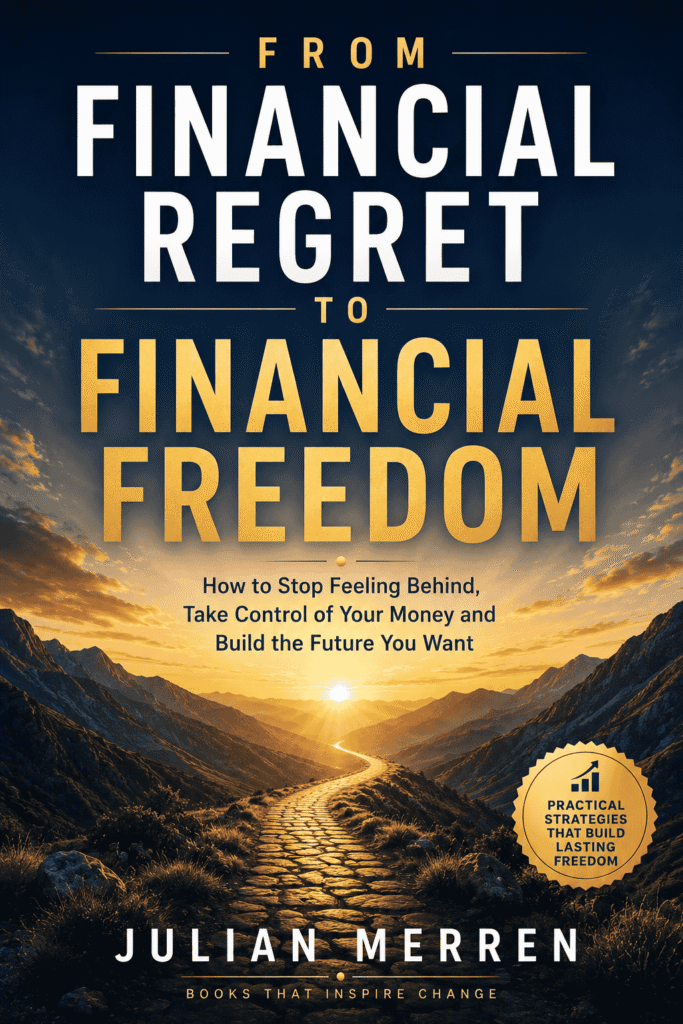
Best for when past money decisions keep returning at night
There is another kind of money worry that can become particularly persistent.
Regret.
You remember what you spent.
What you didn’t save.
The debt you accumulated.
The investment you never made.
The years you could have been building wealth.
And nighttime gives those thoughts plenty of room.
From Financial Regret to Financial Freedom by Julian Merren is particularly relevant here because it begins with that feeling of being financially behind rather than assuming you’ve always handled money perfectly.
The book moves from understanding financial regret towards practical areas including getting clearer about your current position, finding money within what you already earn, building a financial safety net, dealing with debt, beginning to build wealth and developing a financial freedom plan.
The purpose isn’t to convince you that past decisions didn’t matter.
It’s to stop those decisions from consuming energy that could be used to improve what happens next.
If that sounds like the kind of financial reset you’re looking for, you can explore From Financial Regret to Financial Freedom by Julian Merren.
Read this if: the money problem keeping you awake is often something that has already happened.
What the Best Books to Read When Worried About Money Can Actually Do
No book can pay tomorrow’s electricity bill or make a debt disappear overnight.
That’s important to acknowledge.
But good books can change the way you approach the problem.
They can help you:
- distinguish a solvable problem from a vague fear;
- understand some of the behaviour behind your financial decisions;
- define what financial security means to you;
- stop comparison from setting your financial targets;
- turn regret into information rather than punishment; and
- identify one practical thing you can do next.
That’s why the best books to read when worried about money aren’t necessarily books promising to make you rich.
Sometimes the first thing you need isn’t more wealth.
It’s more clarity.
Give Tomorrow’s Problem a Tomorrow Action
One reason financial worries can feel so powerful at night is that there is often very little you can actually do about them at that moment.
The bank isn’t open.
You can’t change yesterday’s purchase.
Your investment balance won’t be transformed before breakfast.
So instead of trying to mentally solve your entire financial life in bed, write down the concern and give it a specific next action.
For example:
Worry: I’m spending too much each month.
Tomorrow: Review the last 30 days of transactions.
Worry: My credit-card balance is getting uncomfortable.
Tomorrow: Write down the balance, interest rate and minimum repayment.
Worry: I haven’t saved enough.
Tomorrow: Decide on a realistic automatic amount to begin setting aside.
The problem hasn’t vanished.
But it now has somewhere to go.
If your situation involves bills or debts that you genuinely cannot meet, practical support matters too, and Moneysmart explains how to access free financial counselling.
You Don’t Have to Solve Your Financial Life Tonight
Money worries deserve attention.
But they don’t deserve every hour you can give them.
The Psychology of Money can help you understand the behaviour and emotion surrounding money.
Your Money or Your Life can help you think more clearly about what enough and financial freedom mean to you.
And From Financial Regret to Financial Freedom can be particularly useful when the worry is tangled up with mistakes, lost time and feeling behind.
Choose the book that most closely matches what’s keeping you awake.
Then tomorrow, choose one action.
Because financial control rarely arrives through one dramatic decision.
More often, it grows from a series of smaller decisions that gradually give you fewer things to worry about when the lights go out.