

There’s a particular kind of financial regret that can creep up on you as the years pass.
You look at your savings and wonder what might have happened if you had started ten or twenty years earlier.
You imagine all those years of potential growth. You think about money you spent rather than saved. And perhaps you start comparing yourself with people who seem much further ahead.
If you’re looking for books for people who started saving late, the most useful ones aren’t necessarily going to tell you how much better things would have been if you’d begun at 25.
You probably know that already.
What you need now are books that help you understand where you are, make sensible decisions with the time you still have and stop allowing regret about yesterday to interfere with what you could begin today.
Here are five worth exploring.
1. The Psychology of Money — Morgan Housel
Best for changing how you think about financial progress
Before changing what you do with money, it can be useful to understand how you think about it.
That’s where The Psychology of Money by Morgan Housel becomes particularly relevant.
The book explores the behavioural side of money: how personal experience, risk, patience, luck and our attitudes towards wealth influence financial decisions.
For someone who feels they’ve started saving late, that perspective matters.
It’s easy to look at another person’s financial position and assume they simply made better choices. But we’re rarely comparing two identical lives.
People earn different amounts. They experience different setbacks. They begin with different advantages and encounter different opportunities.
More importantly, comparison doesn’t change your own financial position.
Understanding your behaviour might.
This is a particularly useful book if feeling behind has become as much an emotional problem as a financial one.
Read this if: you spend too much time comparing your financial progress with everyone else’s.
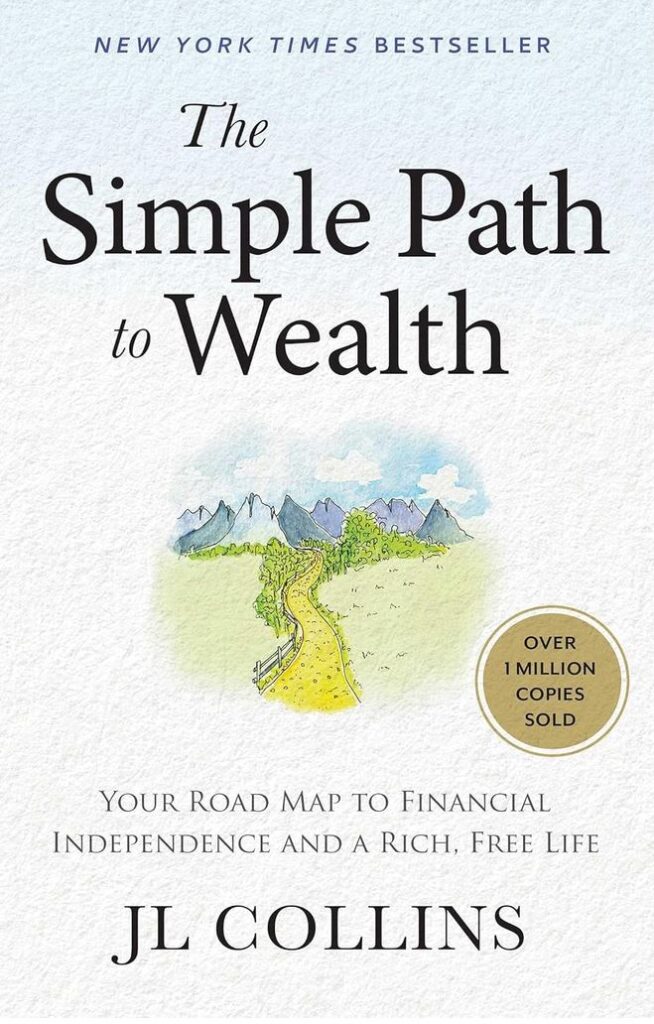
2. The Simple Path to Wealth — JL Collins
Best for making investing feel less intimidating
Starting late can create urgency.
And urgency can make simple financial principles seem inadequate.
You may start thinking that because you have fewer years available, you need to discover a faster or more sophisticated way to build wealth.
The Simple Path to Wealth offers a useful counterweight to that thinking.
JL Collins focuses on simplicity, long-term thinking and financial independence rather than constantly searching for the next clever investment.
That doesn’t mean starting at 50 produces the same outcome as starting at 25.
Time matters.
But starting later doesn’t mean you need to make investing unnecessarily complicated.
In fact, feeling behind can be precisely when simplicity becomes most valuable. It can help you resist the temptation to chase unrealistic returns simply because you’re trying to compensate for years you wish you could recover.
Read this if: you want to start investing but feel overwhelmed by how complicated the financial world appears.
3. I Will Teach You to Be Rich — Ramit Sethi
Best for finally turning intention into action
Many people don’t start saving late because they deliberately decided not to save.
They kept postponing it.
Next month.
After the holiday.
When the mortgage is easier.
When the children are older.
When work settles down.
When there’s finally more money left at the end of the month.
Years can disappear remarkably quickly that way.
I Will Teach You to Be Rich by Ramit Sethi takes a practical approach to personal finance, including the use of systems and automation.
That can be especially helpful when you’ve spent years intending to improve your finances but haven’t managed to make those intentions stick.
Rather than requiring yourself to make the right financial decision again and again, systems can make some of those decisions happen automatically.
The important lesson for a late starter isn’t that you suddenly have to become perfect with money.
It’s that consistency matters more now than another year of good intentions.
Read this if: you know what you should be doing but have struggled to turn that knowledge into regular financial habits.
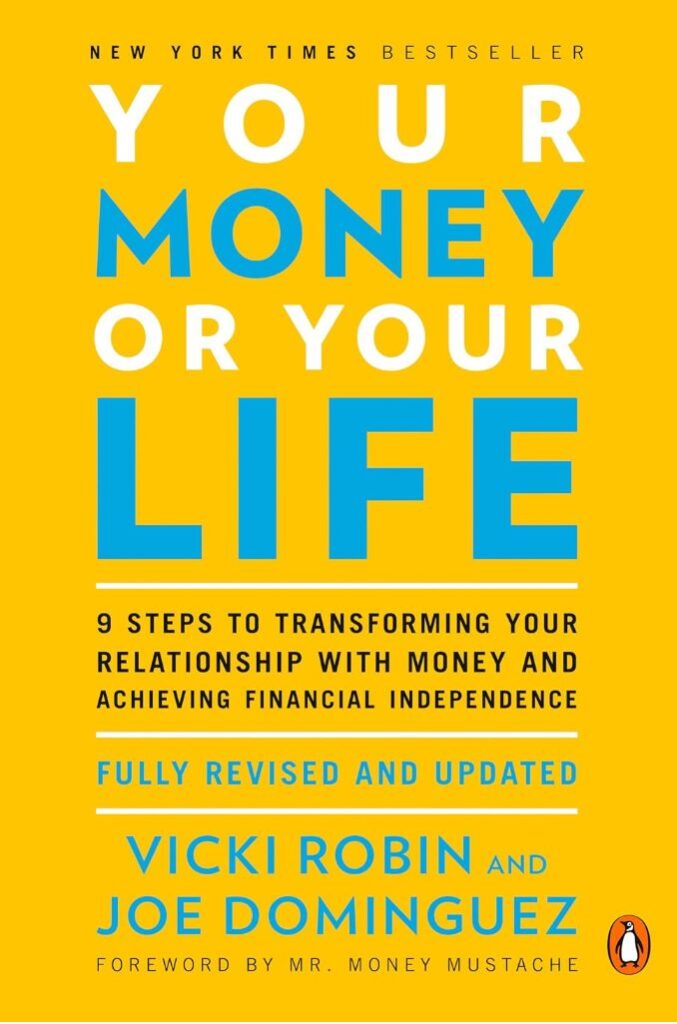
4. Your Money or Your Life — Vicki Robin and Joe Dominguez
Best for deciding what you’re actually saving for
When people realise they’re behind financially, the immediate reaction is often:
I need more money.
That may be true.
But there’s another question worth asking.
How much is enough for the life you actually want?
Your Money or Your Life explores the relationship between money, time and personal values.
That’s particularly interesting for someone beginning later because financial freedom doesn’t necessarily mean accumulating the largest possible number.
It means understanding what money needs to provide for your life.
Perhaps you’re aiming for a comfortable retirement rather than an extravagant one.
Maybe having fewer financial obligations matters more than owning more things.
Or perhaps your definition of wealth includes having greater control over your time.
Becoming clearer about what you’re working towards can make saving feel less like punishment for starting late and more like deliberately building something you value.
Read this if: you’re trying to save more but aren’t completely sure what “enough” looks like for you.
5. From Financial Regret to Financial Freedom — Julian Merren
Best for moving beyond the feeling that you’ve left it too late
This is where From Financial Regret to Financial Freedom by Julian Merren fits particularly closely with today’s subject.
The book is written around a problem that traditional financial advice can sometimes overlook.
You may understand that you should save, reduce unnecessary spending, deal with debt and build wealth.
But knowing those things doesn’t automatically remove the thought:
I should have done all of this years ago.
From Financial Regret to Financial Freedom begins with that emotional side of feeling behind before moving into the practical work of taking control.
It explores understanding your current position, finding money within what you already earn, building a financial safety net, tackling debt, beginning to build wealth and creating your own financial freedom plan.
It doesn’t depend on pretending that starting age doesn’t matter.
Starting earlier obviously gives money longer to grow.
But recognising that fact is very different from concluding that starting now is pointless.
Read this if: your biggest obstacle isn’t knowing that you should start — it’s regretting that you didn’t start sooner.
You can learn more about From Financial Regret to Financial Freedom by Julian Merren.
What the Best Books for People Who Started Saving Late Have in Common
The best books for people who started saving late don’t offer a time machine.
Instead, they help with something considerably more useful: making better decisions with the time and resources available now.
Across these five books, several themes keep appearing:
- understand your behaviour before trying to change it;
- simplify rather than panic;
- build systems that encourage consistency;
- decide what financial freedom actually means to you;
- concentrate on your next decision rather than your previous ones.
That last point may be the most important.
Because regret can quietly create another delay.
You spend a year worrying about the ten years you lost.
Then another year passes.
Starting Late Doesn’t Mean Starting Recklessly
There is one trap late starters should be particularly wary of.
Trying to catch up too quickly.
When you calculate what you might have accumulated had you started earlier, it’s tempting to believe you now need extraordinary investment returns to close the gap.
That can encourage exactly the wrong behaviour.
The alternative isn’t giving up.
It’s becoming more deliberate.
Perhaps that means increasing the amount you save as your circumstances allow. Maybe it means reducing expenses that no longer matter to you, paying down expensive debt, automating investments or extending your working horizon.
The right approach will depend on your circumstances.
But urgency and recklessness are not the same thing.
JL Collins’ work is particularly relevant here: his official site describes The Simple Path to Wealth as a guide to financial independence built around simplicity, and Collins continues to emphasise long-term investing rather than unnecessary complexity.
The Best Time You Still Control Is Now
It’s perfectly reasonable to wish you’d started earlier.
If you’d saved consistently for another decade or two, your position today might look very different.
But there’s a point where acknowledging that becomes less useful than acting on it.
The past contains lessons.
The future contains choices.
And today is where the two meet.
If you recognise yourself in this article, choose one of these books and begin there. Don’t try to fix your entire financial life this weekend.
Learn something.
Make one decision.
Then make another.
Starting late may mean your journey looks different from someone who began decades ago.
It doesn’t mean there isn’t still a journey worth taking.
And if financial regret itself is what’s keeping you stuck, From Financial Regret to Financial Freedom was created specifically around the idea of moving beyond past money mistakes and building forward from where you are today.