
It’s easy to make promises when you’re feeling motivated.
You decide to exercise regularly, read more books, become better organised or finally finish an important project.
You feel determined. You create a plan. Perhaps you even imagine how different your life will look in six months.
Then Monday arrives.
You’re busy, tired or distracted, and suddenly the routine you created doesn’t seem quite so appealing.
By Thursday, you’ve missed a couple of days.
By the weekend, you’re telling yourself you’ll start again next week.
If that sounds familiar, you might be looking for books about building self discipline habits that can help you turn good intentions into something more reliable.
Because the real challenge isn’t always knowing what you should do.
Often, it’s finding a practical way to keep doing it when life becomes ordinary, demanding or unpredictable.
Fortunately, some excellent books explore how habits develop, why routines fall apart and what helps people turn meaningful intentions into consistent action.
Here are five worth considering.
Why Self-Discipline Is More Than Willpower
When we think about self-discipline, we often imagine someone with extraordinary determination.
They wake up early, complete every planned task and rarely seem distracted.
But there’s another way to think about discipline.
Instead of expecting yourself to make the right decision repeatedly through sheer willpower, you can design routines that make worthwhile actions easier to perform.
For example, if you want to read more, keeping a book somewhere convenient may help you remember your intention.
If you’re trying to make progress on a personal project, deciding in advance when you’ll work on it can reduce unnecessary hesitation.
And if you regularly abandon habits after missing a day, planning how to return may be more useful than promising never to miss another session.
Discipline isn’t simply about pushing harder.
It can involve creating an environment, schedule and set of commitments that make following through more manageable.
The following books explore different parts of that process.
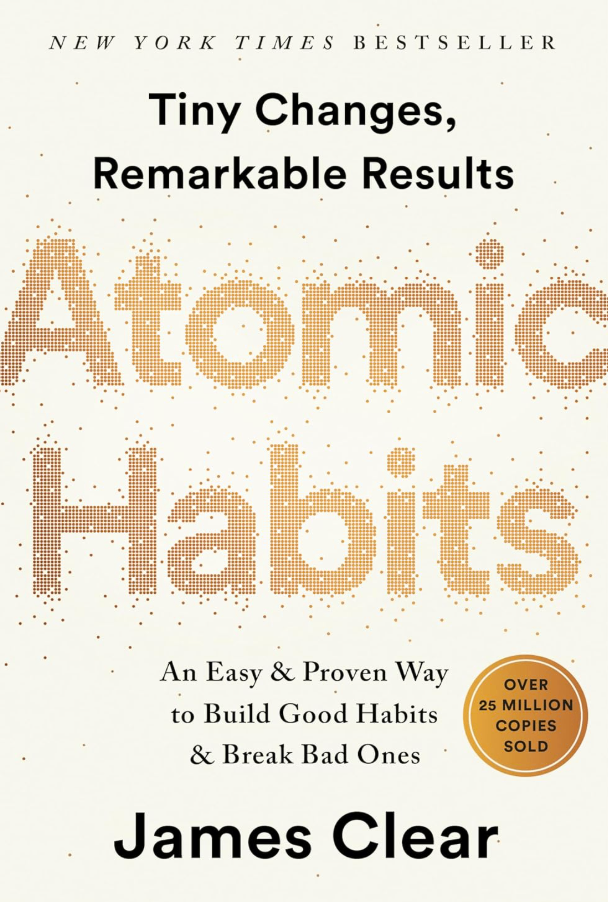
1. Atomic Habits — James Clear
Best for: Creating a System That Supports Consistent Action
Atomic Habits by James Clear is one of the most relevant starting points for understanding how everyday behaviours become established routines.
The book explores how small changes, repeated over time, can contribute to meaningful improvements.
Rather than concentrating exclusively on ambitious goals, Clear encourages readers to examine the systems behind their actions.
Imagine you’ve decided to become someone who reads regularly.
You could set a target of finishing twenty books this year.
That’s a perfectly reasonable ambition.
But the target itself doesn’t explain how reading will fit into your daily life.
James Clear also explains why systems matter as much as goals, encouraging readers to consider the everyday processes that support their ambitions.
You still need to decide when you’ll read, where you’ll keep your books and how you’ll respond when your schedule becomes demanding.
Clear’s approach encourages readers to make desired behaviours more obvious, convenient and satisfying.
He also explores the relationship between habits and identity, showing how repeated actions can reinforce the kind of person we want to become.
What you can learn:
- Build repeatable systems instead of depending entirely on goals.
- Make positive behaviours easier to perform.
- Use small, consistent actions to support long-term change.
Atomic Habits is particularly valuable if you have clear ambitions but struggle to translate them into everyday behaviour. James Clear
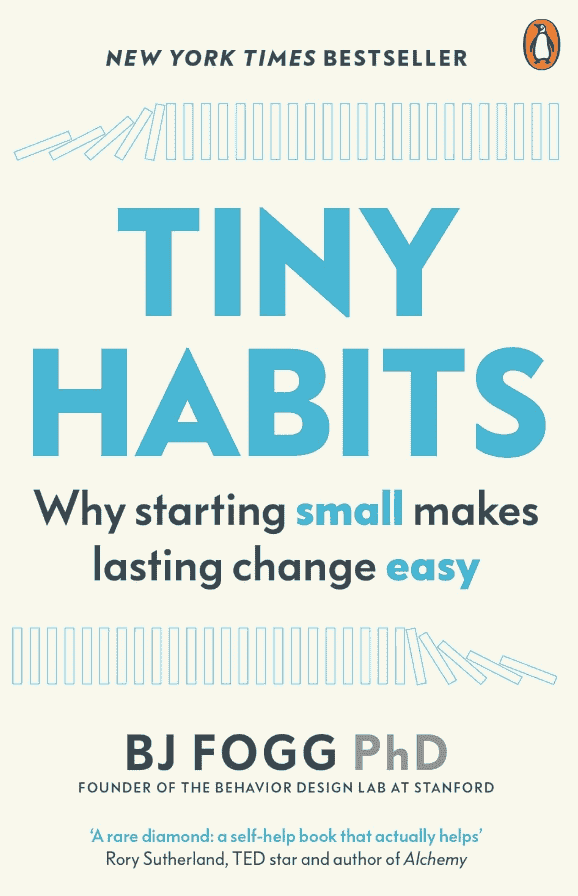
2. Tiny Habits — BJ Fogg
Best for: Making Discipline Easier to Practise
One reason self-improvement plans fail is that we attempt too much too quickly.
We promise ourselves an hour of exercise every morning, thirty minutes of reading every evening and an entirely new routine by the end of the week.
Everything seems manageable while we’re enthusiastic.
But when life becomes demanding, those commitments can be difficult to maintain.
In Tiny Habits, behaviour scientist BJ Fogg explores the value of starting with extremely small actions.
His approach involves connecting new behaviours to existing routines and making the actions easy enough to perform without a major effort.
Perhaps you want to become better organised.
Instead of promising to overhaul your entire schedule, you might begin by writing down one priority after making your morning coffee.
If you’d like to read more, perhaps you start with a single page before bed.
These actions may seem modest.
But they give you an opportunity to practise the behaviour without creating another demanding commitment.
The smaller action can also provide a foundation for expanding the routine when circumstances allow.
What you can learn:
- Start with behaviours that are realistic for your current life.
- Connect new habits to activities you already perform.
- Reduce the effort required to begin.
Tiny Habits is an excellent choice if previous routines have failed because they demanded too much time or energy. BJ Fogg
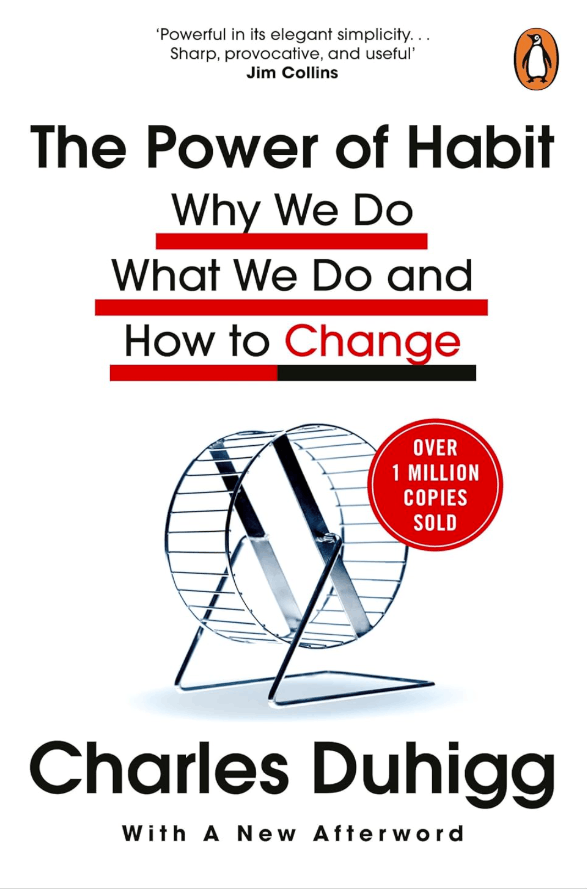
3. The Power of Habit — Charles Duhigg
Best for: Understanding Why Habits Are Difficult to Change
Sometimes you genuinely want to develop better routines, but familiar behaviours keep getting in the way.
You intend to concentrate on work, yet repeatedly check your phone.
You decide to spend less time browsing online, but somehow return to the same websites every evening.
Or perhaps you’ve been trying to introduce a positive habit but keep forgetting to perform it.
In The Power of Habit, Charles Duhigg explores how habits operate in everyday life.
One of the book’s central ideas is the habit loop, involving a cue, a routine and a reward.
Understanding this pattern can help readers examine why certain behaviours become familiar and what might make them easier to change.
Imagine you automatically reach for your phone whenever you take a break from work.
The break itself may be the cue.
Checking your phone is the routine.
And the reward might involve entertainment, novelty or a brief escape from a demanding task.
Recognising that pattern creates an opportunity to experiment with a different response.
Perhaps you stand up, stretch or take a short break away from your screen instead.
Not every habit is easy to change, and people respond differently to different strategies.
But understanding what triggers your behaviour can be a useful starting point.
What you can learn:
- Recognise cues that influence repeated behaviour.
- Understand how routines and rewards interact.
- Examine existing patterns before trying to change them.
The Power of Habit is worth reading if you want a deeper understanding of why certain actions become automatic. Penguin Books Australia
4. The 12 Week Year — Brian P. Moran and Michael Lennington
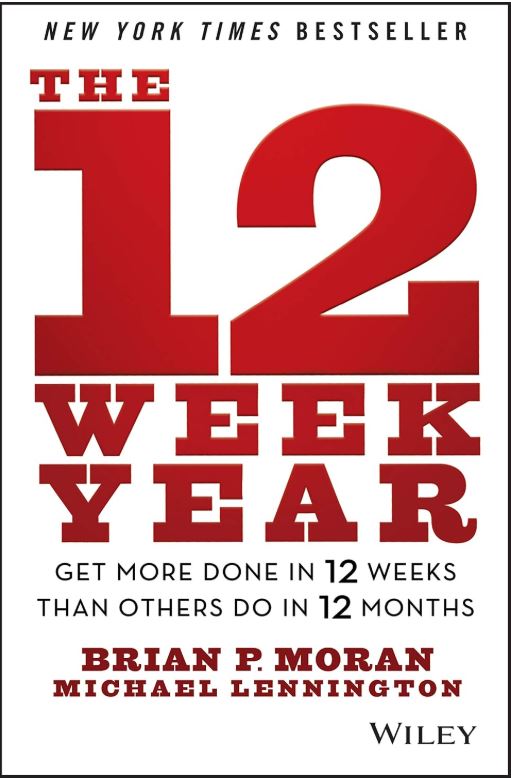
Best for: Turning Long-Term Goals Into Regular Action
Sometimes your difficulty isn’t knowing which habits to build.
It’s connecting those habits to a meaningful goal.
You have an ambition for the future, perhaps involving your career, finances or a personal project.
But because the deadline feels distant, it’s easy to postpone the work.
In The 12 Week Year, Brian P. Moran and Michael Lennington introduce a planning approach built around shorter execution periods.
Instead of relying entirely on annual goals, the book encourages readers to think in twelve-week cycles, with clearer priorities and regular actions.
Imagine you’ve been meaning to complete an online course.
You could set a vague goal of finishing it sometime this year.
Or you could identify what would be realistic to accomplish over the next twelve weeks.
From there, you can decide which specific activities deserve attention each week.
The value isn’t simply creating a tighter deadline.
It’s connecting a meaningful outcome with the practical steps needed to move towards it.
Of course, not every goal will fit neatly into twelve weeks.
The principle is to create enough structure that important commitments don’t continually disappear into the distant future.
What you can learn:
- Translate larger goals into shorter planning periods.
- Identify important actions that deserve regular attention.
- Review your progress and adjust your approach.
The 12 Week Year is particularly relevant if you have meaningful long-term goals but struggle to make consistent progress towards them. books.apple.com
5. The Discipline to Follow Through — Julian Merren
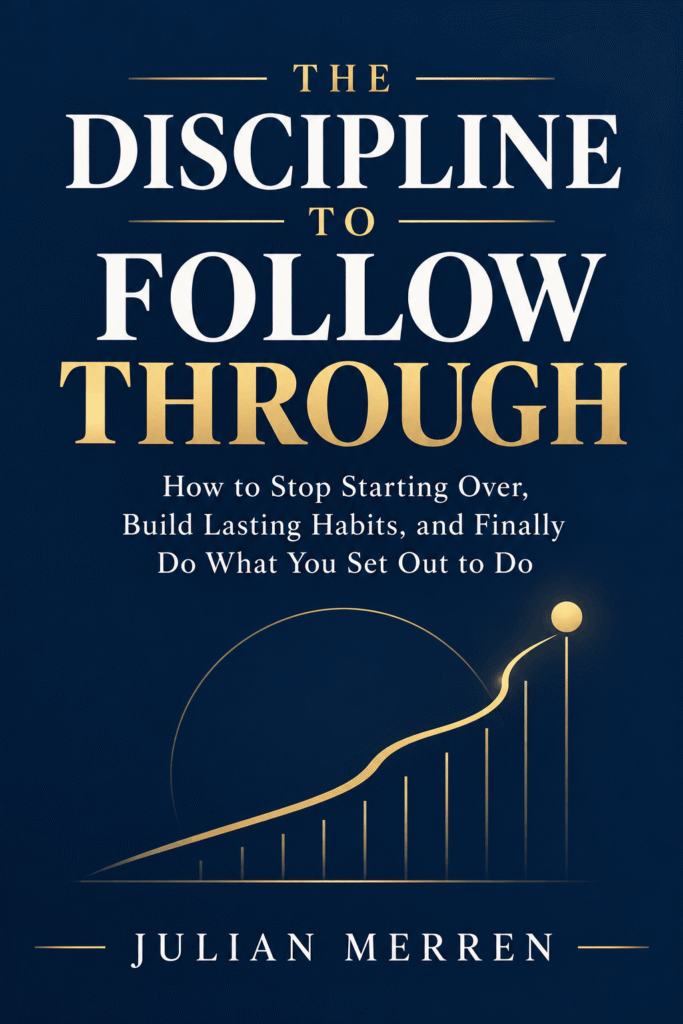
Best for: Developing a Personal System for Lasting Consistency
Understanding habits is useful.
Knowing how to set goals is important.
But eventually, those ideas need to become something practical.
You need a way to make realistic commitments, overcome procrastination, protect your attention and continue when motivation fades.
That’s the challenge explored in The Discipline to Follow Through by Julian Merren.
Rather than encouraging readers to change everything overnight, the book focuses on building a practical system for following through on meaningful goals.
It explores why people repeatedly start over, how to make habits manageable and what to do when everyday life interrupts their plans.
An important theme is rebuilding trust in yourself.
When you’ve repeatedly abandoned commitments, making another promise can feel discouraging.
But creating smaller, realistic actions and developing a way to return after setbacks can help you approach those commitments differently.
The book also examines how to distinguish between a goal worth continuing and one that may need adjusting.
Because discipline isn’t simply about refusing to change direction.
It’s about making thoughtful decisions and following through where it matters.
The book includes a separate 30-Day Follow-Through Workbook, featuring practical daily assignments and weekly checkpoints.
Together, the main book and workbook provide readers with ideas to understand their habits and opportunities to practise those ideas.
What you can learn:
- Make realistic commitments you can maintain.
- Develop manageable routines around meaningful goals.
- Protect your attention and overcome procrastination.
- Respond to setbacks without constantly starting over.
- Build a personal follow-through system.
If you’re tired of making plans that never become consistent action, this book offers a practical approach to building more reliable habits.
Discover The Discipline to Follow Through and its 30-Day Companion Workbook
Which Books About Building Self Discipline Habits Should You Read First?
The best choice depends on what makes consistency difficult for you.
If you want a broad system for establishing better routines, begin with Atomic Habits.
If your commitments regularly become overwhelming, Tiny Habits offers a smaller starting point.
If you want to understand why familiar behaviours are difficult to change, consider The Power of Habit.
If your long-term goals continually get postponed, The 12 Week Year explores how to connect ambitions with regular action.
And if you’re trying to bring these ideas together into a practical system for everyday life, The Discipline to Follow Through focuses on following through when motivation and circumstances change.
You don’t need to read every book immediately.
Choose the one that addresses your current challenge and look for an idea you can apply.
How to Build Your Own Self-Discipline System
Before making another ambitious commitment, consider three simple decisions.
1. Choose one meaningful priority
You don’t need to improve every area of your life at once.
Identify something that genuinely matters and give it enough attention to develop.
2. Make the action repeatable
Decide exactly what you’ll do and when you’ll do it.
Perhaps you’ll read for ten minutes after dinner, practise a skill twice a week or spend twenty minutes working on a project before checking messages.
Choose a commitment that fits your actual circumstances.
3. Create a way to return
Eventually, something will interrupt your plans.
Perhaps you’ll miss a session or discover that your original schedule is unrealistic.
Instead of treating that interruption as a complete failure, decide how you’ll adjust and return.
A useful system doesn’t have to work perfectly every day.
It needs to help you continue when ordinary life becomes demanding.
Final Thoughts
If you’ve been searching for books about building self discipline habits, remember that becoming more consistent doesn’t require extraordinary motivation.
You don’t need to become someone who never gets distracted, never misses a day or never changes plans.
You need realistic commitments, useful routines and a thoughtful way to respond when things don’t go according to plan.
The five books above offer different approaches to developing those abilities.
And perhaps the most useful place to begin is with one simple question.
What worthwhile action could I realistically repeat this week?
Choose something meaningful.
Give it a clear place in your life.
Then practise returning to it.
Because lasting discipline isn’t built through one extraordinary day of effort.
It’s developed through the ordinary decisions that help you keep moving forward.