
Have you ever wanted to say something but stopped yourself because you were worried about what other people might think?
Perhaps you had an idea during a meeting but decided to remain quiet. Maybe you wanted to try a new hobby, share something online or express an opinion that others might disagree with.
You knew what you wanted to do.
But then the questions arrived.
What if they think I’m foolish?
What if I embarrass myself?
What if people don’t like me?
Sometimes the possibility of being judged can feel more uncomfortable than the disappointment of never trying.
If this sounds familiar, these five books about fear of being judged explore why other people’s opinions can influence us so strongly and how to become more comfortable being ourselves.
Because living confidently doesn’t necessarily mean everyone approves of your choices.
It means learning that their approval doesn’t have to determine every decision you make.
Why Do We Worry So Much About What Others Think?
Most people care about being accepted.
We want our friends to value us, our colleagues to respect us and the people we love to understand us.
There’s nothing inherently wrong with that.
Considering how our behaviour affects others is an important part of maintaining healthy relationships.
But difficulties can arise when concern about other people’s opinions begins controlling our decisions.
You might avoid speaking because someone could disagree.
You may change your preferences to fit in.
Perhaps you spend far too long deciding what to wear, what to post online or how to express yourself.
The problem isn’t always that someone has actually criticised you.
Sometimes it’s the possibility that they might.
And when you begin imagining negative reactions before anything has happened, you may gradually become less willing to take chances.
The following books approach this familiar struggle from different perspectives.
1. How to Be Yourself — Ellen Hendriksen
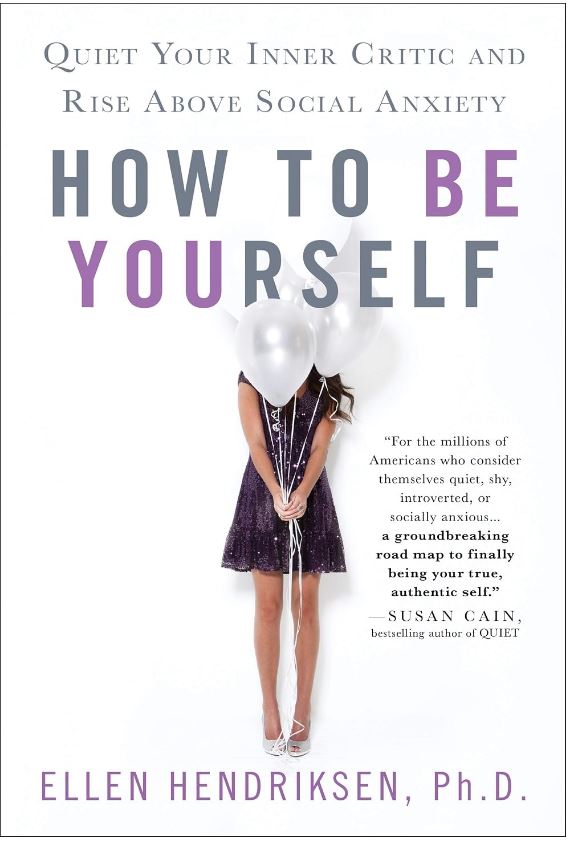
For anyone who feels particularly self-conscious around other people, How to Be Yourself: Quiet Your Inner Critic and Rise Above Social Anxiety is a relevant starting point.
Clinical psychologist Ellen Hendriksen explores the self-critical thoughts and fears that can make social situations uncomfortable.
These might include worrying about saying something embarrassing, appearing awkward or being evaluated negatively.
Why this book is worth reading
One of the most difficult things about fearing judgement is that we sometimes begin monitoring ourselves instead of enjoying the situation.
During a conversation, you may become preoccupied with how you’re coming across.
Are you speaking clearly?
Do you look nervous?
Did that last comment sound strange?
Instead of concentrating on the person you’re talking to, much of your attention is directed towards yourself.
Hendriksen explores this internal criticism and offers ways to approach social situations with greater flexibility.
The book is particularly relevant for readers whose concerns about being judged make everyday interactions more difficult than they need to be.
Best for: People who feel self-conscious in conversations, worry about embarrassing themselves or avoid social situations because they fear negative reactions.
2. The First Rule of Mastery — Michael Gervais
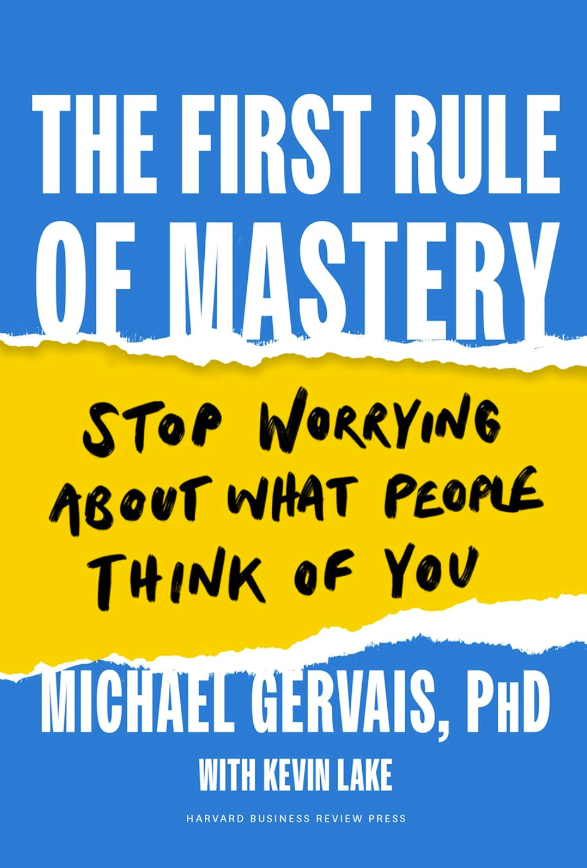
Sometimes worrying about other people’s opinions reaches beyond social situations.
It can influence the goals we pursue, the risks we take and how willing we are to express our abilities.
In The First Rule of Mastery: Stop Worrying about What People Think of You, performance psychologist Michael Gervais explores the fear of other people’s opinions and how it can interfere with meaningful action.
The book considers the ways external approval can influence decisions, confidence and performance.
Why this book is worth reading
Imagine someone who has wanted to start a creative project for years.
They have the ability, the time and a genuine interest in beginning.
But they keep imagining how others might respond.
What if people think the idea is ridiculous?
What if their friends don’t understand?
What if they fail publicly?
Eventually, the fear of judgement becomes a reason not to begin.
Gervais encourages readers to examine where they direct their attention and to develop a clearer connection with their own values and intentions.
Rather than trying to control everyone else’s opinion, the focus shifts towards how you choose to act.
Best for: Readers who hold themselves back from personal ambitions because they’re afraid of criticism, embarrassment or failure.
3. The Courage to Be Disliked — Ichiro Kishimi and Fumitake Koga
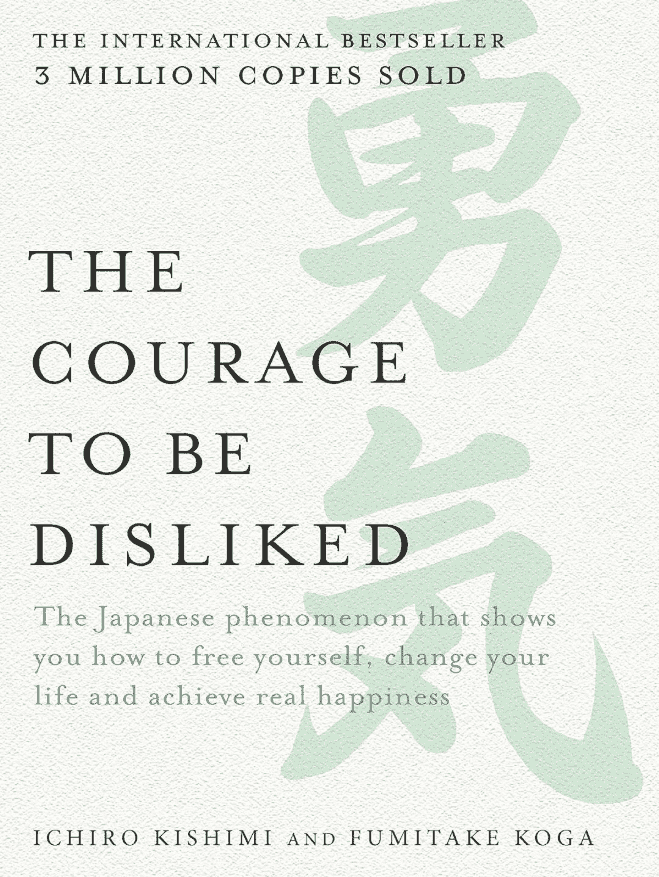
One of the most uncomfortable realities of life is that we cannot make everyone approve of us.
Even when we’re thoughtful, considerate and well-intentioned, someone may disagree with our decisions.
In The Courage to Be Disliked, Ichiro Kishimi and Fumitake Koga explore personal freedom, relationships and the influence of other people’s expectations.
Drawing on Adlerian psychology, the book presents its ideas through a series of conversations between a philosopher and a young man.
Why this book is worth reading
Many people spend considerable energy trying to avoid disappointing others.
They agree when they’d prefer to decline.
They keep opinions to themselves.
They make choices based on what their family, friends or colleagues might consider acceptable.
Over time, this can create a feeling that you’re living according to everyone else’s expectations.
The book challenges readers to consider how much authority they give other people over their lives.
Its philosophical approach won’t appeal to everyone, and some of its ideas invite debate.
Nevertheless, it raises a valuable question.
How much freedom do you give up when you’re constantly trying to ensure nobody disapproves of you?
Best for: Readers who struggle with approval-seeking and feel pressured to meet other people’s expectations.
4. The Confidence Gap — Russ Harris
It’s easy to assume that confident people simply don’t experience fear.
They speak up because they aren’t nervous.
They try new things because they don’t worry about failing.
And they express themselves because they never question whether someone might judge them.
But confidence doesn’t necessarily work that way.
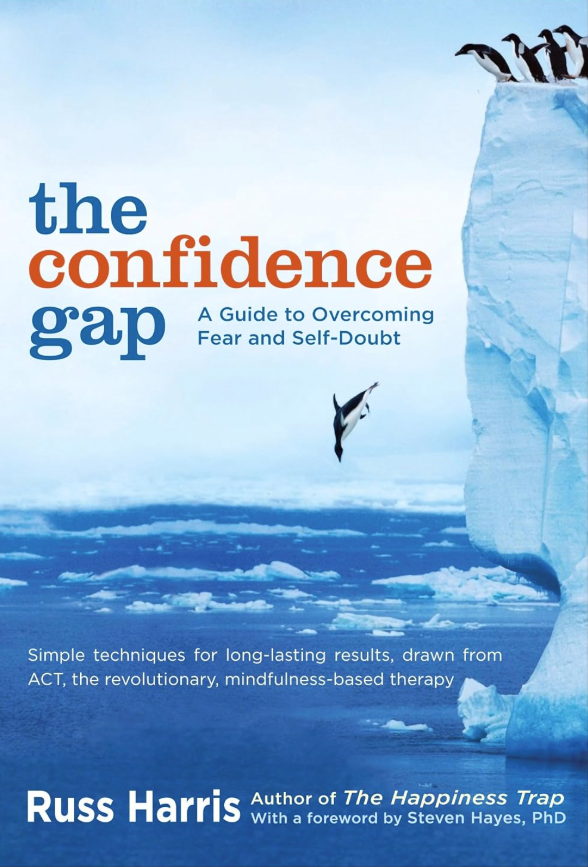
In The Confidence Gap, Russ Harris explores fear, insecurity and self-doubt through ideas from Acceptance and Commitment Therapy.
Rather than suggesting that uncomfortable thoughts must disappear before we can act, the book encourages readers to develop a different relationship with them.
Why this book is worth reading
Suppose you’ve been invited to speak during a group discussion.
You have something worthwhile to contribute.
But you’re nervous about how your idea will be received.
You might decide to wait until you feel completely confident.
Unfortunately, that moment may never arrive.
Harris encourages readers to consider taking meaningful action even when uncertainty remains.
You don’t necessarily need to eliminate every fear of judgement before expressing an opinion, joining a conversation or attempting something new.
Sometimes confidence develops through participating rather than waiting until you feel ready.
Best for: People who repeatedly postpone opportunities because they believe they must feel confident before taking action.
5. The Gifts of Imperfection — Brené Brown
Sometimes our fear of judgement comes from the belief that we must present a carefully controlled version of ourselves.
We want to appear capable, interesting, successful and confident.
We avoid admitting mistakes because we’re worried about seeming inadequate.
And we may hide ordinary imperfections because we assume other people will notice and criticise them.
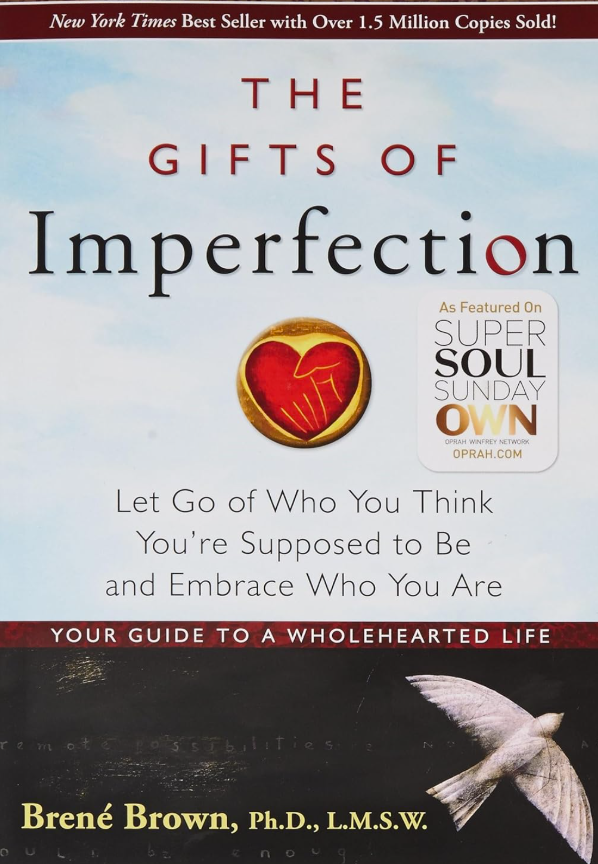
In The Gifts of Imperfection, Brené Brown explores authenticity, shame, vulnerability and the pressure to meet unrealistic expectations.
Why this book is worth reading
One of the challenges of worrying about judgement is that we can begin treating our imperfections as things that must be concealed.
We might believe that everyone else is more confident, organised or successful than we are.
But the version of ourselves we attempt to present can become exhausting to maintain.
Brown encourages readers to reconsider the expectation that they must always appear flawless or meet other people’s standards.
The book’s focus on wholehearted living offers a different perspective on self-worth.
Instead of continually trying to prove that you’re good enough, you can begin examining why you feel that proof is necessary.
Best for: Readers who struggle with perfectionism, comparison and the fear that others will notice their shortcomings.
Which of These Books About Fear of Being Judged Should You Read First?
The best starting point depends on how the fear affects your life.
If you’re constantly worried about how you appear in social situations, start with How to Be Yourself.
If concern about criticism prevents you from pursuing goals, The First Rule of Mastery offers a relevant perspective.
If you struggle to make decisions without other people’s approval, consider The Courage to Be Disliked.
If you’re waiting to feel confident before taking action, The Confidence Gap may be particularly useful.
And if you feel compelled to hide your imperfections, The Gifts of Imperfection explores the pressure to appear good enough.
Each book addresses a slightly different challenge.
You don’t need to read all five to begin reflecting on how much influence other people’s opinions have over your choices.

When Fear of Judgement Follows You Into the Night
Sometimes the most uncomfortable part of worrying about other people’s opinions happens long after a social situation has ended.
You return home from a gathering and start thinking about how you came across.
Perhaps you wonder whether someone thought your comment was foolish.
Maybe you begin imagining how people might respond to something you’re planning to do tomorrow.
And when you finally get into bed, those thoughts become even harder to ignore.
The room is quiet, but your mind continues examining possibilities.
This is where Quiet Nights by Julian Merren offers a related perspective.
The book focuses on nighttime overthinking and the difficulty of settling an active mind when worries, doubts and unfinished thoughts follow you into bed.
It isn’t specifically a guide to overcoming fear of judgement. However, its broader subject may resonate with readers whose concerns about other people’s opinions become particularly persistent at night.
If that experience feels familiar, discover Quiet Nights by Julian Merren.
Four Small Ways to Worry Less About Other People’s Opinions
Understanding why you fear judgement is useful, but everyday practice also matters.
Here are four approaches worth considering.
1. Separate what you know from what you imagine
When you’re worried someone is judging you, consider the evidence.
Have they actually expressed criticism?
Or are you imagining what they might think?
Sometimes we treat our own predictions as though they’re established facts.
Recognising that distinction can help you approach a situation more realistically.
2. Allow yourself to be imperfect
You won’t always say the right thing.
You may occasionally stumble over your words, make a mistake or express an idea awkwardly.
That’s part of being human.
You don’t have to perform perfectly in every interaction to deserve respect.
3. Make one small choice based on your own values
Perhaps you’ve been avoiding sharing an opinion or beginning something new because you fear criticism.
Consider taking one manageable step.
It could be contributing an idea during a meeting or trying an activity you’ve been interested in.
The goal isn’t to force yourself into an overwhelming situation.
It’s to begin recognising that your decisions can reflect your own priorities.
4. Accept that approval isn’t always possible
Even thoughtful decisions can disappoint someone.
People have different preferences, beliefs and expectations.
You can listen respectfully to feedback and remain open to learning without treating every disagreement as evidence that you’ve done something wrong.
It’s also important to distinguish ordinary concern about judgement from anxiety that significantly affects everyday life. If fear is persistently limiting your activities or wellbeing, a qualified mental health professional can offer individual support.
For further guidance, the Western Australian Centre for Clinical Interventions provides practical resources for understanding social anxiety, including information sheets and self-help exercises.
You Can Care What People Think Without Letting It Control You
There’s an important distinction between being considerate and constantly seeking approval.
Being considerate means recognising that other people’s feelings matter.
Seeking approval can mean allowing those feelings — or your predictions about them — to determine nearly everything you do.
You can care about maintaining good relationships without agreeing with everyone.
You can value constructive feedback without believing every criticism defines you.
And you can recognise that other people’s opinions matter in certain situations without allowing them to control your entire sense of self.
The goal isn’t to become indifferent to everyone around you.
It’s to develop a more balanced relationship with their opinions.
Final Thoughts: You Don’t Need Everyone’s Approval
Other people will always have opinions.
Some will encourage you.
Others may question your decisions.
And occasionally, someone may misunderstand you or disagree with something that matters to you.
You cannot control every reaction.
But you can begin changing how much authority those reactions have over your choices.
The best books about fear of being judged encourage readers to reconsider the assumptions that keep them quiet, hesitant or overly concerned with appearing perfect.
They remind us that confidence doesn’t necessarily require the absence of discomfort.
And that being yourself sometimes means accepting that not everyone will approve.
If worries about how others see you tend to become more persistent when you’re trying to rest, explore Quiet Nights by Julian Merren for further reading on nighttime overthinking.
Because a meaningful life isn’t one where nobody ever judges you.
It’s one where the possibility of judgement no longer makes every important decision for you.