

You pick up your phone to check one message. Twenty minutes later, you’re still scrolling through things you never intended to look at.
Perhaps it happens first thing in the morning, during a break at work or when you’re supposed to be winding down for bed. You tell yourself you’ll stop in a minute, but somehow that minute keeps stretching.
The frustrating part isn’t necessarily how much time you spend on your phone. It’s the feeling that you’re no longer choosing how to spend that time.
If this sounds familiar, you’re certainly not alone.
The good news is that changing your relationship with your phone doesn’t require throwing it away, deleting every app or abandoning modern technology.
It starts with understanding why you reach for it, recognising the habits you’ve developed and making small, deliberate changes.
That’s where books about reducing phone use can be particularly helpful.
The following five books offer different perspectives on digital distraction, attention, habits and time management. Some focus directly on smartphones, while others explore the bigger question of how to regain control over your attention.
Why Is It So Difficult to Put Your Phone Down?
Smartphones are incredibly useful. They help us communicate, learn, work, navigate and stay connected with people we care about.
But that convenience also makes them easy to reach for without thinking.
You might check your phone because you’re bored, uncomfortable, avoiding a difficult task or simply accustomed to filling every quiet moment with something interesting.
Over time, reaching for your phone can become your automatic response to almost any pause in the day.
Consider a few familiar situations:
- You check notifications while working and struggle to return to what you were doing.
- You open social media without a particular reason.
- You pick up your phone whenever a conversation goes quiet.
- You plan to read before bed but end up scrolling instead.
- You frequently feel that the day has disappeared without accomplishing what mattered.
None of these behaviours necessarily means something is seriously wrong. But when they start interfering with your priorities, relationships or personal goals, they’re worth examining.
The following books offer practical ways to begin.
1. Digital Minimalism — Cal Newport
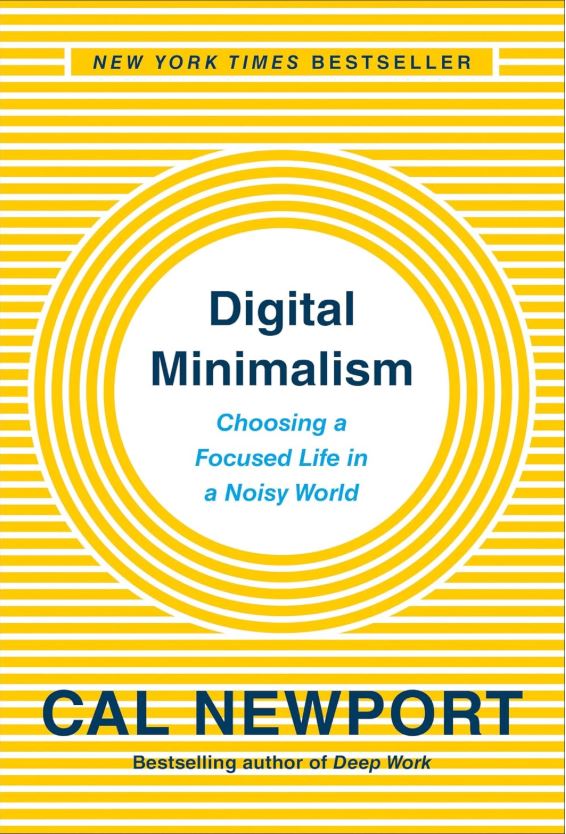
Best for: Creating a more intentional relationship with technology.
Cal Newport approaches digital distraction from an interesting angle.
Rather than suggesting that technology itself is the enemy, he encourages readers to examine which digital tools genuinely improve their lives.
His central philosophy is that technology should serve your values, rather than determine how you spend your days.
In Digital Minimalism, Newport explores how to become more selective about the apps, services and online activities you allow into your routine.
One of the book’s practical approaches involves taking a deliberate break from optional digital activities and reconsidering which ones deserve a place in your life.
For someone who constantly checks social media, this can be a useful shift in perspective.
Instead of asking, “How do I stop using my phone?”, you begin asking, “What am I actually gaining from this activity?”
That question can make certain habits easier to recognise.
What you can take away
Try reviewing the apps you use most frequently.
Which ones support something important in your life? Which ones mainly fill time?
You don’t necessarily need to delete everything. Start by identifying one activity that offers little lasting value and reduce how often you engage with it.
Digital Minimalism is an excellent starting point for readers who want less digital clutter and more room for meaningful activities. Penguin Books Australia
2. How to Break Up with Your Phone — Catherine Price
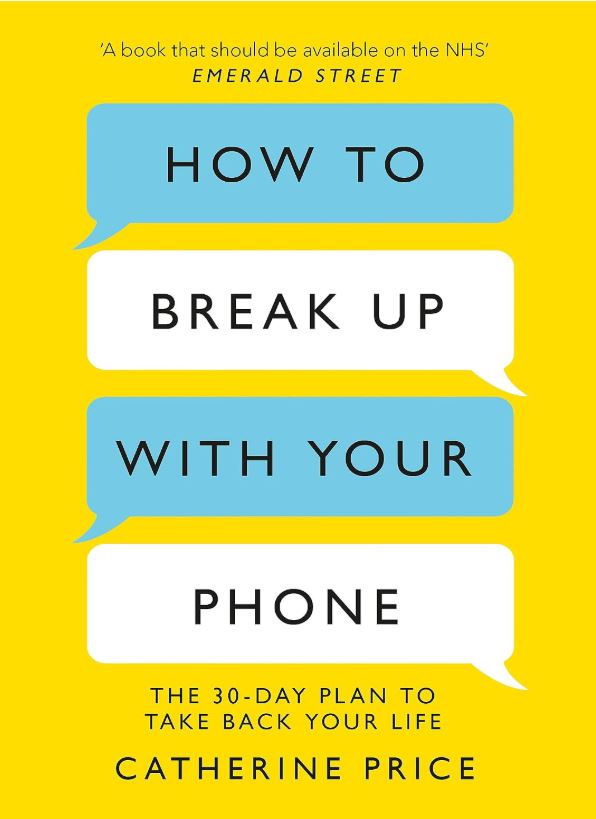
Best for: Readers who want a structured, practical approach.
Catherine Price’s How to Break Up with Your Phone is particularly relevant for anyone who feels that checking their phone has become automatic.
The book focuses directly on examining and changing our relationship with smartphones.
Rather than insisting that readers abandon their devices, Price offers a structured 30-day approach to developing healthier phone habits.
The aim is to help readers become more aware of their behaviour and establish boundaries that make their phone use more intentional.
This makes it a useful choice if you’ve already tried to reduce screen time but struggled to maintain the change.
Sometimes, knowing that you should use your phone less isn’t enough. You need a practical plan.
What you can take away
Begin by noticing the situations that prompt you to reach for your phone.
Is it boredom? Stress? A notification? The desire to avoid something uncomfortable?
For a few days, pay attention to when you pick it up and what you’re hoping to get from the experience.
That awareness gives you a starting point for making changes.
Price’s book is especially suitable for people who prefer a guided process rather than general advice. Hachette UK
3. Indistractable — Nir Eyal
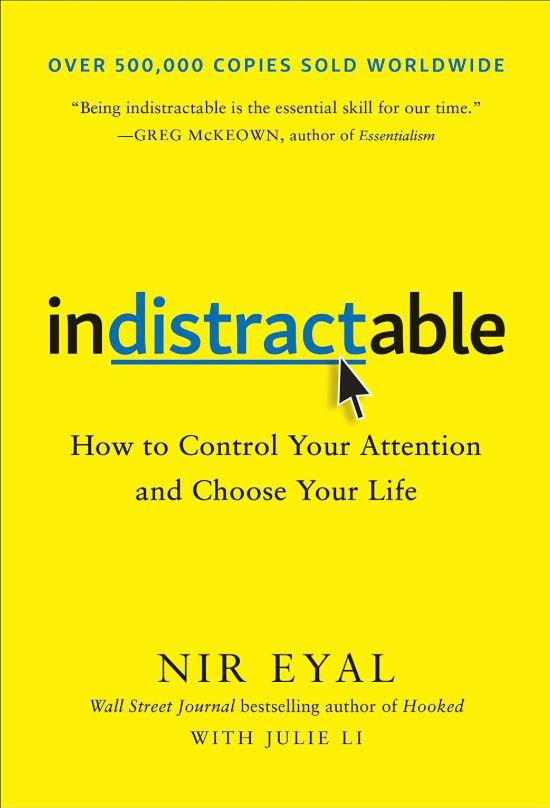
Best for: Understanding distraction and improving everyday focus.
It’s tempting to assume that your phone is the main reason you struggle to concentrate.
But what if the phone is sometimes a convenient escape from something else?
That’s one of the interesting questions explored in Nir Eyal’s Indistractable.
Eyal examines the psychology of distraction and encourages readers to understand both external interruptions and the internal feelings that can prompt avoidance.
Think about the last time you were working on something difficult.
Perhaps you felt frustrated, uncertain or bored. Checking your phone offered a quick distraction from that discomfort.
Removing notifications might help, but it doesn’t necessarily address the underlying reason you wanted to escape.
This book explores how to manage distractions more deliberately and protect time for the things you actually intend to do.
What you can take away
Before opening an app, ask yourself:
“Am I choosing to do this, or am I avoiding something else?”
You might discover that certain scrolling habits appear when you’re facing an unpleasant task.
Recognising that connection can help you respond differently.
Indistractable is particularly useful for readers who want to improve concentration at work, while studying or when pursuing personal goals. Bloomsbury
4. Make Time — Jake Knapp and John Zeratsky
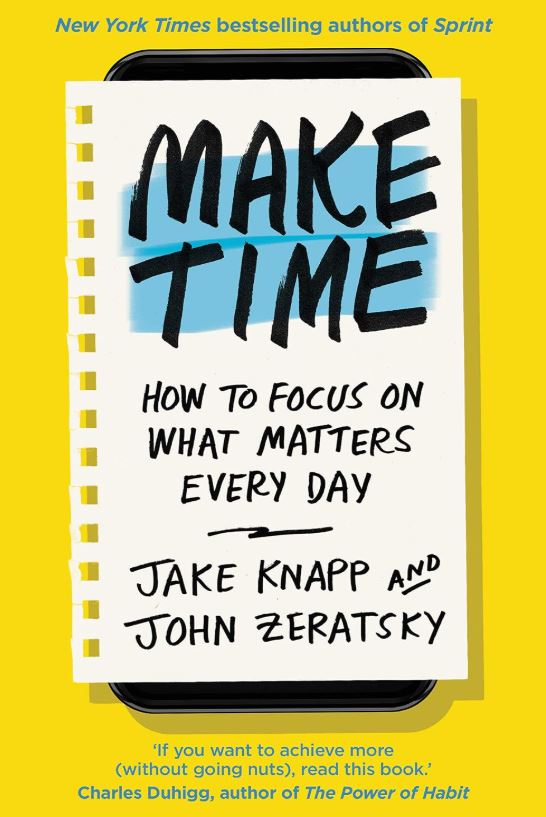
Best for: Replacing aimless scrolling with activities that matter.
Sometimes the problem isn’t simply that you’re spending too much time on your phone.
It’s that you haven’t decided what you’d rather be doing instead.
Make Time offers a practical approach to designing your day around the things that deserve your attention.
Jake Knapp and John Zeratsky introduce a framework for identifying important daily priorities, reducing distractions and making more deliberate choices about how you use your time.
The book contains numerous practical tactics, including approaches to managing smartphone use, social media and other common sources of distraction.
What makes this book especially useful is its emphasis on replacing unhelpful defaults with meaningful activities.
If you want to spend less time scrolling, it helps to have something worthwhile waiting in its place.
What you can take away
Choose one thing you’d genuinely like to make time for tomorrow.
It might be:
- Reading a chapter of a book.
- Taking a walk after dinner.
- Spending uninterrupted time with your family.
- Working on a personal project.
- Learning a new skill.
Then give that activity a specific place in your day.
Even a short, protected period can help you begin using your time more intentionally.
Make Time is an encouraging choice for anyone who wants to move beyond simply limiting screen time and start creating more satisfying days. Penguin Books Australia
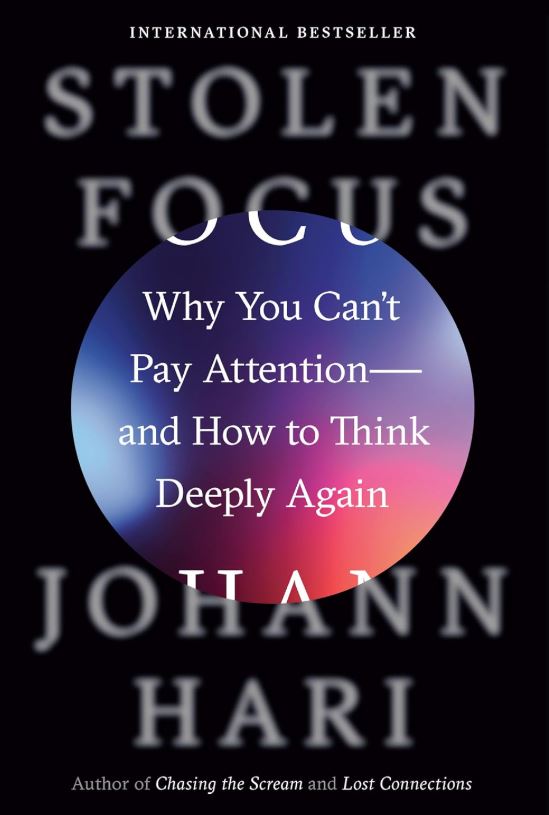
5. Stolen Focus — Johann Hari
Best for: Understanding the wider challenges to modern attention.
Johann Hari’s Stolen Focus takes a broader look at why maintaining attention can feel increasingly difficult.
Rather than treating distraction purely as a personal failure, Hari explores environmental, technological and social factors that influence how we concentrate.
The book examines the modern attention environment and raises questions about the demands placed on our focus.
This makes it a useful companion to the more practical books on this list.
While some authors concentrate on individual habits, Hari encourages readers to consider the larger conditions shaping those habits.
The message is that attention isn’t only about willpower.
Our surroundings, routines and the technologies competing for our time also matter.
What you can take away
Consider creating one regular period where competing demands on your attention are reduced.
You could leave your phone in another room while reading, disable unnecessary alerts or establish a quiet period for uninterrupted work.
The aim isn’t to achieve perfect concentration.
It’s to give yourself more opportunities to focus without constant interruption.
Stolen Focus is particularly worthwhile for readers interested in the wider conversation about technology, modern life and attention. Bloomsbury
How to Choose Between These Books About Reducing Phone Use
Each book approaches the subject differently, so the best choice depends on what you’re struggling with.
| If your biggest challenge is… | Start with… |
|---|---|
| Too many unnecessary apps and digital habits | Digital Minimalism |
| Constantly checking your phone | How to Break Up with Your Phone |
| Getting distracted while working | Indistractable |
| Feeling you never have enough time | Make Time |
| Understanding why focus feels difficult | Stolen Focus |
You don’t need to read all five.
Choose the one that best reflects your current experience and try applying a single useful idea before moving on to another book.
Reading about change can be motivating. But the real difference comes from what you do afterwards.

Reducing Phone Use Is Also About Building Better Habits
One of the biggest challenges with changing any routine is maintaining your progress.
You might decide that you’re going to stop checking your phone before bed.
For a few evenings, everything goes well.
Then you have a stressful day, reach for your phone out of habit and find yourself scrolling again.
It’s easy to interpret that moment as failure.
But a temporary setback doesn’t mean your efforts have been wasted.
What matters is how you respond next.
This is where the principles of habit formation and consistency become especially relevant.
Small changes are easier to repeat
Rather than attempting to transform your entire relationship with technology overnight, experiment with one manageable change:
For additional guidance, the Australian eSafety Commissioner offers practical advice on managing your screen time, including notification settings, device-free periods and healthy online boundaries.
- Keep your phone away from the table during meals.
- Turn off one category of unnecessary notifications.
- Read for ten minutes before opening social media.
- Leave your phone outside the bedroom for part of the evening.
- Establish one phone-free period each day.
Choose something realistic enough that you’re willing to repeat it.
And when you miss a day, resume the routine without turning the setback into a reason to abandon it.
A Further Read: The Discipline to Follow Through
If you find that starting new habits is easy but maintaining them is difficult, you may also find The Discipline to Follow Through by Julian Merren helpful.
The book explores how to stop repeatedly starting over, build more sustainable habits and follow through on the goals you set for yourself.
Although it isn’t specifically about smartphone use, its focus on consistency and lasting behavioural change connects naturally with the challenge of reducing mindless scrolling.
After all, deciding to use your phone less is one thing. Building a daily routine that supports that decision is another.
Explore The Discipline to Follow Through by Julian Merren if you’d like practical guidance on building habits you can maintain.
Final Thoughts: Reclaim Your Attention One Small Choice at a Time
Your phone doesn’t have to disappear from your life for you to develop a healthier relationship with it.
The goal is simply to become more intentional about when and why you use it.
These five books about reducing phone use offer different ways to approach that goal, from digital minimalism and structured phone boundaries to understanding distraction and designing better daily routines.
You might begin by switching off a few notifications. You might create a phone-free evening routine or replace ten minutes of scrolling with reading.
Whatever you choose, make it small enough to repeat.
The aim isn’t to spend every minute productively. It’s to have more freedom to choose how your time is spent.
And that freedom can begin with something as simple as putting your phone down and opening a book.