

“Are you sure everything’s OK?”
You’ve already asked the question once. Someone has reassured you that nothing is wrong. You felt better for a little while.
But then the doubt returns.
Perhaps they sounded slightly different when they answered. Maybe they took longer than usual to reply to your message. Or perhaps you simply can’t shake the feeling that something isn’t quite right.
So you ask again.
If this sounds familiar, you may recognise a pattern known as reassurance seeking.
It’s something many people do when they’re worried, uncertain or afraid of making a mistake. And while asking for reassurance is perfectly normal, repeatedly needing someone to confirm that everything is fine can become exhausting.
The difficulty is that reassurance often provides relief without resolving the underlying uncertainty.
If you’re looking for books about reassurance seeking, the following five recommendations offer useful perspectives on worry, overthinking, doubt and the desire to feel certain.
They explore why we seek reassurance and how we can gradually become more comfortable with unanswered questions.
Why Do We Keep Asking If Everything Is OK?
Imagine sending an important message to someone you care about.
You read it again after sending it.
Did that sound rude? Could they misunderstand what you meant? Should you have worded it differently?
You ask a friend for their opinion. They tell you the message sounds perfectly fine.
For a few minutes, you relax.
Then another thought appears.
“But what if they’re just saying that to make me feel better?”
And the cycle begins again.
Reassurance seeking can appear in many areas of everyday life:
- Relationships: Repeatedly asking whether someone is upset with you.
- Work: Needing confirmation that you’ve done something correctly.
- Health: Frequently seeking reassurance about a symptom or concern.
- Decisions: Asking several people whether you’re making the right choice.
- Social situations: Replaying conversations and checking whether you said something wrong.
These behaviours can become difficult when the comfort they provide fades quickly, leaving you wanting reassurance again.
The Australian Centre for Clinical Interventions describes this as a cycle in which reassurance temporarily reduces distress but can encourage repeated checking over time.
Understanding that pattern is a useful starting point.
And that’s where our first book comes in.
1. Needing to Know for Sure — Martin N. Seif and Sally M. Winston
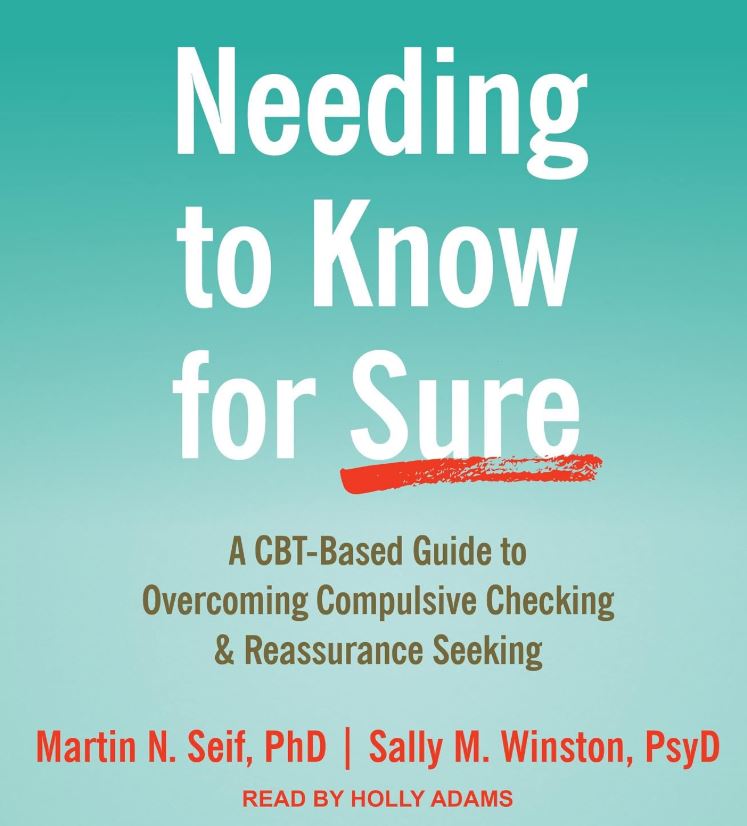
Best for: Understanding compulsive checking and repeated reassurance.
If there’s one book on this list that directly addresses the topic, it’s Needing to Know for Sure.
The authors explore what happens when the desire for certainty becomes so strong that we repeatedly check, question and seek confirmation from others.
The book uses principles from cognitive behavioural therapy (CBT) to examine why these behaviours can become difficult to resist.
One of its most useful ideas is that complete certainty is rarely possible.
You might ask whether you’ve made the right decision, but nobody can guarantee that every choice will turn out perfectly.
You might ask whether someone is upset with you, but another person’s thoughts and feelings aren’t always something you can know with complete confidence.
The desire to eliminate every possibility of something going wrong can become a source of worry in itself.
What you can take away
Begin noticing when reassurance stops being about gathering useful information and starts becoming an attempt to eliminate uncertainty.
Before asking the same question again, consider whether you’ve already received a reasonable answer.
If you have, the next step may be learning to tolerate the remaining uncertainty rather than searching for another guarantee.
Needing to Know for Sure is particularly relevant for readers who recognise repeated checking as a persistent pattern in their lives.
2. The Worry Trick — David A. Carbonell
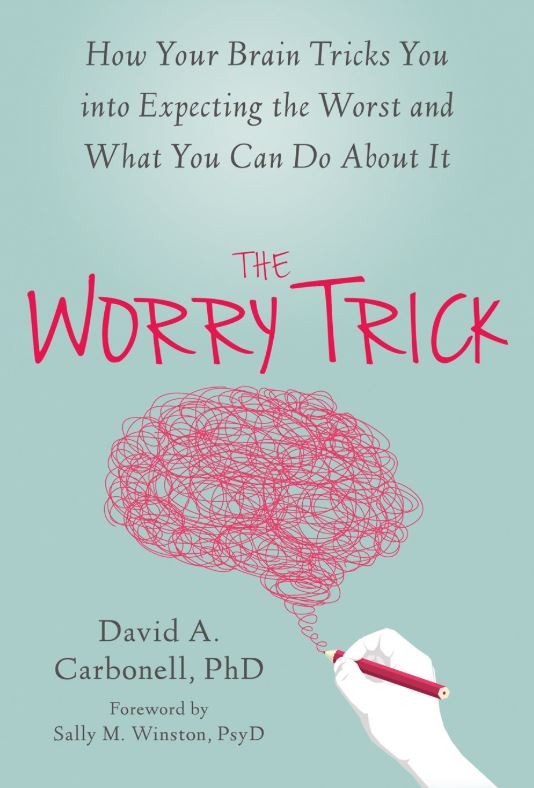
Best for: Understanding why worrying can make ordinary situations feel threatening.
Sometimes reassurance seeking begins with a simple thought.
“What if something goes wrong?”
Then another possibility appears.
What if you missed something important? What if you made the wrong choice? What if a small problem becomes something much bigger?
Before long, you’re trying to find reassurance about a situation that hasn’t actually happened.
In The Worry Trick, psychologist David Carbonell explores how anxious thinking can convince us that imagined possibilities require immediate attention.
Rather than encouraging readers to fight every worrying thought, he examines ways to respond differently to anxiety and uncertainty.
This is an important distinction.
Trying to prove that nothing bad will happen can become an endless exercise. There will almost always be another possibility to consider.
What you can take away
The next time a worrying thought appears, ask whether it represents a problem you can address now or a possibility you’re trying to predict.
If there’s something practical to do, take an appropriate step.
If the worry concerns an uncertain future, repeatedly seeking reassurance may not provide the answer you’re looking for.
The Worry Trick offers a useful perspective for readers whose reassurance seeking is closely connected to anticipating the worst.
3. Overcoming Unwanted Intrusive Thoughts — Sally M. Winston and Martin N. Seif
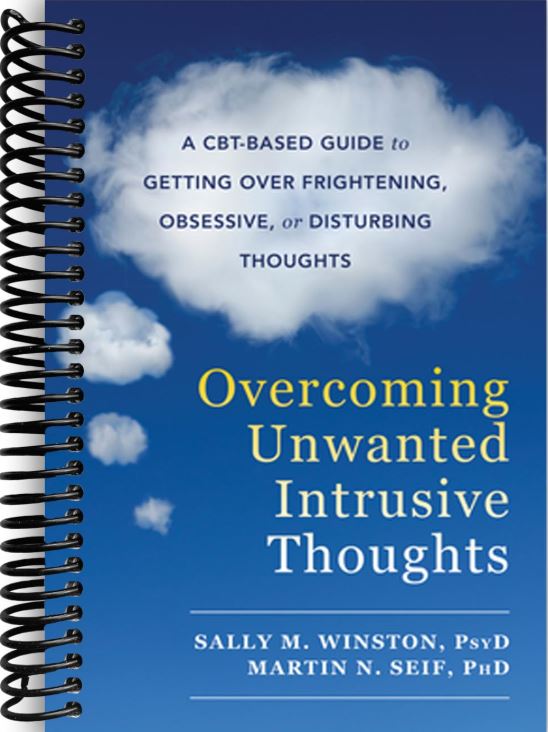
Best for: Readers who repeatedly question the meaning of unwanted thoughts.
Not every reassurance-seeking habit begins with something happening in the outside world.
Sometimes it begins with a thought.
An uncomfortable possibility crosses your mind, and suddenly you’re wondering what it means.
Why did I think that? Does it say something about me? Should I be worried?
You might seek reassurance from someone else or spend time mentally reviewing the thought until you feel better.
Overcoming Unwanted Intrusive Thoughts explores how unwanted thoughts can become more distressing when we treat them as significant warnings that must be analysed or resolved.
The authors draw on CBT approaches to help readers develop a different relationship with disturbing or repetitive thoughts.
What you can take away
Try recognising that having a thought doesn’t automatically make it meaningful or true.
You don’t necessarily need to investigate every possibility your mind produces.
When you notice yourself repeatedly analysing the same thought, consider whether you’re gaining useful understanding or simply seeking another moment of reassurance.
This book is especially relevant for people who become caught in repeated mental checking.
For persistent, distressing intrusive thoughts, professional guidance can also be valuable.
4. The Happiness Trap — Russ Harris
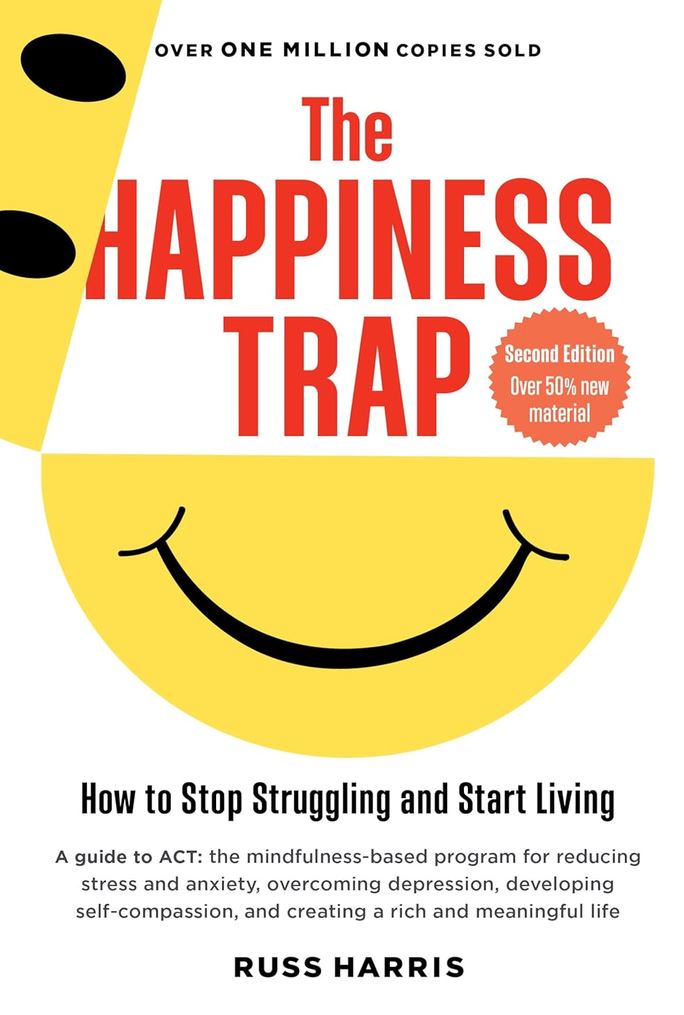
Best for: Becoming more comfortable with uncomfortable feelings.
Many of us assume that we need to feel calm and confident before we can move forward.
We want to know that everything will be fine before making a decision.
We want reassurance that someone isn’t upset before enjoying the rest of our day.
We want uncertainty to disappear before we can relax.
But what if the goal isn’t to eliminate every uncomfortable feeling?
In The Happiness Trap, Russ Harris introduces principles from acceptance and commitment therapy (ACT).
The book explores how struggling against unwanted thoughts and emotions can sometimes make life more difficult, and how we can learn to act according to our values even when uncomfortable feelings are present.
This perspective connects naturally with reassurance seeking.
Instead of waiting until you feel completely certain, you can practise making reasonable choices while accepting that some uncertainty remains.
What you can take away
Choose a small decision that doesn’t carry serious consequences.
Make the decision using the information you already have, without repeatedly seeking approval.
Then practise allowing yourself to feel a little uncertain afterwards.
The aim isn’t to become careless. It’s to recognise that reasonable decisions don’t always come with complete confidence.
The Happiness Trap is a helpful broader read for anyone who wants to respond more thoughtfully to worry and discomfort.
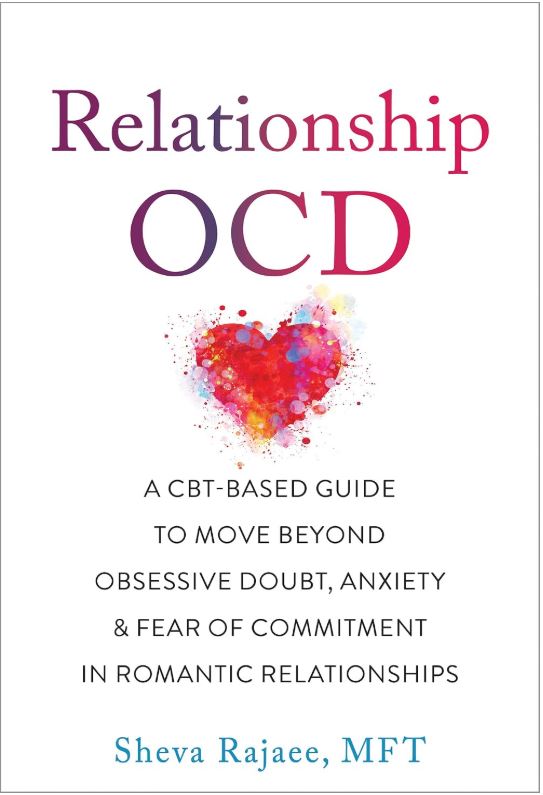
5. Relationship OCD — Sheva Rajaee
Best for: Understanding persistent relationship doubts and repeated checking.
Relationships are one of the most common places where people look for reassurance.
You might wonder whether your partner still cares about you.
Perhaps you worry that an ordinary disagreement means something is seriously wrong.
Or you repeatedly ask whether the relationship is OK, even after receiving a reassuring answer.
It’s important to distinguish ordinary relationship concerns from patterns that become persistent and distressing.
In Relationship OCD, therapist Sheva Rajaee explores obsessive relationship doubts, anxiety and the difficulty of accepting uncertainty in romantic relationships.
The book is specifically written for people experiencing relationship-focused obsessive-compulsive difficulties, so it won’t be relevant to everyone who occasionally seeks reassurance from a partner.
However, its discussion of uncertainty and repeated doubt may be particularly valuable for readers who recognise those experiences.
What you can take away
Notice the difference between having a genuine relationship concern that needs a conversation and repeatedly asking the same question because the previous answer no longer feels reassuring.
Healthy communication matters. You shouldn’t ignore real problems or accept mistreatment.
But when a worry has already been reasonably addressed, asking again may not provide lasting comfort.
Relationship OCD offers a more specialised perspective for those whose relationship doubts are intrusive, persistent and difficult to manage.
How to Choose Between These Books About Reassurance Seeking
Each recommendation approaches the subject from a slightly different direction.
| If you’re struggling with… | Start with… |
|---|---|
| Repeated checking and needing certainty | Needing to Know for Sure |
| Constantly imagining what might go wrong | The Worry Trick |
| Distressing, repetitive thoughts | Overcoming Unwanted Intrusive Thoughts |
| Discomfort with uncertainty | The Happiness Trap |
| Persistent obsessive doubts about relationships | Relationship OCD |
You don’t need to read all five.
Choose the book that most closely reflects your experience and begin with one useful idea.
What Can You Do When You Feel the Need for Reassurance?
Reading about reassurance seeking can help you recognise the pattern, but making changes requires practice.
For further guidance, the Centre for Clinical Interventions provides practical strategies for reducing reassurance seeking, including ways to recognise the cycle and respond differently to uncertainty.
Here are three gentle starting points.
1. Notice the urge before responding
When you feel the need to ask whether everything is OK, pause briefly.
Ask yourself whether you’re seeking new information or repeating a question you’ve already received an answer to.
Sometimes that distinction is enough to make the pattern more visible.
2. Practise delaying unnecessary reassurance
If you’ve already checked something reasonably and there is no new evidence of a problem, experiment with waiting a short while before asking again.
You might initially wait five minutes.
The objective isn’t to deny yourself genuine help or ignore safety concerns. It’s to practise responding differently when the urge comes from repeated uncertainty rather than a new problem.
3. Build confidence in handling uncertainty
Try reminding yourself that you don’t need to predict every outcome.
You can make thoughtful decisions, communicate openly and take reasonable precautions without guaranteeing that nothing unexpected will happen.
If reassurance seeking significantly interferes with your relationships, sleep or everyday activities, speaking with a qualified mental health professional can provide more individualised support.
When Reassurance Seeking Follows You Into Bed
For some people, the urge to check whether everything is OK becomes particularly noticeable at night.
During the day, work, conversations and ordinary responsibilities provide distractions.
But when the house becomes quiet, unresolved questions can suddenly feel more important.
You might replay something you said earlier.
Wonder whether you’ve forgotten an important task.
Or feel the temptation to check your messages one more time before sleeping.
This is where Quiet Nights by Julian Merren may also be worth exploring.
The book focuses on overthinking, nighttime worry and developing a calmer approach to bedtime.
Although it isn’t specifically about reassurance seeking, its broader focus on quieting mental activity and establishing more supportive evening routines connects naturally with the challenges we’ve discussed.
It may be a useful companion for readers whose worries become difficult to put aside at the end of the day.
Explore Quiet Nights by Julian Merren if you’d like further guidance on managing nighttime overthinking and building a more peaceful bedtime routine.
Final Thoughts: You Don’t Need an Answer to Every What-If
If you regularly ask whether everything is OK, remember that seeking comfort and support is a normal part of being human.
There’s nothing wrong with asking questions, checking important information or turning to people you trust.
The difficulty begins when no answer feels reassuring for very long.
These five books about reassurance seeking offer different ways to understand that pattern and begin responding to uncertainty with greater awareness.
You don’t need to stop asking questions altogether.
You can begin by recognising when a question has already been answered and allowing yourself to move forward without another guarantee.
Sometimes, the most useful change isn’t discovering one more reason why everything should be fine.
It’s gradually learning that you can cope with not knowing everything for certain.
And that is something you can practise, one small moment at a time.