
The argument is over, but something still doesn’t feel right.
Perhaps you’ve both stopped talking about what happened. Maybe one of you has apologised, but the atmosphere remains uncomfortable.
You sit beside each other on the sofa, yet somehow feel miles apart.
Sometimes, the hardest part of an argument isn’t the disagreement itself. It’s finding your way back to each other afterwards.
You might want to make things better but struggle to find the right words. Or perhaps you’re worried that bringing up the disagreement again will start another argument.
The good news is that repairing a disagreement doesn’t require pretending nothing happened.
It involves understanding what went wrong, acknowledging how each person felt and making a genuine effort to reconnect.
If you’re searching for books about repairing after an argument, the following five recommendations offer helpful perspectives on conflict, communication, emotional connection and relationship repair.
Why Reconnecting After an Argument Can Feel So Difficult
Not every disagreement ends when the conversation stops.
Sometimes the words exchanged during an argument continue to linger long afterwards.
Perhaps something your partner said made you feel dismissed or unappreciated.
Maybe you regret how you responded.
Or perhaps you’re both waiting for the other person to make the first move.
The difficulty is that emotional distance can remain even after the original disagreement has been resolved.
You might agree about what happened but still feel hurt by how it happened.
That’s an important distinction.
Solving the problem and repairing the emotional connection aren’t always the same thing.
Reconnection often requires more than deciding who was right.
It may involve listening without interrupting, acknowledging someone’s feelings, taking responsibility for your behaviour and showing that the relationship matters more than winning the disagreement.
These five books explore those skills from different perspectives.
1. Fight Right — John Gottman and Julie Schwartz Gottman
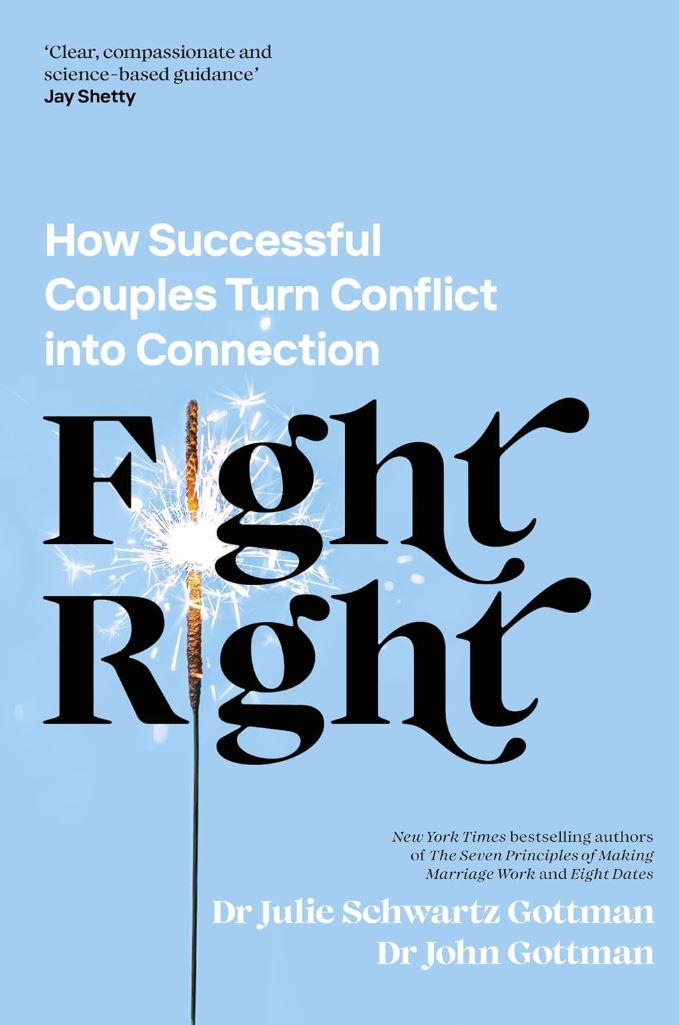
Best for: Learning how to handle disagreements without damaging your connection.
Some couples believe that a healthy relationship means rarely arguing.
But disagreements are a normal part of sharing your life with another person.
You won’t always have the same opinions, priorities or expectations.
In Fight Right, relationship researchers John and Julie Gottman explore how couples approach conflict and why the way they disagree matters.
The book examines common patterns that can turn ordinary disagreements into painful experiences.
Rather than encouraging couples to avoid difficult conversations, the authors focus on approaching conflict with greater understanding and cooperation.
One particularly useful idea is that the goal of an argument doesn’t have to be proving that you’re right.
It can be understanding what matters to each person and finding a better way forward together.
What you can take away
After an argument, try asking yourself what your partner may have been trying to communicate beneath their frustration.
Perhaps they were feeling overlooked, worried or disappointed.
You don’t have to agree with their interpretation of events to take their feelings seriously.
Understanding the concern behind the argument can make the next conversation less defensive.
Fight Right is a strong starting point for couples who want to handle disagreements more constructively.
2. Hold Me Tight — Sue Johnson
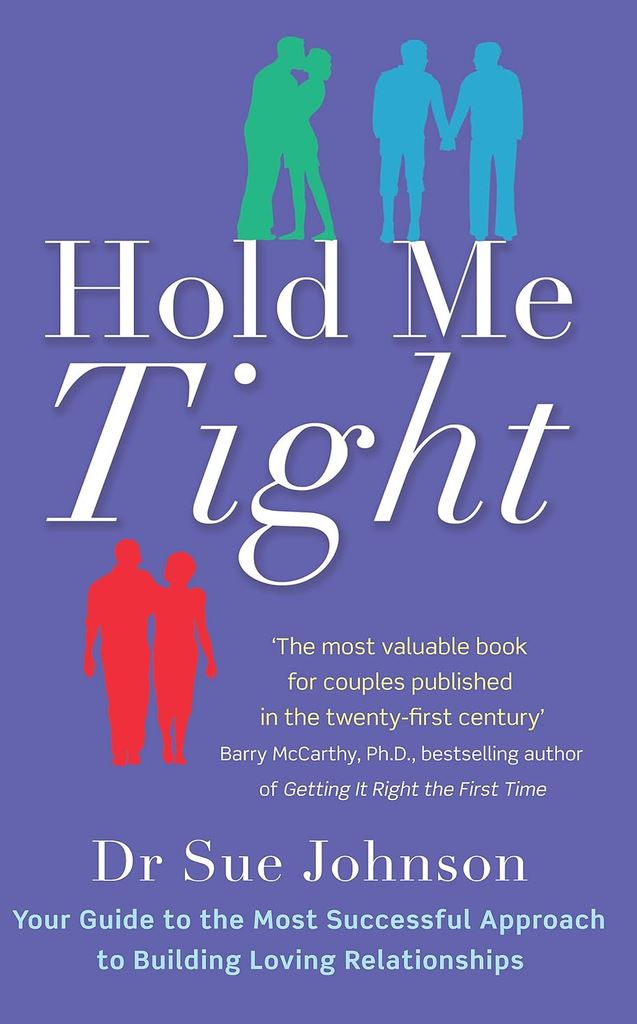
Best for: Rebuilding emotional closeness after conflict.
Sometimes arguments aren’t really about the things we’re arguing over.
A disagreement about household responsibilities might also involve feeling unsupported.
An argument about spending time together might reflect a deeper worry about emotional distance.
In Hold Me Tight, psychologist Sue Johnson explores the importance of emotional connection and security in romantic relationships.
The book introduces conversations designed to help partners recognise negative interaction patterns and understand the feelings beneath them.
Rather than focusing only on the surface disagreement, Johnson encourages couples to explore what they’re experiencing emotionally.
This can be particularly helpful when an argument leaves one or both partners feeling rejected, unheard or alone.
What you can take away
When you’re ready to reconnect, try describing how the disagreement made you feel rather than beginning with what your partner did wrong.
For example:
“I felt quite alone when we stopped talking after the argument. I’d really like us to understand what happened.”
This is different from accusing someone of deliberately ignoring you.
It creates an opportunity to discuss the emotional experience without immediately returning to blame.
Hold Me Tight may be particularly valuable for couples who find themselves having similar arguments and struggling to restore closeness afterwards.
3. Nonviolent Communication — Marshall B. Rosenberg
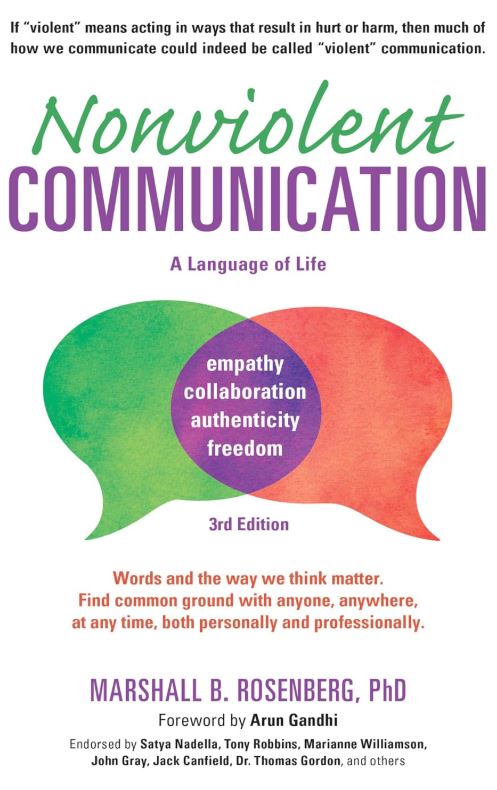
Best for: Finding better words when emotions are running high.
Have you ever tried to explain why you were upset, only to find that the conversation became another argument?
Sometimes the difficulty isn’t what we’re feeling.
It’s how we communicate those feelings.
In Nonviolent Communication, Marshall Rosenberg introduces a communication approach centred on observations, feelings, needs and requests.
The book encourages readers to express themselves clearly without relying on blame, criticism or personal attacks.
It also emphasises listening to the needs and experiences of others.
This can be especially useful during the repair process, when both partners may still feel vulnerable.
What you can take away
Consider the difference between these two statements:
“You never listen to me.”
And:
“When I was explaining something earlier and the conversation moved on, I felt unheard. Could we make some time to talk about it?”
The second approach is more specific.
It explains what happened, describes the emotional impact and makes a clear request.
It doesn’t guarantee that the other person will respond perfectly.
But it offers a more constructive starting point.
Nonviolent Communication is a worthwhile read for anyone who struggles to express hurt or disappointment without conversations becoming defensive.
4. I Hear You — Michael S. Sorensen
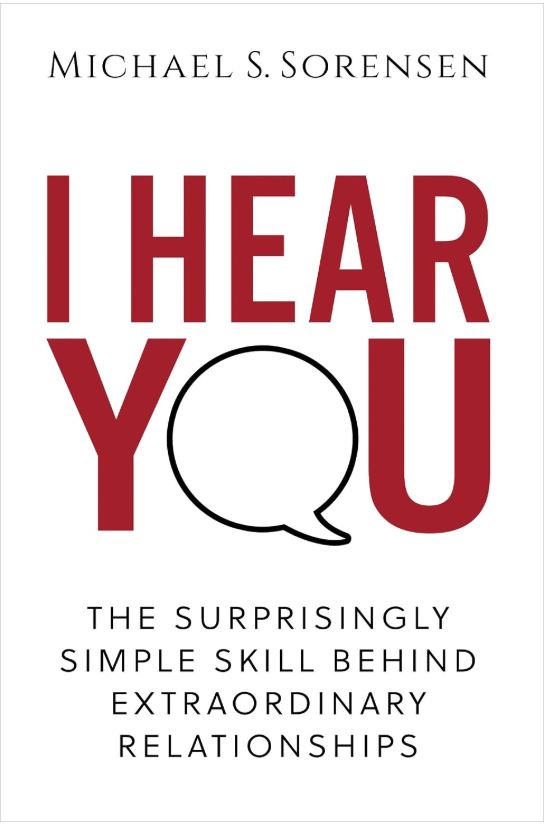
Best for: Helping your partner feel understood after a disagreement.
One of the most frustrating experiences during an argument is feeling that the other person isn’t listening.
You explain why something upset you.
They immediately defend themselves.
You try again.
They offer reasons why you shouldn’t feel that way.
Before long, the disagreement becomes less about the original issue and more about feeling misunderstood.
In I Hear You, Michael S. Sorensen explores emotional validation and how acknowledging another person’s experience can improve communication.
Validation doesn’t mean agreeing with everything someone says.
It means recognising that their feelings are real and worth understanding.
This distinction can make a meaningful difference when two people are trying to reconnect.
What you can take away
After an argument, try listening to your partner’s perspective without immediately correcting the details.
You might respond with:
“I can understand why that was upsetting for you.”
Or:
“I hadn’t realised you felt that way. I’d like to understand.”
These responses don’t require you to abandon your own perspective.
They simply communicate that you’re willing to hear the other person’s experience.
I Hear You is particularly useful for readers who want to improve listening skills and create more emotionally supportive conversations.
5. The Seven Principles for Making Marriage Work — John Gottman and Nan Silver
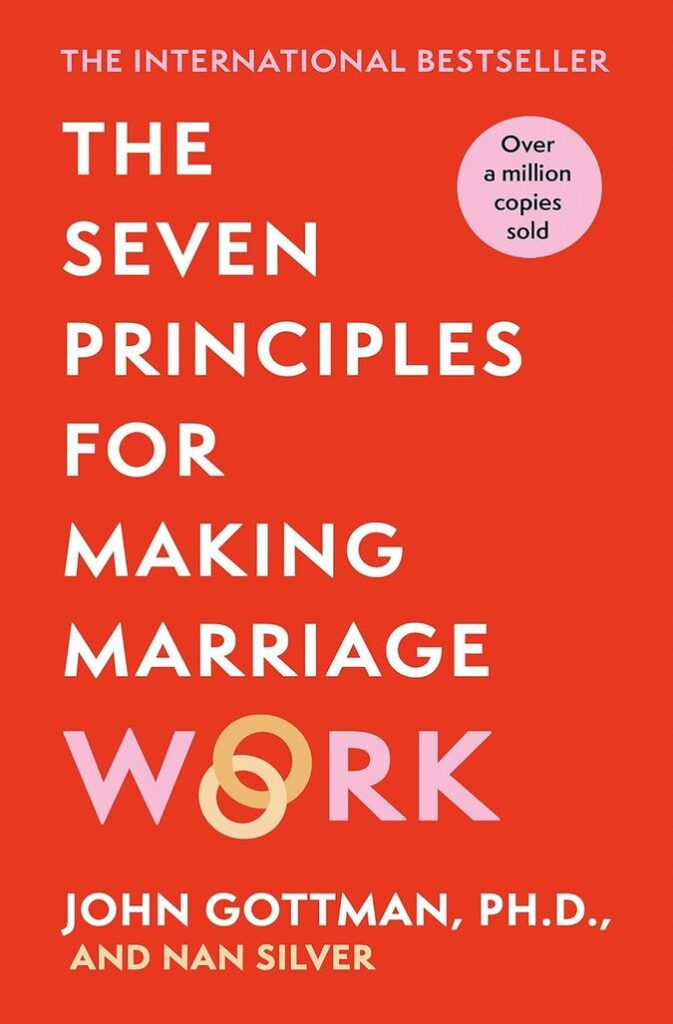
Best for: Strengthening everyday connection so disagreements are easier to repair.
Sometimes reconnecting after an argument starts long before the disagreement happens.
The everyday habits within a relationship can influence how partners respond when things become difficult.
In The Seven Principles for Making Marriage Work, John Gottman and Nan Silver explore behaviours and practices associated with stronger, more satisfying relationships.
The book includes practical exercises and discussions about friendship, emotional connection, conflict and understanding one another.
One important theme is the value of small, positive interactions.
Relationships aren’t built entirely through grand gestures.
They also develop through everyday moments of attention, kindness and support.
Those moments can provide a stronger foundation when disagreements arise.
What you can take away
Think about one small way you could show your partner that you value them today.
It might be asking about their day, offering genuine appreciation or spending time together without distractions.
These gestures don’t replace a needed apology or difficult conversation.
But when both partners feel respected and appreciated, it can become easier to approach disagreements with goodwill.
This book is a useful choice for couples who want to strengthen their relationship beyond simply resolving individual arguments.
Which Books About Repairing After an Argument Should You Read First?
Each recommendation approaches the challenge from a slightly different angle.
| Your main challenge | Recommended book |
|---|---|
| Arguments become competitive or destructive | Fight Right |
| You feel emotionally distant afterwards | Hold Me Tight |
| You struggle to express hurt without blame | Nonviolent Communication |
| One or both partners feel unheard | I Hear You |
| You want to strengthen the relationship overall | The Seven Principles for Making Marriage Work |
You don’t need to read every book.
Choose the one that best reflects what’s happening in your relationship and begin with an idea you can put into practice.
Five Small Ways to Reconnect After an Argument
Reading provides useful insights, but rebuilding connection also involves everyday actions.
For additional guidance, the Gottman Institute explains how to repair and process an argument so both partners can understand what happened and move forward more constructively.
Here are five gentle approaches worth considering.
1. Allow time for emotions to settle
Trying to resolve everything while you’re still upset can make communication more difficult.
Sometimes a short break is helpful.
The important thing is making it clear that you’re taking time to calm down rather than abandoning the conversation.
You could agree to return to the discussion later, when you’re both ready to listen.
2. Take responsibility for your part
A meaningful apology doesn’t have to include accepting blame for everything that happened.
It can begin with acknowledging your own behaviour.
“I’m sorry I raised my voice earlier. That wasn’t fair.”
Being specific helps the other person understand what you’re taking responsibility for.
3. Listen before defending yourself
When your partner explains how they felt, resist the urge to immediately explain why they’re wrong.
Try understanding their experience first.
You can have a different perspective and still acknowledge that the disagreement was painful for them.
4. Ask what would help
Not everyone wants the same thing after an argument.
One person may appreciate a conversation.
Another may need a little time.
Rather than guessing, consider asking:
“What would help us feel closer again?”
The answer may be simpler than you expect.
5. Follow through on what you’ve discussed
A sincere apology matters, but consistent behaviour matters too.
If the argument revealed an ongoing problem, consider what practical change could help prevent the same difficulty from repeating.
Small, reliable actions can be more meaningful than promises that are quickly forgotten.
Importantly, repair requires respect and willingness from both people. If arguments involve intimidation, threats or abuse, prioritising your safety and seeking appropriate support is more important than trying to restore closeness.
When Arguments Leave You Feeling Invisible
Sometimes the real pain after a disagreement isn’t the argument itself.
It’s the feeling that your thoughts, emotions or needs weren’t taken seriously.
Perhaps you tried to explain something important, but the conversation became focused on your partner’s perspective.
Or perhaps you walked away feeling that your concerns had been dismissed.
If this pattern feels familiar, Invisible No More by Julian Merren may be another relevant read.
The book explores the experience of feeling unseen or undervalued within a relationship and the importance of expressing your needs, rebuilding confidence and creating healthier emotional connections.
Although it isn’t specifically a guide to resolving arguments, its focus on feeling heard and valued connects naturally with the challenge of repairing emotional distance.
When people feel understood, it becomes easier to approach difficult conversations as partners rather than opponents.
Explore Invisible No More by Julian Merren if you’d like further guidance on reconnecting with your voice and sense of value within a relationship.

Final Thoughts: Reconnection Matters More Than Winning
Disagreements don’t automatically mean a relationship is failing.
Two people can care deeply about each other and still have different opinions, expectations and emotional needs.
What matters is how those differences are handled.
These five books about repairing after an argument remind us that reconnecting doesn’t require a perfect conversation or an immediate solution to every disagreement.
Sometimes it begins with a genuine apology.
Sometimes it means listening more carefully.
And sometimes the first step is simply acknowledging that both people have been hurt and would like to find a better way forward.
You don’t have to pretend the argument never happened.
You can learn from it.
The goal isn’t to win every disagreement. It’s to build a relationship where both people feel safe enough to be heard, understood and respected.
And that begins with one thoughtful conversation at a time.