

Have you ever sat down to relax, only to feel uncomfortable because you weren’t doing something productive?
Perhaps it’s a Sunday afternoon. You’ve finished the most important jobs, made yourself a cup of tea and finally have an hour to yourself.
But instead of enjoying the break, your mind starts reminding you of everything you could be doing.
The laundry isn’t finished. There are emails you haven’t answered. You could be exercising, cleaning, organising or getting ahead for next week.
Suddenly, sitting still feels like wasting time.
If this sounds familiar, you’re not alone. Many people struggle with what is often called rest guilt — the uncomfortable feeling that taking a break means you’re being lazy, irresponsible or unproductive.
The following books about rest guilt explore why we place so much value on staying busy, how our relationship with productivity affects our wellbeing and why rest deserves a place in everyday life.
Because sometimes the most useful thing you can do is stop doing things for a while.
Why Do We Feel Guilty When We’re Resting?
Rest guilt often comes from the belief that our time should always be used productively.
Research into students’ experiences of rest has also explored how guilt and worries about unfinished work can interfere with downtime. This research into guilt and difficulty resting offers an interesting perspective.
We measure a good day by how much we’ve accomplished.
We admire people who work long hours, manage endless responsibilities and somehow keep finding time for more.
And when we aren’t doing something measurable, we may feel as though we’re falling behind.
This mindset can make ordinary downtime surprisingly uncomfortable.
You might recognise some familiar patterns:
- Feeling uneasy when you have nothing scheduled.
- Checking emails or messages when you’re supposed to be relaxing.
- Believing you must finish every task before taking a break.
- Comparing your productivity with other people’s.
- Feeling that enjoyable activities need to be earned.
Of course, responsibilities matter. There are times when work needs finishing and commitments must be honoured.
But there’s a difference between being responsible and believing you should never stop.
These five books approach that distinction from different perspectives.
1. Rest: Why You Get More Done When You Work Less — Alex Soojung-Kim Pang
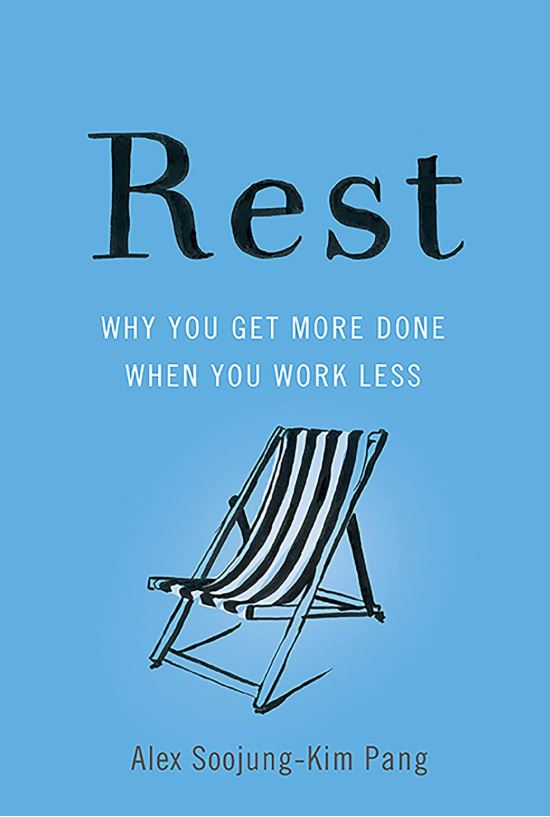
For people who believe that working longer automatically means achieving more, Rest offers a useful alternative perspective.
Alex Soojung-Kim Pang explores the relationship between work, creativity and deliberate rest.
Drawing on research and examples from creative and intellectual work, he challenges the assumption that progress always requires longer hours.
Instead, the book considers how periods of focused effort and meaningful rest can complement one another.
Why this book is worth reading
One particularly helpful idea is that rest doesn’t have to be treated as the opposite of achievement.
Many people view breaks as interruptions to their real work.
They feel guilty for stepping away because they believe every available hour should move them closer to a goal.
Pang encourages readers to reconsider that relationship.
Time away from demanding work can be a deliberate part of a sustainable routine, rather than evidence of insufficient commitment.
There’s also an important distinction between meaningful rest and simply filling every break with another form of stimulation.
The book encourages readers to think more carefully about how they spend time away from work.
Best for: People who struggle to switch off because they associate constant activity with success.
2. Laziness Does Not Exist — Devon Price
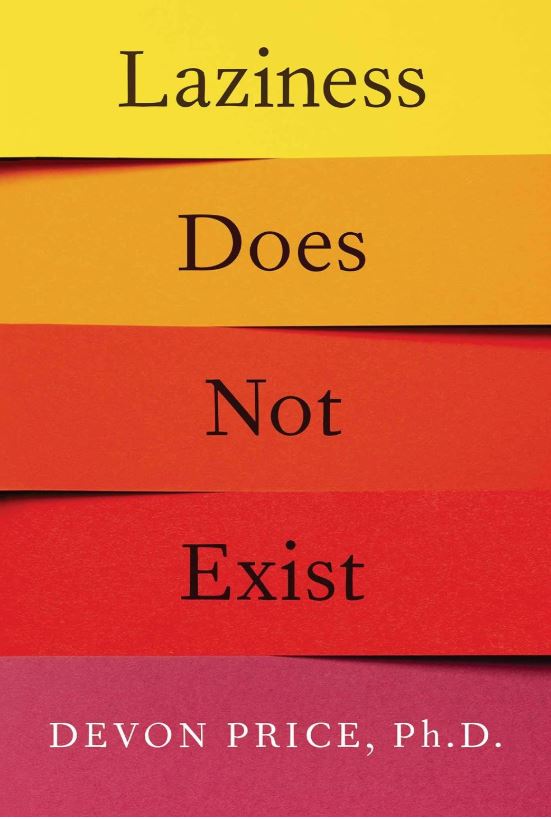
Few words create as much unnecessary guilt as lazy.
Perhaps you’ve described yourself that way after spending an afternoon doing very little.
Maybe you’ve felt disappointed because you weren’t as productive as you expected.
Or you’ve looked at someone else’s achievements and concluded that you simply aren’t working hard enough.
In Laziness Does Not Exist, social psychologist Devon Price challenges the assumption that people must constantly demonstrate their value through productivity.
The book examines social expectations around work, achievement and personal worth.
Why this book is worth reading
One of its central themes is that struggling to complete tasks doesn’t automatically reflect a lack of character.
People face different pressures, responsibilities, resources and circumstances.
Sometimes what looks like a lack of motivation may be connected to exhaustion, competing demands or unrealistic expectations.
This perspective can be particularly relevant for people who judge themselves harshly whenever they slow down.
The book encourages readers to question where their beliefs about productivity came from and whether those beliefs are actually helping them.
It doesn’t suggest that responsibilities should be ignored.
Rather, it challenges the idea that your worth should depend entirely on how much you accomplish.
Best for: Readers who regularly criticise themselves for not doing enough and struggle to separate self-worth from productivity.
3. The Art of Rest — Claudia Hammond
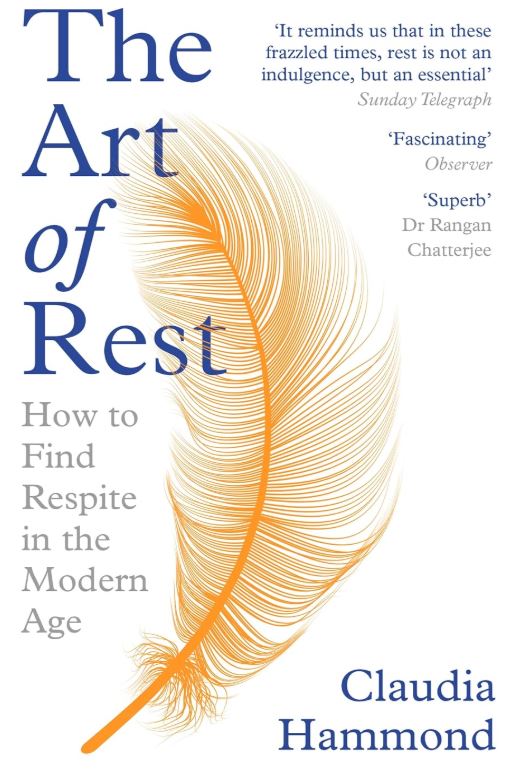
What does meaningful rest actually look like?
For some people, it’s reading a book in a quiet room.
For others, it’s spending time outdoors, listening to music or enjoying a peaceful afternoon without a schedule.
Yet many of us rarely consider what genuinely helps us feel rested.
We simply stop working and reach for our phones.
The Art of Rest by Claudia Hammond explores different ways people experience rest, drawing on research including the large-scale Rest Test survey.
The book examines how rest varies between individuals and why certain activities can feel more restorative than others.
Why this book is worth reading
A particularly useful perspective is that rest isn’t identical for everyone.
One person might enjoy sitting quietly.
Another might prefer a gentle walk, creative activity or time alone.
The aim isn’t to follow someone else’s perfect relaxation routine.
It’s to become more aware of what helps you step away from everyday demands.
This can also challenge the belief that resting means doing absolutely nothing.
Rest may involve an enjoyable activity that allows your attention to shift away from pressure and obligation.
For people who find unstructured time uncomfortable, experimenting with different forms of downtime can be a helpful starting point.
Best for: Readers who want to discover what genuine rest means to them rather than simply taking breaks that leave them feeling distracted.
4. Four Thousand Weeks — Oliver Burkeman
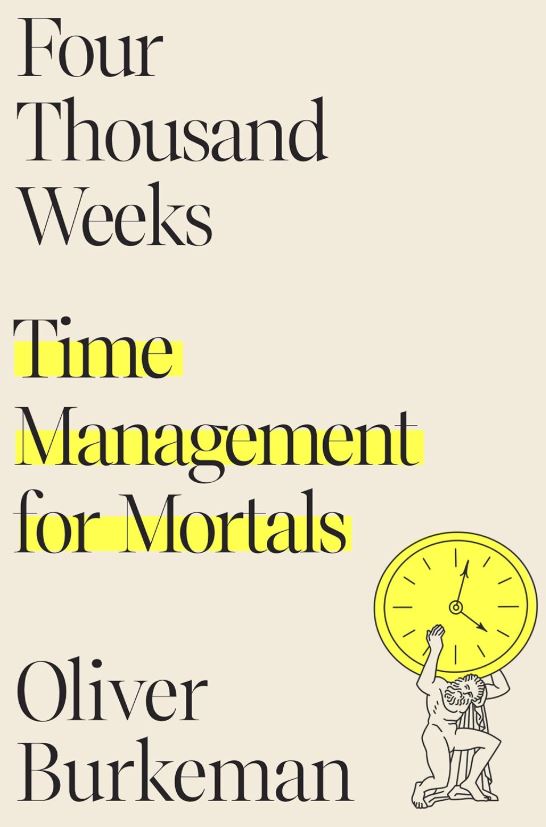
There will always be more things to do than time available to complete them.
Another email.
Another household responsibility.
Another ambition worth pursuing.
Another improvement you could make.
The difficulty begins when you believe that somewhere, with enough discipline and organisation, you might finally reach the end of the list.
Four Thousand Weeks: Time Management for Mortals by Oliver Burkeman challenges the modern obsession with getting everything done.
Rather than offering another system for squeezing more activity into each day, the book explores the limitations of time and the importance of making meaningful choices.
Why this book is worth reading
One of the most liberating ideas is that unfinished tasks aren’t necessarily proof that you’ve failed.
They’re part of living within limited time.
You cannot complete every worthwhile project, accept every opportunity or meet every possible expectation.
Something will always remain undone.
For people who struggle to rest, this matters enormously.
If you insist on finishing absolutely everything before allowing yourself downtime, you’ll probably never feel entitled to stop.
Burkeman encourages a different relationship with time — one in which choosing what matters also means accepting what you cannot do.
Best for: People who feel permanently behind, carry endless to-do lists and believe rest must wait until everything is finished.
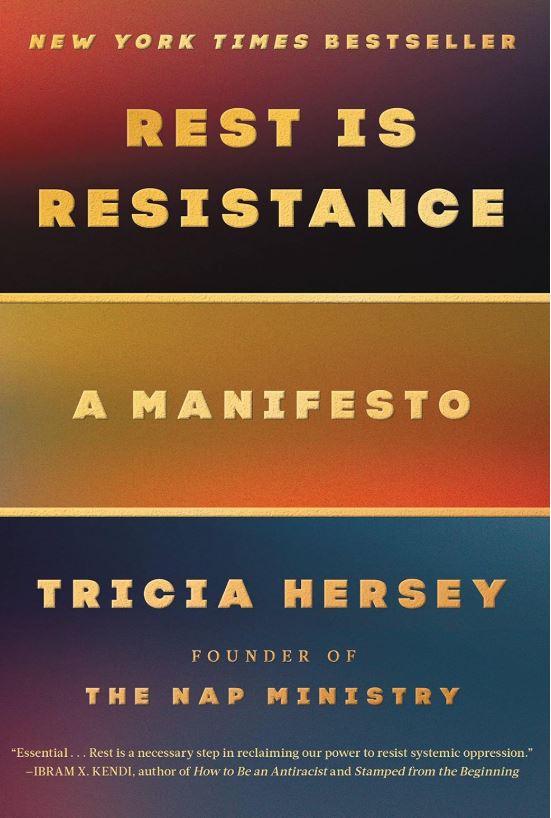
5. Rest Is Resistance — Tricia Hersey
Sometimes the pressure to stay busy doesn’t come only from personal ambition.
It comes from the wider culture around us.
We are encouraged to work harder, improve constantly, achieve more and use every moment efficiently.
Even leisure can become something to optimise.
In Rest Is Resistance, Tricia Hersey challenges the pressures of what she calls grind culture.
Her approach connects rest with human dignity, social expectations and the right to exist beyond constant productivity.
The book brings together personal reflection, cultural criticism and a broader social perspective on rest.
Why this book is worth reading
Hersey encourages readers to question the belief that their value depends on what they produce.
This is a particularly different perspective from conventional productivity advice.
Rather than arguing that you should rest so you can accomplish more afterwards, the book makes a case for rest having value in its own right.
That’s an important distinction.
You don’t necessarily need to justify every quiet afternoon by explaining how productive you’ll be tomorrow.
Sometimes rest can simply be part of caring for yourself.
Best for: Readers who want to challenge the wider social pressure to remain busy and explore a more compassionate relationship with rest.
Which of These Books About Rest Guilt Should You Read First?
Each of these books approaches the subject differently.
If you believe taking breaks will make you less successful, Rest offers a useful examination of work and recovery.
If you regularly call yourself lazy, Laziness Does Not Exist challenges the assumptions behind that judgement.
If you’re unsure how to relax meaningfully, The Art of Rest explores different ways people find downtime.
If your unfinished to-do list prevents you from switching off, Four Thousand Weeks may help you reconsider your expectations.
And if you want to question the cultural pressure to be productive constantly, Rest Is Resistance offers a broader perspective.
You don’t need to read all five.
Choose the one that most closely reflects the reason you find it difficult to stop.

Rest and Discipline Are Not Opposites
There’s a common misunderstanding that disciplined people should always be working towards something.
If you’re serious about your goals, you should push harder.
If you’re committed, you should never waste time.
But sustainable progress doesn’t necessarily require constant activity.
Knowing when to stop can be just as important as knowing when to begin.
This is where The Discipline to Follow Through by Julian Merren offers a related perspective.
The book focuses on building lasting habits, developing consistency and learning to follow through on meaningful goals.
It isn’t specifically a guide to overcoming rest guilt, and rest shouldn’t be treated as another productivity target.
However, for readers who struggle to balance personal goals with realistic expectations, the distinction between sustainable consistency and relentless pressure is worth considering.
A useful routine should support your life, not leave you feeling guilty whenever you take a break.
If you’re also working on building better habits without constantly starting over, you can explore The Discipline to Follow Through by Julian Merren.
Four Small Ways to Make Rest Feel Less Guilt-Inducing
Changing your relationship with rest doesn’t usually happen overnight.
If you’ve spent years believing that every moment should be productive, doing less may initially feel uncomfortable.
Here are four approaches worth experimenting with.
1. Stop making rest a reward
Instead of deciding that you can only relax once every task is complete, consider allowing rest to be part of your normal routine.
There’s almost always another job waiting.
You don’t have to finish everything to deserve a break.
2. Decide what matters today
A shorter, realistic list of priorities can make it easier to recognise when you’ve done enough.
Choose what genuinely needs attention rather than treating every possible task as equally urgent.
Some things can wait.
3. Find activities you actually enjoy
Rest doesn’t have to mean sitting still.
Reading, listening to music, spending time outdoors or enjoying a quiet hobby may feel more satisfying than scrolling through your phone while thinking about work.
Experiment without judging yourself for choosing one form of rest over another.
4. Notice the language you use
Pay attention when you describe yourself as lazy for taking a break.
Ask whether you’d judge someone you care about in the same way.
A more balanced description might simply be that you’ve had a demanding week and need some downtime.
You don’t need to turn every moment of rest into a personal achievement.
Final Thoughts: You Don’t Have to Earn Every Moment of Rest
There will always be responsibilities waiting for your attention.
Work will continue. Household tasks will return. New goals and opportunities will appear.
That’s simply part of life.
But if you believe you must complete everything before you’re allowed to relax, rest may remain permanently out of reach.
The best books about rest guilt invite us to question that belief.
They remind us that taking a break isn’t necessarily a sign of laziness, that personal worth extends beyond productivity and that a meaningful life includes more than getting things done.
You can care about your responsibilities without allowing them to occupy every moment.
You can pursue worthwhile goals while making room for other parts of life.
And you can enjoy an afternoon without needing to explain what you’ve achieved.
If you’re also looking to build more sustainable habits and follow through on personal goals, discover The Discipline to Follow Through by Julian Merren for further reading.
Because a good life isn’t measured solely by everything you accomplish.
It’s also shaped by the moments you allow yourself to enjoy.