

Affection rarely disappears overnight.
More often, it becomes one of those things you suddenly realise you haven’t experienced for a while.
The kiss before leaving for work becomes automatic — then disappears altogether. You sit at opposite ends of the sofa. Hugs become less frequent. Conversations revolve around children, appointments, bills and what needs doing tomorrow.
You may still care deeply about each other. There may not even be a major problem you can point to.
But something feels different.
If you’re looking for books about lack of affection in a relationship, the real question may be bigger than how to bring back physical touch.
You may be wondering what happened to the closeness behind it.
Why did something that once felt natural begin to fade? And, perhaps more importantly, can two people find their way towards each other again without pretending they’re still the people they were ten years ago?
These three books approach those questions from very different directions.
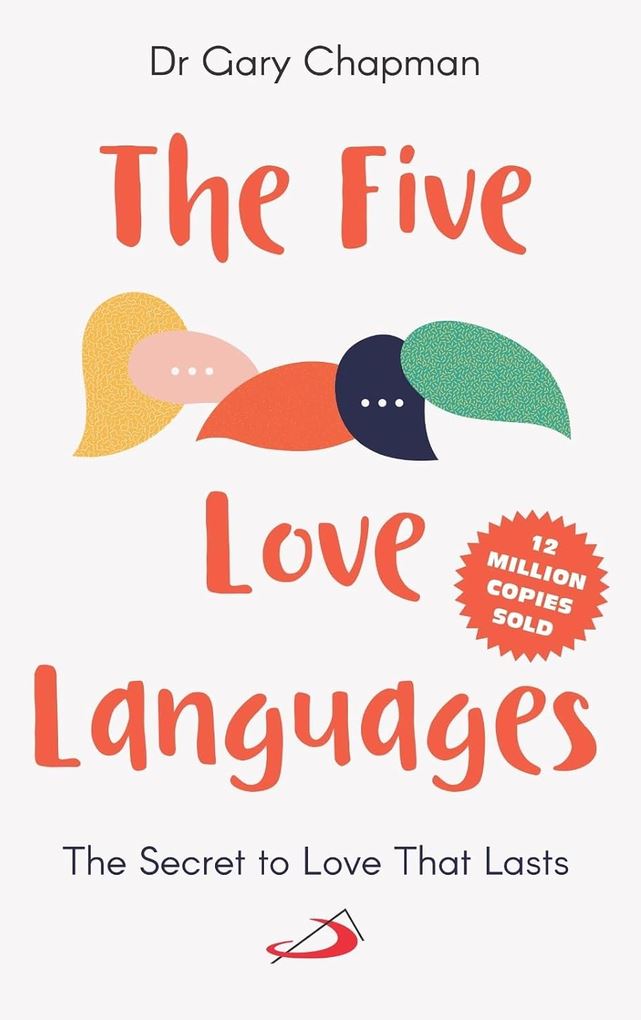
1. The 5 Love Languages — Gary Chapman
Best for thinking about how you each express affection
The 5 Love Languages has become one of the most recognisable relationship books of the past few decades.
Gary Chapman’s central framework is straightforward: people may tend to give and receive expressions of love in different ways.
The five categories he describes are words of affirmation, quality time, receiving gifts, acts of service and physical touch.
It’s an appealing idea when affection seems to have disappeared because it raises an interesting possibility:
What if some affection is still there, but you’re no longer recognising it in the same way?
One partner might be thinking:
“I do everything for this family. Of course I love you.”
Meanwhile, the other is thinking:
“You haven’t hugged me properly in weeks.”
Neither necessarily doubts the relationship.
But they’re noticing different things.
Look beyond the label
The love languages framework is best treated as a conversation starter rather than a scientific formula for relationships.
You don’t need to identify one category, attach it permanently to yourself and expect your partner to memorise it.
The more useful question might simply be:
What makes me feel loved these days — and does my partner know?
The answer may have changed.
Perhaps physical touch used to matter enormously but now what you crave is uninterrupted time together.
Perhaps your partner does plenty of practical things for you, but you’ve stopped acknowledging them because what you’re really missing is verbal appreciation.
Or perhaps you genuinely do miss touch.
Not necessarily sex.
Just warmth.
A hand on your back. Sitting close together. A kiss that doesn’t feel like part of the morning timetable.
Talking about these things can be more constructive than waiting for your partner to notice what has disappeared.
Read this if: you suspect that you and your partner may care about each other but have gradually stopped expressing that care in ways the other person actually notices.
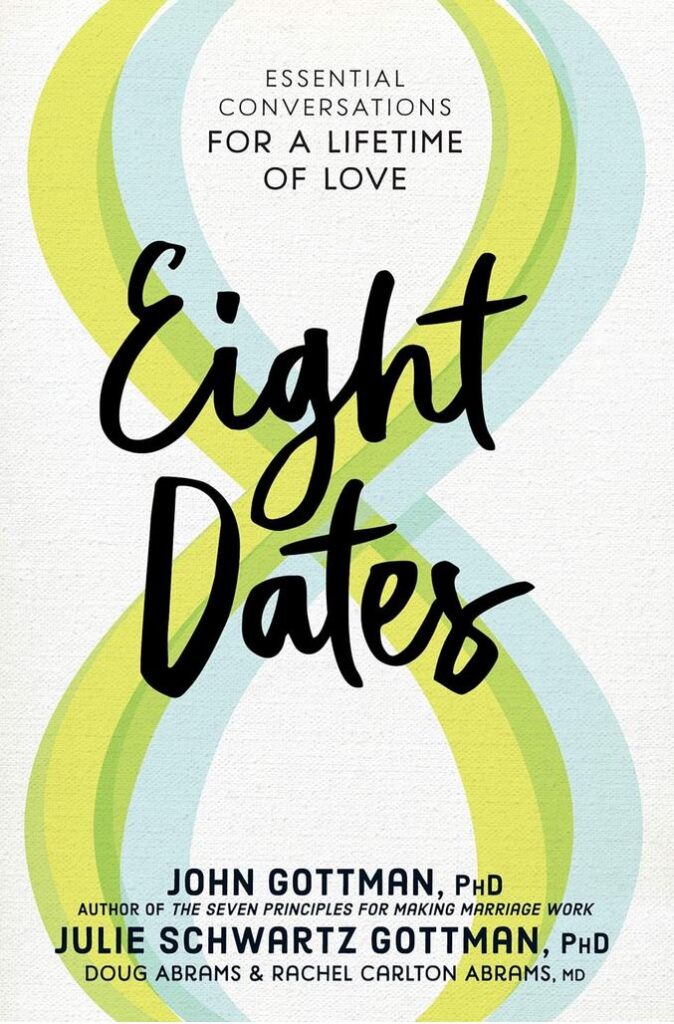
2. Eight Dates — John Gottman, Julie Schwartz Gottman, Doug Abrams and Rachel Carlton Abrams
Best for couples who have stopped being curious about each other
Sometimes affection fades because the relationship has become overwhelmingly practical.
You become very good at running a life together.
Who is picking something up?
What’s happening Saturday?
Did you pay that bill?
What time is the appointment?
Do we need anything from the supermarket?
All necessary conversations.
But they don’t necessarily create closeness.
Eight Dates takes a different approach. Rather than simply telling couples they need to communicate more, it structures meaningful conversations around eight important areas of a relationship.
The dates explore subjects including trust and commitment, conflict, sex and intimacy, work and money, family, fun and adventure, growth and spirituality, and dreams.
The interesting part isn’t simply going on eight dates.
It’s the idea behind them:
Keep discovering the person you’re with.
Familiarity can quietly replace curiosity
Early relationships contain enormous amounts of curiosity.
You want to know everything.
What do they want from life?
What scares them?
Where would they travel?
What was their childhood like?
What makes them happy?
Years later, we can begin assuming we already know the answers.
But people don’t stop changing simply because they’re in long-term relationships.
The person beside you today isn’t exactly the person you first met.
Neither are you.
That’s why intentional conversation can matter when affection fades.
Sometimes what we’re missing isn’t merely touch. It’s the feeling of being interesting to each other.
When was the last time you asked your partner something you genuinely didn’t know the answer to?
When did you last talk about something other than what needed to happen that day?
When did you last do something together simply because it sounded enjoyable?
Affection can be difficult to manufacture on command.
Curiosity may be an easier place to begin.
You don’t have to announce that you’re going to “fix the relationship.”
You could simply create some room to meet each other again.
Read this if: your relationship feels more functional than connected and you want a practical structure for having conversations that go beyond everyday logistics.
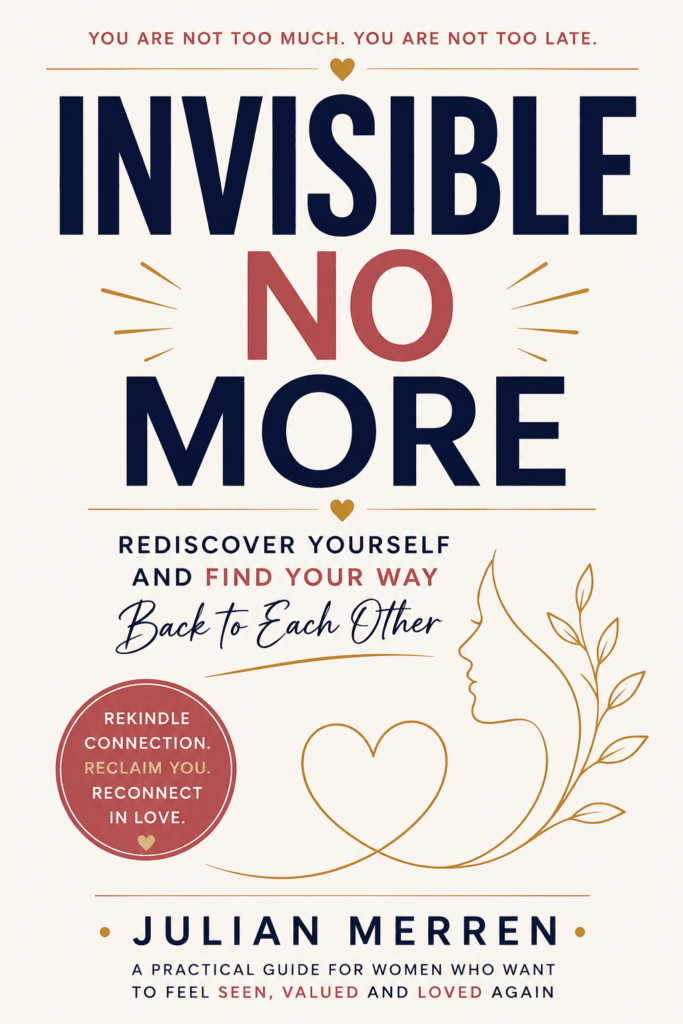
3. Invisible No More — Julian Merren
Best when fading affection has left you feeling invisible
There is another experience that can sit underneath a lack of affection.
You don’t simply miss being hugged.
You miss being seen.
Perhaps you’ve become the dependable one.
The organiser.
The parent.
The person who remembers birthdays, keeps everything moving and knows where everyone needs to be.
You’re important to the household.
You’re needed.
But being needed and feeling seen aren’t quite the same thing.
And after enough time, you may begin wondering where you went.
Invisible No More: Rediscover Yourself and Find Your Way Back to Each Other by Julian Merren approaches relationship disconnection from this direction.
It explores what can happen when a woman gradually loses touch with her identity inside a long-term relationship, and how rediscovering her needs, confidence, boundaries and voice can become part of rebuilding connection.
What exactly are you missing?
This can be a valuable question when you’re considering books about lack of affection in a relationship.
Because “I want more affection” can mean many things.
It might mean:
- I want more physical touch.
- I want my partner to notice me.
- I want to feel attractive again.
- I want us to laugh together.
- I want them to ask how I am and actually listen.
- I want to feel appreciated.
- I want to feel like a partner rather than a household manager.
- I want to remember who I am outside all the roles I perform.
Those are different needs.
Putting words around them can change the conversation.
Instead of expecting one hug, romantic dinner or weekend away to somehow repair years of gradual distance, you can begin identifying what has actually been lost.
And some of that rediscovery may need to happen within yourself.
Finding yourself doesn’t mean giving up on the relationship
This is an important distinction.
Rediscovering yourself isn’t necessarily about becoming more independent so that you can leave.
Nor should reconnecting with your partner require returning to an earlier version of yourself.
You’ve changed.
Your partner has changed.
Your relationship has changed.
The question becomes whether there’s room for the people you are now to see each other more clearly.
That’s one of the ideas behind Invisible No More: strengthening your connection with yourself while exploring whether a warmer, more emotionally connected relationship can grow from there.
If this part of the article feels particularly familiar, you can explore Invisible No More and the Books That Shape relationship collection here:
What Books About Lack of Affection in a Relationship Can Help You Ask
No book can look inside your relationship and tell you exactly why affection changed.
But a good relationship book can give you better questions.
Rather than asking only:
Why isn’t my partner affectionate anymore?
You might begin asking:
- What makes each of us feel loved now?
- Have we stopped telling each other what we need?
- When did our conversations become mostly practical?
- Do we still make time to enjoy one another?
- Have we stopped being curious about each other?
- Do I feel seen and valued in this relationship?
- Have I lost touch with parts of myself?
- What kind of closeness am I actually missing?
Those questions move the focus away from counting hugs and towards understanding connection.
And that may be where the more useful conversation begins.
Which of These Three Books Should You Read First?
If you’re unsure, think about what feels most absent.
If you still care deeply for one another but seem to express love differently, start with The 5 Love Languages. Use its framework as a way of talking about what makes each of you feel cared for rather than as a rigid rulebook.
If everyday responsibilities have taken over and you’ve stopped having meaningful conversations, Eight Dates provides a practical way to create space for curiosity again.
And if fading affection has become part of a deeper feeling that you’ve lost yourself or stopped feeling seen, Invisible No More may be the more relevant place to begin.
You may even recognise pieces of your relationship in all three.
Affection Is Often a Signal
It’s understandable to miss the physical things.
The hugs.
The kisses.
The hand reaching for yours.
The arm around you on the sofa.
But those gestures often matter because of what they communicate.
I notice you.
I’m glad you’re here.
I still want to be close to you.
When those moments disappear, the absence can therefore feel much larger than the gesture itself.
That’s why books about lack of affection in a relationship can be most helpful when they encourage us to look underneath what’s missing.
The 5 Love Languages can start a conversation about how each partner experiences expressions of love.
Eight Dates can encourage two people to become curious about each other again.
And Invisible No More can help turn some of that curiosity inward, towards the person you have become and what you now need from your relationship.
You don’t necessarily have to solve everything at once.
Sometimes a better beginning is much smaller.
Choose the book that most closely reflects what you’re missing.
Read.
Think.
Talk.
And start putting words around the kind of connection you’d like to feel again.