
Some money books teach you what to do.
The Psychology of Money is memorable because it spends so much time exploring why we do what we do.
Morgan Housel’s book uses 19 short stories to examine the way behaviour, personal history, ego and individual experience influence our financial decisions. Its publisher describes its central idea simply: doing well with money isn’t only about knowledge; behaviour matters enormously too.
That helps explain why readers often finish the book wanting more.
Not necessarily another step-by-step guide to investing, but another book that makes them think differently about money.
If that’s you, these books like The Psychology of Money continue the conversation in some fascinating directions — from behavioural investing and spending to uncertainty, financial wellbeing and the regret that comes from wishing you’d handled money differently.
1. The Laws of Wealth — Daniel Crosby
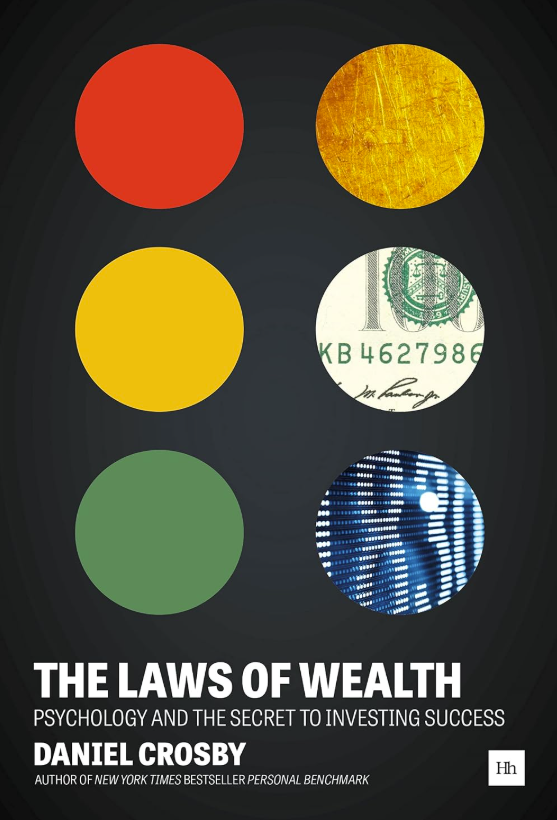
Best for taking behavioural finance into investing
If the behavioural side of The Psychology of Money fascinated you, Daniel Crosby is a natural author to explore next.
The Laws of Wealth moves further into the relationship between psychology and investing.
Crosby is a psychologist and behavioural-finance expert, and the book looks at how investor behaviour affects financial outcomes. It combines behavioural ideas with practical rules intended to help people make better investment decisions.
That’s an interesting progression from Housel.
Housel encourages you to recognise that money decisions are deeply human. Crosby takes that recognition and asks what it means when you’re actually making investment decisions.
Why do investors behave badly when markets become uncomfortable?
How can rules protect us from our own tendencies?
And why can our behaviour sometimes matter as much as the investments we choose?
It makes The Laws of Wealth particularly appealing if you finished The Psychology of Money thinking, “I understand myself better — now how do I apply that?”
Read this next if: behavioural psychology was your favourite part of Housel’s book and you’d like to connect it more directly with investing.
2. The Art of Spending Money — Morgan Housel
Best for continuing directly with Housel’s thinking
Sometimes the most obvious next book really is the right one.
Morgan Housel’s The Art of Spending Money turns the conversation towards something that receives surprisingly little attention in personal finance:
What happens after you’ve earned the money?
Its publisher describes the book as exploring how money can be used to create greater happiness and meaning, while examining issues including envy, expectations, identity, insecurity and regret.
That’s a natural continuation of the ideas that made The Psychology of Money so engaging.
Because becoming better with money isn’t only about accumulating more of it.
It’s also about understanding what you’re asking money to do for you.
Are you spending to impress people?
Buying things because your expectations keep rising?
Saving endlessly without knowing what would make you feel secure?
Or using money in ways that genuinely improve your life?
Those questions take financial wellbeing beyond account balances.
Read this next if: you enjoy Housel’s storytelling style and want to explore the psychology of what money is ultimately for.
3. Quit Like a Millionaire — Kristy Shen and Bryce Leung
Best for questioning conventional ideas about money and freedom
Quit Like a Millionaire approaches money from a different direction.
Kristy Shen and Bryce Leung explore financial independence and the choices involved in designing a life where money provides greater freedom.
What makes it interesting alongside The Psychology of Money isn’t that the books make exactly the same argument.
They don’t.
It’s that both encourage you to question assumptions you’ve absorbed about money.
How much do you really need?
What does financial freedom mean to you?
How much of your financial behaviour comes from following the expected path?
And what might change if money became a tool for creating choices rather than simply measuring success?
Those are useful questions even if early retirement isn’t your goal.
You don’t need to adopt somebody else’s financial destination to learn something from how they think about getting there.
Read this next if: The Psychology of Money made you reconsider your definition of wealth and you’d like to explore financial independence from a different perspective.
4. Same as Ever — Morgan Housel
Best for thinking about uncertainty, risk and what doesn’t change
This is another Housel title, but it takes the reader beyond money alone.
Same as Ever starts from an intriguing problem: predicting the future is extraordinarily difficult.
Instead of focusing entirely on what might change, Housel explores behaviours and patterns that tend to persist through changing circumstances.
The book uses 24 short stories to examine recurring themes across life, behaviour and business, with particular attention to risk, opportunity and uncertainty.
That makes it a strong companion to The Psychology of Money.
Financial plans inevitably involve the future.
But the future refuses to behave exactly as expected.
Markets change.
Economies change.
Technology changes.
Our personal circumstances change.
Learning to think about uncertainty — rather than pretending we can eliminate it — can therefore be an important part of making better long-term decisions.
Read this next if: you enjoyed Housel’s short-story format and want to broaden the discussion from money psychology into risk, uncertainty and human behaviour.
5. From Financial Regret to Financial Freedom — Julian Merren
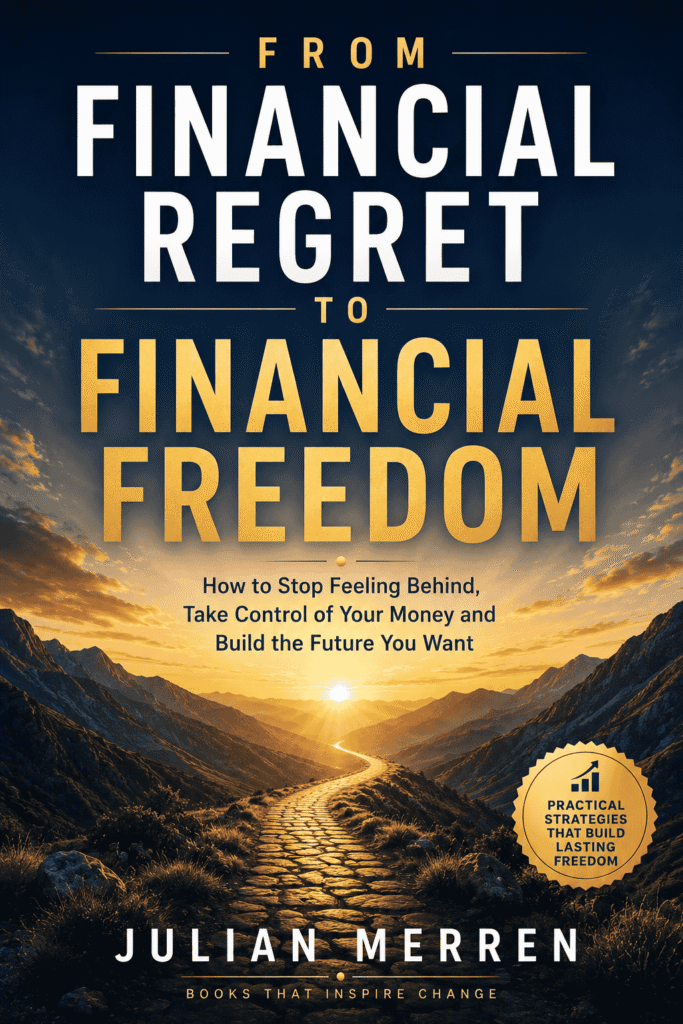
Best for readers who wish they’d made different financial decisions
One of the most powerful ideas surrounding money psychology is that financial decisions aren’t made in an emotional vacuum.
Our past travels with us.
That becomes especially noticeable when the emotion involved is regret.
Perhaps you wish you’d started saving earlier.
Maybe debt stayed around longer than expected.
Perhaps you earned reasonable money over the years but reached midlife wondering where it all went.
Or maybe you simply look at your current financial position and think:
I should be further ahead than this.
From Financial Regret to Financial Freedom by Julian Merren approaches money from that starting point.
Rather than pretending previous decisions don’t matter, it focuses on preventing regret from controlling what happens next.
That means looking honestly at where you are, creating room within your current income, building financial security, addressing debt and gradually beginning to build wealth.
The goal isn’t to recreate a financial life you could have had.
It’s to make better use of the financial life still ahead of you.
Read this next if: the behavioural side of money interests you because your own past financial decisions are affecting how you think about the future.
You can explore From Financial Regret to Financial Freedom.
What Makes the Best Books Like The Psychology of Money?
It isn’t simply that they’re about finance.
There are thousands of books about finance.
What distinguishes Housel’s book is its interest in the person making the financial decision.
That’s the thread connecting this reading list.
These books explore questions such as:
- Why do intelligent people still make poor financial decisions?
- How does emotion affect investing?
- What does “enough” actually look like?
- What should money ultimately provide?
- How do we make plans when the future is uncertain?
- What happens when regret starts influencing today’s decisions?
Those questions don’t always have neat mathematical answers.
That’s precisely why they’re worth exploring.
Which Book Should You Read Next?
It depends on what stayed with you after finishing The Psychology of Money.
If it was investor behaviour, start with The Laws of Wealth.
If it was the relationship between money and happiness, try The Art of Spending Money.
If you’re interested in financial independence and choice, consider Quit Like a Millionaire.
If Housel’s thoughts about risk and uncertainty interested you, Same as Ever is the obvious continuation.
And if your relationship with money is complicated by regret about starting late or past financial decisions, From Financial Regret to Financial Freedom may be the most relevant next step.
One Good Money Book Should Lead to Better Questions
The best financial books don’t necessarily leave you with a checklist.
Sometimes they leave you with better questions.
What does wealth mean to me?
How much is enough?
Which financial decisions am I making because of fear, comparison or regret?
What do I actually want money to make possible?
And am I building a financial life that suits me — or simply copying what everyone else appears to be doing?
That’s why searching for books like The Psychology of Money can lead somewhere more interesting than another list of investment strategies.
You’re continuing a conversation about behaviour.
And the more you understand the person making the financial decisions, the better chance you have of making decisions that actually fit the life you’re trying to build.
Choose the question that matters most to you.
Then choose the book that explores it.