
Retirement has an odd way of spending years somewhere in the distance.
You know it’s coming.
You contribute what you can. You occasionally look at your retirement balance. You tell yourself there will be time to sort everything out later.
And then, somehow, “later” arrives.
Five years doesn’t sound very long anymore. Ten years can suddenly feel surprisingly close. Questions that once seemed theoretical become much more immediate.
Have I saved enough?
What if I haven’t?
What will I actually do when I’m no longer working?
And perhaps the most uncomfortable one:
Have I left it too late to make a meaningful difference?
That’s when the right books to read before retirement can be useful. Not because a book can magically fix a retirement plan, but because it can help you understand your choices, ask better questions and replace some of the uncertainty with a clearer sense of what to do next.
Here are five worth considering.
1. How to Retire — Christine Benz
Best for seeing retirement as more than a financial calculation
Christine Benz’s How to Retire is a particularly appropriate place to begin because it doesn’t treat retirement purely as an investment problem.
The book brings together lessons from retirement specialists covering both financial questions and quality-of-life considerations. Its topics include retirement income, changing spending patterns, portfolio organisation, happiness and living without regret.
That’s important because preparing for retirement isn’t simply about reaching a particular number.
You’re preparing for a different stage of life.
There are financial questions, certainly.
But there are also questions about how you’ll spend your days, where meaning will come from, how your relationships might change and what you actually want this next chapter to look like.
A retirement plan becomes far more useful when it connects those two sides.
A good choice if: retirement is getting closer and you want to think about both your money and the life that money needs to support.
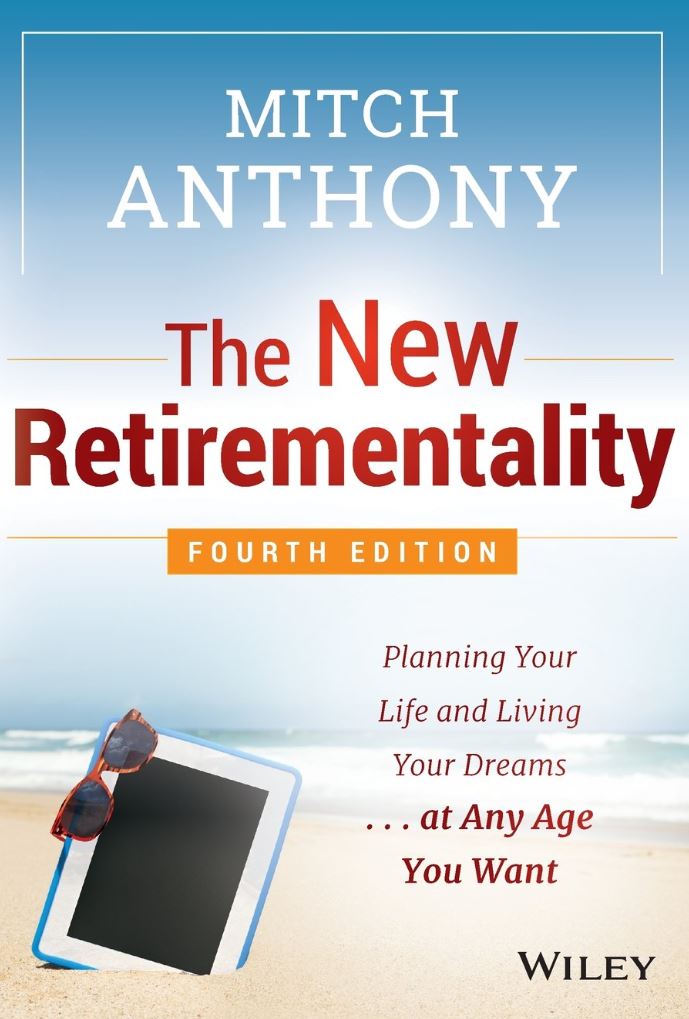
2. The New Retirementality — Mitch Anthony
Best for reconsidering what retirement actually means
For generations, retirement followed a fairly familiar script.
Work for several decades. Stop working. Begin retirement.
But that clean dividing line doesn’t suit everybody.
Some people want to continue working in some capacity.
Others want to reduce their hours gradually.
Some want to start something completely different.
And plenty of people discover that the prospect of doing absolutely nothing for the next twenty or thirty years isn’t nearly as appealing as it once sounded.
The New Retirementality challenges conventional assumptions about retirement and encourages a broader conversation about money, work and purpose.
That makes it particularly interesting if your concern isn’t simply, “Can I afford to retire?”
Perhaps you’re also wondering:
What do I actually want retirement to look like?
That’s a question worth answering before you automatically follow somebody else’s version of it.
A good choice if: you’re less interested in “stopping” and more interested in designing the next stage of your life.
3. Die With Zero — Bill Perkins
Best for thinking about the balance between saving and living
Retirement planning naturally encourages us to think about having enough.
But there’s another side to that conversation.
What is the money actually for?
Die With Zero by Bill Perkins approaches money through the relationship between time, experiences and the way we use our resources throughout life.
You don’t have to agree with every conclusion in the book to find the questions valuable.
Retirement planning can easily become dominated by fear of running out.
That fear matters, and financial security deserves serious attention. But so does the possibility of postponing too much of life while waiting for some future moment when you’ll finally give yourself permission to enjoy what you’ve built.
This book provides a useful counterweight to retirement conversations that focus entirely on accumulation.
A good choice if: you’ve spent years concentrating on saving and now want to think more deeply about how money, time and experiences fit together.
4. The Essential Retirement Guide — Frederick Vettese
Best for readers who want to examine retirement assumptions more carefully
Once retirement starts feeling close, numbers inevitably become part of the conversation.
How much will you spend?
How long might your money need to last?
How could spending change as you get older?
What risks actually matter?
Frederick Vettese’s The Essential Retirement Guide examines retirement planning and some of the assumptions people make when trying to determine how much they’ll need.
Books like this can be helpful because retirement figures often look frightening when they’re viewed without context.
A large target number can tell you surprisingly little by itself.
What matters is the relationship between your resources, expected spending, retirement timing, other potential income and the life you’re trying to fund.
The closer retirement becomes, the more useful it can be to replace a vague fear of “not enough” with a clearer understanding of your actual position.
A good choice if: you want to think more carefully about the numbers and assumptions behind retirement planning.
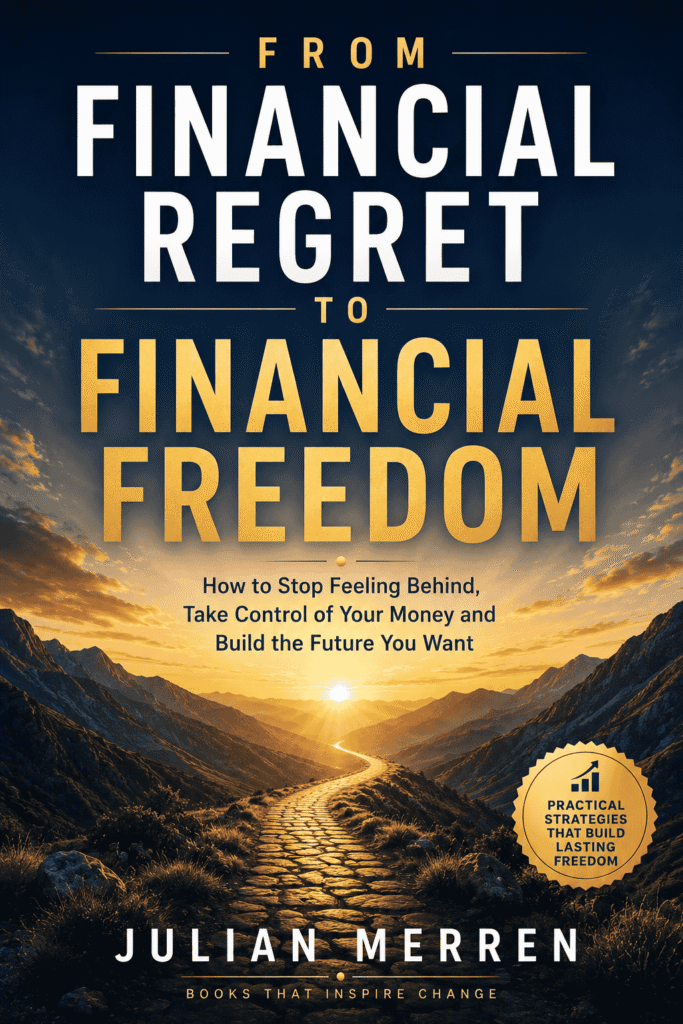
5. From Financial Regret to Financial Freedom — Julian Merren
Best for people who worry they started preparing too late
Retirement approaching can make old financial regrets considerably louder.
You might think about the years when you weren’t investing.
The money you spent rather than saved.
The debt that hung around too long.
Or the retirement balance you imagine you’d have if only you’d started ten or twenty years earlier.
That’s where From Financial Regret to Financial Freedom by Julian Merren fits into this list.
The book isn’t specifically a retirement manual. Instead, it addresses the problem underneath many late-retirement worries:
Feeling financially behind.
It focuses on accepting the position you’re in now, creating greater control over your money, building financial security, dealing with debt and beginning or strengthening the process of building wealth.
That’s particularly relevant when retirement is getting closer because regret can create urgency.
And urgency can tempt people towards shortcuts.
The years behind you are fixed.
The years ahead aren’t.
A good choice if: retirement is making you think about financial decisions you wish you’d made differently and you want to focus on what you can still change.
You can explore From Financial Regret to Financial Freedom.
Why Books to Read Before Retirement Should Cover More Than Money
It’s tempting to approach retirement as though you’re preparing for an exam.
Reach the right number and you’ve passed.
Fall short and you’ve failed.
Real life is more complicated.
Retirement can involve decisions about:
- when or whether to stop working completely
- where you want to live
- what your everyday spending might look like
- how you’ll create purpose and structure
- what sources of income may be available
- how much flexibility you want
- what you want to do while you’re still healthy and active
- how you’ll respond if circumstances change
That’s why reading across several perspectives can be more valuable than searching for one book containing “the answer”.
You’re not simply building a retirement portfolio.
You’re preparing for a different way of living.
Retirement Feels Close. What Should You Do First?
Before trying to solve everything, get clear on where you actually stand.
That might mean gathering your retirement account balances, savings, investments and debts in one place.
Then look at your current spending.
Think about the kind of retirement you imagine.
And start identifying the gap between the resources you may have and the life you’d like those resources to support.
For Australian readers, Moneysmart recommends considering your retirement goals, likely living costs, assets and income sources, then examining possible actions if your plan isn’t on track. Those actions can include reviewing fees and investments, reducing debt, working longer or part-time, and making additional super contributions where appropriate.
The important word is options.
Being closer to retirement doesn’t mean every option has disappeared.
You Don’t Need to Fix Twenty Years in One Year
Perhaps this is the most important point.
Discovering at 55 or 60 that you wish you’d done more at 35 doesn’t mean you need to compensate by doing something dramatic now.
You don’t have to turn retirement preparation into a desperate race.
Start with information.
Understand your position.
Decide what matters.
Then look at the changes that are genuinely available to you.
The best books to read before retirement won’t give every reader the same answer.
They’ll help you ask better questions.
For one person, that might mean saving more.
For another, working slightly longer.
For someone else, changing what retirement looks like altogether.
And for somebody carrying years of financial regret, the first step may simply be accepting that yesterday’s decisions don’t get to make tomorrow’s decisions too.
Retirement may be getting closer.
That doesn’t mean the opportunity to prepare for it has disappeared.
Pick the book that speaks most directly to the question keeping you awake — and start there.