
You answer a simple question.
Then you add a little context.
Then you explain why you answered that way.
Then you realise the other person might misunderstand something you just said, so you explain that too.
Before long, what could have been a two-sentence answer has become a two-minute explanation.
If this sounds familiar, these books to stop overexplaining approach the problem from several useful angles—from communicating more simply to setting boundaries, handling difficult conversations and trusting that you don’t always need to justify what you’ve said.
Because overexplaining isn’t necessarily about having too much to say.
Sometimes it’s about not quite trusting that what you’ve already said is enough.
Why Do We Overexplain?
There isn’t one reason.
Sometimes we start speaking before we’ve decided what our main point is. The explanation grows because we’re effectively discovering the answer while we’re giving it.
At other times, we’re trying to prevent misunderstanding.
We imagine every possible interpretation of what we’ve said and attempt to deal with each one before the other person has even responded.
And sometimes the problem isn’t explanation at all.
It’s justification.
You say no to something, then immediately feel compelled to provide enough reasons to make your answer acceptable.
Recognising why you’re adding more words can be just as important as learning how to use fewer of them.
These five books tackle different parts of that challenge.
1. The Art of Explanation — Lee LeFever
Explaining something well isn’t about including everything you know.
It’s about helping the other person understand what matters.
That’s the territory Lee LeFever explores in The Art of Explanation: Making Your Ideas, Products, and Services Easier to Understand. LeFever describes the book as a guide to developing communication skills centred on clarity and understanding, particularly when ideas are difficult to explain.
That’s particularly relevant to overexplaining.
When you know a subject well, you can see dozens of details, connections and exceptions. But the person listening may need only enough information to understand the central idea.
Before explaining something, try asking:
What does this person actually need to understand?
Not:
What do I know about this?
Those are very different questions.
Best for: people who give too much background when explaining ideas.
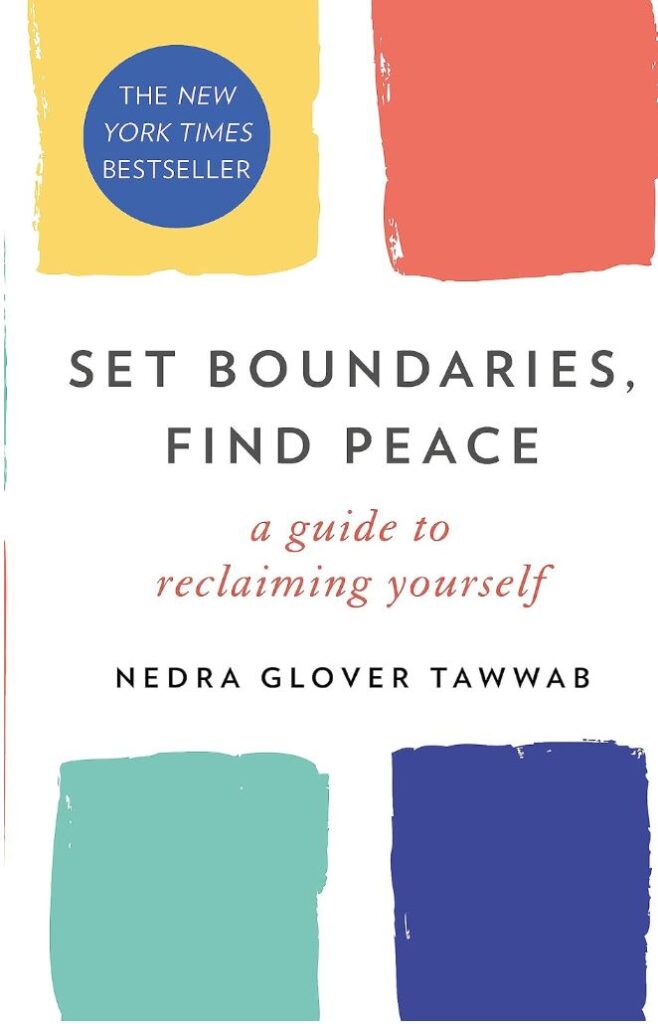
2. Set Boundaries, Find Peace — Nedra Glover Tawwab
Overexplaining can become particularly noticeable when you’re trying to say no.
“I can’t make it.”
Simple.
But then comes:
“It’s just that I’ve had a really busy week, and I promised I’d get something finished, and normally I’d definitely come, and I hope you don’t think…”
Suddenly you’re not simply communicating a decision. You’re building a case for why the other person should allow you to make it.
Set Boundaries, Find Peace by Nedra Glover Tawwab focuses on establishing healthy boundaries, including expressing needs, saying no and communicating limits clearly.
That makes it a useful addition to this list because sometimes saying less requires becoming more comfortable with the fact that another person may not love your answer.
A clear boundary doesn’t always require a long defence.
Best for: people who overexplain their decisions because they feel uncomfortable saying no.
3. Exactly What to Say — Phil M Jones
Sometimes we add more words because we can’t find the ones we actually need.
Exactly What to Say by Phil M Jones comes primarily from the world of influence and business communication. Its focus is on choosing language deliberately and using particular phrases in important conversations.
You don’t need to adopt every technique or treat ordinary conversations like sales negotiations to find something useful in that idea.
The broader lesson is worth considering:
Specific words can often do the work of entire paragraphs.
Instead of circling around an uncomfortable point, you can practise saying it plainly.
“I disagree.”
“I need some time to think about that.”
“I can’t commit to that.”
“I’m not sure.”
The shorter version can feel exposed at first because there is nowhere to hide.
But clarity often does.
Best for: people who talk around their point because they aren’t sure how to phrase it directly.
4. Crucial Conversations — Joseph Grenny, Kerry Patterson, Ron McMillan, Al Switzler and Emily Gregory
Overexplaining often becomes worse when the stakes rise.
You may be perfectly concise in an ordinary conversation, then find yourself talking in circles when you need to raise a problem, disagree with someone or discuss something emotionally charged.
Crucial Conversations: Tools for Talking When Stakes Are High focuses specifically on difficult, high-stakes conversations and productive dialogue when opinions differ or emotions become stronger.
That’s useful because “say less” isn’t always enough advice.
Sometimes you need to feel capable of staying with your point when the other person challenges it.
Otherwise, you can end up adding explanation after explanation simply because the conversation feels uncomfortable.
Best for: people whose overexplaining becomes worse during difficult or important conversations.
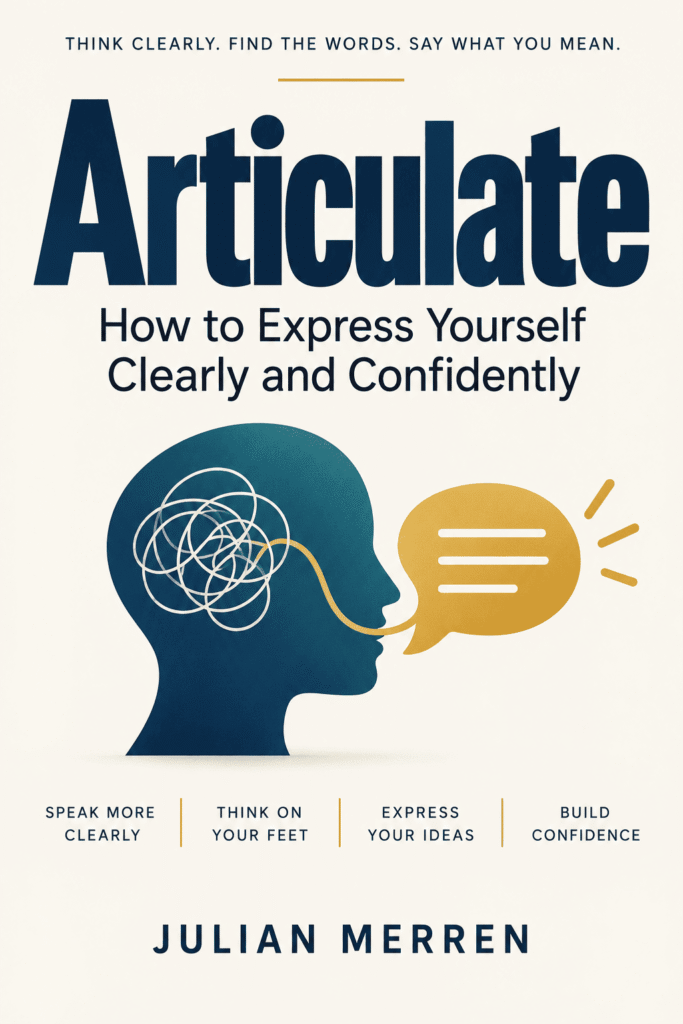
5. Articulate — Julian Merren
Then there’s the everyday version.
You know what you want to say, but instead of starting with the point, you begin with the background.
One detail leads to another.
You hear yourself talking and realise you’ve somehow travelled a long way from the original question.
Articulate: How to Express Yourself Clearly and Confidently by Julian Merren is built around practical communication problems like these.
It explores how to organise your thoughts before speaking, get to the point, find the right words, explain ideas clearly and recognise when you’ve already said enough.
One simple habit is to ask yourself:
What’s the one thing I want this person to understand?
Say that first.
Then let the listener decide whether they need more.
If you’d like to work on clearer, more confident everyday communication, you can discover Articulate here.
What the Best Books to Stop Overexplaining Can Teach You
Although these books approach communication differently, several useful principles emerge.
Lead with the point
Don’t make someone listen for a minute before discovering why you’re speaking.
Try:
“I don’t think we should go ahead with it yet.”
Then explain why.
Let people ask for more
You don’t have to anticipate every possible question.
Give the essential information first.
If the listener needs more context, they’ll usually ask.
Notice when explanation becomes justification
There’s a difference between helping someone understand your decision and trying to convince them that you’re entitled to make it.
Sometimes:
“I won’t be able to come.”
really can be enough.
Stop when the point has landed
This may be the hardest skill of all.
You explain something clearly.
The other person nods.
And then you keep going.
Practise noticing that moment.
Your point doesn’t necessarily become stronger because you repeat it three different ways.
Try the Two-Sentence Rule
Here’s a simple exercise for your next ordinary conversation.
When someone asks you a question, try answering in no more than two sentences.
Then stop.
Not forever. Just for a moment.
Give the other person the opportunity to respond.
You may discover that they understood you perfectly well.
If they want more information, they can ask.
This isn’t about turning conversations into clipped exchanges. It’s about breaking the habit of assuming that every silence needs another explanation.
You Don’t Have to Explain Everything
Overexplaining can feel helpful while you’re doing it.
You’re providing context. Preventing confusion. Making sure the other person understands.
But more information doesn’t automatically create more clarity.
Sometimes the clearest thing you can do is trust the sentence you’ve already said.
The right books to stop overexplaining can help you become more deliberate about what you say, why you’re saying it and when it’s time to stop.
Start with whichever part sounds most familiar.
Do you struggle to simplify ideas?
Do you justify your boundaries?
Do difficult conversations make you talk more?
Or do you simply need help finding your point before you begin?
You don’t need to become someone who always says less.
You just need to become better at recognising when you’ve already said enough.