

Have you ever tried to explain something you understand perfectly well, only to watch the other person’s expression become increasingly confused?
You know what you mean. The idea makes complete sense in your head. But somewhere between thinking it and saying it, the explanation becomes tangled.
You add more details. You try another example. You go back to something you forgot to mention.
And eventually, you find yourself saying, “Does that make sense?”
It’s a frustrating experience, particularly when you’re discussing something you genuinely know a lot about.
The good news is that explaining ideas clearly is a skill you can develop. And some of the best books to explain things clearly approach that challenge from surprisingly different directions.
Whether you’re explaining a problem at work, helping somebody understand a complicated subject or simply trying to make your thoughts easier to follow, these five books offer useful ways to improve.
1. The Art of Explanation — Lee LeFever
Sometimes the biggest problem with an explanation isn’t what we’re saying.
It’s what we’re assuming the other person already knows.
The Art of Explanation by Lee LeFever explores how to make ideas easier for others to understand, particularly when the subject is unfamiliar or complicated.
One of the most useful lessons is that a good explanation needs to begin where the listener is, not where the speaker is.
Imagine you’ve spent several weeks working on a complicated project.
You understand the background, the technical details and the decisions that led to the current situation.
But the person you’re explaining it to might know almost none of that.
If you jump straight into the details, they may struggle to follow.
A clearer approach is to establish the bigger picture first.
Try this: Start with why it matters
Before explaining how something works, briefly explain why the person should care.
For example, instead of beginning with the technical details of a new workplace system, you might say:
“This change should reduce the time we spend entering the same information twice.”
Now the listener has a reason to pay attention.
You can introduce the details afterwards.
Best for: People who regularly explain unfamiliar ideas, processes or technical subjects.

2. Made to Stick — Chip Heath and Dan Heath
Have you ever listened to someone explain an idea and understood every word, only to forget the whole thing an hour later?
Clarity is important, but so is making the message memorable.
Made to Stick by Chip Heath and Dan Heath explores why certain ideas are easier to understand and remember than others.
The book introduces principles such as simplicity, concreteness and storytelling.
These are particularly useful when you want somebody to understand an idea without having to work too hard to follow it.
Consider the difference between these two explanations:
“We need to optimise our internal communication processes to improve operational efficiency.”
And:
“We need to stop sending the same information through three different systems.”
Both might be describing the same problem.
But the second gives the listener something specific to picture.
That’s the power of concrete language.
Try this: Replace abstract language with something people can picture
When preparing an explanation, look for words that sound impressive but don’t communicate much.
Ask yourself whether you could replace them with a simple example, a specific problem or an everyday comparison.
The goal isn’t to make your explanation sound less intelligent.
It’s to make the meaning easier to grasp.
Best for: People who want their ideas to be understood, remembered and acted upon.
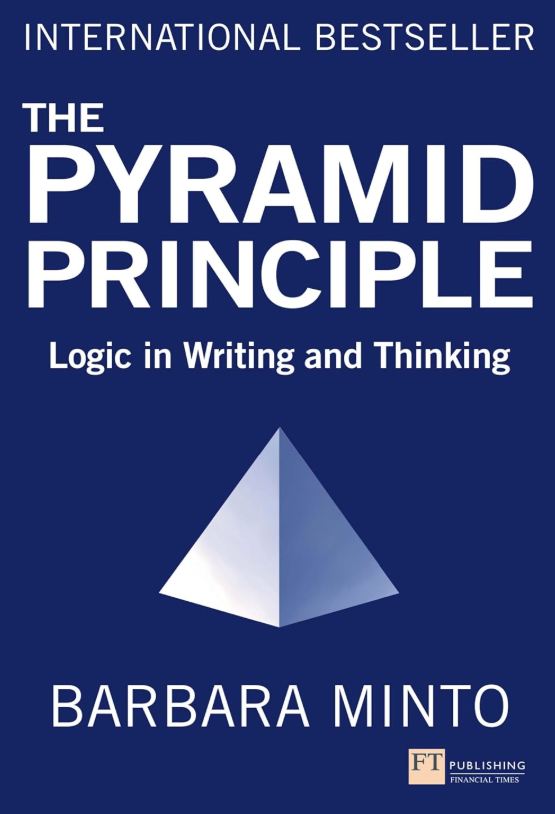
3. The Pyramid Principle — Barbara Minto
One of the most common reasons explanations become confusing is that we present information in the order we thought of it.
Unfortunately, that isn’t always the order in which somebody else needs to hear it.
The Pyramid Principle by Barbara Minto focuses on organising ideas logically, with the central message supported by the information beneath it.
This can be especially useful in professional conversations, where people often want to understand your conclusion before hearing every detail that led to it.
Imagine someone asks why a project is behind schedule.
You could begin by explaining everything that happened over the previous three weeks.
Or you could start with:
“The project is delayed because we’re waiting on two supplier approvals.”
Then explain the supporting details.
The second approach gives the listener a clear starting point.
Try this: Answer first, explain second
Before giving an explanation, identify your main message.
Then arrange the supporting information underneath it.
A useful structure is:
- Main point: What do I want them to understand?
- Reason: Why is that true or important?
- Example: What would make it easier to understand?
This doesn’t mean every conversation needs to become a formal presentation.
It simply means giving your thoughts a logical order.
Best for: People who understand a subject but struggle to organise their explanation.
4. Simply Said — Jay Sullivan
Knowing your subject and communicating it effectively are two different skills.
You might have excellent ideas but still lose people’s attention because you’re speaking too quickly, adding unnecessary details or failing to consider what matters most to your audience.
Simply Said by Jay Sullivan focuses on communicating more effectively in professional situations, including conversations, meetings, presentations and written communication.
One particularly useful theme is becoming more aware of the person receiving your message.
An explanation isn’t simply information leaving your mouth.
It’s information somebody else needs to understand.
That means paying attention to what they need, what they already know and what might be confusing them.
Try this: Check understanding without starting again
If somebody looks uncertain, the instinct is often to repeat the entire explanation using even more words.
Instead, ask:
“Which part would you like me to explain further?”
Or:
“Would an example help?”
This gives you a better idea of where the confusion lies.
Sometimes the listener understands most of what you’ve said and needs clarification on only one small point.
Best for: People who want to communicate more clearly and effectively in everyday professional situations.
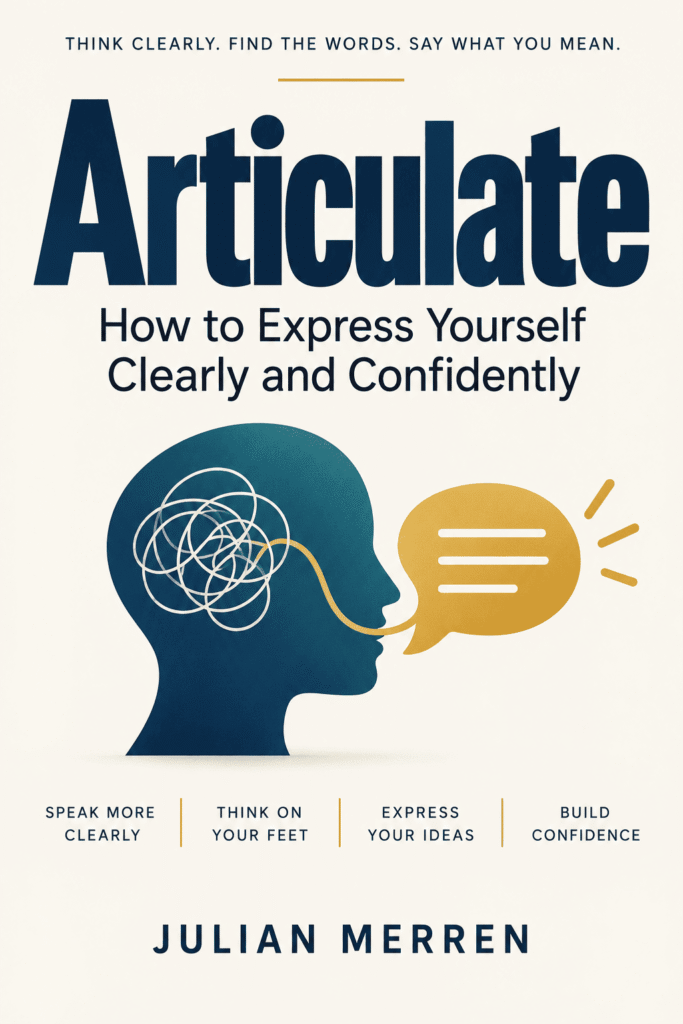
5. Articulate — Julian Merren
There’s another reason explaining something can feel difficult.
Sometimes you understand the idea and know exactly what you want the listener to understand.
But when you begin speaking, the words don’t come out in the order you intended.
You jump between thoughts, add unnecessary background or start explaining before you’ve decided what your main point actually is.
Articulate: How to Express Yourself Clearly and Confidently by Julian Merren addresses that gap between knowing what you mean and being able to express it clearly.
The book focuses on practical communication skills, including organising thoughts, finding the right words, reducing rambling and making spoken explanations easier to follow.
A useful approach is:
Pause → Point → Explain
Pause briefly before speaking.
Identify the main point.
Then explain it using only the information necessary to help the listener understand.
For example, imagine someone asks why you disagree with a proposed change.
Instead of beginning with every concern you have, you might say:
“I think the change makes sense, but the timing could create problems for the team.”
Now you’ve established your position.
You can explain the reasons afterwards.
The listener knows where you’re going, and you have a clear direction for your answer.
Best for: People who know what they want to say but struggle to turn their thoughts into clear spoken explanations.
If this sounds familiar, you can discover Articulate by Julian Merren.
What the Best Books to Explain Things Clearly Have in Common
Although these books approach communication differently, they share an important principle.
A good explanation is designed for the person listening, not just the person speaking.
That means being willing to simplify without becoming vague.
It means choosing the most useful information rather than including everything you know.
And it means recognising that more words don’t automatically create more understanding.
The next time you need to explain something, consider these questions:
- What is the single most important thing I want this person to understand?
- What do they already know about the subject?
- Am I explaining the main idea before introducing the details?
- Could I use a simple example to make the meaning clearer?
- Have I included information that isn’t actually necessary?
You don’t need to answer all five questions before every conversation.
But becoming more aware of them can help you communicate with greater purpose.
A Simple Exercise to Make Your Explanations Clearer
Here’s a practical exercise you can try today.
Choose something you understand well.
It might be a process at work, a hobby, a familiar piece of technology or a subject you’ve spent time learning about.
Now explain it aloud in three stages.
Stage 1: The one-sentence explanation
Explain the idea in a single sentence.
Don’t worry about including every detail.
Focus on the central meaning.
Stage 2: The thirty-second explanation
Add enough context for somebody unfamiliar with the subject to understand why it matters and how it works.
Keep the explanation focused.
Stage 3: The two-minute explanation
Now introduce the supporting details, examples or reasons that help somebody understand the subject more deeply.
Notice what happens as you move between the three versions.
You’re learning to control how much information you give, rather than simply saying everything that comes to mind.
That’s a useful skill because different conversations require different levels of detail.
Sometimes a sentence is enough.
Sometimes a fuller explanation is necessary.
The key is knowing the difference.
Clear Communication Isn’t About Using More Impressive Words
There’s a common temptation when explaining something important.
We want to sound knowledgeable.
So we use technical language, elaborate phrases or more detail than the listener actually needs.
But sounding knowledgeable and being understood aren’t always the same thing.
In fact, one of the strongest signs that you understand something well is being able to explain it simply without losing its meaning.
That doesn’t mean avoiding technical terms when they’re necessary.
It means recognising when they help and when they create another barrier.
The best explanation isn’t necessarily the longest, most detailed or most sophisticated.
It’s the one that helps the other person understand what matters.
Final Thoughts: Make Understanding the Goal
If you’ve ever struggled to explain something clearly, remember that the problem isn’t necessarily your knowledge.
You may simply need a better way to organise and deliver what you already know.
These books to explain things clearly offer several approaches worth exploring, from simplifying complicated ideas and making messages memorable to organising thoughts and expressing yourself more effectively.
Start with the difficulty that sounds most familiar.
And the next time you need to explain something, remember one simple principle:
Don’t begin with everything you know. Begin with what the listener needs to understand.
If turning your thoughts into clear spoken language is your biggest challenge, take a closer look at Articulate by Julian Merren.
Because the goal isn’t simply to say more.
It’s to help people understand what you mean.