
Have you ever walked away from a conversation wishing you’d been a little more relaxed, asked a better question or found something more interesting to say?
Perhaps you struggle to keep conversations going after the initial small talk.
Maybe you’re comfortable discussing subjects you know well but find everyday social situations surprisingly difficult.
Or perhaps you simply want to become somebody who listens more attentively, communicates more naturally and makes other people feel comfortable.
Being a good conversationalist isn’t necessarily about being outgoing, entertaining or having an endless supply of interesting stories.
Often, it’s about something much simpler: showing genuine interest, listening carefully and knowing how to contribute without taking over.
If you’re looking for books to improve conversation skills, there are several worthwhile titles that approach the subject from different angles.
Here are five books to help you build more enjoyable, meaningful conversations.
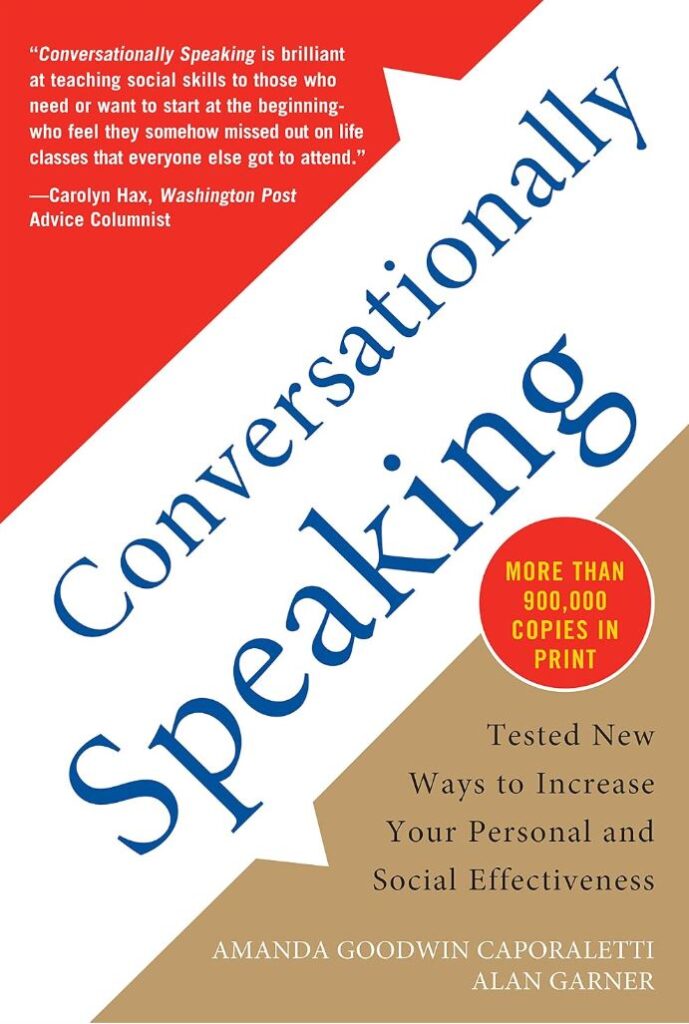
1. Conversationally Speaking — Alan Garner
Best for: Becoming more comfortable in everyday conversations.
Some people find conversations difficult because they don’t know how to begin.
Others can start a conversation easily enough but struggle to keep it moving.
And some spend so much time worrying about what to say next that they barely hear what the other person is telling them.
Conversationally Speaking by Alan Garner focuses on practical communication skills that can make social interactions feel more manageable.
The book explores areas such as asking questions, listening, expressing yourself and handling everyday interpersonal situations.
One particularly useful lesson is that a conversation doesn’t need to depend entirely on your ability to produce interesting things to say.
You can help it develop by showing curiosity about the other person.
Try this: Ask questions that invite more than one-word answers
Imagine somebody tells you they’ve recently started a new job.
You could ask:
“Do you like it?”
That’s a perfectly reasonable question, but it might produce a simple yes or no.
Alternatively, you could ask:
“What’s been the biggest difference compared with your previous job?”
Now you’ve given them an opportunity to share something more meaningful.
The aim isn’t to interrogate people with endless questions.
It’s to show enough interest that the conversation has somewhere to go.
Why read it? If everyday conversations sometimes feel awkward or difficult to maintain, this book offers practical skills to explore.

2. The Art of Gathering — Priya Parker
Best for: Creating more meaningful interactions with other people.
Not every difficulty with conversation comes from the words we use.
Sometimes the situation itself makes genuine interaction harder.
Think about a gathering where everybody exchanges polite greetings, discusses the weather and eventually returns to their own little groups.
Now compare that with an occasion where people feel comfortable sharing ideas, experiences and thoughtful questions.
What’s different?
Often, it’s the environment and the way people are brought together.
The Art of Gathering by Priya Parker explores how to create more purposeful and meaningful gatherings.
Although it isn’t a conventional conversation-skills manual, its ideas are valuable for anyone who wants interactions to feel less superficial.
The book encourages us to think about why people are coming together and what might help them connect.
Try this: Give a conversation a more interesting starting point
Instead of relying entirely on familiar small-talk questions, introduce something that invites a little reflection.
For example:
“What’s something you’ve really enjoyed learning recently?”
Or:
“What’s been the most interesting part of your week?”
These questions won’t suit every situation, and that’s important to remember.
A casual exchange with a stranger doesn’t need to become a deep personal conversation.
But when the setting feels right, a thoughtful question can help people move beyond predictable answers.
Why read it? If you enjoy bringing people together or want to create more meaningful social interactions, this book offers a different perspective.
3. The Lost Art of Listening — Michael P. Nichols
Best for: Understanding others and becoming a more attentive listener.
When people think about improving their conversation skills, they often concentrate on speaking.
They want to sound more interesting, become quicker with their responses or avoid awkward silences.
But listening deserves just as much attention.
The Lost Art of Listening by Michael P. Nichols explores why genuinely hearing another person can be more difficult than it appears.
Sometimes we’re distracted.
Sometimes we’re preparing our response while the other person is still talking.
And sometimes we’re so eager to offer advice that we miss what they’re actually trying to communicate.
Consider a friend who tells you they’re frustrated with something happening at work.
You might immediately begin offering solutions.
But perhaps they aren’t looking for advice.
Perhaps they simply want somebody to understand why the situation has been difficult.
Try this: Understand before you respond
The next time somebody shares a problem, resist the temptation to immediately fix it.
Instead, try a simple follow-up question.
“What part of that has been most frustrating?”
Or:
“How have you been feeling about it?”
Then give them space to answer.
You don’t need to agree with everything somebody says to listen attentively.
And you don’t need to have the perfect response.
Sometimes helping someone feel heard is more valuable than providing an immediate solution.
Why read it? If you want conversations to feel more thoughtful, particularly with friends, family or colleagues, this book is worth considering.
4. The Charisma Myth — Olivia Fox Cabane
Best for: Becoming more present and comfortable in social interactions.
Have you ever spoken with somebody who made you feel as though they were genuinely interested in what you had to say?
They weren’t necessarily the funniest person in the room.
They might not have told impressive stories or dominated the conversation.
But they gave you their attention.
And that made the interaction feel different.
The Charisma Myth by Olivia Fox Cabane explores how presence, confidence and interpersonal behaviour can influence the way we connect with others.
It’s a useful reminder that effective conversation involves more than choosing the right words.
Our attention, manner and ability to remain engaged also matter.
Try this: Give the conversation your full attention
During your next conversation, notice whether you’re genuinely listening or mentally preparing what you’ll say next.
Try putting distractions aside.
Allow the other person to finish their point.
And don’t feel pressured to fill every brief silence.
A pause isn’t always a sign that something has gone wrong.
Sometimes it gives both people a moment to think.
Being present doesn’t require a dramatic change in personality.
It can begin with simply paying more attention to the person in front of you.
Why read it? If you want to feel more confident and engaged when interacting with others, this book offers useful ideas to consider.
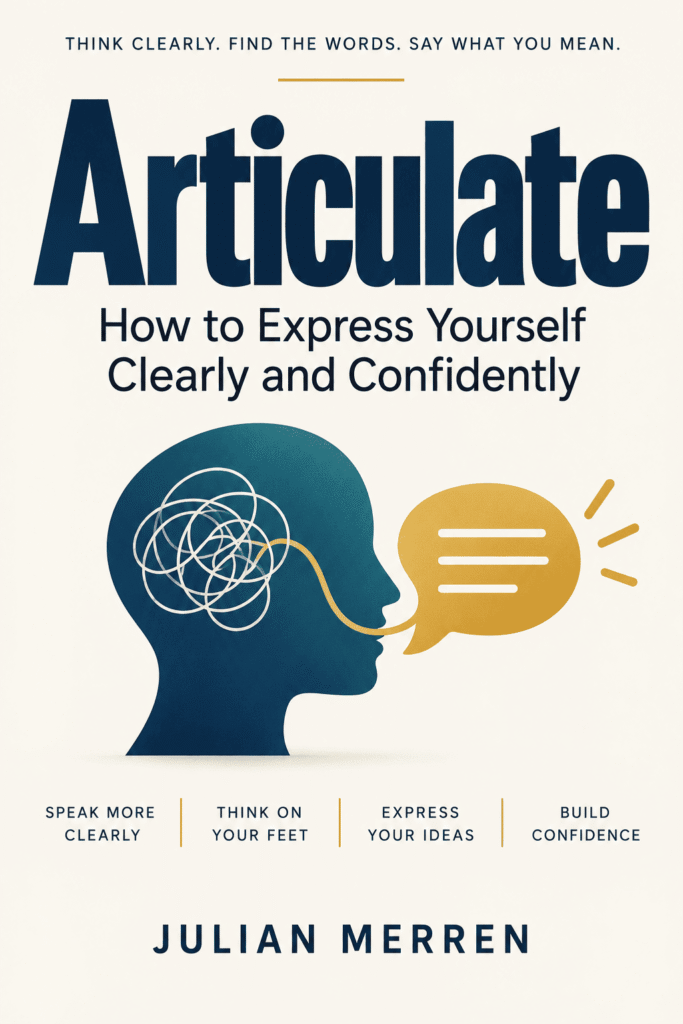
5. Articulate — Julian Merren
Best for: Expressing yourself clearly and confidently during conversations.
Listening carefully and asking thoughtful questions are important parts of conversation.
But there’s another challenge many people recognise.
Knowing what you want to say and struggling to actually say it.
Perhaps you have an interesting thought but can’t find the right words.
Maybe you begin telling a story and lose track of your point.
Or perhaps somebody asks an unexpected question and your mind suddenly goes blank.
Articulate: How to Express Yourself Clearly and Confidently by Julian Merren focuses on practical ways to organise thoughts, find the right words and communicate more effectively.
These skills can be particularly helpful in everyday conversations, where you rarely have time to prepare exactly what you’re going to say.
One useful approach is:
Pause. Point. Explain.
Before responding, give yourself a brief moment to identify what you actually want to communicate.
Then state your main point before adding supporting details.
Try this: Share the point before the whole story
Imagine a friend asks what you thought of a film.
You could begin describing the plot, individual scenes and everything that happened.
Or you could start with:
“I really enjoyed it, mainly because the characters felt believable.”
Now you’ve given the conversation a direction.
Your friend can ask about the characters, share their own opinion or disagree with you.
You haven’t closed the conversation.
You’ve made it easier to continue.
That’s an important distinction.
Being articulate doesn’t mean delivering perfect speeches during ordinary conversations.
It means being able to express your thoughts in a way that other people can understand and respond to.
Why read it? If you frequently struggle to find the right words, ramble or feel frustrated that your spoken thoughts don’t match what you intended, this book may be particularly relevant.
You can discover Articulate by Julian Merren here.
What the Best Books to Improve Conversation Skills Have in Common
These five books approach conversation from different perspectives, but they share a useful underlying message.
Good conversation is a shared experience.
It’s not a performance where one person needs to impress the other.
And it’s not a competition to see who can speak the most.
A satisfying conversation usually involves a balance of curiosity, listening, expression and responsiveness.
That means recognising when to ask a question, when to share your own experience and when to simply allow somebody else to finish their thought.
It also means accepting that not every conversation will flow perfectly.
Some interactions will be brief.
Some will feel awkward.
Others will develop naturally into something memorable.
The goal isn’t to control every conversation.
It’s to become more comfortable participating in them.
Five Small Habits That Can Make Conversations Better
You don’t need to read all five books before beginning to practise.
Here are five simple habits you can start exploring today.
- Ask one thoughtful follow-up question. Show that you’re interested in what the other person has just said.
- Listen without preparing your next sentence. Give yourself permission to respond after they’ve finished.
- Share something about yourself. Conversation should feel like an exchange, not an interview.
- Make your main point clear. If you’re telling a story or explaining an opinion, help the listener understand where you’re going.
- Allow natural pauses. You don’t have to fill every moment with words.
These habits might sound simple, but they’re easy to overlook when we’re feeling nervous or distracted.
Choose just one to practise during your next conversation.
You may find it more useful than trying to change everything at once.
Which Book Should You Read First?
The best starting point depends on what you find most difficult.
If you’re unsure how to begin or maintain conversations, Conversationally Speaking is a natural choice.
If you want to create more meaningful interactions, consider The Art of Gathering.
If listening is your biggest challenge, explore The Lost Art of Listening.
If you want to feel more present and comfortable around others, The Charisma Myth may appeal.
And if you often know what you mean but struggle to express it clearly, Articulate focuses directly on that problem.
You don’t need to become an entirely different person to become a better conversationalist.
You simply need to develop the skills that help you connect more naturally.
Final Thoughts
The most useful books to improve conversation skills don’t simply teach you how to talk more.
They help you think about how conversations work.
How we listen.
How we ask questions.
How we express ourselves.
And how we make space for other people to contribute.
The next time you’re having a conversation, try shifting your attention away from whether you’re saying the perfect thing.
Instead, focus on being curious, present and clear.
Because the best conversations aren’t always the ones filled with impressive words.
They’re often the ones where both people feel comfortable being themselves.
And if expressing your thoughts clearly is the part you’d most like to improve, take a look at Articulate by Julian Merren.
Sometimes becoming a better conversationalist begins with learning to say what you really mean.