
You
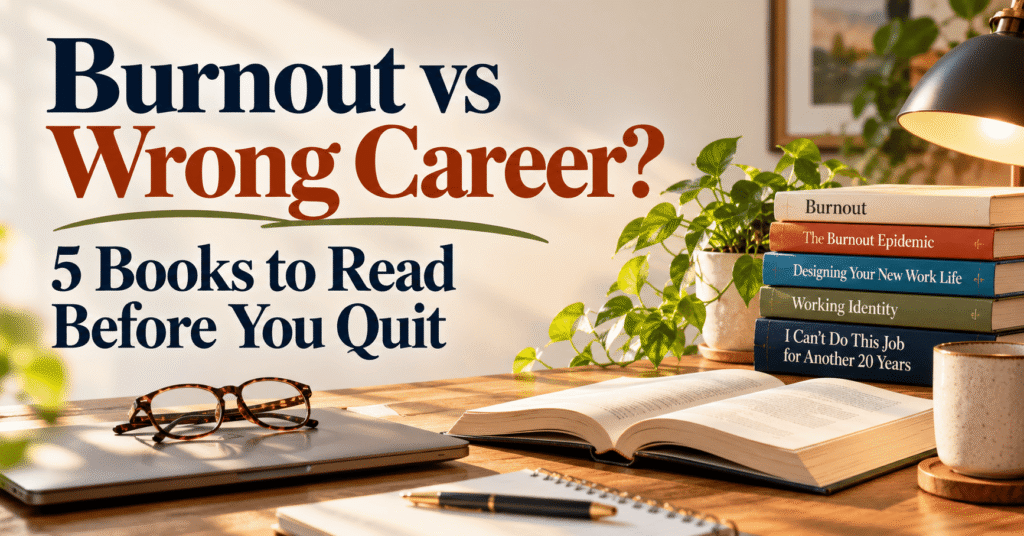
The following five books offer different perspectives on burnout, work-related stress, career satisfaction and making thoughtful decisions about your future.
Why Burnout and Career Dissatisfaction Can Feel So Similar
When work becomes difficult, it’s natural to assume something fundamental needs to change.
Perhaps you’ve lost motivation, become increasingly irritable or stopped enjoying activities that once interested you.
You may find yourself watching the clock, struggling to concentrate or imagining how much better life would be in another profession.
But these experiences don’t automatically mean you’ve chosen the wrong career.
The World Health Organization describes burnout as an occupational phenomenon associated with chronic workplace stress that hasn’t been successfully managed. Its description includes exhaustion, greater mental distance or negativity towards work, and reduced professional effectiveness.
Career dissatisfaction is a broader issue.
You might have manageable working conditions and still feel that your role no longer suits your interests, values or priorities.
And sometimes both problems exist together.
That’s why it’s worth examining your circumstances rather than assuming that every difficult working day is evidence you need to resign.
1. Burnout — Emily Nagoski and Amelia Nagoski
Understanding Why Exhaustion Doesn’t Always Disappear With Rest
If you’re questioning your career because you feel permanently overwhelmed, Burnout: The Secret to Unlocking the Stress Cycle is a useful starting point.
Emily Nagoski and Amelia Nagoski explore stress, emotional exhaustion and the importance of responding to stress rather than simply trying to remove every stressful situation.
A central idea in the book is that dealing with a stressor and addressing the body’s stress response are not necessarily the same thing.
You might finish a difficult project, resolve a workplace disagreement or reach the end of a demanding week, yet still feel tense and depleted.
That distinction is valuable when you’re considering a major career change.
Sometimes the immediate priority isn’t choosing a new profession. It’s recognising that your current level of stress may be affecting how you experience work and make decisions.
The book also explores the influence of social expectations and the pressure to keep meeting other people’s needs.
Although its discussion particularly addresses women’s experiences, some of its broader ideas about stress and exhaustion may resonate with other readers too.
Why it’s worth reading: It encourages you to understand and respond to exhaustion rather than automatically treating it as proof that your career is wrong.
Best for: Readers who feel emotionally drained and want to understand why simply taking time off hasn’t always felt sufficient.

2. The Burnout Epidemic — Jennifer Moss
When the Problem Isn’t You, but the Way Work Is Organised
Workplace burnout is often discussed as though it’s an individual problem.
You’re told to manage your time better, improve your morning routine, become more resilient or practise self-care.
Those things may have their place, but what if the underlying problem is the working environment itself?
In The Burnout Epidemic, Jennifer Moss examines workplace burnout and the organisational conditions that can contribute to it.
The book challenges the idea that employees should carry the entire responsibility for coping with unsustainable working conditions.
This is an important distinction.
If you’re dealing with consistently excessive workloads, unclear expectations, inadequate support or a workplace culture that rewards constant availability, improving your personal habits may not be enough.
You might enjoy your profession but dislike the environment in which you’re practising it.
For example, someone working in healthcare might still find the work meaningful but feel worn down by staffing pressures and demanding schedules.
An IT professional might enjoy solving technical problems but struggle with relentless on-call responsibilities.
Those situations don’t automatically require an entirely new career.
They may require changes to workloads, boundaries, support, employers or working arrangements.
Why it’s worth reading: It helps readers consider whether the structure and culture of their workplace are contributing to their difficulties.
Best for: People who still value their profession but feel overwhelmed by the demands of their current organisation.
3. Designing Your New Work Life — Bill Burnett and Dave Evans
Rethinking Work Before Deciding You Need to Leave
When you’re unhappy at work, it’s easy to imagine that happiness must exist somewhere else.
A different company. A different industry. Perhaps a completely different profession.
But what if there are opportunities to improve your working life without immediately abandoning your career?
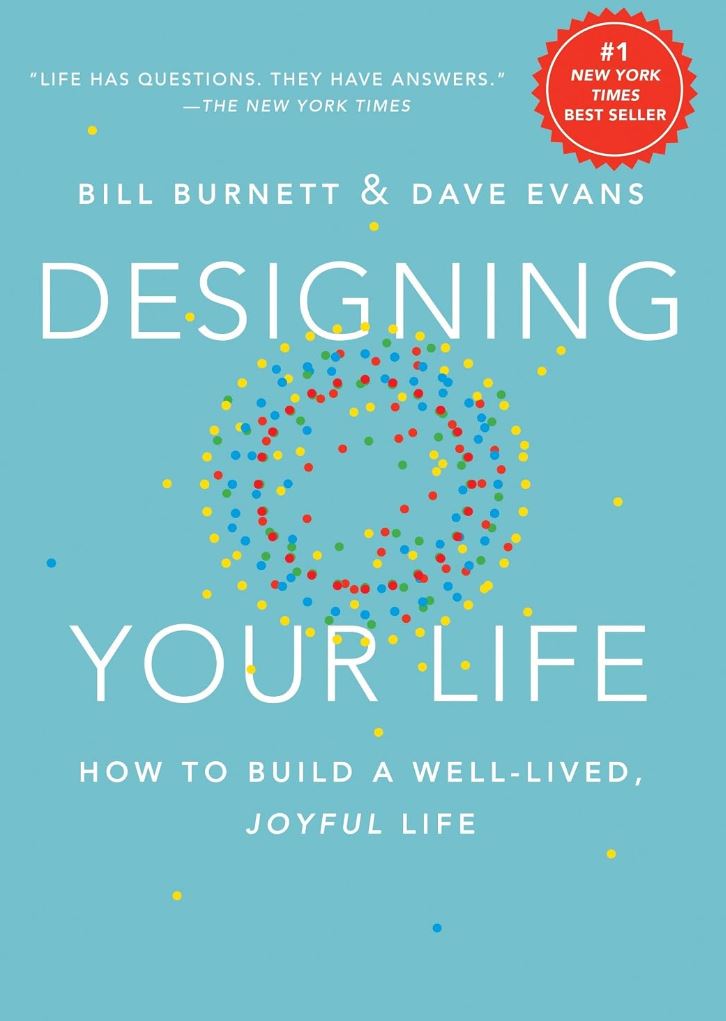
Designing Your New Work Life by Bill Burnett and Dave Evans applies design-thinking ideas to the challenges of modern work.
The book encourages readers to approach their working lives with curiosity, experiment with possibilities and rethink situations that feel frustrating or limiting.
This perspective is particularly useful when you’re unsure whether you’re exhausted by your current circumstances or genuinely ready for a different direction.
Rather than treating the decision as a choice between staying miserable and quitting everything, you can begin exploring smaller changes.
Could you adjust your responsibilities?
Would a different team or employer provide a healthier environment?
Are there aspects of your work you’d like to spend more time doing?
The answers won’t always be within your control, but investigating them can help you understand the problem more clearly.
Why it’s worth reading: It offers practical ways to reconsider your working life before committing to a major career transition.
Best for: Readers who feel stuck but aren’t convinced that changing careers is the only answer.
4. Working Identity — Herminia Ibarra
Recognising When You’ve Genuinely Outgrown Your Career
Sometimes the problem isn’t exhaustion.
Sometimes you’ve changed.
The career you chose fifteen or twenty years ago may have suited your interests, priorities and circumstances at the time.
But those things don’t necessarily remain the same forever.
In Working Identity, Herminia Ibarra explores professional reinvention and how people move towards new career identities.
One of the book’s valuable insights is that career change often involves experimentation rather than discovering a perfect answer through reflection alone.
That matters because dissatisfaction doesn’t always come with a clear alternative.
You might know that your current work no longer feels meaningful but have little idea what you’d prefer to do instead.
Rather than waiting for complete certainty, you can investigate different possibilities through conversations, new experiences and small professional experiments.
You might discover that a different role within your industry offers the challenge you’ve been missing.
Or you might find that your interests have moved in a genuinely different direction.
Either way, you learn something useful before making a significant commitment.
Why it’s worth reading: It helps readers understand career reinvention as a process of exploration rather than one dramatic decision.
Best for: People whose work no longer fits their interests or values, even when their workload is manageable.
5. I Can’t Do This Job for Another 20 Years — Julian Merren
Finding Out What Actually Needs to Change
Sometimes the most frustrating part of career dissatisfaction is not knowing exactly what’s wrong.
You may feel tired, unmotivated or increasingly disconnected from your work.
But does that mean you need a new profession?
Not necessarily.
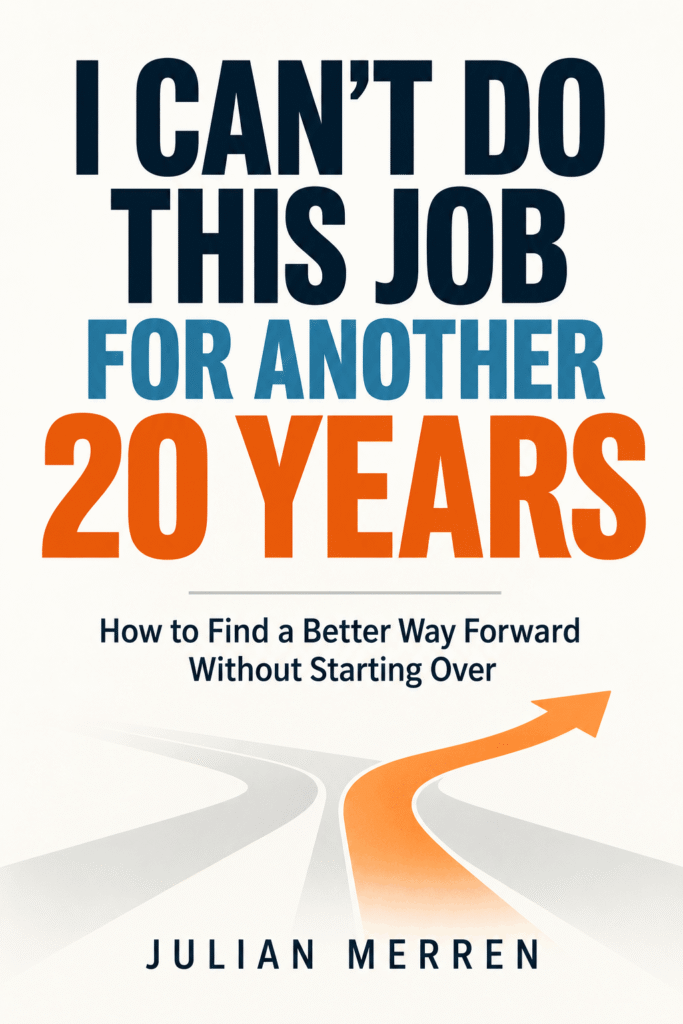
I Can’t Do This Job for Another 20 Years by Julian Merren addresses this uncertainty directly.
The book is written for people who have spent years building a career but are beginning to question whether they want to continue along the same path.
Rather than encouraging an immediate resignation, it focuses on understanding what needs to change.
Is it the work itself?
The employer?
The hours or working conditions?
The lack of opportunity?
Or have your priorities shifted as you’ve got older?
Those questions matter because different problems require different solutions.
Someone exhausted by an unsustainable roster might benefit from a different working arrangement. Someone who no longer enjoys the fundamental nature of their profession may need to explore a broader career transition.
The book includes practical exercises, decision-making frameworks and a 30-day challenge designed to help readers consider their options while respecting financial security and family responsibilities.
Why it’s worth reading: It helps you distinguish between dissatisfaction with your current circumstances and the need for a more substantial career change.
Best for: Experienced workers who know something needs to change but aren’t sure whether they need a new job, employer or career.
Explore the book: I Can’t Do This Job for Another 20 Years by Julian Merren.
Burnout vs Wrong Career: Five Questions Worth Asking Yourself
Reading can offer useful perspectives, but understanding your own circumstances requires looking closely at what’s happening in your working life.
Before making a major decision, consider these five questions.
1. Do I Still Enjoy Any Part of My Work?
Think about the tasks, responsibilities or interactions that still interest you.
If you enjoy the work itself but dislike the conditions surrounding it, a different environment may be worth investigating.
If even the core activities no longer appeal to you, that may be a reason to explore other directions.
2. Does My Dissatisfaction Change When My Workload Changes?
Notice whether your feelings towards work improve during less demanding periods.
This isn’t a definitive test. Exhaustion can persist beyond a short break, and career dissatisfaction can coexist with workplace stress.
But recognising patterns may help you ask more useful questions.
3. What Would I Change If I Could Keep My Current Career?
Imagine staying in your profession but changing your employer, hours, responsibilities or working environment.
Would that make a meaningful difference?
If the answer is yes, you may have options that don’t involve starting over.
4. Am I Attracted to Another Career, or Mainly Trying to Escape This One?
Wanting to escape difficult circumstances is understandable.
But leaving something unpleasant isn’t the same as moving towards something suitable.
If another profession interests you, investigate what the everyday work actually involves before committing to it.
5. What Support or Changes Do I Need Right Now?
If you’re struggling with significant exhaustion or distress, prioritise appropriate support rather than expecting a career decision to resolve everything.
That might involve discussing working conditions with your employer, seeking professional advice or talking with a qualified healthcare professional.
Books can help you reflect, but they aren’t a substitute for individual support.
What to Do Before Making a Career Decision
If you’re caught between exhaustion and uncertainty, try separating your immediate needs from your longer-term career questions.
First, identify any urgent problems affecting your wellbeing or ability to work safely. Those deserve attention regardless of whether you eventually change careers.
Next, write down the specific aspects of your job that feel unsustainable or unfulfilling.
Then consider which changes might be possible within your current role or industry.
Finally, investigate one realistic alternative without committing to it immediately.
You don’t need to decide your entire future in a single weekend.
Sometimes the most productive step is gathering information and creating enough space to think clearly.
Final Thoughts: Don’t Confuse Exhaustion With a Permanent Career Decision
The burnout vs wrong career question doesn’t always have a simple answer.
You may be exhausted by difficult working conditions. You may have outgrown your profession. Or you may be experiencing a combination of both.
What matters is recognising that feeling unhappy at work doesn’t automatically tell you which decision to make.
Before walking away from years of experience, give yourself permission to understand what’s happening.
These five books can help you consider different explanations, explore practical options and approach your next move with greater clarity.
And if you’re wondering whether you need a completely new career or simply a better way of working, I Can’t Do This Job for Another 20 Years by Julian Merren offers a practical starting point.
You don’t have to decide everything today. Understanding what needs to change is progress in itself.