
You decide that this time will be different.
You’re going to exercise regularly, read every evening, finish that project, or finally establish a routine you’ve been putting off for months.
For the first few days, everything goes well. You feel motivated, productive, and confident that you’ve found your rhythm.
Then something interrupts your plans.
A demanding day at work. An unexpected responsibility. A missed workout. An evening when you simply don’t feel like doing anything.
Before long, you’re making the same promise again.
I’ll start fresh on Monday.
If you’ve ever asked yourself, “Why do I keep starting over with habits?”, you’re certainly not alone in facing this frustrating pattern.
The difficulty isn’t always a lack of determination. Sometimes the problem lies in the way we’ve designed our routines, the expectations we’ve placed on ourselves, or how we respond when things don’t go perfectly.
Fortunately, several excellent books approach these challenges from different perspectives.
Here are five worth exploring if you’re tired of starting over and want to develop a more practical approach to lasting change.
Why Do I Keep Starting Over With Habits?
One of the biggest mistakes people make when developing new habits is expecting every day to go according to plan.
You create an ambitious routine when you’re feeling enthusiastic, but that routine may depend on having plenty of time, energy, and motivation.
When ordinary life becomes demanding, maintaining it suddenly feels much harder.
Another common difficulty is all-or-nothing thinking.
You miss one planned session and feel as though you’ve ruined your progress. Instead of returning to the routine, you decide to abandon it temporarily and begin again when circumstances improve.
But here’s something worth remembering.
Missing a day isn’t the same as losing all the progress you’ve made.
Building consistency often involves learning how to continue after interruptions, rather than repeatedly attempting to create the perfect beginning.
The following books can help you approach that challenge from five different angles.
1. Atomic Habits — James Clear
Best for: Building Better Systems Instead of Relying on Motivation
Atomic Habits, by James Clear, is one of the most recognisable books on habit formation, and for good reason.
Its central message is that meaningful improvement doesn’t always require dramatic changes. Small behaviours, repeated consistently, can contribute to substantial progress over time.
Clear explains how the systems surrounding our actions influence whether habits become easier or harder to maintain.
Instead of concentrating only on the outcome you want, the book encourages you to examine the repeated behaviours that move you towards that outcome.
For someone who keeps starting over, this is an important distinction.
You might want to become healthier, more organised, or more productive. But unless you establish realistic actions that fit your daily life, those ambitions can remain little more than intentions.
What you can take from this book:
- Choose small actions that are realistic enough to repeat.
- Make useful behaviours easier to begin.
- Pay attention to your environment rather than relying entirely on willpower.
Atomic Habits is particularly useful if your goals are clear but your daily routines keep falling apart.
2. Tiny Habits — BJ Fogg
Best for: Making New Habits Feel Manageable
If you regularly begin with ambitious plans and abandon them after a few days, Tiny Habits by BJ Fogg offers a refreshingly manageable approach.
Fogg’s method concentrates on making desired behaviours extremely small and connecting them to existing routines.
The idea is straightforward: a new habit becomes easier to attempt when it doesn’t demand a significant amount of additional effort.
For example, instead of immediately committing to a lengthy daily exercise routine, you might begin with a much smaller movement-related action attached to something you already do.
That doesn’t mean the small action must remain your entire routine forever.
It gives you a practical starting point that can become more established before you increase your expectations.
This approach is particularly helpful for people who repeatedly attempt too much at once.
What you can take from this book:
- Begin with a behaviour that feels genuinely manageable.
- Connect it to an existing daily activity.
- Make establishing the routine your initial priority.
Tiny Habits is a worthwhile choice if your enthusiasm regularly produces plans that are difficult to sustain.
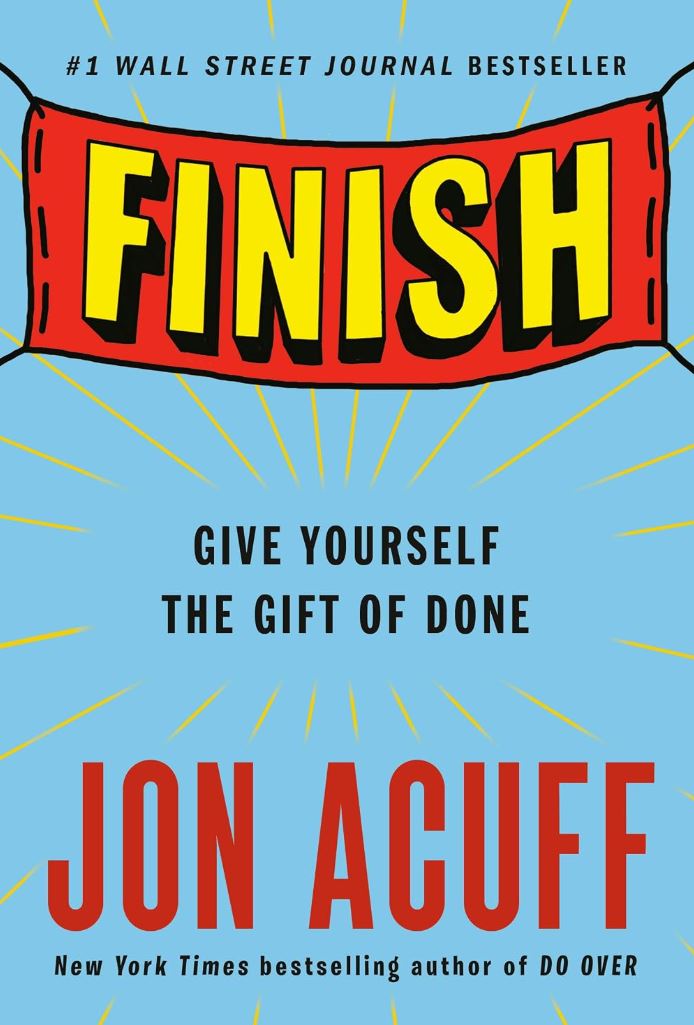
3. Finish: Give Yourself the Gift of Done — Jon Acuff
Best for: People Who Start Plenty of Things but Rarely Finish
Some people have no trouble beginning new projects.
They have ideas, make plans, buy the necessary equipment, and approach their goals with genuine enthusiasm.
The difficulty comes later.
When the work becomes repetitive, progress slows, or the results aren’t quite what they expected, another project begins to seem more appealing.
Finish: Give Yourself the Gift of Done by Jon Acuff addresses this familiar problem.
Rather than presenting achievement as a constant battle to become more demanding of yourself, Acuff examines how perfectionism and unrealistic expectations can interfere with completion.
An especially useful theme is the importance of allowing a goal to be achievable rather than insisting that every result must be exceptional.
Think about an unfinished writing project.
If you believe every paragraph needs to be excellent before moving forward, progress can become frustratingly slow.
Sometimes finishing a reasonable first draft is more useful than endlessly improving the opening page.
What you can take from this book:
- Recognise when perfectionism is preventing progress.
- Reduce unnecessary expectations that make goals harder to finish.
- Give completion the attention it deserves.
This is an excellent option if your biggest struggle isn’t starting a habit or project, but following it through to the end.
4. The Now Habit — Neil Fiore
Best for: Understanding Procrastination and Getting Started
Procrastination is often described as a problem of poor time management.
But avoiding a task can involve much more than failing to organise your schedule.
Sometimes you’re worried about making mistakes. Sometimes the task feels overwhelming. At other times, you’re placing so much pressure on yourself that beginning becomes unpleasant.
The Now Habit by Neil Fiore explores the relationship between procrastination, pressure, and the way we approach demanding work.
One of its most helpful contributions is encouraging readers to reconsider how they structure work and rest.
Rather than treating every unfinished task as evidence that you need to push yourself harder, the book offers a more considered approach to beginning and managing your responsibilities.
For someone who repeatedly restarts goals, this can be valuable.
If every attempt is associated with pressure and frustration, beginning again may become increasingly difficult.
What you can take from this book:
- Identify the situations that trigger procrastination.
- Make the beginning of a task less intimidating.
- Create a more balanced relationship between productive work and rest.
The Now Habit is particularly relevant if you understand what you need to do but continually find reasons to postpone it.
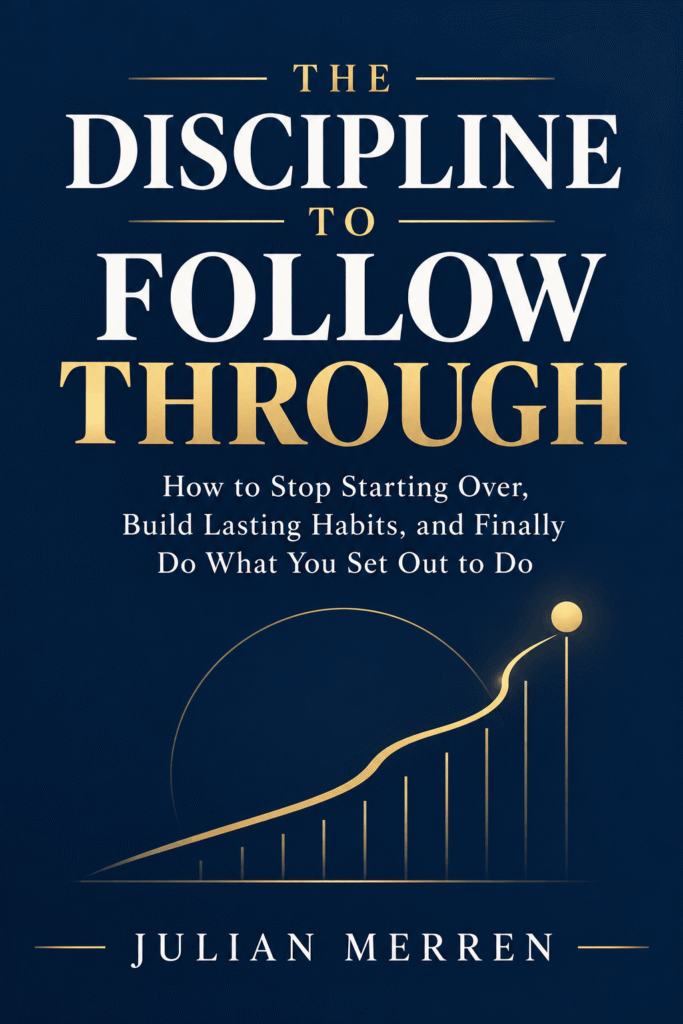
5. The Discipline to Follow Through — Julian Merren
Best for: Breaking the Cycle of Starting Over and Building Lasting Consistency
If you’ve ever promised yourself that this time would be different, only to find yourself starting over a few weeks later, The Discipline to Follow Through by Julian Merren addresses that exact struggle.
The book explores why good intentions often fall apart and offers a practical approach to building habits that work in everyday life.
Rather than encouraging readers to rely on endless motivation or become perfectly disciplined, it focuses on making realistic commitments, taking consistent action, and learning how to recover when things don’t go according to plan.
One particularly useful aspect is its emphasis on developing a personal follow-through system.
Readers are encouraged to understand their obstacles, simplify their commitments, and create routines they can realistically maintain.
What you can take from this book:
- Build manageable habits without trying to change everything at once.
- Overcome procrastination and continue when motivation fades.
- Recover from missed commitments without abandoning your progress.
The book also comes with a 30-Day Follow-Through Workbook, featuring practical daily assignments, weekly checkpoints, and exercises to help turn the lessons into action.
If you’re tired of repeatedly beginning again, this is a relevant choice for learning how to keep moving forward.
Discover The Discipline to Follow Through and its companion workbook
Which Book Should You Read First?
The right choice depends on where your habits usually break down.
If your routines are too complicated, start with Atomic Habits or Tiny Habits. Both focus on making positive behaviours easier to establish.
If you enjoy beginning projects but struggle to complete them, consider Finish: Give Yourself the Gift of Done.
If procrastination regularly prevents you from getting started, The Now Habit offers a useful perspective on managing avoidance and pressure.
And if your biggest difficulty is staying consistent when motivation fades, responsibilities increase, or plans fall apart, The Discipline to Follow Through brings those challenges together in one practical guide.
You don’t need to read all five immediately.
In fact, choosing one book and applying what you learn is likely to be more useful than collecting another pile of advice you never put into practice.
A Simple Way to Stop Starting Over
Before beginning another ambitious routine, try this small exercise.
Choose one goal you’ve been struggling to maintain.
Then answer three questions:
- What’s the smallest meaningful action I can repeat? Choose something that contributes directly to the goal.
- When will I realistically do it? Connect the action to a specific opportunity in your normal routine.
- What will I do if I miss a session? Decide how you’ll return without treating the interruption as a complete failure.
Keep your answers simple.
You don’t need another complicated system or a dramatic declaration that everything will change tomorrow.
You need a realistic next step and a sensible way to continue.
Final Thoughts
If you’ve been wondering, “Why do I keep starting over with habits?”, remember that the answer may have more to do with your approach than your ability.
Perhaps you’ve been attempting too much, demanding perfection, or relying on enthusiasm to carry you through every difficult moment.
The five books above offer different ways to reconsider those habits and begin developing something more sustainable.
Choose the one that addresses your biggest obstacle, take one useful idea from it, and give that idea a fair opportunity to work.
Because lasting change isn’t necessarily about making a better fresh start.
Sometimes it’s about learning how to continue without needing another one.