

There never seems to be enough time.
You get up, prepare for the day, deal with work, manage responsibilities, answer messages and somehow reach the evening wondering where all the hours disappeared.
You’d like to exercise more regularly, read a few books, improve your finances or develop a healthier daily routine.
But finding time for those things can feel almost impossible.
Every new habit seems to require another commitment, and your schedule is already full.
So you make ambitious plans when life is relatively quiet, only to abandon them when everything becomes demanding again.
If you’ve been searching for books about habits for busy people, you probably don’t need someone telling you to wake up at five in the morning or squeeze another dozen activities into your day.
You need practical advice that recognises a simple reality: your time and energy are limited.
Fortunately, several excellent books approach habit-building from that perspective.
Here are five recommendations for creating better routines without expecting your entire life to revolve around them.
Why Building Habits Can Be Harder When You’re Busy
Many popular self-improvement routines look wonderful on paper.
Exercise for an hour every morning. Read for thirty minutes each evening. Prepare healthy meals, meditate, keep a journal and spend time learning something new.
Individually, those activities may be worthwhile.
Together, they can become another demanding schedule.
The problem is that habits don’t exist separately from the rest of your life.
They compete with work, family responsibilities, household tasks, social commitments and the occasional need to simply relax.
When you’re already stretched, even a positive change can begin to feel like another obligation.
That’s why developing better habits isn’t always about finding more motivation.
Sometimes it’s about making your routines smaller, choosing fewer priorities and reducing the effort required to follow through.
The five books below explore those possibilities from different angles.
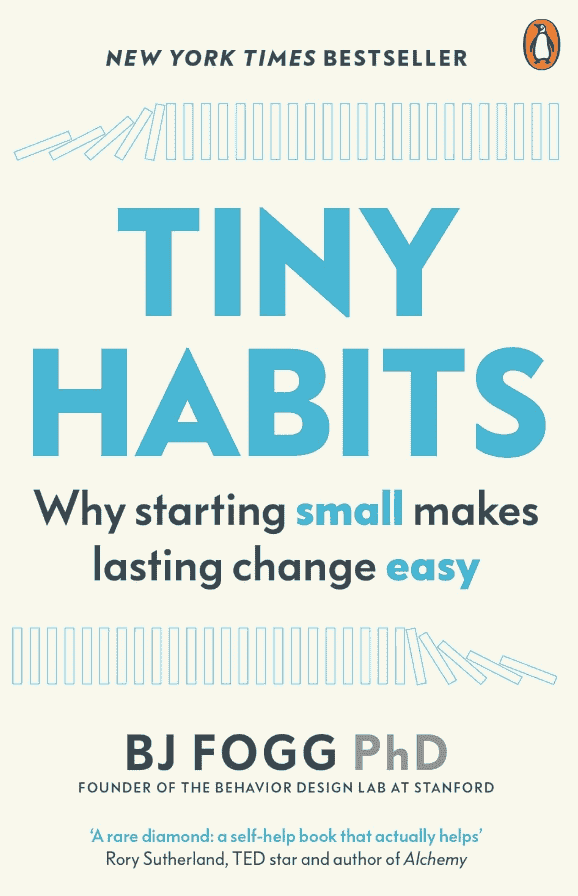
1. Tiny Habits — BJ Fogg
Best for: Creating Habits That Take Very Little Time
Tiny Habits by BJ Fogg offers a particularly useful approach for people who feel they don’t have enough time to develop new routines.
Rather than beginning with dramatic lifestyle changes, Fogg encourages readers to start with extremely small behaviours connected to things they already do.
The idea is to make the desired action easy enough that getting started doesn’t require a major effort.
Imagine you’ve been meaning to improve your fitness.
Instead of committing immediately to a demanding daily workout, you might begin with a brief movement-related action attached to an existing part of your morning.
Or perhaps you want to read more.
You could start with a single page after making your evening cup of tea.
These actions may seem insignificant, but the point is to establish a behaviour you can realistically repeat.
For a deeper understanding of why simple actions can be easier to maintain, explore Stanford’s Fogg Behavior Model, which explains how motivation, ability and a prompt influence behaviour.
Fogg also emphasises recognising small successes, rather than constantly focusing on everything you haven’t achieved.
What you can learn:
- Start with manageable actions instead of ambitious overhauls.
- Connect new behaviours to familiar daily routines.
- Make habits easier to repeat on demanding days.
Tiny Habits is especially relevant if you’ve repeatedly created routines that require more time and energy than you can comfortably give them. Penguin Books Australia
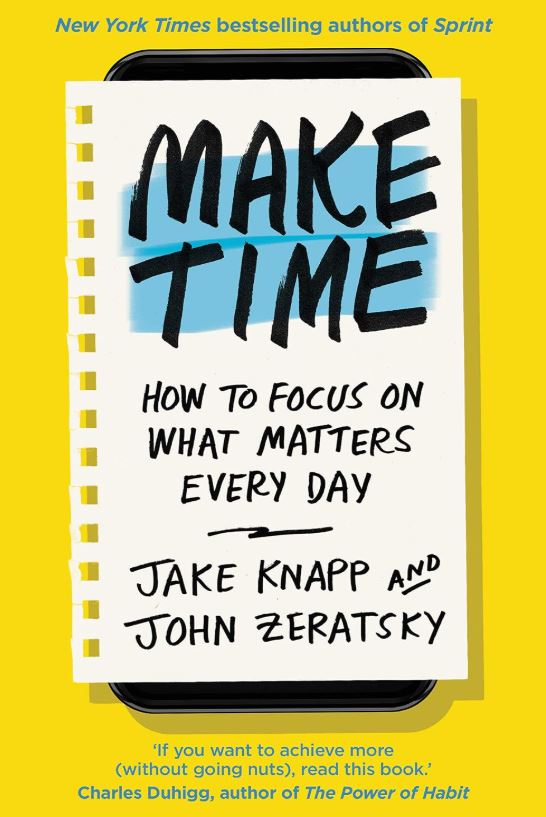
2. Make Time — Jake Knapp and John Zeratsky
Best for: Making Room for What Matters Most
Being busy and making progress towards meaningful goals aren’t always the same thing.
You can spend an entire day dealing with urgent responsibilities without finding even fifteen minutes for something you genuinely care about.
In Make Time, Jake Knapp and John Zeratsky explore practical ways to design your day around important activities rather than allowing distractions to consume every available moment.
One of their central ideas is choosing a daily highlight.
Instead of trying to accomplish everything, you identify one meaningful activity that deserves deliberate attention.
Perhaps you want to finish a chapter of a book, exercise, spend uninterrupted time with your family or make progress on a personal project.
The aim isn’t to ignore your responsibilities.
It’s to recognise that important activities often need a place in your schedule before less meaningful demands take over.
The book also offers ways to manage digital distractions and reflect on which approaches work best for you.
What you can learn:
- Choose a realistic daily priority.
- Reduce distractions that consume useful time.
- Make deliberate space for meaningful activities.
If your days constantly feel full but your personal goals rarely receive attention, Make Time offers a practical change in perspective. Penguin Books Australia
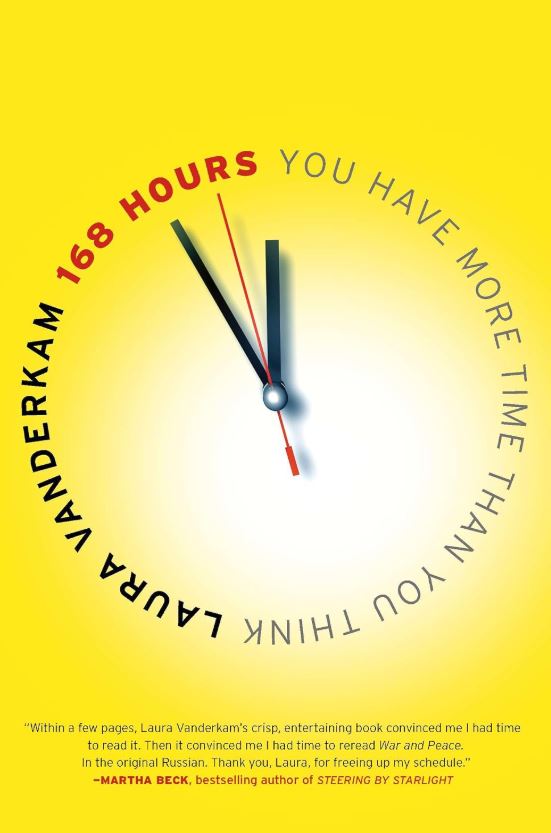
3. 168 Hours: You Have More Time Than You Think — Laura Vanderkam
Best for: Understanding Where Your Time Actually Goes
Sometimes the difficulty isn’t simply that we’re busy.
It’s that we don’t have a particularly clear picture of how our available time is being used.
In 168 Hours, Laura Vanderkam encourages readers to examine their schedules across an entire week rather than thinking only in terms of individual days.
This provides a different perspective on how work, rest, responsibilities and personal activities fit together.
Consider someone who wants to read more but struggles to find an uninterrupted hour every evening.
Looking at the entire week might reveal shorter opportunities that would be easier to use.
Perhaps there’s time on a weekend morning or a quiet period during the commute, provided reading would be safe and practical.
The point isn’t to fill every available moment with another task.
It’s to become more aware of where your time goes and decide which activities deserve priority.
For people with demanding schedules, that awareness can be more useful than another unrealistic daily timetable.
What you can learn:
- Examine your week rather than concentrating only on busy days.
- Identify activities that deserve more deliberate attention.
- Plan around your actual responsibilities and priorities.
168 Hours is worth considering if you frequently feel short of time but haven’t examined how your week is structured. Penguin Books Australia
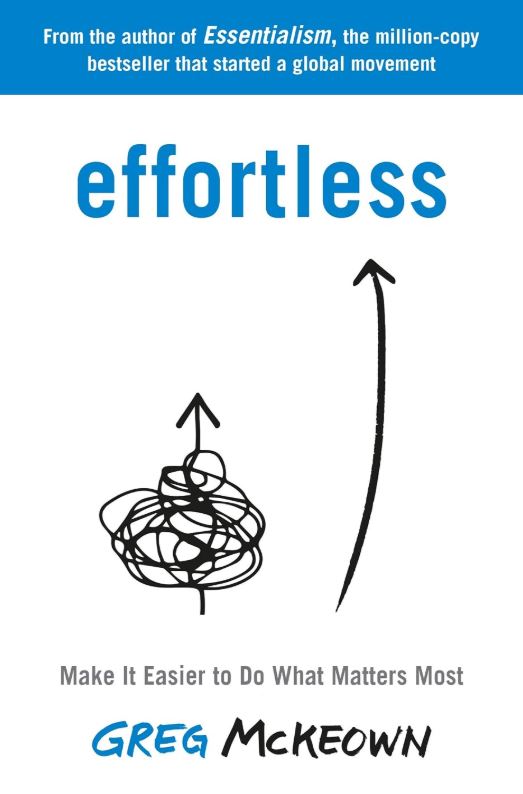
4. Effortless: Make It Easier to Do What Matters Most — Greg McKeown
Best for: Making Important Activities Less Demanding
When life becomes busy, our first instinct is often to push harder.
We try to become more efficient, extend our working hours and squeeze additional responsibilities into whatever time remains.
But sometimes the better approach is to make important activities easier.
In Effortless, Greg McKeown explores ways to simplify meaningful work and reduce unnecessary effort.
Rather than treating every worthwhile goal as something that must involve enormous sacrifice, the book encourages readers to find more sustainable approaches.
For example, suppose you want to prepare healthier meals during the working week.
You might struggle with elaborate recipes and daily decisions about what to cook.
A simpler routine involving a few familiar meals and basic preparation could make the habit easier to maintain.
The same principle can apply to learning, organising your home or working towards personal goals.
Not everything can be made easy.
But unnecessary complexity often makes useful behaviours harder than they need to be.
What you can learn:
- Simplify routines by removing unnecessary steps.
- Establish a sustainable pace instead of continually pushing harder.
- Make important activities easier to approach.
Effortless is particularly relevant if your self-improvement plans regularly become another source of pressure. Penguin Books Australia
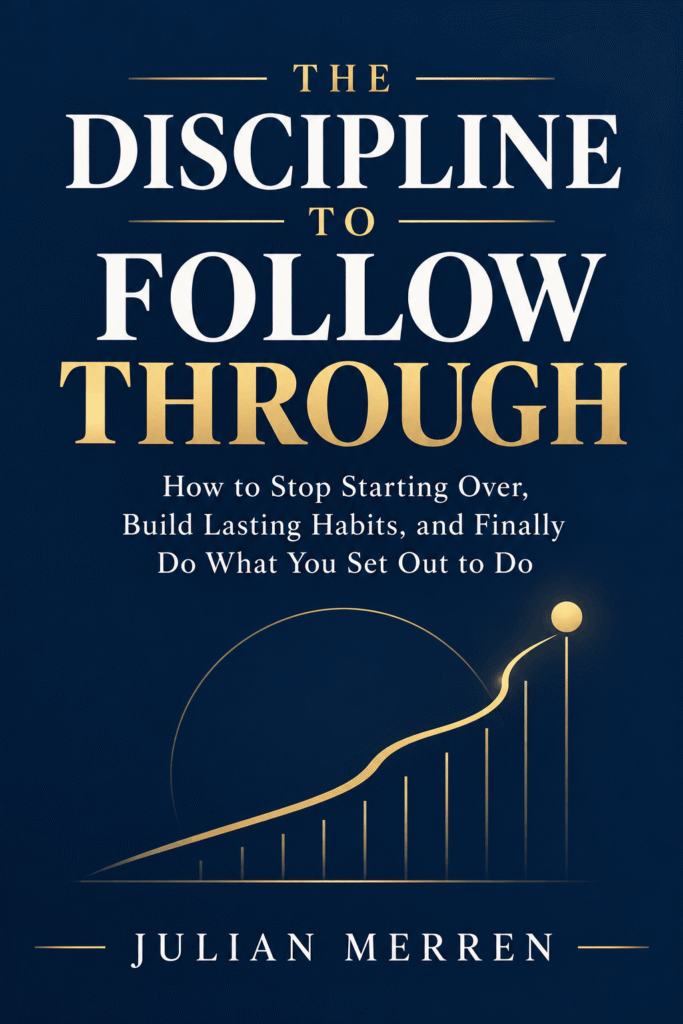
5. The Discipline to Follow Through — Julian Merren
Best for: Maintaining Habits When Life Gets Demanding
Even when you’ve simplified your routines and made time for meaningful activities, there will still be interruptions.
Work becomes demanding.
Family responsibilities change.
You feel tired, miss a planned session or discover that the routine you created no longer fits your circumstances.
That’s where The Discipline to Follow Through by Julian Merren becomes particularly relevant.
The book explores how to make realistic commitments, build manageable habits, overcome procrastination and continue when motivation fades.
Rather than expecting perfect discipline, it focuses on developing practical systems that work within everyday life.
An important theme is learning how to recover when things don’t go according to plan.
You may miss a day or need to adjust your schedule.
That doesn’t automatically mean abandoning the entire routine.
Sometimes the most useful response is to choose the next manageable action and continue from there.
The book also includes a separate 30-Day Follow-Through Workbook, featuring daily assignments and weekly checkpoints designed to help readers apply what they’ve learned.
What you can learn:
- Build routines that fit your available time and energy.
- Make realistic commitments rather than attempting too much.
- Continue when motivation fades or responsibilities increase.
- Recover from setbacks without repeatedly starting over.
If you’re tired of making promising plans that fall apart whenever life gets busy, this book offers a practical approach to maintaining consistency.
Discover The Discipline to Follow Through and its 30-Day Companion Workbook
Which Books About Habits for Busy People Should You Read First?
The most useful choice depends on your biggest challenge.
If your new routines regularly demand too much time, begin with Tiny Habits.
If important personal activities disappear beneath everyday distractions, consider Make Time.
If you want a clearer picture of your available time, 168 Hours offers a broader perspective.
If your routines feel unnecessarily complicated, Effortless encourages simplification.
And if your biggest difficulty is maintaining commitments when life becomes demanding, The Discipline to Follow Through focuses on practical consistency.
You don’t need to read all five immediately.
Choose the book that most closely addresses your situation and concentrate on applying one idea.
Three Simple Ways to Build Habits Around a Busy Schedule
Before introducing another activity into an already full day, consider three changes.
1. Create a minimum version of your habit
If your ideal routine involves thirty minutes of reading, decide what a realistic alternative would look like on a demanding day.
Perhaps five minutes is enough to keep the routine manageable.
The smaller version isn’t a failure. It’s a way to adapt.
2. Look for existing opportunities
Instead of automatically adding another appointment to your schedule, consider whether a useful action can fit alongside something you already do.
You might prepare tomorrow’s priorities while finishing work or read a few pages during an established evening break.
Choose arrangements that suit your actual responsibilities.
3. Decide what you’ll stop doing
Sometimes creating space for something worthwhile means reducing time spent elsewhere.
Perhaps there are unnecessary commitments, distractions or overly complicated routines that no longer deserve your attention.
You don’t need to fill every hour.
The aim is to make room for what matters without losing the rest and flexibility that everyday life requires.
Final Thoughts
Finding the right books about habits for busy people can help you rethink what meaningful self-improvement needs to look like.
You don’t necessarily need an elaborate morning routine, endless motivation or an entirely different lifestyle.
Perhaps you need smaller commitments, clearer priorities and a sensible way to continue when your plans are interrupted.
The five books above offer different approaches to those challenges.
Choose one habit that would genuinely improve your life.
Make it realistic enough to fit your circumstances.
Then give yourself permission to build consistency gradually.
Because lasting change doesn’t always require finding more hours in the day.
Sometimes it begins with making better use of the time and energy you already have.