

Have you ever spent an entire evening worrying about something that hasn’t even happened?
Perhaps it’s a conversation you’re dreading, an important decision you haven’t made, or a problem that might never become a problem at all.
Your mind starts with one simple question: What if?
Before long, you’ve imagined every possible outcome, usually concentrating on the worst ones.
If this sounds familiar, you’re certainly not alone. And while worrying about the future is a normal part of life, constantly anticipating problems can leave you mentally exhausted.
That’s where the right books can offer a fresh perspective.
These five books about anticipatory anxiety explore why our minds become preoccupied with future events and how we can develop a healthier relationship with uncertainty.
Some focus on anxious thinking itself. Others explore worry habits, emotional flexibility and the particular challenge of overthinking at night.
Why Do We Worry About Things That Haven’t Happened?
Worry often begins with good intentions.
Your brain wants to keep you safe. It tries to predict potential problems so you’ll be prepared if something goes wrong.
Unfortunately, there’s a difference between preparing for a realistic challenge and mentally rehearsing disasters that may never happen.
Think about an upcoming job interview.
Preparing answers to likely questions is useful. Spending three evenings imagining every possible way you could embarrass yourself is something entirely different.
The second approach rarely leaves you feeling more prepared. Instead, it can make an ordinary situation feel increasingly threatening.
Anticipatory anxiety often involves several familiar patterns:
- Imagining worst-case scenarios before events occur.
- Replaying future conversations in your head.
- Struggling with decisions because something might go wrong.
- Seeking reassurance about things nobody can guarantee.
- Finding it difficult to relax when something uncertain lies ahead.
Recognising these patterns is an important starting point.
The aim isn’t to eliminate every worrying thought. It’s to learn when a thought deserves your attention and when your mind is simply trying to predict an unpredictable future.
1. Overcoming Anticipatory Anxiety — Sally M. Winston and Martin N. Seif
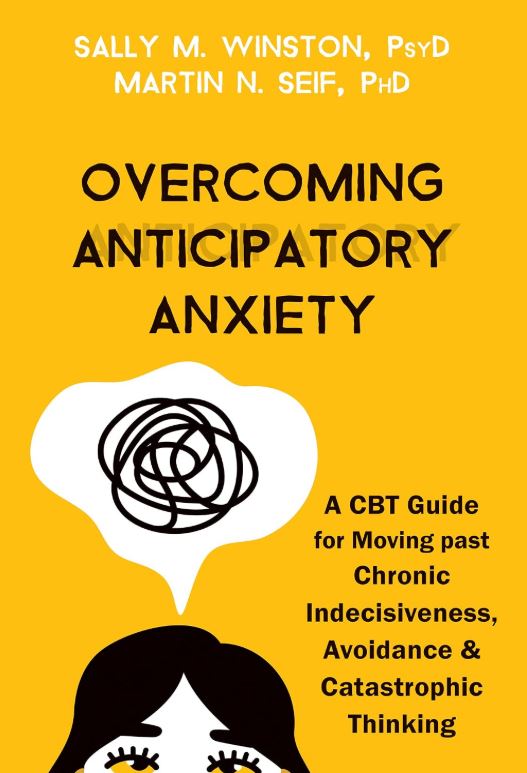
If you’re looking for a book that addresses this particular problem directly, Overcoming Anticipatory Anxiety is an excellent starting point.
The authors explore why people become trapped in future-focused thinking, especially when facing uncertainty, difficult decisions or situations they cannot fully control.
One of the central ideas is that attempting to achieve complete certainty can actually keep anxious thinking going.
You might believe that if you consider every possibility carefully enough, you’ll eventually feel safe.
But what happens when your mind discovers yet another possibility?
Suddenly, you’re back where you started.
The book encourages readers to recognise these mental patterns and learn to move forward without needing every question answered beforehand.
Why this book is worth reading
What makes it especially relevant is its focus on the relationship between uncertainty and avoidance.
Sometimes we postpone decisions because we fear making mistakes. Other times, we avoid experiences simply because we cannot predict how they’ll turn out.
The problem is that avoiding uncertainty can gradually make it feel even more intimidating.
This book offers a structured approach to understanding those reactions and responding more flexibly.
Best for: Readers who struggle with catastrophic thinking, indecision and constantly imagining what could go wrong.
2. The Worry Trick — David A. Carbonell
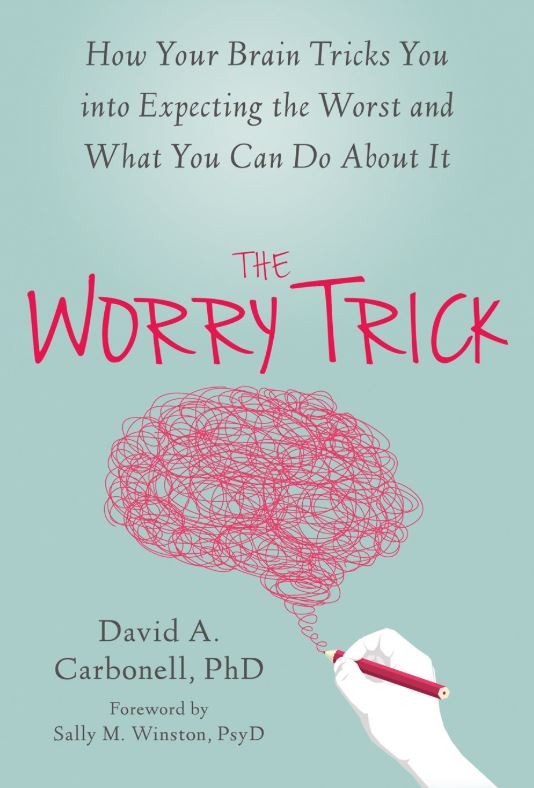
Have you noticed how convincing an anxious thought can feel?
Even when you recognise that you’re worrying unnecessarily, your mind can make the imagined danger seem remarkably real.
In The Worry Trick, psychologist David Carbonell explores how anxiety can trick us into treating possibilities as immediate threats.
The book combines ideas from cognitive behavioural therapy and acceptance-based approaches.
Rather than encouraging readers to fight every anxious thought, Carbonell explains why struggling against worry can sometimes strengthen the cycle.
Why this book is worth reading
Consider what happens when you’re worried about an upcoming event.
You might search online for reassurance, ask someone for their opinion or repeatedly review your plans.
For a moment, you feel better.
Then another uncomfortable question appears.
The reassurance that worked ten minutes ago suddenly doesn’t feel convincing anymore.
The Worry Trick helps readers recognise this pattern and understand why chasing reassurance can become an exhausting habit.
It’s particularly relevant for people who find themselves constantly checking, questioning and mentally preparing for unlikely outcomes.
Best for: People who repeatedly seek reassurance, second-guess themselves or struggle to disengage from anxious thoughts.
3. Unwinding Anxiety — Judson Brewer
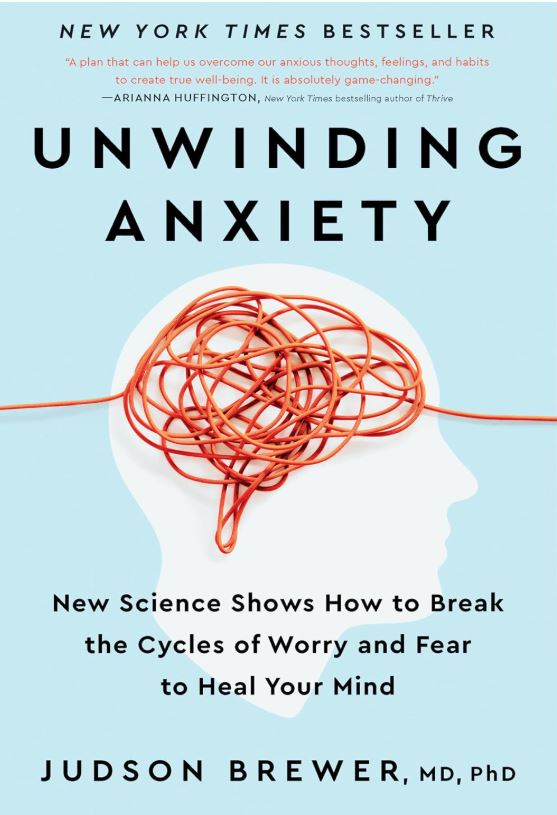
Sometimes worrying doesn’t feel like a deliberate choice.
It feels automatic.
You wake up and immediately start thinking about everything that needs to be done. You check your messages, imagine potential problems and mentally prepare for situations that haven’t happened.
Before you’ve even started your day, your mind is already somewhere in the future.
In Unwinding Anxiety, psychiatrist and neuroscientist Judson Brewer explores anxiety through the lens of habits.
His approach focuses on understanding how repeated thought patterns and behaviours can reinforce themselves.
Why this book is worth reading
One particularly useful perspective is that worrying can become a familiar routine.
Something creates uncertainty.
Your mind responds with anxious thoughts.
You engage with those thoughts because it feels like you’re doing something useful.
And the process repeats.
By becoming more aware of these patterns, readers can begin recognising when they’re responding automatically rather than deliberately.
This doesn’t mean every worry will disappear.
It means you may become better at noticing the moment a familiar cycle begins.
For someone who spends hours anticipating problems, that awareness can be valuable.
Best for: Readers who feel that worrying has become an automatic daily habit.
4. The Happiness Trap — Russ Harris
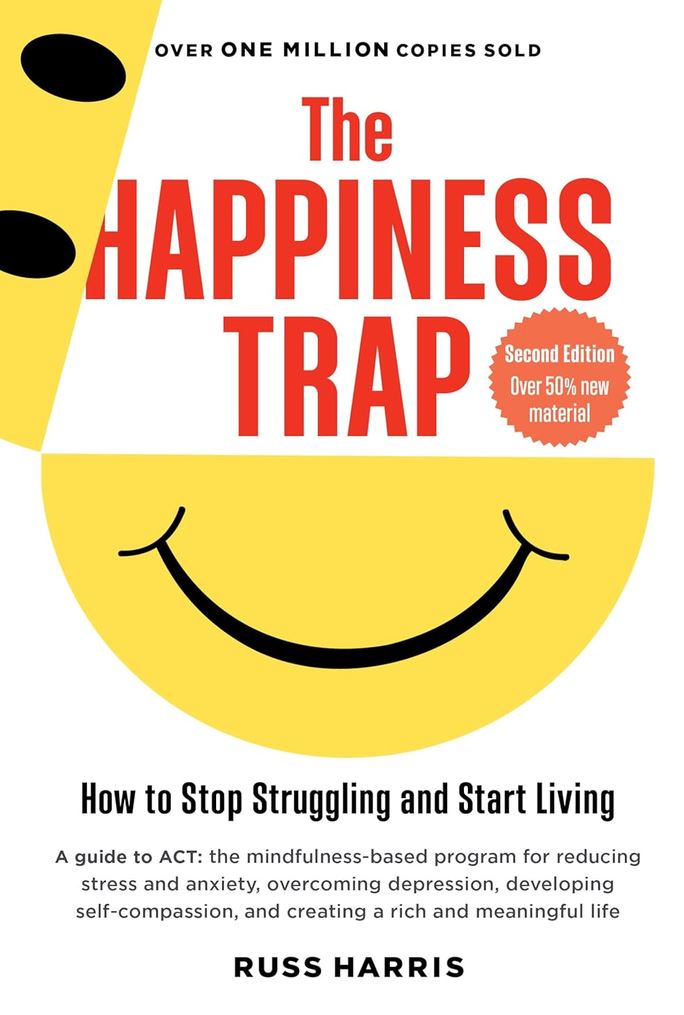
Many people believe they’ll finally enjoy life once they stop feeling anxious.
They postpone decisions until they feel confident.
They avoid opportunities until the fear disappears.
They tell themselves they’ll relax when everything feels certain.
Unfortunately, life rarely provides that kind of certainty.
The Happiness Trap by Russ Harris offers a different perspective.
Drawing on Acceptance and Commitment Therapy, the book explores how people can respond more flexibly to difficult thoughts and emotions while continuing to pursue meaningful goals.
Why this book is worth reading
One of the most useful shifts is learning that you don’t necessarily need to feel completely comfortable before taking action.
Imagine you’ve been putting off something important because you’re afraid of making a mistake.
Instead of waiting until the anxiety disappears, you begin considering whether you can take a reasonable next step while accepting that some uncertainty remains.
That doesn’t mean ignoring genuine risks or making careless decisions.
It means recognising that discomfort doesn’t always have to determine your choices.
For readers searching for books about anticipatory anxiety, this broader approach can offer a refreshing change from constantly trying to control their thoughts.
Best for: People who let fear of future outcomes prevent them from pursuing opportunities, making decisions or enjoying the present.
5. Quiet Nights — Julian Merren
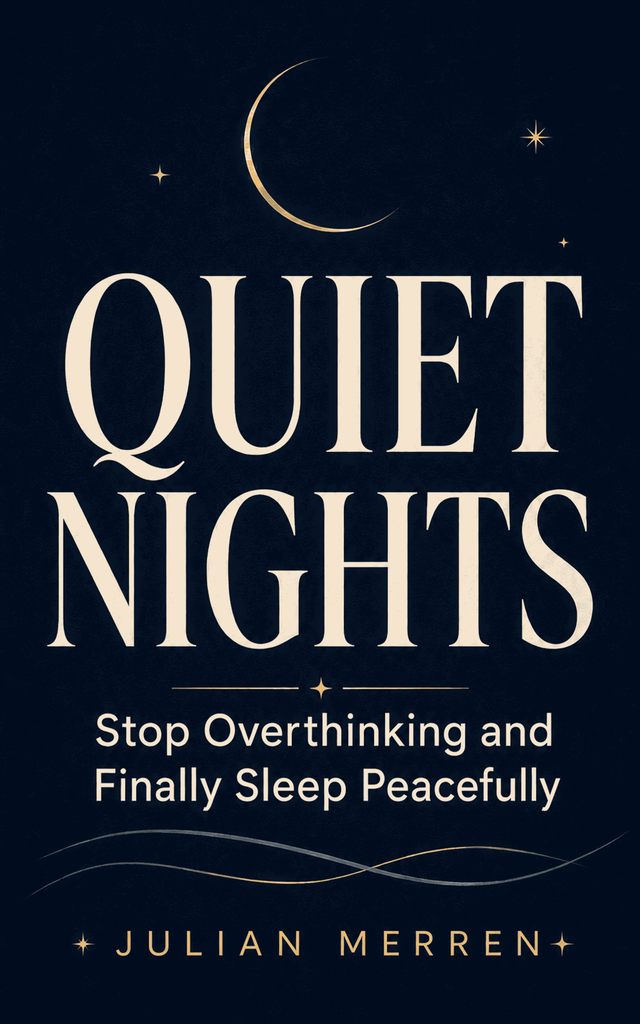
For many people, worrying about the future becomes particularly difficult at night.
During the day, responsibilities and distractions keep the mind occupied.
But when the house becomes quiet and the lights go out, all those unanswered questions seem to demand attention.
What if tomorrow goes badly?
What if I made the wrong decision?
What if something happens that I can’t control?
You might be physically exhausted, yet your mind feels determined to remain active.
This is where Quiet Nights: Stop Overthinking and Finally Sleep Peacefully by Julian Merren fits naturally into the conversation.
The book focuses on the experience of nighttime overthinking and the difficulty of finding mental calm when worries, doubts and unfinished thoughts follow you into bed.
Why this book is worth reading
Anticipatory anxiety doesn’t always involve dramatic fears.
Sometimes it’s simply the inability to stop thinking about tomorrow.
You mentally organise your responsibilities, replay possible conversations or imagine problems that might arise.
The more you think, the harder it becomes to switch off.
Quiet Nights is particularly relevant for readers who recognise this pattern and want to explore a gentler approach to nighttime overthinking.
While the other books on this list examine anxiety from broader psychological perspectives, this one concentrates on the quieter, more personal experience of lying awake with an overactive mind.
It may be a useful companion for readers seeking to create a more peaceful relationship with their thoughts before sleep.
Best for: People whose future-focused worries become especially difficult to manage at bedtime.
Discover Quiet Nights by Julian Merren
Which of These Books About Anticipatory Anxiety Should You Read First?
The most useful choice depends on how your worry tends to appear.
If you frequently imagine worst-case scenarios or struggle with uncertainty, Overcoming Anticipatory Anxiety addresses those experiences directly.
If your mind constantly demands reassurance, The Worry Trick may help you understand why that cycle keeps repeating.
If worrying seems to happen automatically, Unwinding Anxiety explores the habits that can keep anxious thinking active.
If you’re tired of allowing uncertainty to dictate your decisions, The Happiness Trap offers a different way of approaching uncomfortable thoughts.
And if the future seems particularly frightening when you’re lying awake at night, Quiet Nights focuses on that specific experience.
You don’t need to read all five.
Sometimes one thoughtfully chosen book is enough to introduce an idea worth exploring.

A Simple Way to Respond When Future Worries Take Over
Reading can help you understand your thought patterns, but small everyday actions can also be useful.
The next time you find yourself worrying about something that hasn’t happened, consider asking three questions.
Is this a real problem I can address today?
If there’s something practical you can do, identify one manageable action.
Am I trying to predict something I cannot know yet?
If the answer is yes, recognise that further thinking may not provide the certainty you’re seeking.
What deserves my attention right now?
Bringing your attention back to the present can help separate today’s responsibilities from tomorrow’s imagined possibilities.
You may also find it helpful to write your worries down or set aside a short, dedicated period for thinking through concerns rather than allowing them to interrupt the entire day.
These approaches won’t remove every difficult thought, but they can help you distinguish useful planning from repetitive worrying.
Final Thoughts: You Don’t Have to Solve Tomorrow Today
The future will always contain uncertainty.
There will be conversations you cannot predict, decisions without perfect answers and situations that unfold differently from what you expected.
Constantly worrying about those possibilities doesn’t necessarily make you better prepared.
Sometimes, it simply makes today more difficult than it needs to be.
The best books about anticipatory anxiety remind us that we can learn to respond differently to uncertainty.
We can recognise unhelpful thinking patterns, develop more flexible habits and begin making decisions without demanding complete guarantees.
And perhaps most importantly, we can gradually learn to give the present a little more of our attention.
If your worries tend to follow you into bed, explore Quiet Nights by Julian Merren for a book focused on nighttime overthinking and finding a calmer approach to rest.
Tomorrow will arrive when it arrives.
You don’t have to live through it twice.