
Who remembers when the bills are due? Who notices that the groceries are running low? Who keeps track of birthdays, appointments, school events and all those little things that make everyday life run smoothly?
In many relationships, one partner becomes the person who remembers almost everything.
And while the other partner may contribute plenty of physical work, the responsibility for planning, organising and keeping track of everything can remain surprisingly unequal.
This is often called the mental load — the invisible thinking and organising that happens behind the scenes of everyday family life.
If you’ve been looking for books about mental load in relationships, these five thoughtful reads explore why this imbalance develops, how it affects couples and what sharing responsibility more fairly might look like.
Because a balanced relationship isn’t simply about dividing chores. It’s also about sharing the responsibility for remembering that those chores need doing.
What Is the Mental Load in a Relationship?
The mental load is everything that happens before a task gets completed.
Consider something as ordinary as booking a dentist appointment.
Making the phone call might take five minutes.
But someone first needs to remember that the appointment is due, check everyone’s availability, find a suitable time, arrange transport if necessary and make sure it doesn’t conflict with something else.
That’s the mental load.
The actual appointment is only the visible result of several smaller responsibilities.
This can happen throughout everyday life:
- Remembering household supplies before they run out.
- Planning meals and keeping track of groceries.
- Organising family appointments and commitments.
- Anticipating what children or other family members will need.
- Making sure important tasks don’t fall through the cracks.
These responsibilities aren’t always distributed equally, even when both partners believe they’re contributing.
Over time, the person carrying most of the mental load may begin feeling exhausted, unappreciated or frustrated.
The difficulty is that invisible work can be hard to recognise until someone explains just how much of it they’re doing.
Fortunately, several excellent books explore this subject from different perspectives.
1. Fair Play — Eve Rodsky
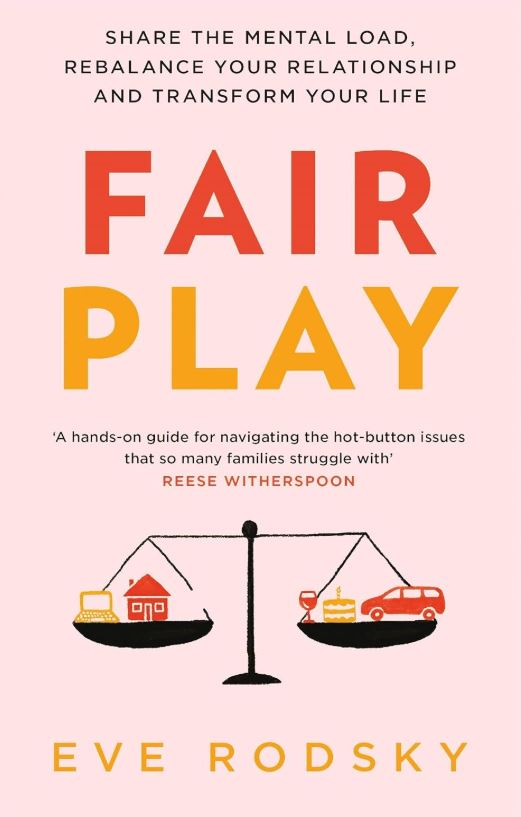
Fair Play is one of the most directly relevant books for couples struggling with unequal household responsibilities.
Eve Rodsky explores the often-unrecognised work involved in managing a home and introduces a practical system for dividing responsibilities more fairly.
Rather than treating household tasks as occasional favours, the book encourages couples to consider who actually owns each responsibility.
That’s an important distinction.
If one partner constantly needs to remind the other to do something, the task may have been delegated, but the responsibility for remembering it hasn’t necessarily changed.
Why this book is worth reading
Fair Play provides a structured way to discuss work that might otherwise remain invisible.
It encourages couples to identify their household responsibilities, agree on expectations and establish clearer ownership.
For someone who feels like the household manager rather than an equal partner, this approach may offer a useful starting point.
It also moves the conversation away from simply counting chores towards understanding the planning and decision-making involved.
Best for: Couples who want a practical system for sharing household responsibilities rather than repeatedly arguing about who does more.
2. What’s on Her Mind — Allison Daminger
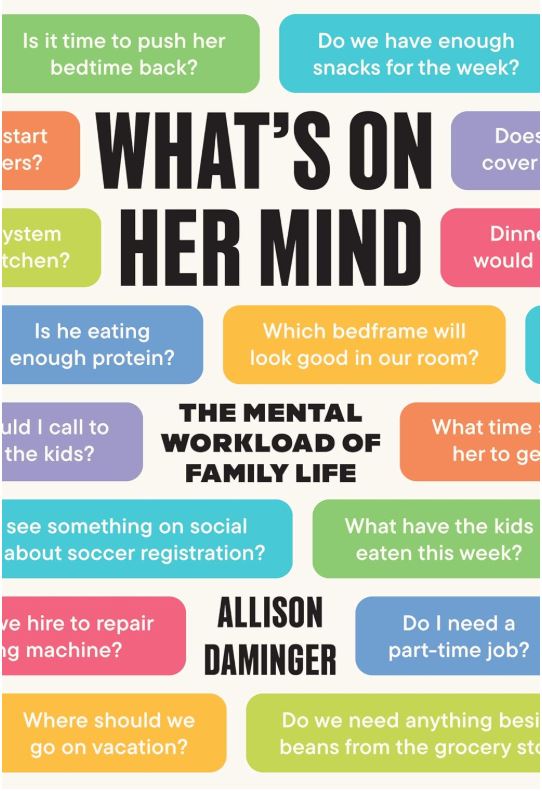
Sometimes the most difficult part of the mental load is explaining what it actually feels like.
You might struggle to describe why you’re exhausted when you haven’t necessarily completed more physical tasks than your partner.
What’s on Her Mind: The Mental Workload of Family Life by Allison Daminger explores this less visible dimension of household responsibility.
Drawing on sociological research, Daminger examines the thinking involved in family life, including anticipating needs, researching options, making decisions and monitoring whether things have been completed.
Why this book is worth reading
One particularly valuable insight is that the mental load doesn’t begin when someone starts doing a task.
It often begins long before that.
Someone notices a need, thinks through possible solutions and decides what should happen.
Only then does the visible work begin.
This helps explain why a partner can feel overwhelmed even when another person appears willing to help.
If one person remains responsible for anticipating everything, much of the invisible burden stays with them.
The book also explores how social expectations and learned behaviours influence who takes responsibility.
Best for: Readers who want a deeper understanding of the invisible thinking behind household management and why it is often unevenly shared.
3. Equal Partners — Kate Mangino
Many couples genuinely believe in equality.
Both partners may work, contribute financially and agree that household responsibilities should be shared.
Yet everyday arrangements don’t always reflect those intentions.
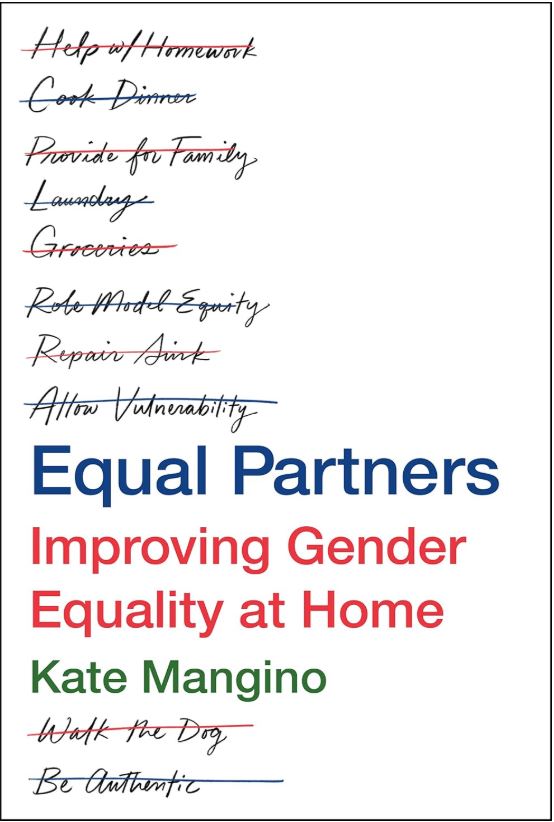
In Equal Partners: Improving Gender Equality at Home, Kate Mangino explores the social expectations and habits that influence how work is divided within families.
The book considers how couples can challenge familiar patterns and develop a more balanced approach to household life.
Why this book is worth reading
One of the strengths of this book is its emphasis on examining existing arrangements rather than simply blaming one person.
Sometimes unequal responsibilities develop gradually.
One partner becomes better at remembering appointments, so they take responsibility for them.
Another becomes accustomed to waiting for instructions.
Over time, these patterns can become so familiar that neither person questions them.
Mangino’s approach encourages reflection, conversation and practical changes.
The aim is to help couples create arrangements that reflect their shared values rather than automatically repeating established habits.
Best for: Couples who believe in equality but need help translating that belief into everyday responsibilities.
4. Drop the Ball — Tiffany Dufu
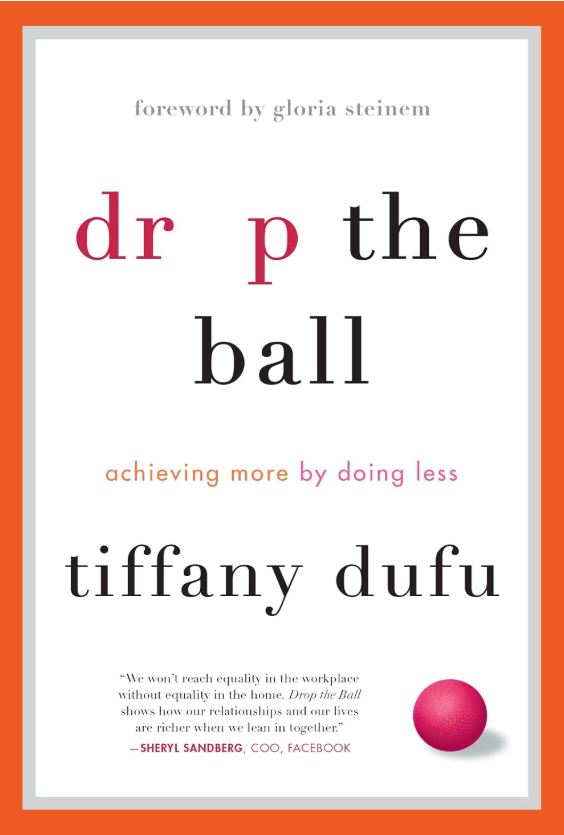
There is another side to the mental load that deserves attention.
Sometimes the person carrying most of the responsibility also feels that everything must be done to a particular standard.
They may struggle to delegate because it seems easier to complete the task themselves.
Or they may worry that if they stop managing everything, important things will be forgotten.
Drop the Ball by Tiffany Dufu explores the pressures surrounding domestic responsibility, perfectionism and expectations placed on women.
Dufu encourages readers to reconsider which responsibilities genuinely require their attention and which expectations may need to change.
Why this book is worth reading
Sharing responsibility can sometimes mean accepting that another person will approach a task differently.
That doesn’t mean accepting carelessness, neglect or repeatedly unfinished work.
It means distinguishing between something being done differently and something being done badly.
For couples trying to rebalance their household, this can become an important conversation.
Both partners need room to take genuine ownership of responsibilities, rather than one person continuing to supervise every detail.
Best for: Readers who feel responsible for everything and want to reconsider perfectionism, expectations and the difficulty of letting go.
5. The Second Shift — Arlie Hochschild and Anne Machung
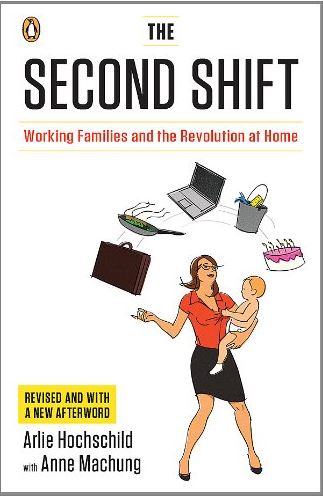
The mental load isn’t a completely new problem.
Long before the phrase became widely used in everyday conversations, researchers were examining how household responsibilities affected relationships.
The Second Shift by Arlie Hochschild, with Anne Machung, explores what happens when paid employment is followed by another round of unpaid work at home.
The book examines the division of domestic labour, childcare and the expectations surrounding work and family life.
Why this book is worth reading
What makes this book valuable is its broader perspective.
Household inequality isn’t always just a disagreement about dishes, shopping or laundry.
It can reflect deeper assumptions about gender, responsibility and whose time is considered available.
Although the original research belongs to an earlier period, many of the questions remain relevant.
Who is expected to notice what needs doing?
Whose work gets interrupted when something unexpected happens?
And why can two people contribute significantly to a household while experiencing their responsibilities so differently?
Best for: Readers interested in the social and historical background of unequal household labour and how familiar patterns became established.
Which of These Books About Mental Load in Relationships Should You Read First?
The right starting point depends on what you’re hoping to understand or change.
If you want a practical household responsibility system, Fair Play is probably the most immediately useful choice.
If you’re struggling to explain the invisible thinking you carry, What’s on Her Mind offers a closer examination of that experience.
If you and your partner want to reconsider familiar household roles, Equal Partners encourages a more collaborative discussion.
If perfectionism and difficulty delegating add to your exhaustion, Drop the Ball offers another perspective.
And if you’re interested in understanding how expectations about household work developed, The Second Shift provides important historical context.
You don’t need to read every book.
Sometimes one useful idea can begin a conversation that has been difficult to have.

When the Mental Load Becomes an Emotional Distance
There’s another consequence of unequal responsibilities that isn’t always obvious.
When one partner repeatedly feels responsible for remembering everything, the problem can gradually become emotional.
They may begin feeling that their contributions are overlooked.
They might feel more like a household organiser than a romantic partner.
And when those feelings aren’t discussed, frustration can quietly turn into resentment or distance.
This is where Invisible No More: Rediscover Yourself and Find Your Way Back to Each Other by Julian Merren becomes relevant.
While the book is not specifically a guide to dividing household responsibilities, it explores the broader experience of feeling unseen, emotionally disconnected and uncertain about your place within a relationship.
For readers whose frustration about the mental load has developed into a deeper feeling of being unappreciated, that emotional perspective may be worth exploring.
Discover Invisible No More by Julian Merren
How Can Couples Begin Sharing the Mental Load More Fairly?
Books can introduce helpful ideas, but meaningful change also requires honest conversations and practical follow-through.
Here are four useful starting points.
1. Make invisible responsibilities visible
Write down the household responsibilities that require regular attention.
Don’t stop at physical chores. Include planning, remembering, scheduling, researching and following up.
You may discover that one task involves far more invisible work than either partner realised.
2. Share ownership, not just individual chores
Instead of asking one partner to remind the other about every task, consider giving each person responsibility for particular areas.
For example, taking ownership of grocery shopping might include noticing what’s running low, planning what to buy and making sure the shopping gets done.
The goal is to reduce the need for constant supervision.
3. Agree on reasonable expectations
Different standards can become a source of conflict.
Discuss what needs to be done, when it matters and what a reasonable result looks like.
Not every household task needs to be completed in exactly the same way.
4. Review the arrangement together
Responsibilities change as work schedules, finances, health and family circumstances change.
An arrangement that felt balanced six months ago may no longer work.
Regular conversations can help prevent small frustrations from becoming larger problems.
Most importantly, both partners need to participate willingly. One person shouldn’t have to become responsible for managing the process of sharing responsibility, too.
Final Thoughts: A Shared Life Needs Shared Responsibility
The mental load can be difficult to explain because so much of it happens quietly.
It’s the remembering, anticipating, planning and organising that keeps everyday life moving.
When that responsibility falls consistently on one person, even a loving relationship can begin to feel unbalanced.
The best books about mental load in relationships help bring those invisible responsibilities into the open.
They remind us that fairness isn’t simply about dividing physical chores.
It’s about recognising the thinking behind those chores, respecting each other’s time and sharing responsibility for the life you’re building together.
And if feeling overburdened has also left you feeling emotionally unseen, explore Invisible No More by Julian Merren for a thoughtful companion on emotional connection and rediscovering your place in a relationship.
Because sharing a life should mean more than living under the same roof.
It should also mean knowing you don’t have to carry everything alone.