
Have you ever agreed to something and regretted it almost immediately?
Perhaps a colleague asked you to take on another task when you were already overwhelmed. A friend wanted a favour you didn’t have time for. Or a family member expected you to change your plans to accommodate theirs.
You wanted to say no.
But instead, you smiled, agreed and told yourself you’d somehow manage.
The difficult part wasn’t necessarily the request. It was the uncomfortable feeling that saying no would make you selfish, unkind or disappointing.
If this sounds familiar, you’re not alone. Many people find themselves searching for books about saying no without guilt because they want to become more assertive without damaging their relationships.
The good news is that setting boundaries doesn’t require becoming rude, confrontational or uncaring.
These five books explore how to communicate your limits clearly, recognise people-pleasing habits and become more comfortable making decisions that respect your own needs.
Why Does Saying No Feel So Difficult?
For some people, declining a request feels surprisingly personal.
Even when the request is unreasonable, they worry about how the other person might react.
Will they be disappointed?
Will they think I’m selfish?
Will they stop including me?
These concerns can make a simple decision feel much bigger than it needs to be.
Sometimes the difficulty comes from wanting to be helpful. Other times, it reflects longstanding habits of avoiding conflict or seeking approval.
And occasionally, we’re simply so accustomed to agreeing that saying no feels unnatural.
The problem is that constantly accommodating others can create difficulties of its own.
You may become overcommitted, exhausted or resentful. You might find yourself giving time and energy to responsibilities you never genuinely wanted to accept.
Learning to say no isn’t about becoming less considerate.
It’s about recognising that your needs, time and responsibilities matter too.
1. The Book of Boundaries — Melissa Urban

If you’re looking for practical guidance on what to say when someone makes an uncomfortable request, The Book of Boundaries is a particularly useful starting point.
Melissa Urban explores how to identify personal limits and communicate them in different areas of life, including family, friendships, romantic relationships and work.
One of the book’s strengths is its emphasis on everyday language.
Many people understand the importance of boundaries but struggle when they actually need to express one.
They know they don’t want to attend an event, lend money or accept another responsibility.
What they don’t know is how to communicate that decision without an uncomfortable confrontation.
Why this book is worth reading
Urban offers examples of language and approaches that help make boundaries easier to express.
Instead of waiting until frustration builds, readers are encouraged to recognise their needs and communicate them earlier.
This can be particularly valuable if you tend to agree automatically and only realise afterwards that you’ve taken on too much.
A useful principle to consider is that a boundary doesn’t have to be dramatic to be meaningful.
Sometimes a calm, straightforward response is enough.
Best for: Readers who want practical examples of how to set boundaries in everyday conversations.
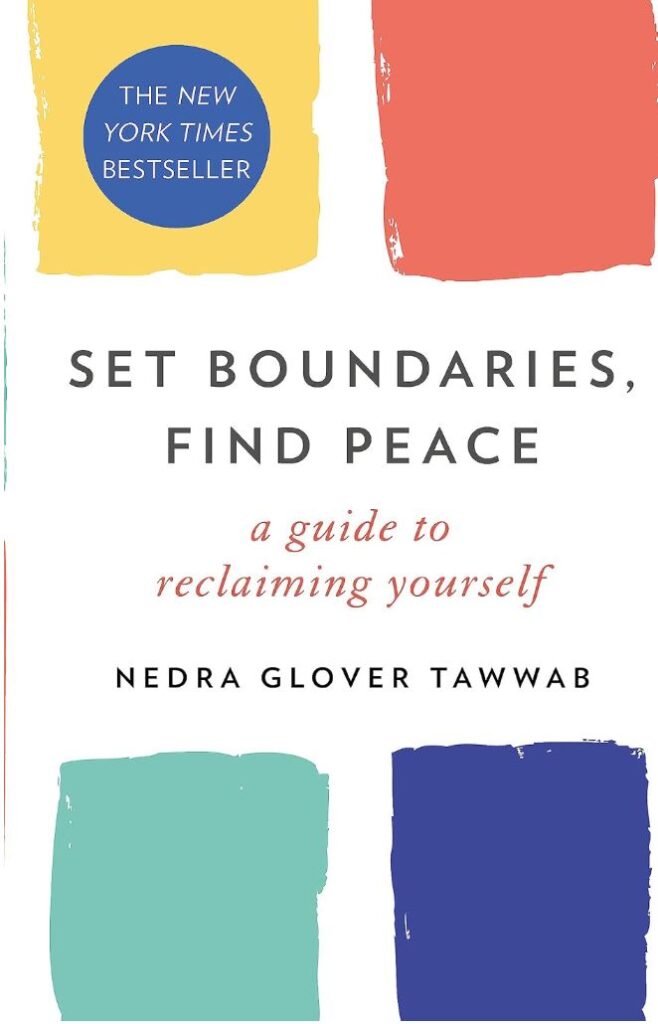
2. Set Boundaries, Find Peace — Nedra Glover Tawwab
Some people find it difficult to say no because they aren’t entirely sure where their boundaries should be.
They might recognise that they’re exhausted or frustrated, but struggle to identify which expectations are creating the problem.
In Set Boundaries, Find Peace, therapist Nedra Glover Tawwab explores how to recognise personal needs, communicate limits and develop healthier expectations within relationships.
The book looks beyond individual requests to examine the patterns that can leave people feeling repeatedly overwhelmed.
Why this book is worth reading
A boundary isn’t simply a sentence you say to someone.
It’s also a decision about what you’re willing to accept, how you want to spend your time and what responsibilities you can reasonably manage.
For example, declining an additional work assignment may require recognising that your existing workload is already full.
Similarly, setting limits with family members may involve reconsidering the expectation that you should always be available.
Tawwab encourages readers to approach boundaries as part of maintaining healthy relationships rather than as an act of rejection.
Best for: People who frequently feel overextended and want to understand the deeper reasons they struggle to establish personal limits.
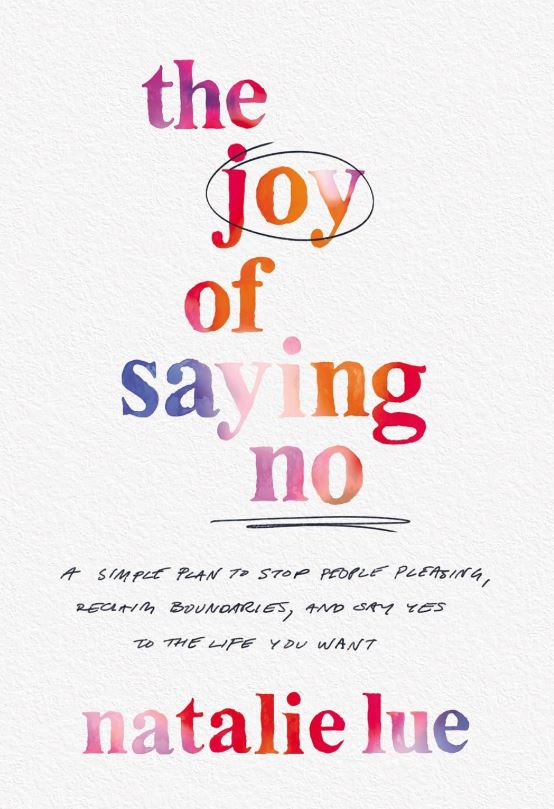
3. The Joy of Saying No — Natalie Lue
Have you ever realised that you’ve been making decisions based on what other people might think?
You agree because you don’t want to disappoint anyone.
You offer help before considering whether you have time.
You put your preferences aside because keeping everyone happy seems easier than explaining what you need.
In The Joy of Saying No, Natalie Lue explores people-pleasing and the habits that can develop when approval becomes more important than personal boundaries.
The book considers how constantly accommodating others can affect relationships, self-worth and everyday decisions.
Why this book is worth reading
One of the most useful ideas to take from this subject is that being kind and being endlessly available are not the same thing.
You can care about someone without accepting every request.
You can be generous without ignoring your own commitments.
And you can value a relationship without making yourself responsible for preventing every disappointment.
For habitual people-pleasers, saying no may initially feel uncomfortable.
But that discomfort doesn’t automatically mean the decision was wrong.
Best for: Readers who struggle with approval-seeking, feel responsible for other people’s happiness or regularly put their own priorities last.
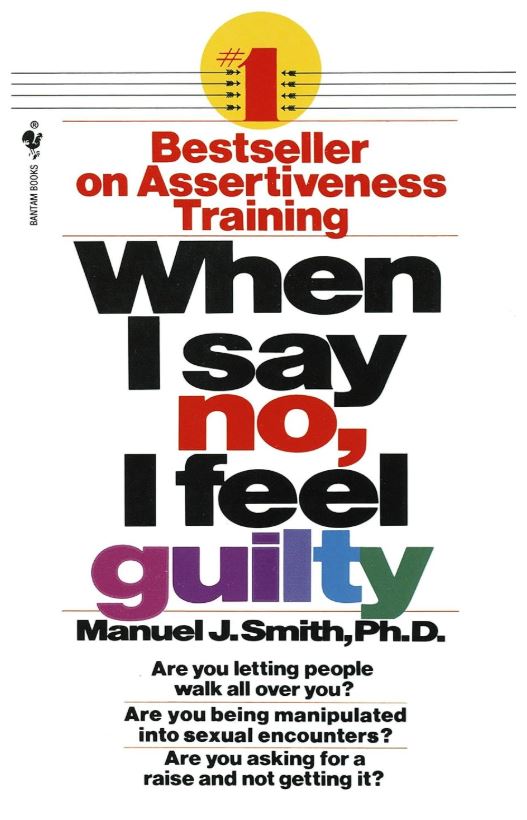
4. When I Say No, I Feel Guilty — Manuel J. Smith
The title of this book describes a problem many readers will recognise immediately.
Sometimes you manage to say no, only to spend the next few hours questioning yourself.
Perhaps you should have agreed.
Perhaps you sounded unfriendly.
Perhaps you owe the other person a longer explanation.
In When I Say No, I Feel Guilty, psychologist Manuel J. Smith explores assertiveness and the communication skills involved in standing up for yourself.
The book includes examples of everyday interactions in which people struggle to express preferences, handle criticism or resist pressure.
Why this book is worth reading
One common difficulty with saying no is feeling that you must justify your decision until everyone agrees with it.
You explain why you’re unavailable.
The other person suggests an alternative.
You explain again.
They challenge your reasons.
Eventually, a simple refusal becomes a lengthy negotiation.
Smith’s work encourages readers to examine their assumptions about assertiveness and develop greater confidence in expressing themselves.
Although it is an older book, its central subject remains relevant to modern situations involving work, family and personal relationships.
Best for: Readers who feel compelled to defend every decision or experience guilt after declining requests.
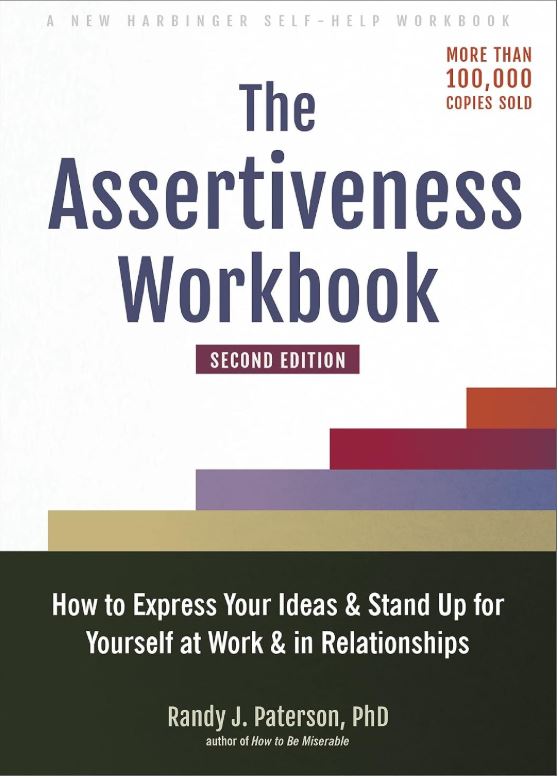
5. The Assertiveness Workbook — Randy J. Paterson
Knowing that you should be more assertive is one thing.
Actually changing the way you communicate is another.
The Assertiveness Workbook by psychologist Randy J. Paterson takes a practical, skills-based approach to developing assertive communication.
The book explores the differences between passive, aggressive and assertive behaviour, while addressing difficulties such as expressing opinions, making requests and saying no.
Why this book is worth reading
Assertiveness is sometimes misunderstood as becoming more forceful.
But expressing yourself clearly doesn’t require intimidating others or dominating conversations.
It involves communicating your position while recognising that other people have needs and opinions of their own.
For someone who habitually agrees to avoid uncomfortable conversations, practising more direct communication can be particularly useful.
For example, rather than giving a vague answer because you feel pressured, you might calmly explain that you cannot take on another commitment.
The objective isn’t to win an argument.
It’s to communicate honestly and respectfully.
Best for: Readers who want structured exercises and practical communication skills they can apply in everyday life.
Which of These Books About Saying No Without Guilt Should You Read First?
The right choice depends on what’s making it difficult for you to set boundaries.
If you’re unsure what words to use, The Book of Boundaries offers practical examples.
If you’re struggling to recognise your own limits, Set Boundaries, Find Peace provides a broader understanding of healthy boundaries.
If your biggest challenge is constantly trying to please everyone, The Joy of Saying No explores that pattern directly.
If you experience guilt after declining requests, When I Say No, I Feel Guilty is particularly relevant.
And if you want to strengthen your communication skills through practical exercises, The Assertiveness Workbook offers a structured approach.
Each book addresses a slightly different challenge, but all five reinforce an important idea: you can respect other people without automatically agreeing to everything they ask.

Saying No Is Also About Learning to Express Yourself
Sometimes the difficulty isn’t deciding whether to say no.
You already know the answer.
The problem is finding the confidence to express it.
Perhaps you become nervous when someone questions your decision. You start overexplaining, apologising or changing your answer because you’re uncomfortable with their reaction.
This is where broader communication skills can help.
Articulate by Julian Merren explores clearer self-expression, communicating ideas more confidently and finding the words you want to say.
While it isn’t specifically a book about setting boundaries, those communication themes are relevant when you’re trying to express your needs without becoming confused or overwhelmed.
For readers who know what they want to say but struggle to communicate it clearly, developing that ability may be a valuable next step.
Discover Articulate by Julian Merren
Four Practical Ways to Start Saying No More Confidently
Reading about assertiveness can be helpful, but small changes in everyday conversations can also make a difference.
Here are four approaches worth practising.
1. Give yourself time before answering
You don’t need to accept every request immediately.
When someone asks for your help, try allowing yourself a moment to consider your availability.
You might say:
Let me check what I’ve already committed to, and I’ll get back to you.
This gives you space to make a deliberate decision rather than agreeing automatically.
2. Keep your response clear and respectful
A refusal doesn’t always require a lengthy explanation.
For example:
Thanks for thinking of me, but I won’t be able to take that on.
This acknowledges the request without creating unnecessary confusion about your answer.
3. Don’t turn every boundary into a negotiation
Sometimes people respond to a refusal by asking for additional explanations or offering alternatives.
There may be situations where discussion is appropriate.
But you don’t necessarily need to keep defending a reasonable decision simply because someone is disappointed.
A calm repetition of your position may be more useful than increasingly complicated explanations.
4. Accept that discomfort may be part of the process
If you’re accustomed to saying yes, declining a request may initially feel uncomfortable.
That feeling doesn’t automatically mean you’ve been unfair.
You can recognise another person’s disappointment without making yourself responsible for removing it.
Of course, boundaries should be considered alongside genuine responsibilities, existing agreements and the needs of others. The aim is thoughtful communication, not refusing every request.
For additional exercises, the Western Australian Centre for Clinical Interventions provides practical guidance on saying no assertively
Final Thoughts: Saying No Doesn’t Make You Unkind
Many people spend years believing that being helpful means always being available.
They agree to responsibilities they cannot reasonably manage, avoid expressing preferences and feel guilty whenever someone is disappointed.
But healthy relationships need more than generosity.
They also need honesty, consideration and respect for personal limits.
The best books about saying no without guilt help readers recognise that assertiveness and kindness are not opposites.
You can care about people while protecting your time.
You can disagree without becoming disrespectful.
And you can decline a request without turning the decision into a judgement about your character.
The next time you’re asked to do something, consider what you genuinely have the time, energy and willingness to accept.
Then give yourself permission to respond thoughtfully.
If expressing your decisions clearly is part of what you find difficult, explore Articulate by Julian Merren for a further look at communicating with greater clarity and confidence.
Because learning to say no isn’t about becoming a different person.
It’s about allowing your own voice to matter, too.