
Have you ever bought something for yourself and immediately wondered whether you should have spent the money?
Perhaps it was a new outfit, a nice meal, a weekend away or something you’ve wanted for months.
You could afford it. Your important bills were covered. You hadn’t made an impulsive decision.
Yet instead of enjoying your purchase, you started questioning it.
Did I really need that?
Should I have saved the money instead?
Was I being irresponsible?
For some people, spending money on themselves creates more discomfort than pleasure.
And while being careful with money is generally sensible, constantly feeling guilty about reasonable purchases can make it difficult to enjoy the financial stability you’ve worked to create.
If this sounds familiar, these five books about guilt spending money on yourself explore the psychology of spending, our emotional relationship with money and how to make financial decisions that reflect both our responsibilities and our personal values.
Because managing money well isn’t only about knowing when to save.
It’s also about understanding when spending makes sense.
Why Do We Feel Guilty Spending Money on Ourselves?
Money carries different meanings for different people.
For some, it represents freedom and opportunity.
For others, it represents security, protection and reassurance that they’ll be able to handle whatever happens next.
If you grew up in a household where money was frequently tight, you may have developed a strong preference for saving.
Perhaps you remember hearing that unnecessary purchases were wasteful.
Maybe you watched family members struggle with unexpected bills.
Or you learned that responsible people should always put their own wants last.
These experiences can shape how you feel about spending long after your financial circumstances have changed.
Sometimes, the discomfort has less to do with whether a purchase is affordable and more to do with what spending represents.
You might feel that you should always be preparing for an emergency.
You may worry that spending on yourself is selfish.
Or perhaps saving has become such an important part of your identity that any unnecessary purchase feels like breaking a rule.
The following books explore these patterns from different perspectives.
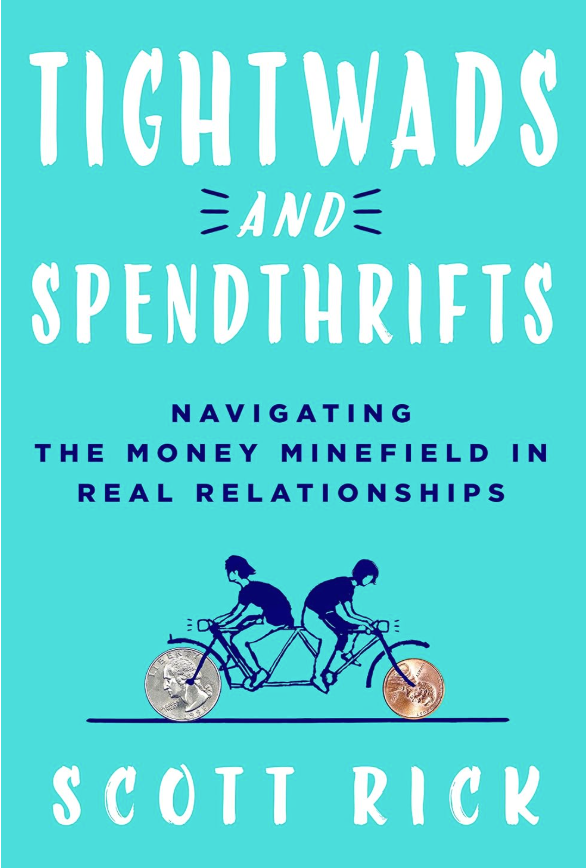
1. Tightwads and Spendthrifts — Scott Rick
Some people love spending money.
Others experience genuine discomfort whenever they part with it.
In Tightwads and Spendthrifts, behavioural scientist Scott Rick explores the psychology behind these differences and how they influence everyday financial decisions.
The book examines why spending can feel emotionally difficult, even when someone has enough money to make a purchase comfortably.
Rick also considers how different spending attitudes affect relationships, particularly when one person is more reluctant to spend than the other.
Why this book is worth reading
One of its most relevant ideas is that financial behaviour isn’t always determined by what someone can afford.
Two people with similar incomes and savings may react very differently to the same purchase.
One might enjoy buying something they’ve been planning for.
The other might experience immediate discomfort, wondering whether the money should have remained untouched.
Understanding this difference can help readers recognise that being reluctant to spend isn’t always the same as making the financially wisest decision.
Sometimes the difficulty comes from the emotional experience of spending itself.
Best for: Readers who feel uncomfortable parting with money, even when a purchase is affordable and carefully considered.
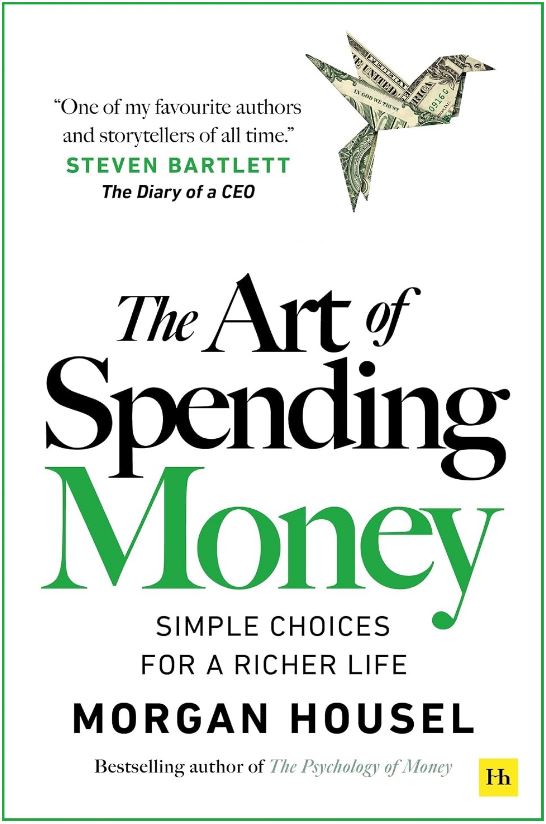
2. The Art of Spending Money — Morgan Housel
Many personal finance books concentrate on how to earn, save and invest money.
But there’s another important question.
What is your money actually for?
In The Art of Spending Money, Morgan Housel explores the emotions, expectations and social influences that shape how people use their financial resources.
Rather than presenting a single formula for the perfect purchase, Housel encourages readers to examine the relationship between money, satisfaction and personal priorities.
Why this book is worth reading
It’s easy to assume that the financially responsible choice is always to spend less.
But a purchase can’t be judged solely by its price.
Something inexpensive may provide little value.
Something more costly might make an important difference to your life, provided it fits comfortably within your financial circumstances.
The book encourages readers to think more carefully about what genuinely matters to them.
That may mean questioning purchases made to impress others.
But it can also mean reconsidering the guilt associated with spending on things you genuinely enjoy.
Best for: Readers who want to develop a more thoughtful relationship with spending and understand what makes a purchase worthwhile.
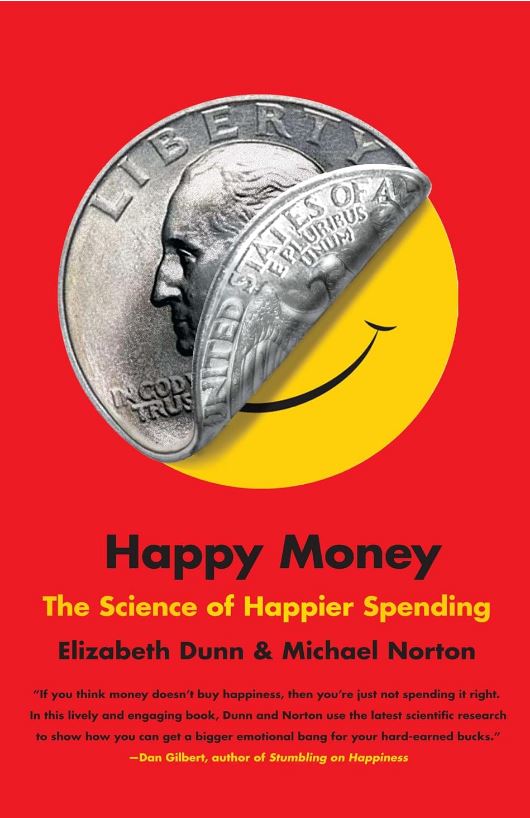
3. Happy Money — Elizabeth Dunn and Michael Norton
What if the most useful question wasn’t simply how much money you spent, but what you received from spending it?
In Happy Money: The Science of Happier Spending, Elizabeth Dunn and Michael Norton explore research into how different spending choices relate to happiness and satisfaction.
The book considers why some purchases bring more lasting enjoyment than others and how people can become more deliberate about where their money goes.
Why this book is worth reading
People who feel guilty about spending on themselves sometimes treat every discretionary purchase as equally unnecessary.
But not all purchases contribute to life in the same way.
A forgotten item bought out of boredom is different from an experience you’ve looked forward to sharing with someone you love.
The book encourages readers to think about the value of spending rather than concentrating exclusively on the amount.
That doesn’t mean buying something will automatically improve your happiness.
It means recognising that money can support experiences and activities that matter to you, not simply remain untouched.
Best for: Readers who want to make more meaningful spending choices and feel more comfortable allowing room for enjoyment in their finances.
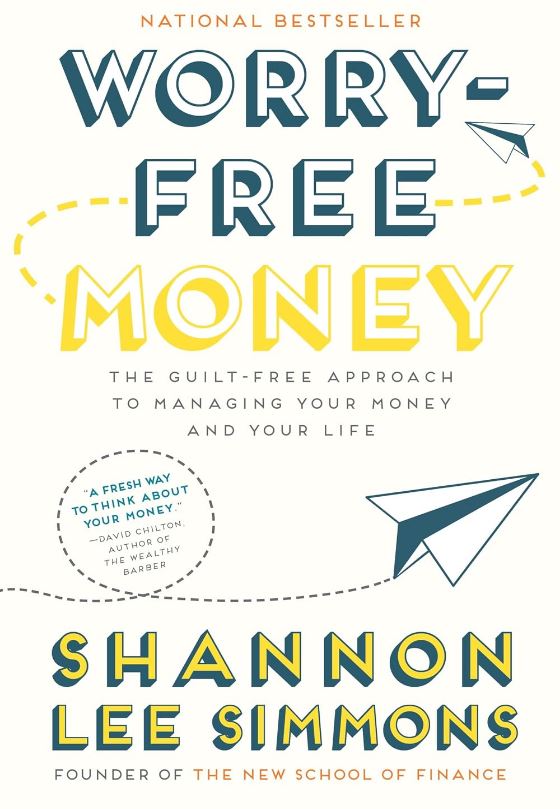
4. Worry-Free Money — Shannon Lee Simmons
For some people, financial guilt isn’t limited to an occasional purchase.
It becomes part of almost every spending decision.
They worry about small treats, compare themselves with others and struggle to feel confident about what they can reasonably afford.
In Worry-Free Money, financial planner Shannon Lee Simmons explores the emotional pressures surrounding spending and money management.
The book examines guilt, financial expectations and the difficulties people experience when trying to balance practical responsibilities with everyday enjoyment.
Why this book is worth reading
One particularly useful perspective is that a financial plan should work within your actual life.
If your approach to managing money leaves you feeling guilty about every purchase, it may be worth examining whether your expectations are realistic.
Of course, there are times when reducing spending is necessary.
But when your essential expenses, financial obligations and savings priorities are accounted for, reasonable discretionary spending doesn’t automatically mean you’re being careless.
Simmons encourages a more practical and less judgemental approach to financial decisions.
Best for: Readers who want to manage their money responsibly without feeling that every enjoyable purchase represents a financial failure.
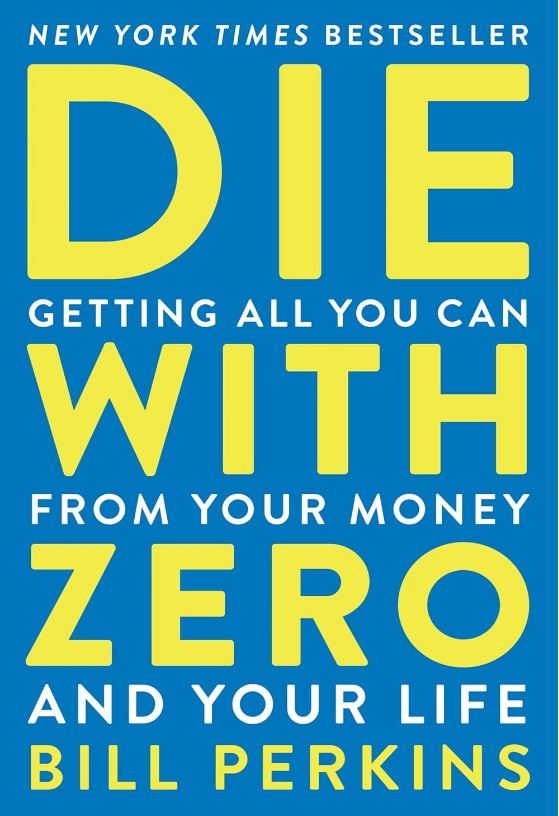
5. Die With Zero — Bill Perkins
Some people become so focused on saving for the future that they struggle to enjoy what they’ve already achieved.
They postpone holidays, experiences and personal interests.
They tell themselves they’ll spend money once they’ve reached another savings milestone.
But when that milestone arrives, they create a new one.
In Die With Zero, Bill Perkins challenges readers to think carefully about the relationship between money, time and life experiences.
The book explores the idea that financial resources have value partly because of what they allow us to experience during our lives.
Why this book is worth reading
Perkins takes a deliberately provocative approach to the balance between saving and spending.
His ideas won’t suit every reader, particularly those dealing with financial insecurity or who need to prioritise long-term obligations.
However, the broader question is worth considering.
Are you saving towards something meaningful?
Or has saving become an end in itself?
For readers who continually postpone affordable experiences because spending feels wrong, this book offers a different perspective.
It’s not an invitation to ignore retirement planning or financial responsibilities.
It’s an opportunity to consider whether your financial decisions reflect both your future needs and the life you’re living now.
Best for: Financially secure readers who are reluctant to spend on meaningful experiences and want to reconsider the balance between saving and enjoying life.
Which of These Books About Guilt Spending Money on Yourself Should You Read First?
The right starting point depends on why spending feels uncomfortable.
If you experience an immediate emotional resistance to spending, Tightwads and Spendthrifts is particularly relevant.
If you’re questioning what money should contribute to your life, The Art of Spending Money offers a broader perspective.
If you want to make purchases more deliberately, Happy Money explores how spending choices relate to satisfaction.
If guilt affects your everyday financial decisions, Worry-Free Money takes a practical approach.
And if you’re financially comfortable but continually postpone experiences, Die With Zero encourages reflection on the relationship between money and time.
Each book approaches spending from a different angle.
The goal isn’t to become someone who spends more.
It’s to become someone who makes decisions with greater understanding and less unnecessary guilt.
When Past Financial Mistakes Make Every Purchase Feel Wrong
There’s another reason some people struggle to spend money on themselves.
They’ve made financial mistakes in the past.
Perhaps they accumulated debt, bought things they couldn’t afford or struggled to manage their income.
After experiencing financial regret, they may become determined never to repeat those mistakes.
That’s understandable.
But sometimes a valuable lesson becomes an overly restrictive rule.
Instead of learning to spend more thoughtfully, a person may begin feeling that almost every purchase is irresponsible.
This is where From Financial Regret to Financial Freedom by Julian Merren offers a related perspective.
The book explores the experience of financial regret and the process of moving towards a healthier, more deliberate relationship with money.
While it isn’t specifically about feeling guilty over affordable purchases, its wider themes may resonate with readers whose previous financial experiences continue to influence their decisions.
Understanding past mistakes matters.
But those mistakes don’t have to become permanent evidence that you cannot trust yourself with money.
If that sounds familiar, discover From Financial Regret to Financial Freedom by Julian Merren.
Four Ways to Feel More Comfortable With Responsible Spending
Reading can help change how you think about money, but practical decisions matter too.
Here are four starting points worth considering.
1. Know what you can genuinely afford
For practical guidance, the Australian Government’s Moneysmart website explains creating a realistic budget that accounts for everyday expenses and financial goals.
Before deciding whether a purchase is reasonable, look at your actual financial situation.
Consider your essential expenses, debts, savings priorities and upcoming commitments.
A purchase that compromises important obligations deserves reconsideration.
But if you’ve accounted for those responsibilities and have money available for discretionary spending, the decision may be more straightforward than your feelings suggest.
2. Give enjoyable spending a place in your budget
A budget doesn’t have to consist entirely of bills and savings.
Where circumstances allow, it can also include money for hobbies, entertainment, personal interests or occasional treats.
Having a planned amount available may help you distinguish between an affordable purchase and one that would place unnecessary pressure on your finances.
3. Question the guilt rather than automatically obeying it
When you feel uncomfortable spending, ask yourself why.
Is the purchase genuinely unaffordable?
Are you neglecting an important responsibility?
Or are you feeling guilty simply because the money is being spent on you?
Those are very different situations.
Recognising the difference may help you make decisions based on current circumstances rather than old assumptions.
4. Choose what matters instead of buying automatically
Giving yourself permission to spend doesn’t mean purchasing everything you want.
It means considering which experiences, products or activities genuinely improve your life.
Sometimes you’ll decide to buy something.
Other times, you’ll realise the purchase isn’t particularly important.
Both decisions can be financially responsible.
You Don’t Have to Choose Between Saving and Enjoying Life
A healthy relationship with money isn’t necessarily about finding the perfect percentage to save or spend.
It’s about understanding your priorities and making decisions that reflect your circumstances.
For someone facing financial hardship, saving and reducing unnecessary spending may be essential.
For someone with stable finances, the challenge may be learning to enjoy reasonable purchases without unnecessary self-criticism.
Neither situation should be ignored.
But the same financial rule won’t suit everyone.
You can value security while recognising that enjoyment matters.
You can plan for the future without postponing every worthwhile experience.
And you can learn from previous financial decisions without allowing regret to control every purchase you make.
Final Thoughts: Responsible Spending Doesn’t Have to Feel Wrong
Money is an important resource.
It pays for the things we need, provides security and helps us prepare for an uncertain future.
But it can also support experiences, interests and moments that make everyday life more enjoyable.
If you feel guilty whenever you spend money on yourself, it may be worth considering whether your discomfort reflects a genuine financial concern or an expectation you’ve carried for years.
The best books about guilt spending money on yourself help readers explore that distinction.
They encourage us to think more carefully about how we use money, why certain purchases feel uncomfortable and what responsible spending looks like in our own circumstances.
You don’t need to abandon your savings goals.
You don’t need to become careless.
And you certainly don’t need to buy something simply because you can afford it.
But when your financial responsibilities are covered, enjoying a thoughtful purchase doesn’t automatically make you irresponsible.
If past money mistakes still influence how you feel about spending, explore From Financial Regret to Financial Freedom by Julian Merren for further reading about learning from financial setbacks and moving forward.
Because managing money wisely isn’t only about protecting your future.
It’s also about making thoughtful choices for the life you’re living today.