
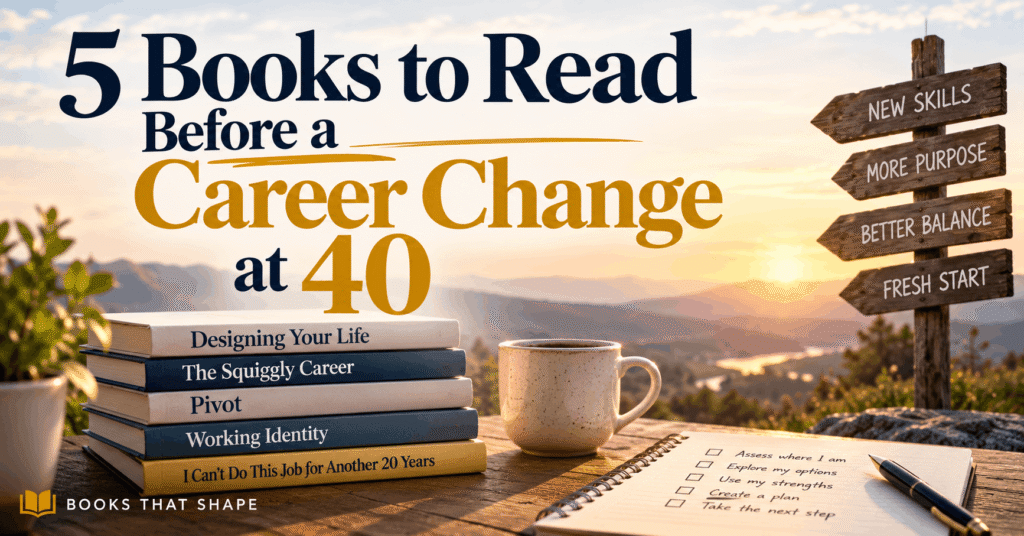
There is something about turning 40 that can make a career question feel much bigger than it did at 25.
You may have spent fifteen or twenty years building experience, earning a reasonable income and becoming good at what you do. There may be a mortgage, family responsibilities, superannuation and a lifestyle built around the money coming in each month.
And yet a thought keeps appearing:
Do I really want to keep doing this?
A career change at 40 can feel exciting and frightening at the same time. You are experienced enough to know that work matters, but also experienced enough to know that time matters too. The idea of spending another twenty years in a career that no longer feels right can be difficult to ignore.
The good news is that changing direction does not necessarily mean throwing away everything you have built. Often, the more useful question is not “What completely different career should I start?” but “How can I use what I already know to build a better next chapter?”
These five books approach that question from different angles.
1. Designing Your Life — Bill Burnett and Dave Evans
One of the hardest parts of contemplating a career change is believing that you need to discover the single correct answer before doing anything.
Designing Your Life offers a much more practical way of thinking.
Bill Burnett and Dave Evans apply design thinking to life and career decisions. Instead of assuming there is one perfect path waiting to be discovered, their approach encourages experimentation, curiosity and the exploration of different possibilities.
That makes the book particularly useful at 40.
You may have several realistic directions available to you. Perhaps you could move into another role in your existing industry, use your skills somewhere completely different, retrain, consult, start something of your own or simply change the way you currently work.
You do not have to know which possibility will become the answer before you start investigating it.
Best for: Someone who keeps thinking, “I know I want something different, but I have no idea what.”

2. The Squiggly Career — Helen Tupper and Sarah Ellis
Many of us grew up with a fairly simple picture of a successful career: choose a profession, climb the ladder, earn more responsibility and keep moving upwards.
Real careers increasingly look less tidy.
Helen Tupper and Sarah Ellis describe modern working lives as “squiggly careers” — careers involving movement between roles, industries, locations and sometimes entirely different kinds of work.
Their approach focuses on strengths, values, confidence, networks and future possibilities rather than simply chasing the next rung of a traditional career ladder.
That perspective can be liberating if you are considering a career change at 40.
A sideways move is not necessarily a backwards move. Taking a role with less status but more freedom may be progress. Moving industries while using many of the same skills may be progress. Even deciding that you no longer want the promotion you once thought you should want can be progress.
The useful question becomes less about whether your career looks impressive from the outside and more about whether it is still working for you.
Best for: Someone who feels trapped by the idea that a successful career must keep moving upwards.
3. Pivot — Jenny Blake
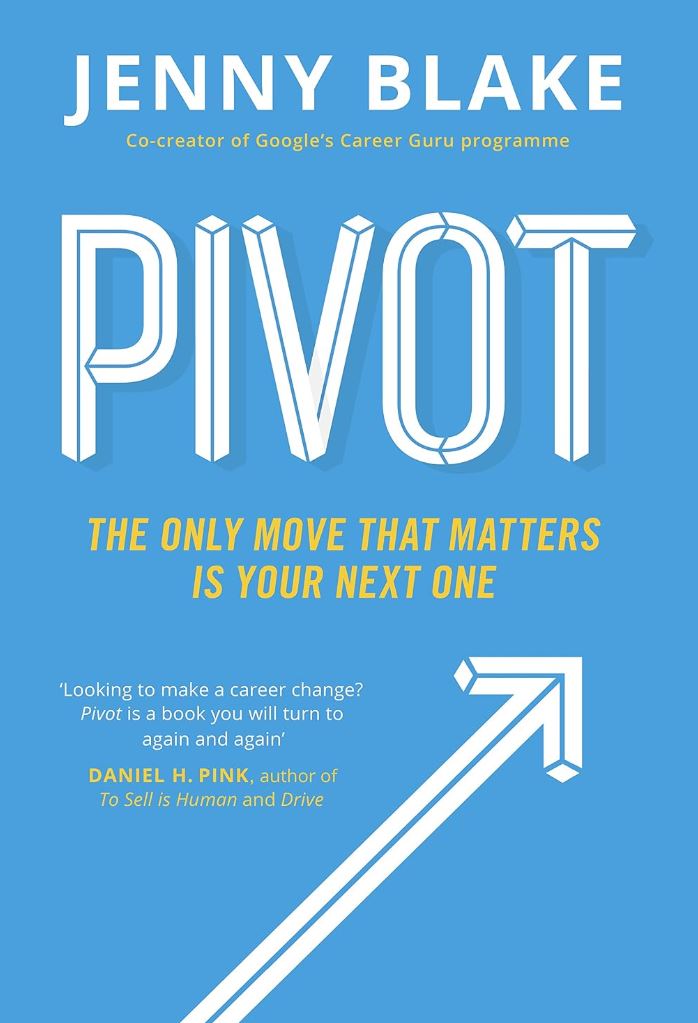
The word change can make a career decision sound enormous.
Pivot makes it smaller.
Jenny Blake’s approach is built around using the strengths, interests, experience and networks you already possess to identify your next opportunity. Rather than treating career change as a complete reinvention, the book focuses on building from your existing assets.
That is an important distinction at 40.
You are unlikely to be starting with nothing. You may have spent years learning how to solve problems, manage people, deal with customers, organise projects, communicate under pressure, understand an industry or make difficult decisions.
Those abilities do not disappear because your job title changes.
Before assuming you need to return to university for four years or begin at the bottom of an entirely new profession, it is worth asking where your existing capabilities could take you.
Sometimes the next career is closer to the current one than you think.
Best for: Someone attracted to change but worried about losing the value of everything they have already built.
4. Working Identity — Herminia Ibarra
Career change is not only practical. It can also challenge the way you see yourself.
After years in one profession, answering “What do you do?” becomes easy. Your career can become tangled up with your identity, status, friendships and sense of competence.
Herminia Ibarra’s Working Identity is particularly valuable here because it treats career reinvention as something we learn through action rather than something we solve entirely through introspection.
That can take some pressure off.
You do not have to sit at the kitchen table one evening and somehow think your way into the perfect second career.
You can talk to people. Try projects. Explore another industry. Take a short course. Test an idea. Notice what gives you energy. Discover what sounded appealing in theory but feels completely wrong in practice.
A new working identity can emerge gradually.
Best for: Someone who knows their current career no longer fits but cannot yet picture themselves doing something else.
5. I Can’t Do This Job for Another 20 Years — Julian Merren
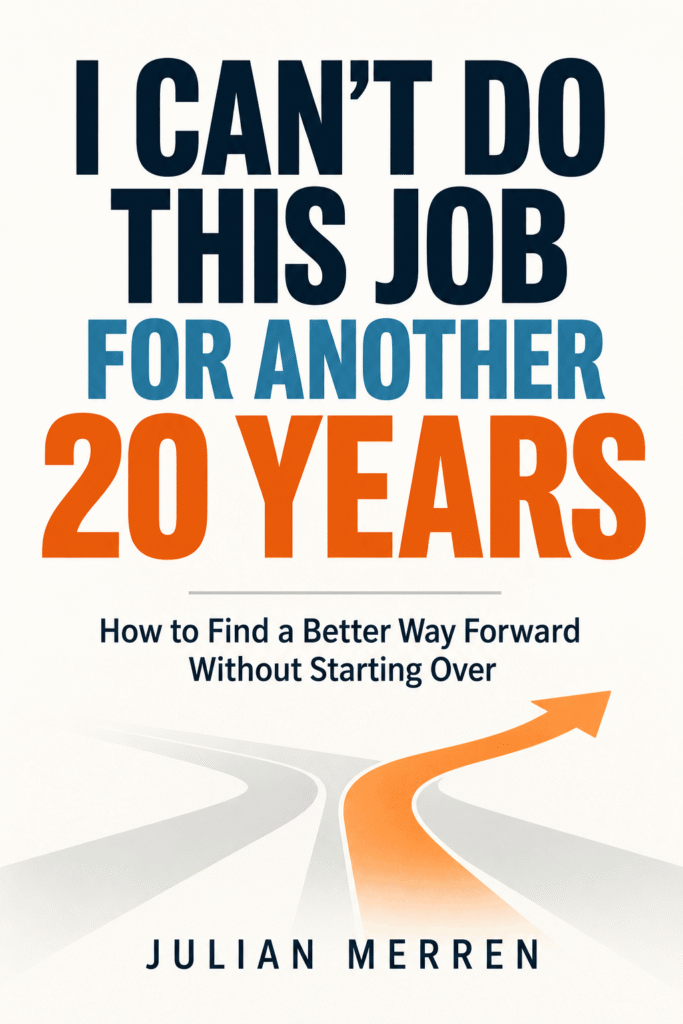
Sometimes the biggest mistake is assuming that dissatisfaction automatically means you need a completely different career.
I Can’t Do This Job for Another 20 Years: How to Find a Better Way Forward Without Starting Over begins one step earlier.
It asks you to work out what actually needs to change.
Is it the career itself? The employer? Your role? The hours? The environment? The level of responsibility? Or has the work simply stopped fitting the life you want now?
That distinction matters because the answer may not require blowing up your working life.
The book takes a practical approach to finding a better way forward while recognising the realities that become increasingly important around 40: income, security, family responsibilities, accumulated experience and the understandable fear of getting a major decision wrong.
Its central idea is simple:
You are not starting from zero.
You are taking years of experience with you.
Best for: Someone thinking, “I know I can’t keep doing this for another twenty years, but I’m not ready to throw everything away.”
Explore I Can’t Do This Job for Another 20 Years →
A Career Change at 40 Does Not Have to Begin With Resigning
One theme runs through all five books: movement does not have to begin with a dramatic leap.
You can investigate before committing.
You might speak to someone already doing work that interests you, look at job advertisements and identify skills you already have, explore an internal move before leaving your employer, test a course before committing to lengthy retraining, or investigate whether the real problem is your career or simply your current version of it.
At 40, this matters.
Experience is not something you need to escape from. Used well, it can become the bridge to whatever comes next.
Before You Decide What Comes Next
If you are considering a career change at 40, try not to turn the question into a choice between staying miserable forever and resigning tomorrow.
You might speak to someone already doing work that interests you, look at job advertisements and identify skills you already have, explore how people move between occupations, explore an internal move before leaving your employer, test a course before committing to lengthy retraining, or investigate whether the real problem is your career or simply your current version of it.
There is a lot of ground between those two extremes.
Read. Explore. Talk to people. Test possibilities. Look carefully at what you want to leave behind — but also at what you want to take with you.
You may eventually decide that a completely new career is exactly what you need.
Or you may discover that a smaller change could give you much of what you have been looking for.
Either way, the goal is not to have the next twenty years perfectly mapped out.
It is to understand yourself, your options and your existing strengths well enough to make a sensible next move.
And if that is the question you are wrestling with now, I Can’t Do This Job for Another 20 Years was written specifically to help you work through it.