

Someone asks you a question.
You know the subject. You probably know the answer.
But suddenly everyone is looking at you.
And your mind goes completely blank.
Then, five minutes later, when the pressure has disappeared, you know exactly what you should have said.
If you’ve been searching for books to think on your feet, the good news is that speaking well in the moment isn’t simply something you’re either naturally good at or you’re not.
It can be practised.
Toastmasters, for example, uses its Table Topics exercises specifically to help people organise their thoughts quickly and respond to unexpected questions. Toastmasters International
These five books approach that challenge from different directions—from spontaneous communication and improvisation to confidence, structure and everyday articulation.
1. Think Faster, Talk Smarter — Matt Abrahams
Few books fit this problem as directly as Think Faster, Talk Smarter.
Matt Abrahams focuses specifically on spontaneous communication: those situations where you have little or no time to prepare before you’re expected to say something useful.
That could mean answering an unexpected question in a meeting, handling a job interview, giving feedback, making small talk or responding during a Q&A. Abrahams’ approach combines managing the pressure of the moment with structuring what you actually say. Matt Abrahams
One particularly useful idea is that trying to produce an exceptional answer can actually make spontaneous speaking harder.
When you’re put on the spot, you don’t necessarily need a brilliant response.
You need a useful one.
That takes some of the pressure away.
Instead of thinking:
“I need to say something impressive.”
Try:
“What’s the clearest useful thing I can say?”
That’s a much easier problem for your brain to solve.
Best for: people who communicate well when prepared but struggle when questions arrive unexpectedly.

2. Improv Wisdom — Patricia Ryan Madson
At first, a book about improvisation might seem like an unusual recommendation.
But think about what conversation actually is.
You don’t know exactly what the other person will say.
You don’t have a script.
You can’t rehearse every question.
You’re constantly responding to something that wasn’t completely predictable.
That’s improvisation.
In Improv Wisdom, Patricia Ryan Madson draws on decades of teaching improvisation and applies its principles beyond theatre to everyday life. The book presents 13 strategies intended to help readers become more comfortable responding to what happens rather than needing everything to follow a predetermined script. PenguinRandomhouse.com
That mindset can be incredibly useful when speaking under pressure.
Sometimes we freeze because we’re searching for the perfect response.
Improvisation encourages something different:
Work with what you have.
Start somewhere.
Respond to what’s actually happening.
You don’t need to know the entire answer before saying the first useful sentence.
Best for: people whose perfectionism makes spontaneous speaking harder than it needs to be.
3. The Quick and Easy Way to Effective Speaking — Dale Carnegie
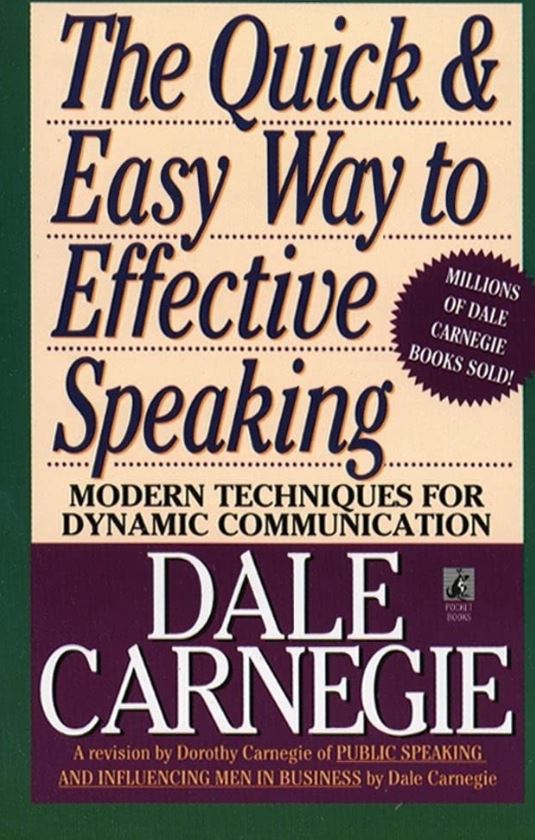
This is the oldest book on the list, but the underlying problem hasn’t changed much.
People still become self-conscious when they’re expected to speak.
They still worry about how they’ll sound.
And they still sometimes discover that the fear of getting it wrong makes finding the words even harder.
The Quick and Easy Way to Effective Speaking covers confidence, clear expression, organisation and presentation skills, including impromptu speaking. Penguin Books Australia
One reason it belongs here is that thinking on your feet isn’t entirely about thinking faster.
Confidence matters too.
If half your attention is occupied by thoughts such as:
Do I sound stupid?
What if this answer is wrong?
Why is everyone looking at me?
…there’s less attention available for the question itself.
You don’t have to eliminate nervousness before you can speak well.
But learning to continue speaking despite some discomfort can make spontaneous communication considerably easier.
Best for: readers who want to build general speaking confidence alongside their ability to respond in the moment.
4. The First Minute — Chris Fenning
Sometimes the hardest part of an unexpected response is simply knowing where to begin.
You have four thoughts competing for attention.
There’s background information you could explain.
There’s a detail you don’t want to forget.
And before you’ve decided which part matters most, you’ve already started talking.
The First Minute focuses on making the beginning of workplace communication clearer and more structured.
That principle becomes particularly useful when you’re put on the spot.
You don’t need to organise everything you know.
You need to find your starting point.
Try asking yourself:
What’s the one thing this person needs to understand first?
Start there.
Then explain.
It’s a small change, but it can prevent an answer from turning into a long journey towards a point that could have appeared in the first sentence.
Best for: people who have plenty to say but struggle to organise it quickly.
5. Articulate — Julian Merren
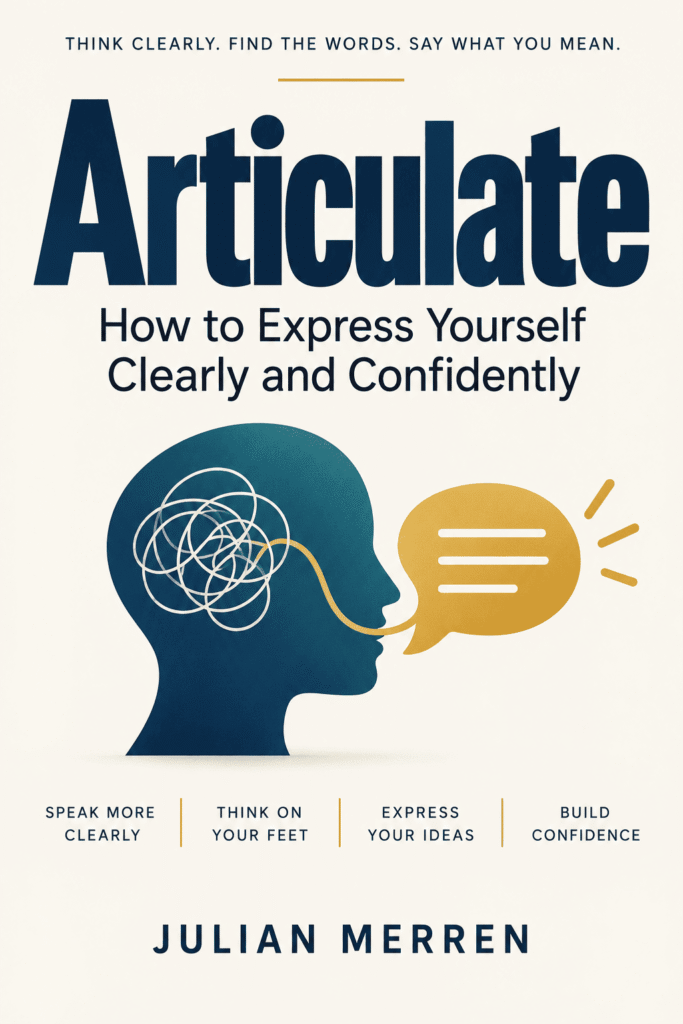
Sometimes the real problem isn’t public speaking at all.
It’s ordinary life.
Your manager suddenly asks what you think.
Someone challenges your opinion.
You’re introduced to somebody important.
A conversation takes an unexpected turn.
Or someone simply says:
“What do you think?”
And suddenly your brain seems to have left the building.
Articulate: How to Express Yourself Clearly and Confidently by Julian Merren looks at these everyday communication problems—including organising your thoughts, thinking on your feet, finding the right words and speaking more clearly when the stakes feel higher.
One of the most useful habits is also one of the simplest:
Don’t rush to answer.
Give yourself a moment.
Then ask:
What’s my point?
You don’t need to construct the entire response.
Find the point first.
Once you know where you’re going, the next sentence becomes much easier.
If this is the kind of everyday communication skill you’d like to develop, you can discover Articulate by Julian Merren.
What the Best Books to Think on Your Feet Have in Common
There’s an interesting thread running through these books to think on your feet.
They don’t really teach you to race your brain.
They teach you to handle spontaneity better.
That’s an important distinction.
Speaking quickly isn’t the same as thinking clearly.
In fact, one of the most useful things you can do when you’re put on the spot is slow the process down.
Toastmasters’ advice for impromptu speaking includes taking a brief pause, identifying the main idea and keeping the response focused rather than trying to say everything. Toastmasters International
A simple approach is:
Pause → Point → Explain
Pause
Give yourself a moment before answering.
Point
Decide the main thing you want the other person to understand.
Explain
Add only the information needed to support that point.
You can practise this anywhere.
Ask yourself a random question:
What’s one thing you’d change about your workplace?
Pause.
Find one point.
Answer.
Then try another:
What’s a book everyone should read?
Again: pause, point, explain.
The subject isn’t particularly important.
You’re training yourself to organise a response without preparing it in advance.
You Don’t Need to Become the Fastest Person in the Room
This might be the most reassuring part.
Thinking on your feet doesn’t mean producing instant clever answers.
It means becoming more comfortable when you don’t have a script.
You listen.
You give yourself a moment.
You decide what matters.
Then you respond.
And sometimes you’ll still think of a better answer five minutes later.
That’s fine.
The goal isn’t spontaneous perfection.
It’s being able to stay present, organise what you know and say something useful while the conversation is still happening.
Read the books.
Try the techniques.
But most importantly, practise.
Because the next time somebody suddenly turns to you and asks:
“What do you think?”
You don’t need the perfect answer.
You just need somewhere clear to begin.